Laser Tracker Manufacturer Comparison for Large Assembly
Time
Click Count
Choosing the right laser tracker manufacturer can determine whether large-assembly projects achieve speed, accuracy, and repeatable quality at scale. For technical evaluation teams, this comparison highlights the key differences in precision performance, system stability, software integration, and long-range measurement capability, helping decision-makers identify solutions that reduce alignment risk, support complex production environments, and deliver measurable value in aerospace, automotive, and other high-tolerance industries.
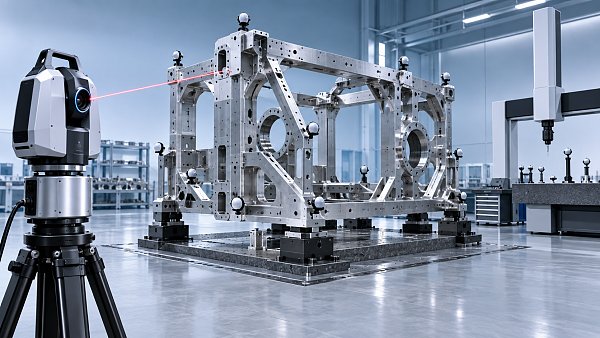
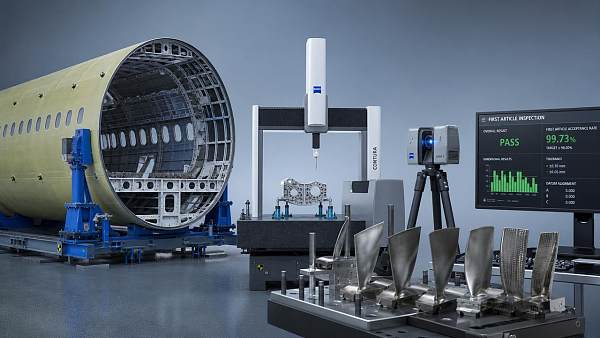
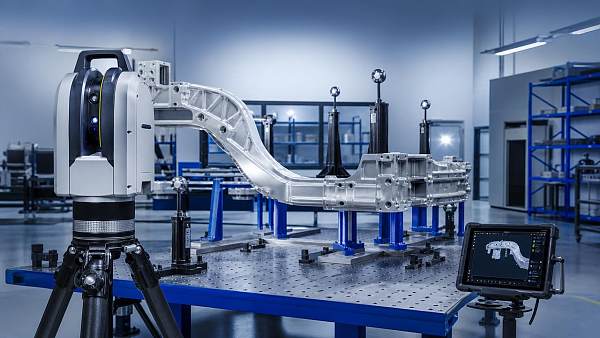
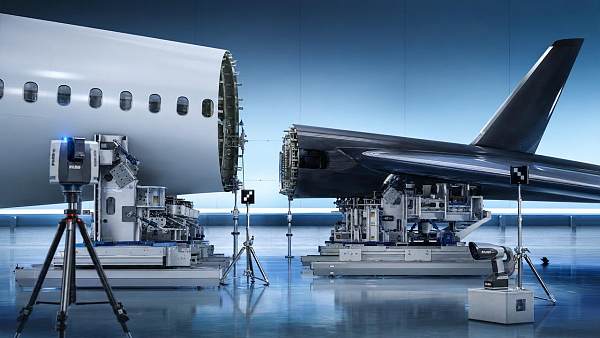
In large-assembly environments, a laser tracker is not simply a metrology device. It is a control point for fixture alignment, tooling verification, in-process inspection, and digital handoff between production and quality teams. When assemblies extend from 5 meters to 40 meters, small measurement errors can turn into expensive rework, late-stage adjustment, or unstable process capability.
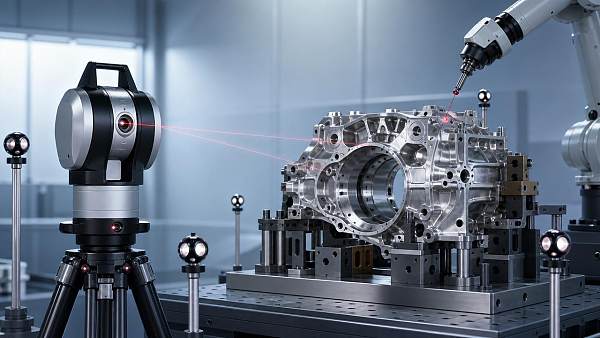
For technical evaluation personnel, comparing a laser tracker manufacturer requires more than reviewing catalog accuracy values. The practical decision depends on how a system performs across long distances, temperature variation, operator shifts, software ecosystems, and mixed workflows that may include CAD alignment, GD&T reporting, robotic guidance, or portable probing. This article outlines the criteria that matter most when benchmarking suppliers for large assembly.
What Technical Teams Should Compare in a Laser Tracker Manufacturer
A meaningful laser tracker manufacturer comparison starts with real operating conditions rather than brochure headlines. In aerospace jigs, body-in-white cells, turbine structures, and heavy equipment frames, the measurement task often spans 10–30 meters and may involve 50 to 500 points per inspection cycle. Under those conditions, speed, thermal behavior, and software stability become as important as nominal accuracy.
Core performance dimensions
Technical teams usually evaluate at least 4 core dimensions: volumetric accuracy, angular stability, tracking robustness, and workflow integration. A supplier may be strong in one category yet weak in another. For example, excellent static accuracy does not automatically mean reliable dynamic tracking during operator movement or reflector handoff around large fixtures.
- Measurement range suitable for 15 m, 20 m, or 30 m class assemblies
- Accuracy consistency across short-range and long-range point collection
- Stability under shop-floor temperatures such as 18°C–28°C
- Compatibility with CAD-based inspection and SPC reporting workflows
Why specification sheets are not enough
Two systems can publish similar uncertainty ranges yet produce different outcomes on the floor. One reason is that large assembly depends heavily on setup repeatability, line-of-sight recovery, and drift control over 2-hour to 8-hour shifts. Another reason is software. If data export, alignment strategy, or multi-station registration is inefficient, inspection throughput can drop by 15%–30% even when raw hardware is capable.
Typical evaluation questions
Before selecting a laser tracker manufacturer, technical teams should ask whether the system will support portable probing, reflector measurement, automated inspection interfaces, and future plant digitalization. A tracker that works well in standalone inspection may underperform in a connected production environment where MES, PLM, or quality databases require structured output and traceable revision control.
The table below summarizes the most relevant criteria when comparing suppliers for large-assembly use cases.
The key conclusion is that a laser tracker manufacturer should be assessed as a systems partner rather than a device vendor. The best fit is usually the supplier that balances measurement performance with deployment practicality, training quality, and software continuity across multiple programs.
Performance Differences That Matter in Large Assembly
Large assembly amplifies every weakness in a measurement system. A 0.05 mm local deviation may not be critical on a bench-top feature, but over a 20-meter structure it can trigger cumulative misalignment, shim growth, or fixture offset that affects downstream drilling, fastening, or mating operations. That is why technical evaluations should connect instrument performance directly to process risk.
Long-range accuracy versus usable accuracy
When comparing a laser tracker manufacturer, teams should distinguish between laboratory specifications and usable accuracy on the floor. Usable accuracy includes environmental compensation, target quality, line-of-sight interruptions, and operator method. In many industrial cells, the real decision threshold is whether the system can repeatedly maintain the required tolerance band over 3 consecutive setups, not whether it reaches a single best-case point value.
Environmental robustness
Temperature change of 2°C–5°C during a shift can influence measurement stability, especially around large metallic structures. Vibration from nearby machining, fork-truck movement, or floor traffic can also affect tracking consistency. A strong laser tracker manufacturer should offer clear compensation strategies, warm-up guidance, and recommended operating envelopes rather than leaving users to solve drift behavior by trial and error.
Throughput considerations
Cycle time is often underestimated during procurement. If one tracker completes a standard 120-point inspection in 25 minutes and another takes 35 minutes because of reacquisition delays or software friction, the annual productivity gap can be significant. Over 2 shifts and 250 production days, even a 10-minute difference per cycle can affect staffing, takt adherence, and inspection queue length.
The comparison below helps evaluation teams map technical differences to operational outcomes.
For most high-tolerance plants, the superior laser tracker manufacturer is the one that preserves measurement confidence while protecting cycle time. That balance is often more valuable than chasing the smallest headline specification.
How to Evaluate Software, Integration, and Data Traceability
Hardware selection should never be isolated from software review. In modern production, the laser tracker sits inside a digital chain that may include CAD models, tolerance libraries, inspection plans, quality databases, and automated reporting. A weak software layer can create hidden costs within 3 to 6 months of deployment, especially when multiple programs share the same metrology resources.
Software functions technical teams should test
A robust laser tracker manufacturer should support practical workflows such as best-fit alignment, datum-based alignment, GD&T output, and revision-controlled reporting. Evaluation teams should request hands-on demonstrations using their own part geometry or a representative sample file. Testing should include at least 3 scenarios: initial setup, measurement interruption, and final report generation.
- Import and manage native or neutral CAD formats
- Generate reports without extensive manual reformatting
- Support operator guidance for repeat tasks across shifts
- Enable data traceability for audits and corrective actions
Integration with broader manufacturing systems
In high-value assembly, metrology data increasingly feeds process control. Some organizations need results linked to part serial numbers, station IDs, or lot-based quality records. Others require interfaces for robotic positioning or closed-loop fixture correction. If the laser tracker manufacturer cannot support APIs, export structure, or application engineering, future integration may require costly custom work.
Questions to ask during acceptance trials
- Can the system complete a standard report in less than 10 minutes after point capture?
- Can operators with 2–3 days of training execute a validated routine consistently?
- Can data be exported in a format usable by quality and engineering teams without re-entry?
- Can the supplier document calibration status, software version, and measurement traceability clearly?
For technical evaluation personnel, these questions often reveal more decision value than another review of static specifications. The stronger laser tracker manufacturer will usually be the one that minimizes friction between measurement, analysis, and action.
Procurement Risks, Service Factors, and a Practical Selection Framework
Procurement decisions in metrology should consider the full operating life of the system, not just acquisition price. A tracker used in large assembly may remain in service for 5 to 10 years. During that period, downtime, recalibration, software licensing, accessory availability, and local application support can influence total cost more than the initial quotation difference.
Common procurement mistakes
One common mistake is selecting a laser tracker manufacturer based only on entry price without validating annual support costs or calibration logistics. Another is underestimating operator adoption. If implementation requires specialized expertise from a single engineer, the plant inherits continuity risk. A third mistake is skipping proof-of-process validation on a real assembly or fixture.
A 5-step selection framework for technical evaluation teams
- Define the largest measurement envelope, typical tolerance band, and expected daily point volume.
- Shortlist 2–4 suppliers whose systems match the target range and workflow needs.
- Run application trials on an actual part, tool, or assembly fixture with defined pass criteria.
- Compare software usability, training effort, and service response commitments.
- Review total cost across hardware, software, calibration, accessories, and downtime risk.
Recommended checkpoints before purchase approval
At minimum, technical teams should validate 6 checkpoints: operating range, repeatability across 3 setups, reporting workflow, environmental suitability, calibration pathway, and support coverage. If the application includes aerospace or other regulated sectors, traceability documentation and procedure control should be reviewed before final sign-off.
For organizations using G-IMS style benchmarking methods, the goal is not to find a universally best laser tracker manufacturer. The goal is to identify the supplier whose measurement logic, software architecture, and support model match the production reality of the plant. In practice, that means choosing the option that lowers alignment risk, compresses inspection time, and sustains quality over repeated programs.
A disciplined comparison of any laser tracker manufacturer should connect metrology capability to business outcomes: fewer rework loops, faster fixture qualification, stronger process control, and more reliable handoff between engineering and production. Technical evaluation teams that use structured trials, defined acceptance thresholds, and software validation are far more likely to select a system that performs beyond the demo stage.
If your organization is assessing laser tracker options for large assembly, now is the right time to build a requirement matrix around range, accuracy, software integration, and lifecycle support. Contact us to discuss your application, request a tailored evaluation framework, or learn more about metrology benchmarking solutions for aerospace, automotive, and other high-tolerance manufacturing environments.
Recommended News
 Oct 05, 2026When industrial 3D laser scanning systems outperform manual inspectionIndustrial 3D laser scanning systems deliver faster, repeatable full-surface inspection for complex parts, CAD comparison, safer access, and actionable quality insights.
 Sep 21, 2026When do laser trackers outperform fixed industrial measurement systems?Industrial Measurement Systems compared: learn when laser trackers deliver better portability, alignment accuracy, and cost efficiency for large, changing assemblies.
 Jul 08, 2026Handheld 3D Laser Scanner Accuracy: What Matters in Field UseHandheld 3d laser scanner accuracy depends on more than specs. Learn how surface, calibration, operator motion, environment, and software impact reliable field results.
 Jul 03, 2026Industrial 3D Laser Scanning Systems for Large-Part InspectionIndustrial 3D laser scanning systems help manufacturers inspect large parts with speed, accuracy, and traceable workflows. Explore key selection criteria for better quality decisions.
 Jun 30, 2026Laser Tracking System Updates: What Changed in Accuracy and WorkflowLaser tracking system updates explained: discover what changed in accuracy, target reacquisition, software integration, and workflow efficiency to improve inspection confidence and productivity.
 Jun 29, 20263D Laser Scanning Systems in Europe: Key Specs That Change Project Cost3D laser scanning systems Europe: discover how accuracy, range, speed, software compatibility, and compliance directly impact project cost, risk, and long-term ROI.
 May 28, 2026Aerospace Metrology Tender Alerts: How to Spot Viable BidsMetrology tender alerts aerospace teams rely on can uncover high-value bids. Learn how to spot viable aerospace contracts, assess compliance, reduce risk, and bid with confidence.
 May 23, 2026Laser Tracker Manufacturer Comparison for Large AssemblyLaser tracker manufacturer comparison for large assembly: evaluate accuracy, stability, software integration, and lifecycle support to reduce alignment risk and improve throughput.
 May 22, 2026Advanced Metrology Solutions for Aerospace: Compare Before UpgradingAdvanced Metrology Solutions for Aerospace compared the smart way—evaluate accuracy, integration, compliance, and lifecycle cost before upgrading. Discover a faster, lower-risk path to better inspection results.
 May 20, 2026Aerospace Measurement Errors That Delay First Pass YieldAerospace Measurement errors can quietly reduce first pass yield. Learn where hidden uncertainty starts, how it delays production, and what to fix first for faster, more reliable aerospace output.
 May 19, 2026Next-Gen Laser Tracking: Accuracy vs SpeedNext-gen laser tracking technology news explained: learn when accuracy should lead and when speed drives value, with a practical checklist for smarter production decisions.
 May 17, 20263D Scanning Speed vs Resolution for Reverse Engineering3d scanning speed vs resolution explained for reverse engineering: learn how to balance scan speed, detail, accuracy, and workflow efficiency to reduce rework and choose smarter.
 May 15, 2026Laser Tracker Manufacturer Selection: Accuracy, Software, ServiceLaser tracker manufacturer selection now goes beyond accuracy. Compare software, calibration, integration, and service support to reduce risk and improve long-term measurement value.
 May 14, 2026Advanced Metrology Solutions for Aerospace: Where Accuracy Pays OffAdvanced Metrology Solutions for Aerospace help reduce risk, improve traceability, and boost production confidence with smarter inspection strategies for precision-critical programs.
 May 13, 2026Aerospace Measurement Methods for Large-Part AlignmentAerospace Measurement methods for large-part alignment: compare laser trackers, photogrammetry, 3D scanning, and portable CMMs to improve accuracy, traceability, and assembly efficiency.
 May 13, 20263D Scanning for Aerospace: Tolerance Risks to Watch Early3D Scanning for aerospace helps detect tolerance drift, datum errors, and assembly risks early—improving quality, compliance, and delivery confidence before delays grow costly.
 May 12, 2026Next-Gen Laser Tracking Technology News That MattersNext-gen laser tracking technology news reveals what truly impacts precision, automation, traceability, and ROI. Discover the updates that help teams reduce risk and make smarter investment decisions.
 May 09, 2026Innovations in Handheld 3D Scanning for Faster Field MeasurementInnovations in handheld 3D scanning are accelerating field measurement with faster capture, real-time validation, and portable accuracy—discover how teams reduce rework and speed decisions.
 May 07, 2026How Much Laser Tracker Measurement Range Do You Actually Need?Laser tracker measurement range: find the right fit for your plant. Learn how to balance accuracy, setup efficiency, and ROI to avoid overspending and choose smarter.
 May 07, 2026Laser Tracker Angular Accuracy vs Real-World Alignment ErrorsLaser tracker angular accuracy is only the start. Learn how setup, thermal drift, geometry, and operator practice drive real-world alignment errors before you trust critical measurement data.
 May 05, 2026Laser Tracker Manufacturer Checklist for High-Accuracy ProjectsLaser tracker manufacturer checklist for high-accuracy projects: compare accuracy, service, compliance, and total cost to choose the right supplier with confidence.
 May 04, 2026Advanced Metrology Solutions for Aerospace: When Higher Precision Pays OffAdvanced Metrology Solutions for Aerospace help reduce compliance risk, improve supplier qualification, and control lifecycle costs—see when higher precision delivers stronger ROI.
 May 03, 2026What to Ask Before Choosing a 3D Scanning Supplier3D Scanning supplier selection starts with the right questions. Learn how to evaluate accuracy, workflow, compliance, costs, and support to choose a supplier with confidence.
 May 03, 20263D Scanning for Aerospace: When Accuracy Changes the Outcome3D Scanning for aerospace helps teams catch deviations earlier, reduce rework, and improve traceable quality decisions—see how accuracy can reshape safety, schedule, and program outcomes.