3D Scanning or Laser Trackers for Large Part Inspection
Time
Click Count
When inspecting large parts, choosing between 3D Scanning and laser trackers can directly affect accuracy, speed, and total quality cost. For teams working with Coordinate Measuring Machines, Industrial Sensors, and broader Sensory Technology under IEEE Standards and NIST Standards, this guide explains how each method performs in real production environments. It helps engineers, quality managers, buyers, and decision-makers identify the best-fit solution for precise, efficient, and scalable inspection.
In aerospace, shipbuilding, energy, automotive, heavy equipment, rail, and advanced fabrication, large-part inspection is rarely a simple question of “which device is more accurate.” The real decision usually involves part size, line speed, tolerance stack-up, environmental stability, operator skill, reporting workflow, and how measurement data will feed corrective action.
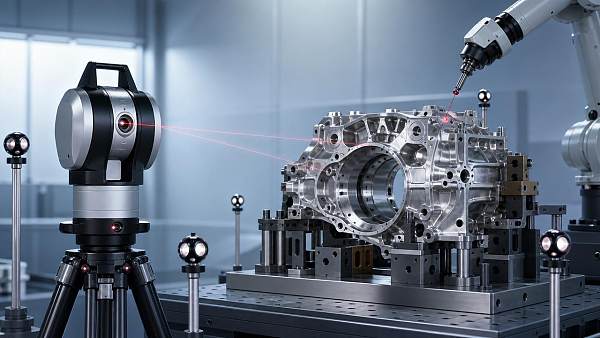
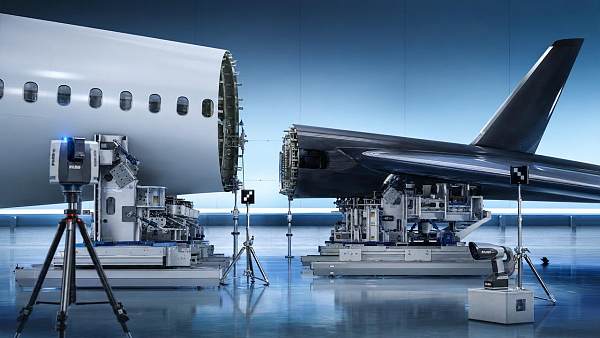
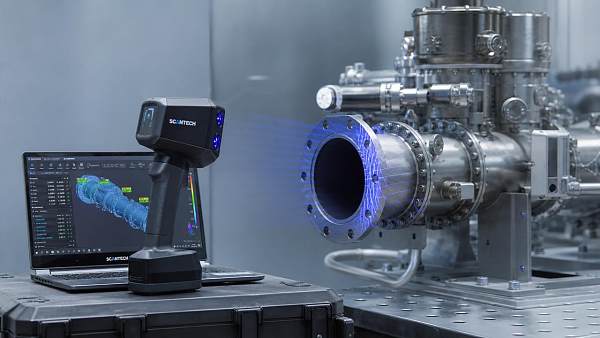
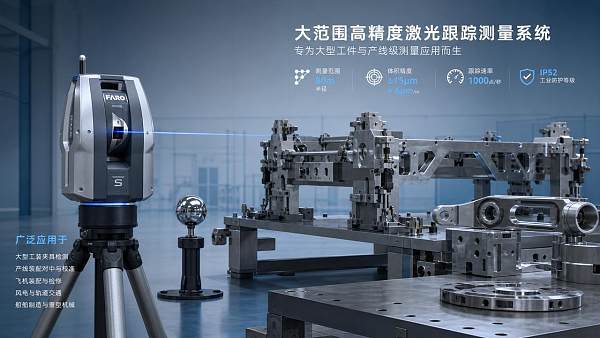
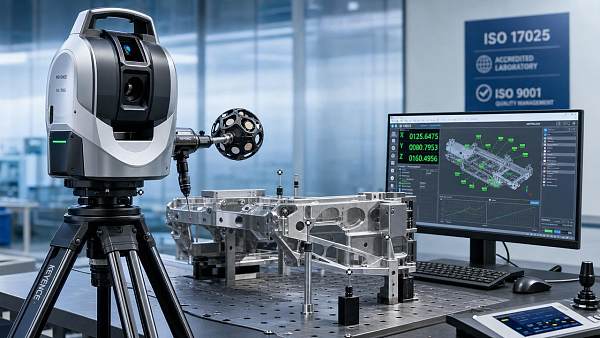
For B2B buyers and technical evaluators, the comparison between 3D scanning and laser trackers should be framed around use case fit. A handheld or mounted 3D scanner can capture dense point clouds across complex geometry in minutes, while a laser tracker can establish highly precise coordinates over 10 m, 20 m, or even larger envelopes with strong traceability for alignment and dimensional verification.
This article outlines where each technology delivers the strongest value, where risk increases, and how to build a practical inspection strategy that supports quality, throughput, and procurement confidence across multiple industries.
How the Two Technologies Differ in Large-Part Inspection
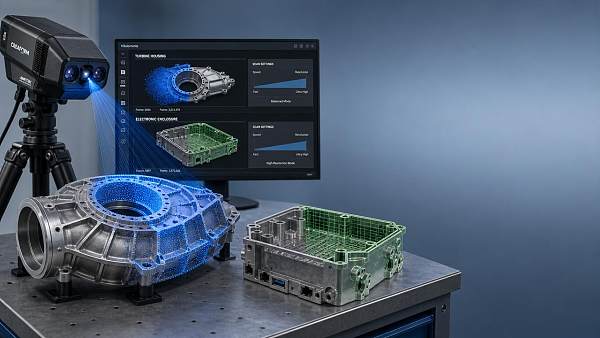
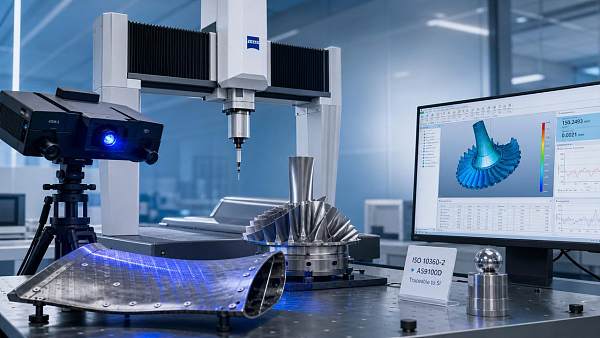
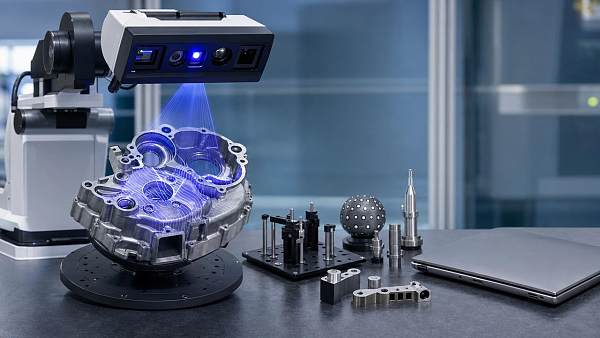
Although both systems are used in dimensional metrology, they are designed around different measurement logics. A 3D scanner captures surface geometry by collecting thousands to millions of points per second, making it useful for freeform surfaces, composite panels, castings, tooling, and parts with complex contours. A laser tracker, by contrast, measures discrete points in 3D space with very high positional fidelity over large volumes.
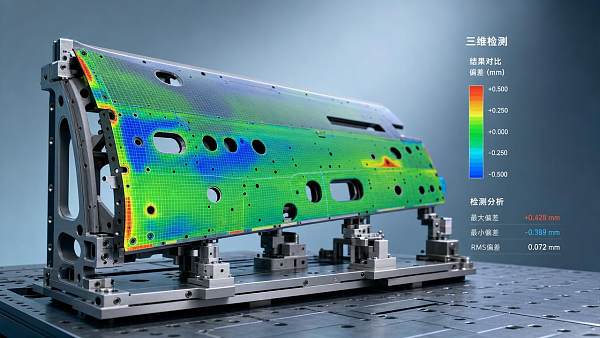
In practical terms, 3D scanning is often favored when coverage matters more than a small set of exact coordinate points. If a team must inspect flushness, surface variation, trim edges, deformation, or compare an as-built part to CAD across 80% to 100% of its visible surface, scanning is often the faster route. This is especially true when parts exceed 2 m and feature irregular shapes.
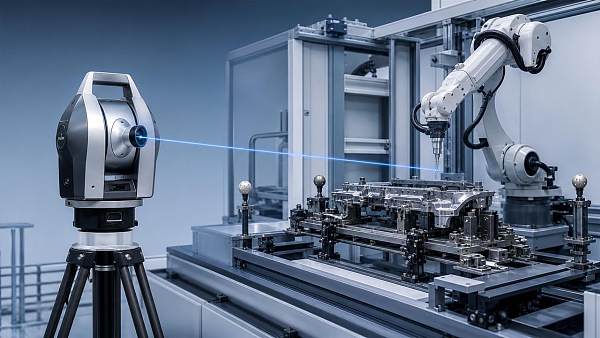
Laser trackers are usually stronger when the measurement task involves datum networks, jig setup, alignment, hole positions, assembly verification, and machine guidance. Their value rises when tolerances are tight, such as ±0.025 mm to ±0.100 mm on critical features, or when the inspection volume extends across 10 m to 30 m and the process depends on stable reference coordinates.
A common mistake is to compare both tools as if they compete in every project. In reality, they often solve different problems. One captures geometry density; the other secures coordinate certainty. In many plants, the best solution is not choosing only one system, but defining where each adds measurable value in the same workflow.
Typical measurement characteristics
The table below summarizes the operational differences that matter most during technical evaluation. Values vary by system design, environment, target type, stand-off distance, and calibration condition, so these should be treated as common industrial ranges rather than fixed specifications.
The key takeaway is that data density and coordinate precision are not the same purchasing objective. Teams that confuse them often overspend on a system that looks advanced but does not fit the inspection task, operator workflow, or tolerance structure of the production line.
When 3D Scanning Is the Better Fit
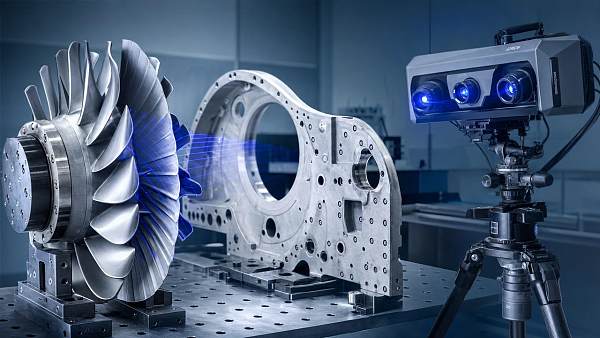
3D scanning is usually the better choice when the part has complex geometry, large surface area, or a need for rapid full-field comparison against nominal CAD. It is especially useful in industries where shape variation matters as much as single-point dimensions, including composite structures, stamped panels, molds, turbine covers, large castings, and formed sheet assemblies.
For operators and quality teams, one major advantage is speed of visual interpretation. A color map showing deviation bands such as ±0.5 mm, ±1.0 mm, or ±2.0 mm can reveal warpage, sink, springback, or assembly mismatch much faster than a report made from 25 discrete points. This can shorten root-cause review from several hours to under 30 minutes in repeat inspection scenarios.
Scanning also supports reverse engineering, digital archiving, and first-article analysis. If procurement teams are evaluating equipment for multi-department use, this broader utility matters. A scanner may serve inspection, tooling validation, maintenance documentation, and supplier incoming checks within the same 12-month budget cycle.
However, scanning is not automatically faster in every case. If the part requires target placement, surface preparation, alignment merges, or heavy mesh cleanup, the total cycle may expand. On reflective, dark, transparent, or highly polished materials, preparation time can become the deciding factor unless the selected optical system is suited to those surfaces.
Best use cases for 3D scanning
- Inspecting freeform surfaces where 1,000+ sampled regions provide more insight than 20 to 50 discrete points.
- Checking deformation, flushness, gap, trim, or contour changes on assemblies above 2 m to 6 m.
- Comparing supplier parts to CAD when tooling drift is suspected and visual evidence is needed for corrective action.
- Capturing as-built geometry for maintenance, retrofit, or fixture redesign where no current digital model exists.
Operational limits to consider
Scanning performance is sensitive to stand-off distance, line-of-sight obstruction, part movement, lighting, and thermal variation. In shop environments with vibration, airborne dust, or unstable fixtures, data consistency may vary between shifts. This is why many technical evaluators test repeatability over at least 3 runs, ideally across 2 operators and more than 1 part condition.
A strong buying process should also check software output. The scanner is only part of the solution. Registration quality, GD&T reporting, CAD alignment options, export compatibility, and operator training time often influence real return on investment more than raw capture speed listed in a brochure.
When Laser Trackers Deliver More Value
Laser trackers are often the preferred solution for large assemblies where reference geometry must be established with high confidence across long distances. In aerospace structures, rail bodies, large machine frames, heavy energy equipment, and assembly tooling, their role extends beyond inspection into alignment, setup, and process control.
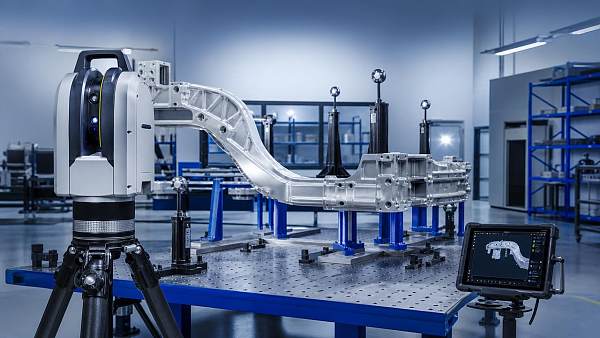
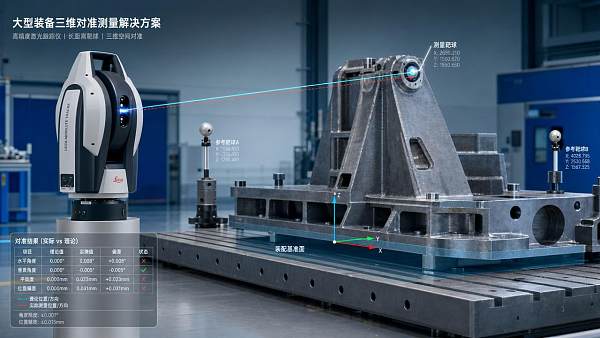
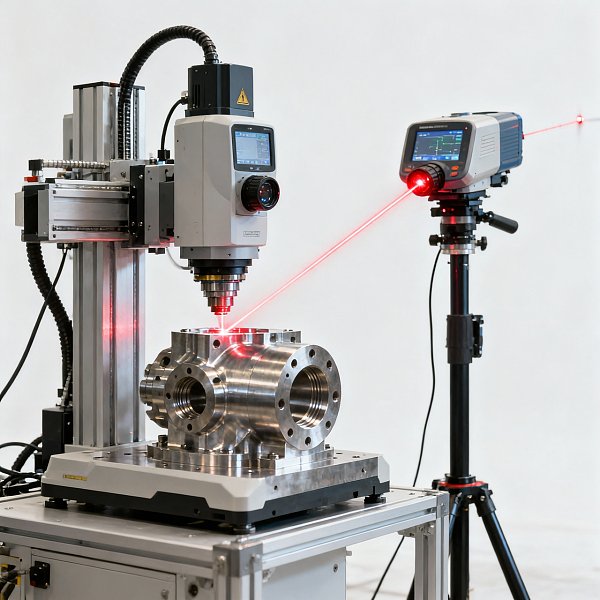
Their major advantage is large-volume precision tied to stable coordinate systems. If a team must confirm the position of holes, datums, tooling pins, and mating interfaces over 8 m, 15 m, or 25 m, a laser tracker can reduce uncertainty and support repeatable setup. This becomes critical when tolerance accumulation across several subassemblies can lead to costly rework.
From a project management perspective, laser trackers also help during installation and commissioning. Instead of measuring only final geometry, they can guide corrective movement during the build process. In some lines, avoiding one major rework event on a high-value fixture can justify the investment more clearly than final inspection throughput alone.
The trade-off is that trackers do not generate complete surface coverage by default. If the application requires full-form visualization, they may need to be paired with probing, photogrammetry, or scanning. That makes them highly effective for critical coordinate tasks, but less efficient when the primary need is broad surface deviation mapping.
Common scenarios where laser trackers outperform
The following comparison highlights tasks where trackers often bring stronger value than 3D scanning in large-part workflows.
For buyers, the table shows a recurring pattern: laser trackers are at their best when a few hundred strategically important points determine assembly success, while 3D scanning is stronger when the geometry itself must be seen, compared, and interpreted in high detail.
Environmental and workflow considerations
Tracker performance depends on visibility, line-of-sight continuity, and environmental stability. Temperature drift over 3°C to 5°C during a long measurement cycle can influence large-volume results if compensation practices are weak. Teams inspecting near heat sources, open doors, or moving cranes should evaluate setup discipline as carefully as instrument specification.
Operator workflow also matters. A system that is technically precise but requires excessive repositioning, poor access around the part, or specialist-only operation may create bottlenecks. In many facilities, the right answer is the tool that keeps the line moving while maintaining acceptable uncertainty, not the one with the most impressive laboratory number.
Selection Criteria for Engineers, Buyers, and Decision-Makers
A robust selection process should begin with the inspection objective, not the technology trend. Teams should define whether the project needs full-field surface data, coordinate-based verification, assembly guidance, supplier qualification, or a combination of these. Once the measurement purpose is clear, the choice between 3D scanning and laser trackers becomes more straightforward.
For procurement, five factors usually drive total value: tolerance target, part size, cycle-time expectation, software integration, and operator readiness. If a plant runs 20 to 50 large parts per week, capture speed and report automation may outweigh marginal improvements in absolute accuracy. If it inspects low-volume, high-value assemblies, traceability and confidence on critical datums may dominate.
Technical evaluators should also review calibration pathway and standards alignment. In regulated or export-sensitive sectors, inspection workflows often need clear linkage to ISO/IEC 17025 practices, NIST traceability concepts, and internal quality protocols. The instrument alone is not enough; the measurement system must support documented, repeatable decisions.
Distributors and integrators should pay attention to implementation burden. Training may take 2 to 5 days for basic operation, but effective deployment can require several weeks of process tuning, fixture strategy, and reporting template setup. Buyers who ignore this phase often underestimate the real time to stable production use.
A practical selection checklist
- Define the largest part envelope, such as 3 m, 8 m, or 20 m, and identify access constraints around it.
- List the critical tolerances by feature type: surface profile, hole position, flatness, alignment, or flush and gap.
- Estimate cycle time from setup to report, not just data capture. Include preparation, targets, alignment, and review.
- Check software outputs required by quality, engineering, and suppliers, including CAD comparison, GD&T, and export format.
- Validate repeatability through trial runs under real production conditions rather than showroom demonstrations.
Decision matrix for purchasing teams
The matrix below can be used during technical and commercial evaluation meetings to align engineering priorities with buying criteria.
This kind of structured evaluation prevents a common procurement error: selecting a system based on isolated specification figures instead of business fit, workflow compatibility, and quality impact over the next 3 to 5 years.
Implementation Risks, Hybrid Strategies, and Frequently Asked Questions
In real factories, the biggest inspection failures usually come from process design, not from instrument defects. Poor datum strategy, unstable fixturing, weak environmental control, and inconsistent operator training can undermine both 3D scanning and laser tracker results. That is why implementation planning should be treated as seriously as equipment selection.
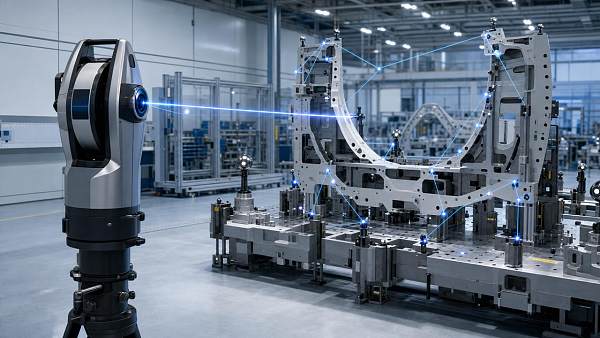
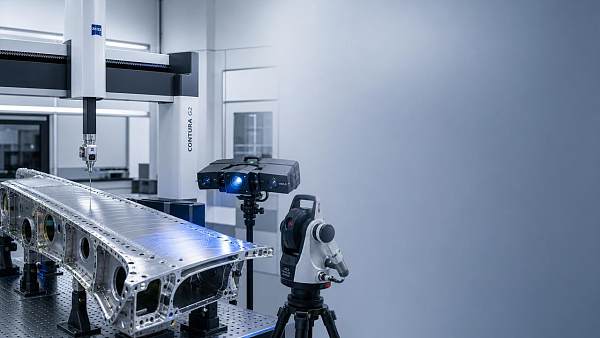
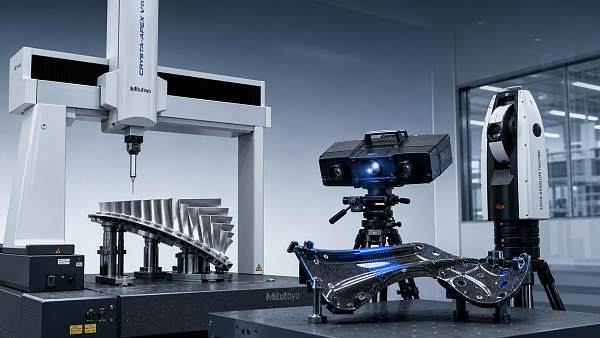
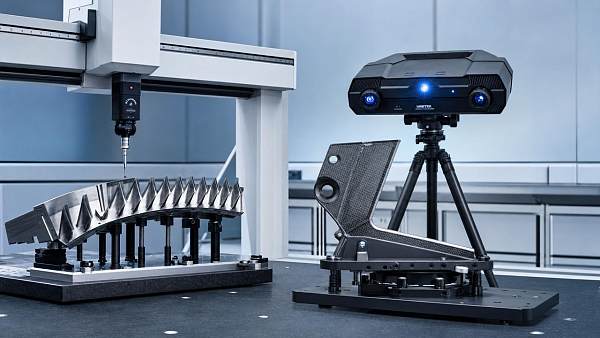
A hybrid workflow is often the most effective model for large-part inspection. For example, a laser tracker can establish the global coordinate frame and verify critical datums, while a 3D scanner captures local surfaces, contours, and fit-up conditions. This approach supports both high confidence and high coverage, particularly in aerospace, automotive body structures, and large tooling programs.
The business case for a hybrid strategy improves when rework cost is high. If one misaligned large assembly leads to 8 to 20 labor hours of correction, repeated use of two complementary systems may still lower total quality cost. The decision should be based on defect prevention value, not only on initial equipment price.
For organizations building digital manufacturing workflows, both technologies also contribute different data assets. Scanning supports digital twins and geometry archives, while trackers strengthen spatial control and assembly validation. Together, they can create a more actionable bridge between measurement and process correction.
Common implementation risks
- Using a scanner for ultra-critical datum tasks without validating uncertainty under production conditions.
- Using a laser tracker for broad surface analysis where thousands of local deviations matter more than point coordinates.
- Ignoring thermal and fixture stability during measurement cycles longer than 20 to 40 minutes.
- Buying software-limited systems that cannot generate the reporting formats required by quality and suppliers.
FAQ: Which is faster for large-part inspection?
For dense surface capture, 3D scanning is usually faster. For direct measurement of selected critical points and alignments, laser trackers can be faster because they reduce post-processing. The right comparison is total cycle time, including setup, target placement, alignment, report generation, and operator review.
FAQ: Which option is better for tight tolerances?
If the task centers on exact coordinate positions, hole locations, and datum relationships over large volumes, laser trackers are often the safer choice. If the tolerance question relates to full surface profile or deformation bands such as ±0.5 mm across large panels, 3D scanning may provide more decision-ready information.
FAQ: Can one system replace the other?
In some plants, yes, but only when inspection requirements are narrow and stable. In mixed manufacturing environments, replacement is uncommon because the technologies solve different metrology problems. Many high-value operations benefit more from a phased deployment strategy than from forcing one tool to cover every scenario.
For organizations comparing 3D scanning and laser trackers, the most reliable decision comes from matching the tool to the inspection objective, tolerance structure, and production workflow. Scanning excels in high-density geometry capture and visual deviation analysis, while laser trackers lead in large-volume coordinate accuracy, alignment, and datum-based verification.
G-IMS supports decision-makers who need measurable, standards-aware evaluation across advanced metrology, industrial sensors, and intelligent inspection workflows. If your team is planning a new inspection cell, upgrading a large-part quality process, or building a hybrid metrology strategy, now is the right time to assess fit, risk, and long-term value.
Contact us to discuss your application, request a tailored comparison framework, or explore broader intelligent-measurement solutions for scalable, high-confidence inspection.
Recommended News
 May 28, 2026Aerospace Metrology Tender Alerts: How to Spot Viable BidsMetrology tender alerts aerospace teams rely on can uncover high-value bids. Learn how to spot viable aerospace contracts, assess compliance, reduce risk, and bid with confidence.
 May 23, 2026Laser Tracker Manufacturer Comparison for Large AssemblyLaser tracker manufacturer comparison for large assembly: evaluate accuracy, stability, software integration, and lifecycle support to reduce alignment risk and improve throughput.
 May 22, 2026Advanced Metrology Solutions for Aerospace: Compare Before UpgradingAdvanced Metrology Solutions for Aerospace compared the smart way—evaluate accuracy, integration, compliance, and lifecycle cost before upgrading. Discover a faster, lower-risk path to better inspection results.
 May 20, 2026Aerospace Measurement Errors That Delay First Pass YieldAerospace Measurement errors can quietly reduce first pass yield. Learn where hidden uncertainty starts, how it delays production, and what to fix first for faster, more reliable aerospace output.
 May 19, 2026Next-Gen Laser Tracking: Accuracy vs SpeedNext-gen laser tracking technology news explained: learn when accuracy should lead and when speed drives value, with a practical checklist for smarter production decisions.
 May 17, 20263D Scanning Speed vs Resolution for Reverse Engineering3d scanning speed vs resolution explained for reverse engineering: learn how to balance scan speed, detail, accuracy, and workflow efficiency to reduce rework and choose smarter.
 May 15, 2026Laser Tracker Manufacturer Selection: Accuracy, Software, ServiceLaser tracker manufacturer selection now goes beyond accuracy. Compare software, calibration, integration, and service support to reduce risk and improve long-term measurement value.
 May 14, 2026Advanced Metrology Solutions for Aerospace: Where Accuracy Pays OffAdvanced Metrology Solutions for Aerospace help reduce risk, improve traceability, and boost production confidence with smarter inspection strategies for precision-critical programs.
 May 13, 2026Aerospace Measurement Methods for Large-Part AlignmentAerospace Measurement methods for large-part alignment: compare laser trackers, photogrammetry, 3D scanning, and portable CMMs to improve accuracy, traceability, and assembly efficiency.
 May 13, 20263D Scanning for Aerospace: Tolerance Risks to Watch Early3D Scanning for aerospace helps detect tolerance drift, datum errors, and assembly risks early—improving quality, compliance, and delivery confidence before delays grow costly.
 May 12, 2026Next-Gen Laser Tracking Technology News That MattersNext-gen laser tracking technology news reveals what truly impacts precision, automation, traceability, and ROI. Discover the updates that help teams reduce risk and make smarter investment decisions.
 May 09, 2026Innovations in Handheld 3D Scanning for Faster Field MeasurementInnovations in handheld 3D scanning are accelerating field measurement with faster capture, real-time validation, and portable accuracy—discover how teams reduce rework and speed decisions.
 May 07, 2026How Much Laser Tracker Measurement Range Do You Actually Need?Laser tracker measurement range: find the right fit for your plant. Learn how to balance accuracy, setup efficiency, and ROI to avoid overspending and choose smarter.
 May 07, 2026Laser Tracker Angular Accuracy vs Real-World Alignment ErrorsLaser tracker angular accuracy is only the start. Learn how setup, thermal drift, geometry, and operator practice drive real-world alignment errors before you trust critical measurement data.
 May 05, 2026Laser Tracker Manufacturer Checklist for High-Accuracy ProjectsLaser tracker manufacturer checklist for high-accuracy projects: compare accuracy, service, compliance, and total cost to choose the right supplier with confidence.
 May 04, 2026Advanced Metrology Solutions for Aerospace: When Higher Precision Pays OffAdvanced Metrology Solutions for Aerospace help reduce compliance risk, improve supplier qualification, and control lifecycle costs—see when higher precision delivers stronger ROI.
 May 03, 2026What to Ask Before Choosing a 3D Scanning Supplier3D Scanning supplier selection starts with the right questions. Learn how to evaluate accuracy, workflow, compliance, costs, and support to choose a supplier with confidence.
 May 03, 20263D Scanning for Aerospace: When Accuracy Changes the Outcome3D Scanning for aerospace helps teams catch deviations earlier, reduce rework, and improve traceable quality decisions—see how accuracy can reshape safety, schedule, and program outcomes.
 May 02, 2026Aerospace Measurement Challenges That Standard QA Often MissesAerospace Measurement risks often hide beyond standard QA. Learn the overlooked accuracy, traceability, and compliance challenges that impact safety—and how to detect them earlier.
 Apr 24, 20263D Scanning or Laser Trackers for Large Part Inspection3D Scanning or laser trackers for large part inspection? Compare accuracy, speed, Coordinate Measuring Machines, Industrial Sensors, IEEE Standards, and NIST Standards to choose the best fit.