Next-Gen Laser Tracking Technology News That Matters
Time
Click Count
For technical evaluators navigating precision manufacturing, next-gen laser tracking technology news is more than headlines—it signals shifts in accuracy, interoperability, and investment risk. The most relevant updates now involve automation, software intelligence, standard alignment, and field-ready stability. In complex industrial environments, these changes affect calibration speed, installation quality, digital traceability, and long-term system value.
What does next-gen laser tracking technology news actually reveal?
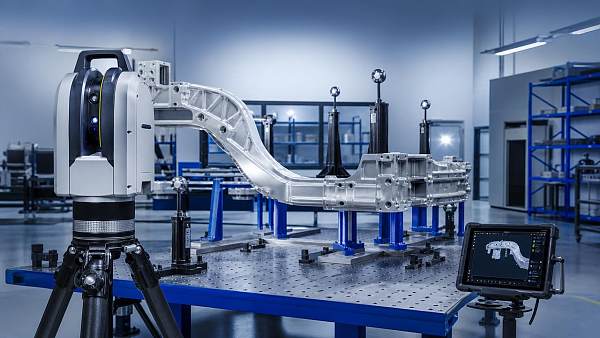
At a basic level, laser trackers measure three-dimensional positions with very high precision across large volumes. They support alignment, tooling verification, assembly guidance, and dimensional inspection.
However, next-gen laser tracking technology news usually points to deeper changes. It often reflects improvements in dynamic measurement, multi-sensor integration, and software-driven compensation.
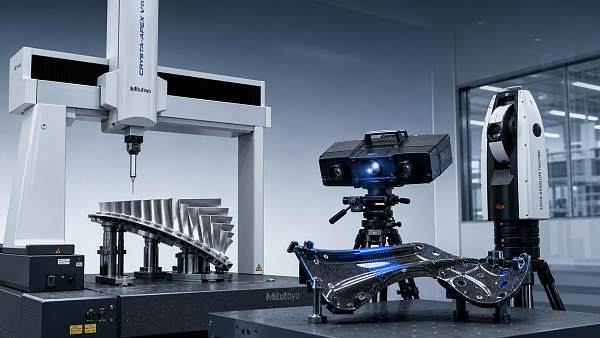
Recent developments show a move from standalone instruments toward connected measurement ecosystems. Trackers now interact with photogrammetry, robotic cells, CMM workflows, and cloud-based reporting platforms.
This matters because measurement quality no longer depends only on hardware accuracy. It also depends on data integrity, environmental compensation, and repeatable process control.
The strongest signals in next-gen laser tracking technology news include these themes:
- Higher accuracy over longer working volumes
- Better performance under thermal and vibration variation
- Faster initialization and target reacquisition
- Native integration with robotics and digital twins
- Improved traceability under ISO and NIST-aligned practices
In other words, the news matters when it changes measurable outcomes, not when it simply announces a new model.
Which applications are most affected by next-gen laser tracking technology news?
Large-structure manufacturing sees the fastest impact. Aerospace assembly, energy equipment alignment, machine tool calibration, and transportation body framing all benefit from improved volume accuracy.
Semiconductor and electronics environments also watch next-gen laser tracking technology news closely. Even where trackers are not used at nanoscale features, they support precision stage alignment and equipment installation.
In mixed-industry settings, the following use cases are especially important:
- Jig and fixture setup for high-repeatability production
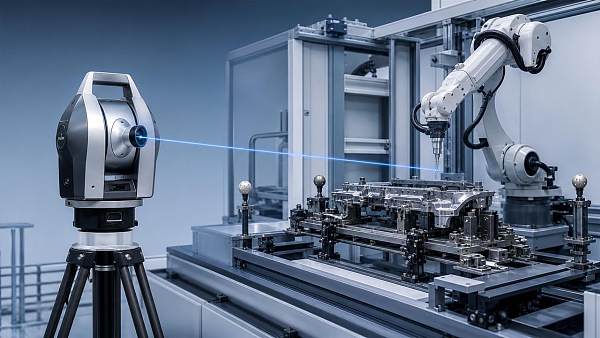
- Robot base alignment and path verification
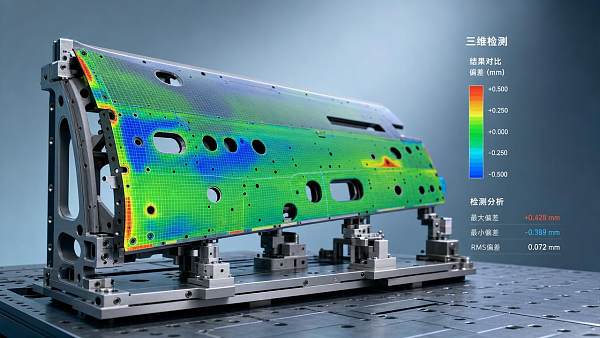
- In-line dimensional control for large assemblies
- Commissioning of automated production cells
- Maintenance checks after transport or collision events
The practical value increases when production cannot tolerate rework. If one alignment drift causes scrap, delays, or failed audits, tracker performance becomes a strategic variable.
That is why next-gen laser tracking technology news often attracts cross-functional attention. It affects process capability, compliance readiness, and digital manufacturing consistency.
How should emerging systems be compared beyond headline accuracy?
Published accuracy figures are useful, but insufficient. A next-generation tracker should be judged by full-system performance in realistic operating conditions.
Several criteria deserve close review before drawing conclusions from next-gen laser tracking technology news.
1. Environmental robustness
Temperature gradients, airflow, dust, and floor vibration can all degrade results. Systems with better compensation models maintain reliability outside laboratory conditions.
2. Workflow speed
Measurement throughput often matters more than peak precision. Faster setup, target lock recovery, and automated reporting reduce total inspection cycle time.
3. Software ecosystem
A tracker with weak software can create hidden costs. Compatibility with CAD, SPC, MES, and robot programming environments should be verified early.
4. Traceability and standards
Check whether the system supports documented calibration chains and recognized methods. ISO/IEC 17025 practices and NIST-referenced routines remain strong trust signals.
5. Upgrade path
Next-gen laser tracking technology news often emphasizes modularity. That matters when future needs may include scanning, automated cells, or remote diagnostics.
What risks are hidden behind fast-moving next-gen laser tracking technology news?
One common mistake is confusing innovation with readiness. A newly announced capability may not yet be proven in harsh production environments.
Another risk is overvaluing nominal precision while ignoring process fit. A tracker can be technically impressive and still fail to improve actual throughput.
Watch for these warning signs when reviewing next-gen laser tracking technology news:
- No clear uncertainty statement under realistic operating conditions
- Limited detail on software interoperability
- Undefined service intervals or calibration support
- Claims based only on ideal lab demonstrations
- Weak documentation for compliance-oriented industries
There is also a data governance issue. As trackers become more connected, measurement records, revision control, and cybersecurity become part of the quality conversation.
For organizations with regulated production, that point is especially important. Measurement data must remain trustworthy from acquisition to final audit trail.
How do cost, implementation time, and return on investment change?
The purchase price tells only part of the story. Real cost includes software licensing, training, recalibration, accessories, integration work, and downtime during deployment.
Next-gen laser tracking technology news often highlights automation because labor efficiency now shapes return on investment as much as raw measurement capability.
In many projects, value appears in four areas:
- Reduced rework and alignment errors
- Shorter commissioning and maintenance windows
- More consistent inspection records
- Improved readiness for digital manufacturing initiatives
Implementation time depends on system complexity. A basic portable setup may be productive quickly, while a robot-integrated measurement cell requires longer validation.
A useful planning method is to estimate value by avoided failures. If one prevented misalignment saves a shutdown, the business case may become obvious.
What should be included in a practical review checklist?
When next-gen laser tracking technology news appears, a structured review avoids rushed decisions. The goal is to connect technical announcements with operational evidence.
This checklist turns next-gen laser tracking technology news into a disciplined evaluation path. It also helps separate useful progress from marketing noise.
How should organizations respond to next-gen laser tracking technology news now?
Start by ranking measurement pain points. Focus on error sources that affect yield, assembly precision, maintenance time, or audit reliability.
Then map recent next-gen laser tracking technology news against those priorities. Not every innovation deserves immediate adoption, but some directly solve chronic process weaknesses.
A sensible next step is a controlled benchmark. Compare one emerging system against current methods using the same part geometry, environment, and reporting requirements.
For broader industrial benchmarking, G-IMS emphasizes a standards-based approach. Measurement systems should be evaluated by technical evidence, interoperability, and traceable performance under real production constraints.
In the end, next-gen laser tracking technology news matters when it leads to better decisions. The strongest results come from linking innovation to measurable operational gain, verified risk reduction, and durable process control.
Recommended News
 Sep 21, 2026When do laser trackers outperform fixed industrial measurement systems?Industrial Measurement Systems compared: learn when laser trackers deliver better portability, alignment accuracy, and cost efficiency for large, changing assemblies.
 Jul 08, 2026Handheld 3D Laser Scanner Accuracy: What Matters in Field UseHandheld 3d laser scanner accuracy depends on more than specs. Learn how surface, calibration, operator motion, environment, and software impact reliable field results.
 Jul 03, 2026Industrial 3D Laser Scanning Systems for Large-Part InspectionIndustrial 3D laser scanning systems help manufacturers inspect large parts with speed, accuracy, and traceable workflows. Explore key selection criteria for better quality decisions.
 Jun 30, 2026Laser Tracking System Updates: What Changed in Accuracy and WorkflowLaser tracking system updates explained: discover what changed in accuracy, target reacquisition, software integration, and workflow efficiency to improve inspection confidence and productivity.
 Jun 29, 20263D Laser Scanning Systems in Europe: Key Specs That Change Project Cost3D laser scanning systems Europe: discover how accuracy, range, speed, software compatibility, and compliance directly impact project cost, risk, and long-term ROI.
 May 28, 2026Aerospace Metrology Tender Alerts: How to Spot Viable BidsMetrology tender alerts aerospace teams rely on can uncover high-value bids. Learn how to spot viable aerospace contracts, assess compliance, reduce risk, and bid with confidence.
 May 23, 2026Laser Tracker Manufacturer Comparison for Large AssemblyLaser tracker manufacturer comparison for large assembly: evaluate accuracy, stability, software integration, and lifecycle support to reduce alignment risk and improve throughput.
 May 22, 2026Advanced Metrology Solutions for Aerospace: Compare Before UpgradingAdvanced Metrology Solutions for Aerospace compared the smart way—evaluate accuracy, integration, compliance, and lifecycle cost before upgrading. Discover a faster, lower-risk path to better inspection results.
 May 20, 2026Aerospace Measurement Errors That Delay First Pass YieldAerospace Measurement errors can quietly reduce first pass yield. Learn where hidden uncertainty starts, how it delays production, and what to fix first for faster, more reliable aerospace output.
 May 19, 2026Next-Gen Laser Tracking: Accuracy vs SpeedNext-gen laser tracking technology news explained: learn when accuracy should lead and when speed drives value, with a practical checklist for smarter production decisions.
 May 17, 20263D Scanning Speed vs Resolution for Reverse Engineering3d scanning speed vs resolution explained for reverse engineering: learn how to balance scan speed, detail, accuracy, and workflow efficiency to reduce rework and choose smarter.
 May 15, 2026Laser Tracker Manufacturer Selection: Accuracy, Software, ServiceLaser tracker manufacturer selection now goes beyond accuracy. Compare software, calibration, integration, and service support to reduce risk and improve long-term measurement value.
 May 14, 2026Advanced Metrology Solutions for Aerospace: Where Accuracy Pays OffAdvanced Metrology Solutions for Aerospace help reduce risk, improve traceability, and boost production confidence with smarter inspection strategies for precision-critical programs.
 May 13, 2026Aerospace Measurement Methods for Large-Part AlignmentAerospace Measurement methods for large-part alignment: compare laser trackers, photogrammetry, 3D scanning, and portable CMMs to improve accuracy, traceability, and assembly efficiency.
 May 13, 20263D Scanning for Aerospace: Tolerance Risks to Watch Early3D Scanning for aerospace helps detect tolerance drift, datum errors, and assembly risks early—improving quality, compliance, and delivery confidence before delays grow costly.
 May 12, 2026Next-Gen Laser Tracking Technology News That MattersNext-gen laser tracking technology news reveals what truly impacts precision, automation, traceability, and ROI. Discover the updates that help teams reduce risk and make smarter investment decisions.
 May 09, 2026Innovations in Handheld 3D Scanning for Faster Field MeasurementInnovations in handheld 3D scanning are accelerating field measurement with faster capture, real-time validation, and portable accuracy—discover how teams reduce rework and speed decisions.
 May 07, 2026How Much Laser Tracker Measurement Range Do You Actually Need?Laser tracker measurement range: find the right fit for your plant. Learn how to balance accuracy, setup efficiency, and ROI to avoid overspending and choose smarter.
 May 07, 2026Laser Tracker Angular Accuracy vs Real-World Alignment ErrorsLaser tracker angular accuracy is only the start. Learn how setup, thermal drift, geometry, and operator practice drive real-world alignment errors before you trust critical measurement data.
 May 05, 2026Laser Tracker Manufacturer Checklist for High-Accuracy ProjectsLaser tracker manufacturer checklist for high-accuracy projects: compare accuracy, service, compliance, and total cost to choose the right supplier with confidence.
 May 04, 2026Advanced Metrology Solutions for Aerospace: When Higher Precision Pays OffAdvanced Metrology Solutions for Aerospace help reduce compliance risk, improve supplier qualification, and control lifecycle costs—see when higher precision delivers stronger ROI.
 May 03, 2026What to Ask Before Choosing a 3D Scanning Supplier3D Scanning supplier selection starts with the right questions. Learn how to evaluate accuracy, workflow, compliance, costs, and support to choose a supplier with confidence.
 May 03, 20263D Scanning for Aerospace: When Accuracy Changes the Outcome3D Scanning for aerospace helps teams catch deviations earlier, reduce rework, and improve traceable quality decisions—see how accuracy can reshape safety, schedule, and program outcomes.
 May 02, 2026Aerospace Measurement Challenges That Standard QA Often MissesAerospace Measurement risks often hide beyond standard QA. Learn the overlooked accuracy, traceability, and compliance challenges that impact safety—and how to detect them earlier.