3D Scanning Speed vs Resolution for Reverse Engineering
Time
Click Count
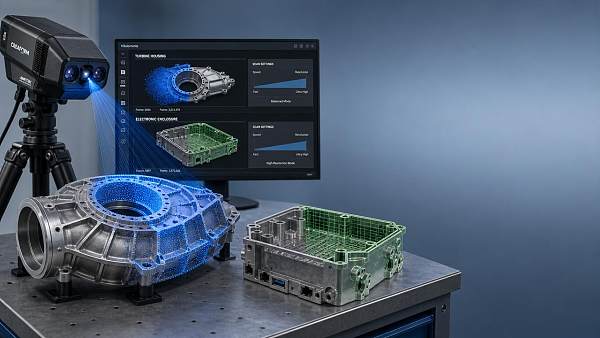
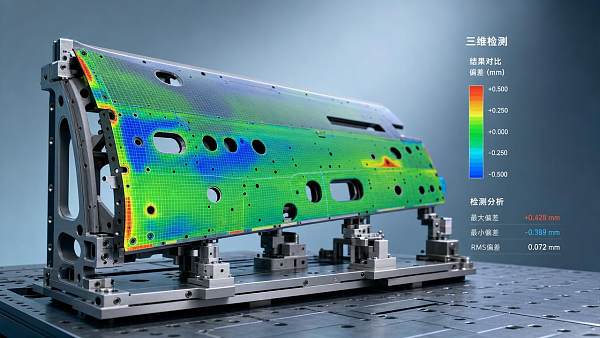
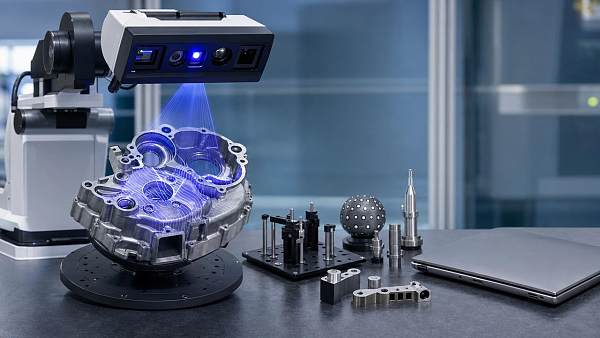
When evaluating 3d scanning speed vs resolution for reverse engineering, technical assessors must balance data quality, throughput, and downstream usability.
A faster scan shortens project cycles, yet insufficient resolution can weaken feature capture, dimensional confidence, and CAD reconstruction quality.
Across industrial equipment, electronics, aerospace parts, tooling, and legacy components, this trade-off directly affects inspection effort, redesign cost, and project risk.
This article explains how to judge 3d scanning speed vs resolution in real workflows, using practical criteria aligned with advanced metrology and data-intelligence decision making.
Definition of 3D Scanning Speed and Resolution
In reverse engineering, scanning speed usually means how quickly a system captures measurable surface data over time or area.
Resolution describes the scanner’s ability to distinguish fine detail, including point spacing, mesh density, and minimum feature detectability.
These terms are often confused with accuracy, but they are not identical.
A scanner may generate dense data quickly, yet still miss true geometry if calibration, optics, or surface conditions reduce accuracy.
Therefore, 3d scanning speed vs resolution should never be judged in isolation from repeatability, noise level, and alignment stability.
Key measurement distinctions
- Speed: capture rate, field coverage, and setup efficiency.
- Resolution: point spacing, edge definition, and small-feature visibility.
- Accuracy: closeness to true dimensions.
- Usability: suitability for meshing, surfacing, and CAD modeling.
Why the Industry Focuses on 3D Scanning Speed vs Resolution
The discussion around 3d scanning speed vs resolution has expanded because reverse engineering now supports faster product iteration and tighter tolerance control.
Many projects no longer scan only simple mechanical parts.
They include worn castings, reflective housings, compact electronics, composite structures, and freeform surfaces requiring detailed digital reconstruction.
At the same time, production and R&D teams expect shorter lead times, better traceability, and smoother integration with simulation and manufacturing software.
This is why the best decision is rarely the fastest scanner or the highest nominal resolution.
The best decision is the one that matches geometry complexity, required deliverables, and total processing burden.
Business Value of Balancing Speed and Resolution
The practical value of optimizing 3d scanning speed vs resolution appears across the full reverse engineering chain.
It affects labor hours, software performance, engineering rework, and confidence in final part models.
If scanning is too slow, throughput falls and project queues expand.
If resolution is too low, missing details force rescans or manual geometry assumptions.
If resolution is unnecessarily high, file sizes grow, processing slows, and modeling effort increases without proportional benefit.
Common business outcomes
- Reduced time from physical part to editable CAD.
- Lower risk of overlooked features or hidden wear.
- More stable meshing and surface fitting.
- Better alignment with quality and metrology records.
- Improved cost control in multi-part scanning programs.
For an intelligence-driven measurement environment, this balance supports the transition from raw data capture to actionable engineering decisions.
Typical Reverse Engineering Scenarios and Parameter Priorities
Different use cases require different answers to the 3d scanning speed vs resolution question.
A broad surface model for packaging studies does not need the same detail as a turbine blade edge or connector geometry.
In many projects, hybrid acquisition is the most effective method.
Teams scan the full object quickly, then rescan selected zones at finer resolution for edges, fillets, threads, slots, or engraved markings.
How to Evaluate the Trade-Off in Practice
A reliable assessment of 3d scanning speed vs resolution starts with the final engineering output, not the scanner brochure.
The required deliverable determines how much data is actually useful.
Practical evaluation steps
- Define the end goal: mesh archive, parametric CAD, inspection comparison, or tool redesign.
- Identify critical features: edges, hole patterns, sealing faces, ribs, and wear regions.
- Set acceptable tolerance and feature-size thresholds.
- Test scan representative surfaces, including reflective, dark, or textured areas.
- Measure processing time for alignment, cleanup, meshing, and CAD extraction.
- Compare total workflow time, not only raw capture time.
This workflow often reveals that a slightly slower but cleaner scan outperforms a faster scan that demands heavy post-processing.
It also shows when ultra-dense data creates unnecessary software load with little modeling advantage.
Frequent Mistakes in 3D Scanning Speed vs Resolution Decisions
Several recurring errors distort 3d scanning speed vs resolution decisions in reverse engineering programs.
- Assuming higher resolution always improves results.
- Ignoring material reflectivity and surface preparation needs.
- Choosing based on peak capture rate rather than validated workflow output.
- Overlooking the role of fixturing, calibration, and operator consistency.
- Scanning all regions equally, even when only a few features drive design intent.
These mistakes increase rescans, inflate storage demand, and complicate digital model approval.
A disciplined methodology reduces those risks and improves repeatability across varied part families.
Implementation Guidance for Industrial Measurement Workflows
Within advanced metrology environments, successful control of 3d scanning speed vs resolution depends on system benchmarking and data governance.
That means validating scanner behavior against realistic materials, geometry classes, and downstream software conditions.
Recommended implementation points
- Create scan recipes by part category, not one universal setting.
- Document resolution levels tied to feature size and tolerance bands.
- Track total cycle time from setup to validated CAD output.
- Use benchmark artifacts to compare scanners under repeatable conditions.
- Align data practices with traceability expectations and recognized metrology standards.
Organizations working within precision-focused frameworks often benefit from independent benchmarking repositories and standards-based evaluation methods.
This is where multidisciplinary institutions such as G-IMS add value through technical comparison, workflow interpretation, and measurement-focused intelligence.
Next-Step Framework for Better Scanner Selection
The central lesson of 3d scanning speed vs resolution is simple: select data quality according to decision value, not specification headlines.
For reverse engineering, the right balance is the one that captures critical geometry, controls processing effort, and supports reliable reconstruction.
A practical next step is to test several representative parts, compare full workflow timing, and verify whether captured detail improves final engineering outcomes.
By structuring evaluation around part complexity, tolerance needs, and downstream use, teams can make more confident and more economical scanning decisions.
In that context, 3d scanning speed vs resolution becomes not a theoretical debate, but a measurable path to better industrial intelligence and more usable digital assets.
Recommended News
 Sep 21, 2026When do laser trackers outperform fixed industrial measurement systems?Industrial Measurement Systems compared: learn when laser trackers deliver better portability, alignment accuracy, and cost efficiency for large, changing assemblies.
 Jul 08, 2026Handheld 3D Laser Scanner Accuracy: What Matters in Field UseHandheld 3d laser scanner accuracy depends on more than specs. Learn how surface, calibration, operator motion, environment, and software impact reliable field results.
 Jul 03, 2026Industrial 3D Laser Scanning Systems for Large-Part InspectionIndustrial 3D laser scanning systems help manufacturers inspect large parts with speed, accuracy, and traceable workflows. Explore key selection criteria for better quality decisions.
 Jun 30, 2026Laser Tracking System Updates: What Changed in Accuracy and WorkflowLaser tracking system updates explained: discover what changed in accuracy, target reacquisition, software integration, and workflow efficiency to improve inspection confidence and productivity.
 Jun 29, 20263D Laser Scanning Systems in Europe: Key Specs That Change Project Cost3D laser scanning systems Europe: discover how accuracy, range, speed, software compatibility, and compliance directly impact project cost, risk, and long-term ROI.
 May 28, 2026Aerospace Metrology Tender Alerts: How to Spot Viable BidsMetrology tender alerts aerospace teams rely on can uncover high-value bids. Learn how to spot viable aerospace contracts, assess compliance, reduce risk, and bid with confidence.
 May 23, 2026Laser Tracker Manufacturer Comparison for Large AssemblyLaser tracker manufacturer comparison for large assembly: evaluate accuracy, stability, software integration, and lifecycle support to reduce alignment risk and improve throughput.
 May 22, 2026Advanced Metrology Solutions for Aerospace: Compare Before UpgradingAdvanced Metrology Solutions for Aerospace compared the smart way—evaluate accuracy, integration, compliance, and lifecycle cost before upgrading. Discover a faster, lower-risk path to better inspection results.
 May 20, 2026Aerospace Measurement Errors That Delay First Pass YieldAerospace Measurement errors can quietly reduce first pass yield. Learn where hidden uncertainty starts, how it delays production, and what to fix first for faster, more reliable aerospace output.
 May 19, 2026Next-Gen Laser Tracking: Accuracy vs SpeedNext-gen laser tracking technology news explained: learn when accuracy should lead and when speed drives value, with a practical checklist for smarter production decisions.
 May 17, 20263D Scanning Speed vs Resolution for Reverse Engineering3d scanning speed vs resolution explained for reverse engineering: learn how to balance scan speed, detail, accuracy, and workflow efficiency to reduce rework and choose smarter.
 May 15, 2026Laser Tracker Manufacturer Selection: Accuracy, Software, ServiceLaser tracker manufacturer selection now goes beyond accuracy. Compare software, calibration, integration, and service support to reduce risk and improve long-term measurement value.
 May 14, 2026Advanced Metrology Solutions for Aerospace: Where Accuracy Pays OffAdvanced Metrology Solutions for Aerospace help reduce risk, improve traceability, and boost production confidence with smarter inspection strategies for precision-critical programs.
 May 13, 2026Aerospace Measurement Methods for Large-Part AlignmentAerospace Measurement methods for large-part alignment: compare laser trackers, photogrammetry, 3D scanning, and portable CMMs to improve accuracy, traceability, and assembly efficiency.
 May 13, 20263D Scanning for Aerospace: Tolerance Risks to Watch Early3D Scanning for aerospace helps detect tolerance drift, datum errors, and assembly risks early—improving quality, compliance, and delivery confidence before delays grow costly.
 May 12, 2026Next-Gen Laser Tracking Technology News That MattersNext-gen laser tracking technology news reveals what truly impacts precision, automation, traceability, and ROI. Discover the updates that help teams reduce risk and make smarter investment decisions.
 May 09, 2026Innovations in Handheld 3D Scanning for Faster Field MeasurementInnovations in handheld 3D scanning are accelerating field measurement with faster capture, real-time validation, and portable accuracy—discover how teams reduce rework and speed decisions.
 May 07, 2026How Much Laser Tracker Measurement Range Do You Actually Need?Laser tracker measurement range: find the right fit for your plant. Learn how to balance accuracy, setup efficiency, and ROI to avoid overspending and choose smarter.
 May 07, 2026Laser Tracker Angular Accuracy vs Real-World Alignment ErrorsLaser tracker angular accuracy is only the start. Learn how setup, thermal drift, geometry, and operator practice drive real-world alignment errors before you trust critical measurement data.
 May 05, 2026Laser Tracker Manufacturer Checklist for High-Accuracy ProjectsLaser tracker manufacturer checklist for high-accuracy projects: compare accuracy, service, compliance, and total cost to choose the right supplier with confidence.
 May 04, 2026Advanced Metrology Solutions for Aerospace: When Higher Precision Pays OffAdvanced Metrology Solutions for Aerospace help reduce compliance risk, improve supplier qualification, and control lifecycle costs—see when higher precision delivers stronger ROI.
 May 03, 2026What to Ask Before Choosing a 3D Scanning Supplier3D Scanning supplier selection starts with the right questions. Learn how to evaluate accuracy, workflow, compliance, costs, and support to choose a supplier with confidence.
 May 03, 20263D Scanning for Aerospace: When Accuracy Changes the Outcome3D Scanning for aerospace helps teams catch deviations earlier, reduce rework, and improve traceable quality decisions—see how accuracy can reshape safety, schedule, and program outcomes.
 May 02, 2026Aerospace Measurement Challenges That Standard QA Often MissesAerospace Measurement risks often hide beyond standard QA. Learn the overlooked accuracy, traceability, and compliance challenges that impact safety—and how to detect them earlier.