Metrology in Electric Vehicle Manufacturing: Costly Gaps
Time
Click Count
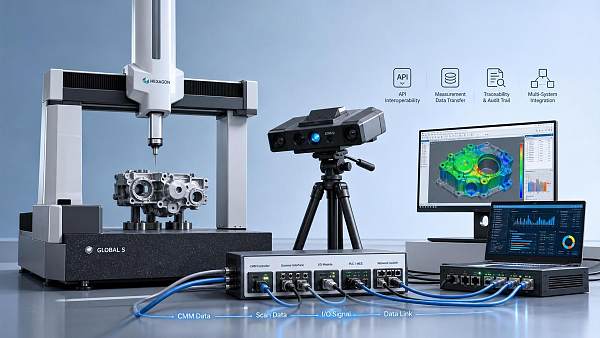
As EV production scales, even tiny measurement errors can trigger costly rework, battery misalignment, and quality failures across global plants. Metrology in electric vehicle manufacturing is no longer a technical detail but a strategic control point for zero-defect output, compliance, and margin protection. Hidden gaps often appear between design intent, process capability, and final verification, creating losses that are difficult to see until warranty claims or line stoppages appear.
The challenge is not simply owning advanced instruments. The real issue is whether measurement data is trusted, connected, repeatable, and fast enough to guide production decisions. In complex EV programs, metrology in electric vehicle manufacturing must support battery packs, body structures, e-drive assemblies, power electronics, and supplier parts under one control logic.
Why a checklist approach matters
A checklist forces consistent judgment across plants, suppliers, launch teams, and quality systems. It reduces the risk of treating measurement as a lab-only function while defects are being created on the shop floor. For EV platforms with tight geometric tolerances and fast engineering changes, structured review is often the difference between stable ramp-up and recurring containment actions.
Metrology in electric vehicle manufacturing also cuts across multiple disciplines. Optical systems, CMMs, in-line vision, electrical test, environmental monitoring, and calibration governance must all work together. Without a checklist, organizations tend to optimize one station while missing system-level drift, correlation failure, or data latency.
Core checklist for finding costly metrology gaps
- Map every critical-to-quality feature from cell, module, pack, body, and drive unit drawings to the actual measurement method used at incoming, in-process, and final inspection stages.
- Verify correlation between design tolerances and gauge capability, ensuring Cg/Cgk, GR&R, bias, linearity, and stability are acceptable for each high-risk EV characteristic.
- Check whether metrology in electric vehicle manufacturing is in-line, near-line, or offline by need, not by legacy equipment placement or convenience.
- Confirm battery tray, module seating, and pack flatness measurements reflect real assembly conditions, including fixture loads, thermal expansion, and fastening sequence effects.
- Audit datum strategy across stamping, body-in-white, battery housing, and final assembly so reference frames stay consistent from prototype through volume production.
- Review cycle time against line takt time, because accurate data that arrives too late still allows scrap, rework, and downstream defect multiplication.
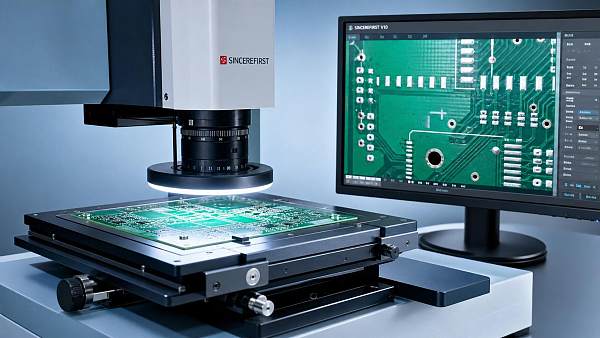
- Evaluate surface inspection capability for reflective metals, coated busbars, adhesive beads, and glossy polymer parts that can confuse non-contact optical systems.
- Validate supplier measurement reports with independent benchmarking, especially for castings, machined e-axle housings, connectors, and safety-relevant battery interfaces.
- Trace calibration status, environmental conditions, and software revision history to each dataset so deviations can be explained and legally defended if needed.
- Connect measurement outputs to SPC, MES, and corrective action workflows so metrology in electric vehicle manufacturing drives action instead of passive reporting.
Where gaps usually appear in EV production
Battery pack and enclosure assembly
Battery systems concentrate some of the highest hidden costs. Flatness error, cell spacing deviation, cooling plate variation, or seal bead inconsistency can lead to thermal risk, leak paths, or assembly force imbalance. These issues often pass early checks when measurement is performed on isolated parts rather than loaded assemblies.
Metrology in electric vehicle manufacturing must therefore include dimensional inspection, surface profile analysis, torque-related displacement checks, and environmental monitoring. Temperature and humidity variation can shift both the part and the measuring system, especially in large aluminum enclosures.
Body-in-white and closure fit
EV platforms often use mixed materials and new joining methods. That increases sensitivity to datum mismatch and springback behavior. A body may pass dimensional audit yet still create poor pack integration, door flush issues, or sealing problems later.
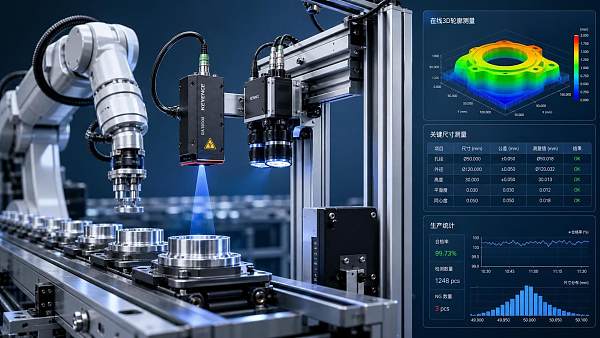
In this area, metrology in electric vehicle manufacturing should combine in-line scanning with fixture validation and weld process feedback. The key is not only measuring gaps and flushness, but linking shape variation to root causes in clamping, tooling wear, or thermal distortion.
E-motor, inverter, and power electronics
Electrical and mechanical tolerances meet here. Rotor-stator concentricity, bearing seat geometry, connector alignment, and solder integrity all influence performance and reliability. A purely dimensional strategy misses the interaction between geometry and electrical behavior.
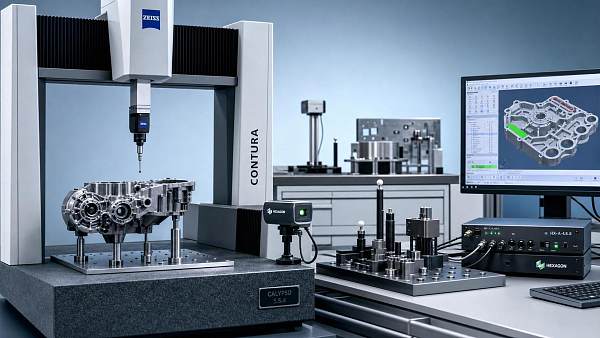
Strong metrology in electric vehicle manufacturing links coordinate measurement, vision inspection, and high-frequency electrical test. Correlation between physical dimensions and signal performance helps identify failure modes earlier, especially in high-speed switching systems.
Commonly overlooked risk items
Measurement system drift hidden by pass rates
A stable pass rate can hide gradual drift when tolerances are wide or process capability is temporarily strong. By the time failures appear, large suspect inventories may already exist. Trend analysis and master-part routines are essential protections.
Poor cross-plant correlation
Global EV programs often compare results from different factories using different fixtures, software versions, or inspection routines. If correlation is weak, engineering decisions become inconsistent. One plant may sort good parts that another plant would release.
Underspecified environmental control
Large structures, optical systems, and precision electronics react to thermal shifts, vibration, dust, and humidity. When environmental conditions are not linked to the dataset, root-cause analysis becomes speculative and corrective action slows.
Disconnected metrology and production response
Many plants collect high-quality data but fail to trigger machine offsets, containment, or supplier alerts quickly enough. Metrology in electric vehicle manufacturing only creates value when the feedback loop is short and ownership is clear.
Execution guidance for stronger control
- Prioritize features by defect cost, safety relevance, and downstream amplification instead of measuring everything with the same frequency.
- Standardize datums, programs, reporting logic, and uncertainty statements across sites before major EV platform launches.
- Deploy hybrid architectures that combine in-line speed with offline reference measurement for periodic truth-checking.
- Use digital traceability for calibration, environmental data, operator access, and software changes to protect audit readiness.
- Benchmark suppliers and internal lines against ISO/IEC 17025-aligned practices where dimensional or sensor-derived data affects release decisions.
For advanced operations, the next step is integrating metrology with predictive analytics. Historical dimensional drift, optical signatures, and electrical test patterns can signal process instability before nonconforming parts are built at scale. This is especially useful in battery, precision casting, and high-volume final assembly operations.
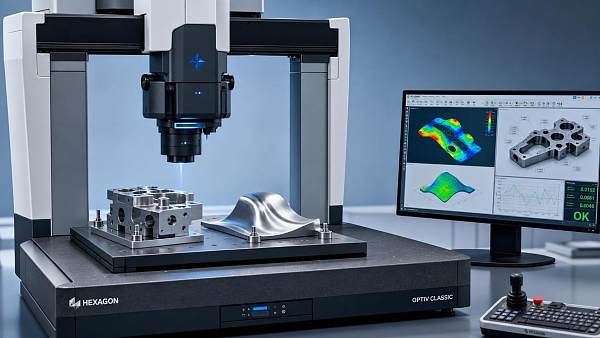
Independent benchmarking also matters. A neutral technical reference can compare CMM performance, 3D scanning reliability, vision-system limitations, and sensor traceability against international standards. That reduces the risk of investing in impressive hardware that does not solve the actual production failure mode.
Conclusion and next action
Metrology in electric vehicle manufacturing should be treated as a production-control system, not a support function. The costly gaps usually come from weak correlation, slow feedback, poor datum discipline, and unverified supplier data. These failures erode yield, launch timing, and warranty performance long before they appear in headline metrics.
Start with a plant-by-plant checklist review of critical EV features, measurement capability, and action-loop speed. Then compare the results against recognized technical standards and cross-site benchmarks. That practical sequence reveals where metrology in electric vehicle manufacturing is protecting margin, and where it is quietly allowing risk to accumulate.
Recommended News
 Oct 02, 2026When vision measuring machines deliver the accuracy a part requiresVision Measuring Machines for dimensional inspection: learn when optical metrology delivers reliable accuracy, validated uncertainty, and faster quality decisions.
 Sep 25, 2026When does tech consulting pay off for an AI metrology project?Tech consulting pays off in AI metrology when it reduces measurement risk, improves vendor selection, and supports reliable production decisions.
 Sep 23, 2026How AI metrology systems for electronics improve PCB inspection accuracyAI Metrology Systems for electronics improve PCB inspection accuracy with calibrated measurement, intelligent defect classification, traceability, and actionable process insights.
 Aug 15, 2026How to benchmark a metrology system before making a purchaseMetrology system benchmarking helps buyers compare accuracy, repeatability, compliance, and total cost before purchase.
 Aug 13, 2026How to Compare Bridge Coordinate Measurement Systems for Accuracy, Volume, and ThroughputBridge coordinate measurement systems compared the smart way: learn how to balance accuracy, measurement volume, and throughput to choose a CMM that fits real parts, workflows, and production goals.
 Aug 12, 2026How to Evaluate Industrial Measurement Systems for Assembly Tolerance ControlIndustrial measurement systems for assembly: learn how to evaluate accuracy, repeatability, integration, and cycle time to improve tolerance control and avoid costly selection mistakes.
 Jul 18, 2026How to Evaluate Automatic Vision Measuring Machines for Accuracy and ThroughputAutomatic Vision Measuring Machines: learn how to evaluate accuracy, repeatability, software, and real-world throughput to choose a system that boosts quality and production confidence.
 Jul 12, 2026How to Compare 3D Optical Measurement Systems for Tight-Tolerance Parts3D optical measurement systems for tight-tolerance parts: learn how to compare accuracy, repeatability, surface handling, software, and traceability to choose with confidence.
 Jul 11, 2026Inline Metrology System Pricing: What Drives Total Cost in 2026Inline metrology system pricing in 2026 depends on more than hardware. Learn the real cost drivers—software, integration, uptime, and ROI—to compare vendors and approve budgets with confidence.
 Jul 11, 2026Non-Contact Metrology System for Electronics: Key Accuracy FactorsNon-contact metrology system for electronics: discover the key factors behind true accuracy, from optics and calibration to software, drift, and reflective surfaces.
 Jul 10, 2026When a Measurement Platform for Automation Improves ThroughputMeasurement platform for automation boosts throughput by speeding inspection, reducing drift, and enabling faster corrective action. See how smarter measurement drives yield, quality, and ROI.
 Jul 09, 2026Vision Measuring Machines for PCB Inspection: What Affects Accuracy MostVision Measuring Machines for PCB inspection: discover the key factors that impact accuracy most, from optics and lighting to calibration and software, and learn how to improve PCB quality control.
 Jul 09, 20263D Scanning Factory Setup: Common Errors and How to Avoid Them3D scanning factory setup often fails before launch due to poor planning, weak validation, and disconnected data. Learn the common errors and how to avoid costly rework.
![]() Jul 07, 2026Automated Dimensional Measurement Systems: Key Accuracy Limits to CheckAutomated dimensional measurement systems: learn the key accuracy limits to check, from calibration drift to environmental effects, and compare platforms with confidence.
Jul 07, 2026Automated Dimensional Measurement Systems: Key Accuracy Limits to CheckAutomated dimensional measurement systems: learn the key accuracy limits to check, from calibration drift to environmental effects, and compare platforms with confidence. Jul 06, 2026Closed Loop Automated Metrology for Faster Process ControlClosed loop automated metrology helps manufacturers speed process control, reduce scrap, and correct variation in real time. Learn how it improves quality, uptime, and production stability.
 Jul 03, 2026How to Compare an Aerospace Measurement Supplier Beyond PriceAerospace measurement supplier selection goes beyond price. Learn how to compare calibration, traceability, software, service, and lifecycle value to reduce risk.
 Jul 03, 2026Industrial Measurement Equipment Cost: What Drives the BudgetIndustrial measurement equipment cost depends on more than price. Learn what drives budget, hidden lifecycle expenses, compliance, software, and downtime risk to compare options smarter.
 Jul 02, 2026Choosing a Non-Contact Metrology System for AutomationNon-contact metrology system for automation: learn how to balance accuracy, speed, integration, and ROI to choose a solution that improves quality and keeps production moving.
 Jul 02, 2026Touch Probe vs Scanning CMM: Which Fits Better?Coordinate Measuring Machines touch probe or scanning CMM? Compare speed, data depth, and cost to choose the best fit for your inspection needs.
 Jul 02, 2026How Inline Metrology Improves Manufacturing YieldManufacturing inline metrology helps improve yield by catching drift, defects, and process variation in real time. Learn how the right fit boosts quality, control, and throughput.
 Jul 01, 2026Coordinate Measuring Machines Optical: Selection Guide by Use CaseCoordinate Measuring Machines optical selection starts with use case. Learn how to match accuracy, throughput, geometry, and data workflow to choose the right system.
 Jun 24, 2026Smart Hotel Energy Efficiency: Where Savings Actually Come FromSmart hotel energy efficiency starts with better measurement and control—not just new devices. Learn where real hotel energy savings come from and how to improve comfort, performance, and ROI.
 Jun 18, 2026Metrology Software API Interoperability: Key Checks Before IntegrationMetrology software API interoperability explained: learn the 6 key checks to verify data integrity, traceability, scalability, and compliance before integration.
 Jun 15, 2026High Accuracy Quality Control Systems ExplainedHigh Accuracy Quality Control Systems explained: learn how precision metrology, analytics, and traceable standards reduce defects, improve compliance, and strengthen smarter manufacturing decisions.