Digital Twins in Metrology: Gains and Limits
Time
Click Count
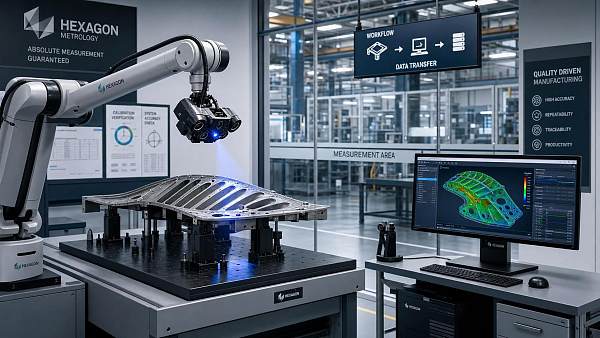
Digital twins are moving metrology from record-keeping to real-time control
As manufacturers pursue zero-defect production and faster decision cycles, the impact of digital twins on metrology is becoming impossible to ignore.
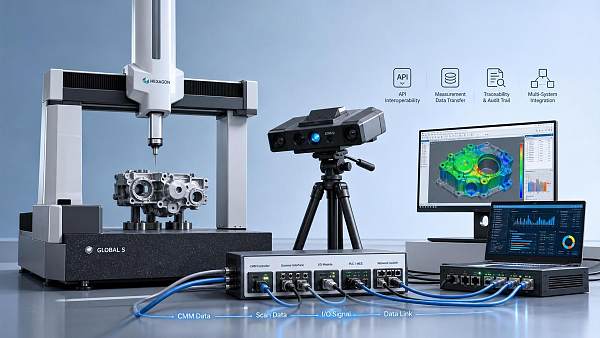
Digital twins connect measurement data, process behavior, and simulation models into a living operational view.
This shift matters across industrial sectors, from semiconductors and aerospace to electronics, energy, automotive, and advanced materials.
When implemented well, the impact of digital twins on metrology includes faster root-cause analysis, reduced scrap, and stronger traceability.
When implemented poorly, they amplify data noise, hide uncertainty, and create expensive integration burdens.
The real question is not whether digital twins matter, but where they create measurable value and where their limits appear.
The trend signal is clear: metrology is becoming a predictive operating layer
Traditional metrology often confirms quality after production steps are already complete.
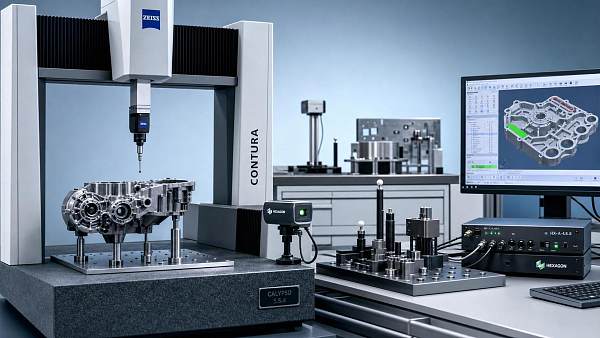
Digital twin architectures push measurement closer to process control, equipment feedback, and continuous optimization.
That changes metrology from a checkpoint into a decision engine.
The impact of digital twins on metrology is strongest where tolerances are tight and process variation is costly.
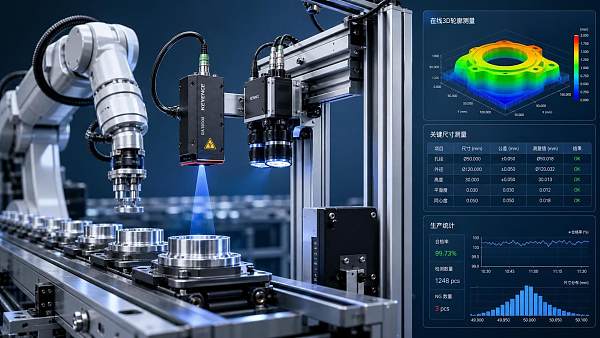
In high-mix environments, twins help compare intended geometry with actual output at production speed.
In regulated sectors, they improve documentation paths between measurement, calibration, and final release decisions.
This trend is reinforced by AI-enabled analytics, edge computing, and broader adoption of connected sensors.
It also aligns with the wider industrial demand for measurable, closed-loop intelligence rather than isolated inspection reports.
Why the impact of digital twins on metrology is accelerating now
Several forces are pushing digital twins from experimentation toward operational relevance.
These drivers explain why the impact of digital twins on metrology is now strategic, not simply experimental.
Where digital twins create the biggest gains in metrology
1. Faster deviation detection
A digital twin can compare incoming measurement data against design intent and process history almost instantly.
That shortens the time between deviation emergence and corrective action.
2. Better predictive quality control
Instead of reacting to out-of-spec results, teams can predict drift trends before defects multiply.
This is one of the clearest examples of the impact of digital twins on metrology.
3. Stronger cross-domain correlation
Metrology rarely exists in isolation.
Dimensional data, temperature data, vibration signals, and machine conditions often interact.
Digital twins help reveal these interactions inside a unified model.
4. Improved traceability and audit readiness
A robust twin can preserve the context around every measurement event.
That includes equipment state, calibration status, operator actions, environmental conditions, and revision history.
5. More efficient process optimization
Virtual testing reduces the need to disrupt production for every parameter experiment.
It also helps prioritize which physical measurements are most informative.
The limits are equally real, and they shape the business case
The impact of digital twins on metrology should not be evaluated through benefits alone.
Their limitations often decide whether projects scale or stall.
- Poor data quality weakens every model outcome.
- Unclear uncertainty budgets can make predictions look stronger than they are.
- Legacy equipment may not support clean interoperability.
- Model maintenance becomes difficult when products, tooling, or workflows change frequently.
- Cybersecurity and data governance risks grow as systems become more connected.
- Upfront costs can exceed value when the use case is vague.
In short, digital twins do not eliminate metrology fundamentals.
They make disciplined calibration, reference standards, and measurement system analysis even more important.
Impact across business functions is uneven but significant
The impact of digital twins on metrology differs across operational layers.
The strongest results appear when measurement data is treated as a strategic asset rather than a departmental output.
What deserves close attention before scaling adoption
- Define a narrow use case first, such as drift prediction, virtual commissioning, or dimensional feedback control.
- Map data sources clearly across instruments, software layers, and process steps.
- Validate uncertainty, repeatability, and calibration integrity before training models.
- Check whether interoperability standards are realistic for existing systems.
- Set governance rules for version control, access rights, and digital evidence retention.
- Measure outcomes using scrap reduction, cycle-time improvement, and audit performance.
These points help separate meaningful transformation from expensive digital duplication.
A practical way to judge readiness and next steps
- Audit current metrology data quality and traceability depth.
- Identify one high-value bottleneck where measurement delays create operational cost.
- Build a limited twin around that bottleneck, not the whole factory.
- Compare predicted outcomes against verified measurement results over time.
- Scale only after proving decision accuracy, integration stability, and business value.
The impact of digital twins on metrology becomes durable when digital models remain grounded in metrological discipline.
That means trusted references, controlled uncertainty, and transparent data lineage.
For organizations building a zero-defect future, the opportunity is substantial.
The advantage will belong to those who treat digital twins not as dashboards, but as validated engines for intelligent action.
A focused assessment of measurement maturity, model integrity, and integration readiness is the best next move.
Recommended News
 Oct 02, 2026When vision measuring machines deliver the accuracy a part requiresVision Measuring Machines for dimensional inspection: learn when optical metrology delivers reliable accuracy, validated uncertainty, and faster quality decisions.
 Sep 25, 2026When does tech consulting pay off for an AI metrology project?Tech consulting pays off in AI metrology when it reduces measurement risk, improves vendor selection, and supports reliable production decisions.
 Sep 23, 2026How AI metrology systems for electronics improve PCB inspection accuracyAI Metrology Systems for electronics improve PCB inspection accuracy with calibrated measurement, intelligent defect classification, traceability, and actionable process insights.
 Aug 15, 2026How to benchmark a metrology system before making a purchaseMetrology system benchmarking helps buyers compare accuracy, repeatability, compliance, and total cost before purchase.
 Aug 13, 2026How to Compare Bridge Coordinate Measurement Systems for Accuracy, Volume, and ThroughputBridge coordinate measurement systems compared the smart way: learn how to balance accuracy, measurement volume, and throughput to choose a CMM that fits real parts, workflows, and production goals.
 Aug 12, 2026How to Evaluate Industrial Measurement Systems for Assembly Tolerance ControlIndustrial measurement systems for assembly: learn how to evaluate accuracy, repeatability, integration, and cycle time to improve tolerance control and avoid costly selection mistakes.
 Jul 18, 2026How to Evaluate Automatic Vision Measuring Machines for Accuracy and ThroughputAutomatic Vision Measuring Machines: learn how to evaluate accuracy, repeatability, software, and real-world throughput to choose a system that boosts quality and production confidence.
 Jul 12, 2026How to Compare 3D Optical Measurement Systems for Tight-Tolerance Parts3D optical measurement systems for tight-tolerance parts: learn how to compare accuracy, repeatability, surface handling, software, and traceability to choose with confidence.
 Jul 11, 2026Inline Metrology System Pricing: What Drives Total Cost in 2026Inline metrology system pricing in 2026 depends on more than hardware. Learn the real cost drivers—software, integration, uptime, and ROI—to compare vendors and approve budgets with confidence.
 Jul 11, 2026Non-Contact Metrology System for Electronics: Key Accuracy FactorsNon-contact metrology system for electronics: discover the key factors behind true accuracy, from optics and calibration to software, drift, and reflective surfaces.
 Jul 10, 2026When a Measurement Platform for Automation Improves ThroughputMeasurement platform for automation boosts throughput by speeding inspection, reducing drift, and enabling faster corrective action. See how smarter measurement drives yield, quality, and ROI.
 Jul 09, 2026Vision Measuring Machines for PCB Inspection: What Affects Accuracy MostVision Measuring Machines for PCB inspection: discover the key factors that impact accuracy most, from optics and lighting to calibration and software, and learn how to improve PCB quality control.
 Jul 09, 20263D Scanning Factory Setup: Common Errors and How to Avoid Them3D scanning factory setup often fails before launch due to poor planning, weak validation, and disconnected data. Learn the common errors and how to avoid costly rework.
![]() Jul 07, 2026Automated Dimensional Measurement Systems: Key Accuracy Limits to CheckAutomated dimensional measurement systems: learn the key accuracy limits to check, from calibration drift to environmental effects, and compare platforms with confidence.
Jul 07, 2026Automated Dimensional Measurement Systems: Key Accuracy Limits to CheckAutomated dimensional measurement systems: learn the key accuracy limits to check, from calibration drift to environmental effects, and compare platforms with confidence. Jul 06, 2026Closed Loop Automated Metrology for Faster Process ControlClosed loop automated metrology helps manufacturers speed process control, reduce scrap, and correct variation in real time. Learn how it improves quality, uptime, and production stability.
 Jul 03, 2026How to Compare an Aerospace Measurement Supplier Beyond PriceAerospace measurement supplier selection goes beyond price. Learn how to compare calibration, traceability, software, service, and lifecycle value to reduce risk.
 Jul 03, 2026Industrial Measurement Equipment Cost: What Drives the BudgetIndustrial measurement equipment cost depends on more than price. Learn what drives budget, hidden lifecycle expenses, compliance, software, and downtime risk to compare options smarter.
 Jul 02, 2026Choosing a Non-Contact Metrology System for AutomationNon-contact metrology system for automation: learn how to balance accuracy, speed, integration, and ROI to choose a solution that improves quality and keeps production moving.
 Jul 02, 2026Touch Probe vs Scanning CMM: Which Fits Better?Coordinate Measuring Machines touch probe or scanning CMM? Compare speed, data depth, and cost to choose the best fit for your inspection needs.
 Jul 02, 2026How Inline Metrology Improves Manufacturing YieldManufacturing inline metrology helps improve yield by catching drift, defects, and process variation in real time. Learn how the right fit boosts quality, control, and throughput.
 Jul 01, 2026Coordinate Measuring Machines Optical: Selection Guide by Use CaseCoordinate Measuring Machines optical selection starts with use case. Learn how to match accuracy, throughput, geometry, and data workflow to choose the right system.
 Jun 24, 2026Smart Hotel Energy Efficiency: Where Savings Actually Come FromSmart hotel energy efficiency starts with better measurement and control—not just new devices. Learn where real hotel energy savings come from and how to improve comfort, performance, and ROI.
 Jun 18, 2026Metrology Software API Interoperability: Key Checks Before IntegrationMetrology software API interoperability explained: learn the 6 key checks to verify data integrity, traceability, scalability, and compliance before integration.
 Jun 15, 2026High Accuracy Quality Control Systems ExplainedHigh Accuracy Quality Control Systems explained: learn how precision metrology, analytics, and traceable standards reduce defects, improve compliance, and strengthen smarter manufacturing decisions.