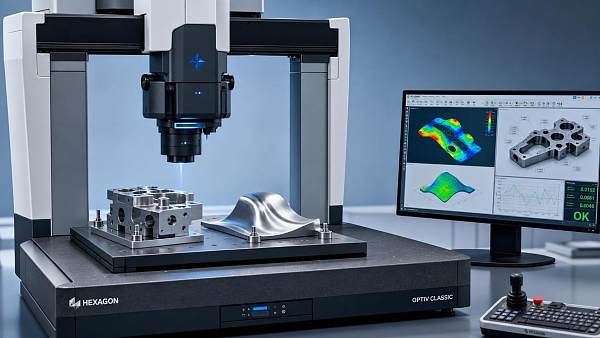
How Inline Metrology Improves Manufacturing Yield
Time
Click Count
Why Yield Improvement Starts Inside the Line
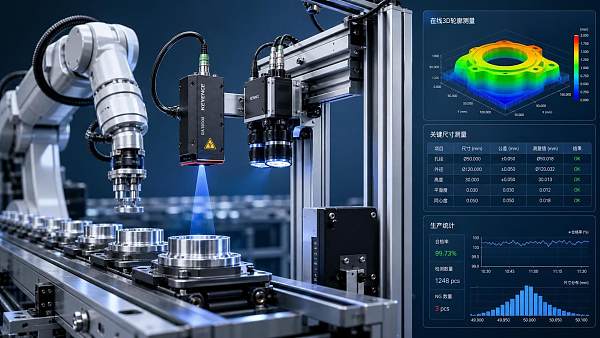
In precision manufacturing, delays between production and measurement create expensive blind spots. Manufacturing inline metrology closes that gap by placing measurement where variation actually begins.
That shift matters because yield losses rarely come from one dramatic failure. More often, they build through drift, tool wear, thermal change, alignment error, or unstable material behavior.
When measurement happens in real time, deviation becomes visible before scrap accumulates. The result is not only better quality control, but faster response, tighter process windows, and more predictable throughput.
Across electronics, aerospace, automotive, medical devices, and advanced materials, manufacturing inline metrology supports a broader operating logic: measure, interpret, correct, and stabilize without waiting for downstream inspection.
That is also why technical benchmarking groups such as G-IMS increasingly frame metrology as part of production intelligence, not an isolated inspection function.
Actual Results Depend on the Production Context
Not every line needs the same manufacturing inline metrology strategy. The value depends on cycle time, tolerance stack-up, defect cost, environmental stability, and how quickly the process can be corrected.
A high-mix assembly line usually cares about rapid changeover and recipe control. A semiconductor or optics process often cares more about sub-micron repeatability and traceable calibration.
In continuous production, the main question is often whether measurement can keep pace without becoming a bottleneck. In batch production, the stronger concern may be whether variation appears between lots.
This is where manufacturing inline metrology should be judged less by headline sensor specifications and more by line behavior. Resolution alone does not guarantee yield improvement.
Different lines create different measurement priorities
Where Manufacturing Inline Metrology Delivers the Clearest Yield Gains
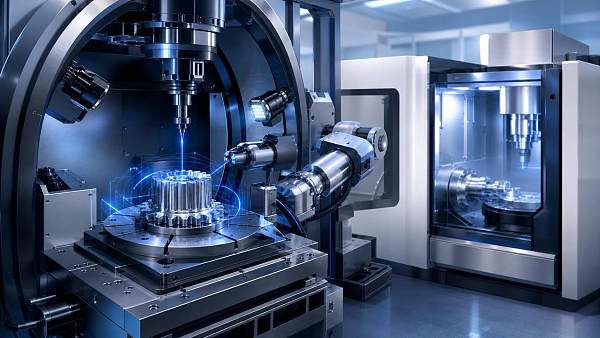
One of the strongest use cases appears in machining and precision forming. Parts may remain within nominal dimensions at startup, then gradually drift as tools heat, wear, or shift under load.
Here, manufacturing inline metrology improves yield by identifying trend changes before parts exceed tolerance. That allows compensation at the machine, not rework after final inspection.
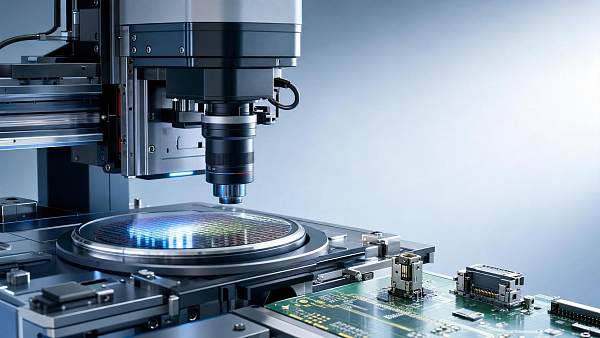
In electronics and semiconductor-related production, the economics are different. A tiny measurement error can multiply across many process steps. In this setting, inline data protects yield by preventing defect propagation.
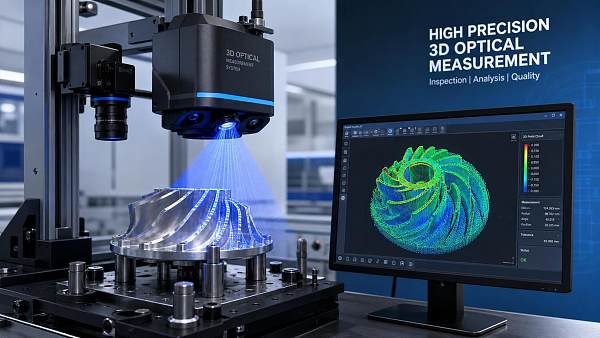
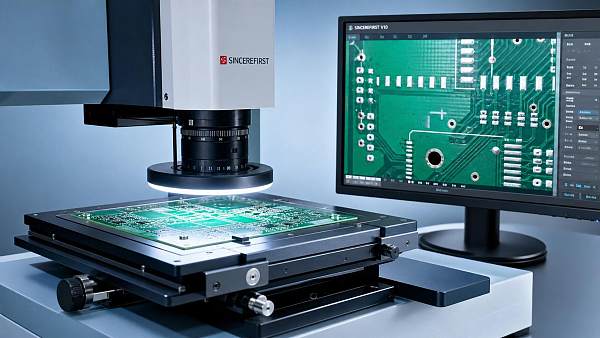
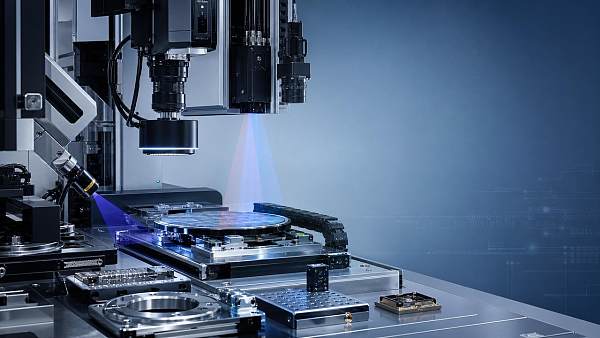
Non-contact optical measurement, surface scanning, and electrical test integration matter because contact methods can be too slow or too intrusive for delicate structures.
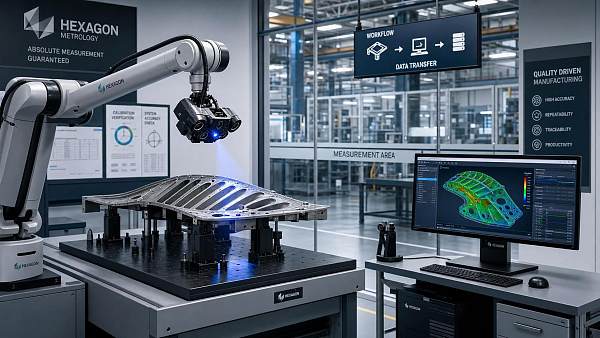
Complex assembly offers another useful contrast. Yield loss often comes from positional mismatch rather than material failure. Inline verification of gap, flushness, orientation, or torque-related geometry helps catch assembly instability early.
For composite materials, coatings, and additive processes, the concern is often process consistency over time. Layer thickness, bead geometry, porosity signals, and thermal patterns may reveal instability before visual defects appear.
These cases show why manufacturing inline metrology works best when measurement is linked to a controllable process variable, not just a pass-fail report.
The Best System Choice Is Usually a Fit Decision, Not a Feature Race
In actual deployment, the better question is not which sensor looks most advanced. It is which measurement architecture fits the line’s defect mechanism and response speed.
A line with highly reflective surfaces may need different optics than one measuring dark composites. A process with heavy vibration may require different mounting and filtering logic than a cleanroom system.
This is why the G-IMS view is useful. It treats metrology as a benchmarked system involving optics, sensing, environmental conditions, data interpretation, and compliance discipline.
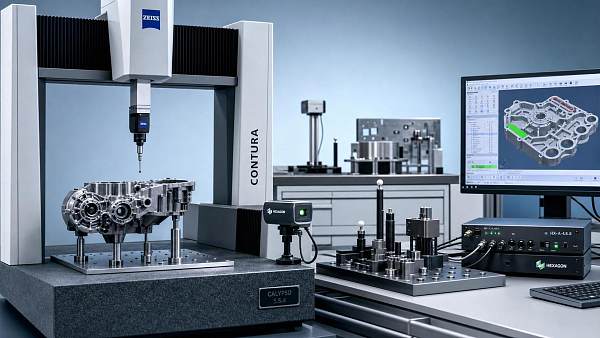
When manufacturers compare manufacturing inline metrology solutions against ISO/IEC 17025, IEEE, or NIST-aligned practices, they reduce the risk of selecting a high-performance instrument that underperforms in production.
Practical fit checks before implementation
- Confirm whether the critical defect is dimensional, surface-related, spectral, electrical, or environmental.
- Check if the process can actually act on the measurement within the available cycle time.
- Verify gauge repeatability under production vibration, temperature, contamination, and lighting conditions.
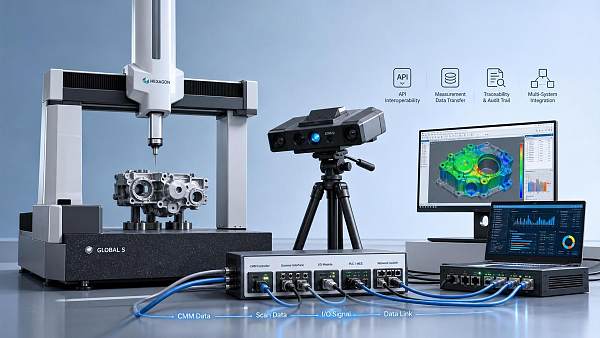
- Define data handoff rules between sensors, machine control, MES, and quality systems.
- Evaluate calibration burden, maintenance access, and replacement downtime before approval.
Common Misreads That Limit Yield Gains
A frequent mistake is assuming that more measurement points automatically improve yield. In reality, excessive data can slow decisions if the line lacks filtering, thresholds, or response logic.
Another misread is copying one manufacturing inline metrology setup across several product families. Similar parts often behave differently once speed, surface condition, or thermal load changes.
Some teams also underestimate environmental effects. A sensor that performs well during acceptance testing may drift when exposed to coolant mist, airborne particles, or fluctuating ambient temperature.
There is also a financial blind spot. Low acquisition cost can be offset by calibration interruptions, frequent false calls, difficult spare-part support, or integration work that stretches startup time.
Yield improves when manufacturing inline metrology is treated as part of process control economics, not just inspection hardware.
How to Build a Stronger Inline Metrology Roadmap
A practical roadmap starts by ranking where defects first become measurable and where correction is still economical. Those two points are not always the same.
Then compare lines by tolerance risk, scrap cost, rework difficulty, and data readiness. That usually reveals where manufacturing inline metrology will generate the fastest operational return.
The next step is to define a small set of control variables linked to yield. Good inline programs measure what the process can influence, not every characteristic that is easy to scan.
It also helps to separate pilot goals from enterprise goals. A pilot may prove repeatability and cycle-time fit. Wider deployment should address traceability, interoperability, maintenance discipline, and benchmarking consistency.
In sectors where precision, compliance, and technical validation are tightly connected, a benchmark-driven approach reduces guesswork. That is especially relevant when comparing 3D scanning, photonic sensing, vision inspection, electrical measurement, and environmental monitoring options.
Manufacturing inline metrology improves yield most when the deployment logic is clear: identify the real failure mode, match the sensing method to the line, and connect measurement to timely action.
The next move is to map each production scenario, define acceptable response time, and test the metrology stack under actual operating conditions before scaling across the plant.
Recommended News
 Sep 25, 2026When does tech consulting pay off for an AI metrology project?Tech consulting pays off in AI metrology when it reduces measurement risk, improves vendor selection, and supports reliable production decisions.
 Sep 23, 2026How AI metrology systems for electronics improve PCB inspection accuracyAI Metrology Systems for electronics improve PCB inspection accuracy with calibrated measurement, intelligent defect classification, traceability, and actionable process insights.
 Aug 15, 2026How to benchmark a metrology system before making a purchaseMetrology system benchmarking helps buyers compare accuracy, repeatability, compliance, and total cost before purchase.
 Aug 13, 2026How to Compare Bridge Coordinate Measurement Systems for Accuracy, Volume, and ThroughputBridge coordinate measurement systems compared the smart way: learn how to balance accuracy, measurement volume, and throughput to choose a CMM that fits real parts, workflows, and production goals.
 Aug 12, 2026How to Evaluate Industrial Measurement Systems for Assembly Tolerance ControlIndustrial measurement systems for assembly: learn how to evaluate accuracy, repeatability, integration, and cycle time to improve tolerance control and avoid costly selection mistakes.
 Jul 18, 2026How to Evaluate Automatic Vision Measuring Machines for Accuracy and ThroughputAutomatic Vision Measuring Machines: learn how to evaluate accuracy, repeatability, software, and real-world throughput to choose a system that boosts quality and production confidence.
 Jul 12, 2026How to Compare 3D Optical Measurement Systems for Tight-Tolerance Parts3D optical measurement systems for tight-tolerance parts: learn how to compare accuracy, repeatability, surface handling, software, and traceability to choose with confidence.
 Jul 11, 2026Inline Metrology System Pricing: What Drives Total Cost in 2026Inline metrology system pricing in 2026 depends on more than hardware. Learn the real cost drivers—software, integration, uptime, and ROI—to compare vendors and approve budgets with confidence.
 Jul 11, 2026Non-Contact Metrology System for Electronics: Key Accuracy FactorsNon-contact metrology system for electronics: discover the key factors behind true accuracy, from optics and calibration to software, drift, and reflective surfaces.
 Jul 10, 2026When a Measurement Platform for Automation Improves ThroughputMeasurement platform for automation boosts throughput by speeding inspection, reducing drift, and enabling faster corrective action. See how smarter measurement drives yield, quality, and ROI.
 Jul 09, 2026Vision Measuring Machines for PCB Inspection: What Affects Accuracy MostVision Measuring Machines for PCB inspection: discover the key factors that impact accuracy most, from optics and lighting to calibration and software, and learn how to improve PCB quality control.
 Jul 09, 20263D Scanning Factory Setup: Common Errors and How to Avoid Them3D scanning factory setup often fails before launch due to poor planning, weak validation, and disconnected data. Learn the common errors and how to avoid costly rework.
![]() Jul 07, 2026Automated Dimensional Measurement Systems: Key Accuracy Limits to CheckAutomated dimensional measurement systems: learn the key accuracy limits to check, from calibration drift to environmental effects, and compare platforms with confidence.
Jul 07, 2026Automated Dimensional Measurement Systems: Key Accuracy Limits to CheckAutomated dimensional measurement systems: learn the key accuracy limits to check, from calibration drift to environmental effects, and compare platforms with confidence. Jul 06, 2026Closed Loop Automated Metrology for Faster Process ControlClosed loop automated metrology helps manufacturers speed process control, reduce scrap, and correct variation in real time. Learn how it improves quality, uptime, and production stability.
 Jul 03, 2026How to Compare an Aerospace Measurement Supplier Beyond PriceAerospace measurement supplier selection goes beyond price. Learn how to compare calibration, traceability, software, service, and lifecycle value to reduce risk.
 Jul 03, 2026Industrial Measurement Equipment Cost: What Drives the BudgetIndustrial measurement equipment cost depends on more than price. Learn what drives budget, hidden lifecycle expenses, compliance, software, and downtime risk to compare options smarter.
 Jul 02, 2026Choosing a Non-Contact Metrology System for AutomationNon-contact metrology system for automation: learn how to balance accuracy, speed, integration, and ROI to choose a solution that improves quality and keeps production moving.
 Jul 02, 2026Touch Probe vs Scanning CMM: Which Fits Better?Coordinate Measuring Machines touch probe or scanning CMM? Compare speed, data depth, and cost to choose the best fit for your inspection needs.
 Jul 02, 2026How Inline Metrology Improves Manufacturing YieldManufacturing inline metrology helps improve yield by catching drift, defects, and process variation in real time. Learn how the right fit boosts quality, control, and throughput.
 Jul 01, 2026Coordinate Measuring Machines Optical: Selection Guide by Use CaseCoordinate Measuring Machines optical selection starts with use case. Learn how to match accuracy, throughput, geometry, and data workflow to choose the right system.
 Jun 24, 2026Smart Hotel Energy Efficiency: Where Savings Actually Come FromSmart hotel energy efficiency starts with better measurement and control—not just new devices. Learn where real hotel energy savings come from and how to improve comfort, performance, and ROI.
 Jun 18, 2026Metrology Software API Interoperability: Key Checks Before IntegrationMetrology software API interoperability explained: learn the 6 key checks to verify data integrity, traceability, scalability, and compliance before integration.
 Jun 15, 2026High Accuracy Quality Control Systems ExplainedHigh Accuracy Quality Control Systems explained: learn how precision metrology, analytics, and traceable standards reduce defects, improve compliance, and strengthen smarter manufacturing decisions.
![]() Jun 09, 2026Non-Contact Metrology System OEM: 7 Checks Before Supplier SelectionNon-contact metrology system OEM selection starts with the right checks. Discover 7 practical ways to verify accuracy, traceability, integration, support, and total cost before choosing a supplier.
Jun 09, 2026Non-Contact Metrology System OEM: 7 Checks Before Supplier SelectionNon-contact metrology system OEM selection starts with the right checks. Discover 7 practical ways to verify accuracy, traceability, integration, support, and total cost before choosing a supplier.