Touch Probe vs Scanning CMM: Which Fits Better?
Time
Click Count
Touch Probe vs Scanning CMM: Which Fits Better?
Choosing between a touch probe and a scanning CMM can reshape inspection speed, data depth, and cost control.
For teams comparing Coordinate Measuring Machines touch probe options, the decision is rarely about one feature alone.
It usually comes down to part geometry, tolerance bands, surface stability, reporting needs, and takt-time pressure.
A touch-trigger setup can be precise and efficient for discrete points.
A scanning CMM is stronger when the inspection plan depends on dense surface data and profile behavior.
The better choice appears when measurement strategy is tied to production reality, not just catalog specifications.
What a Coordinate Measuring Machines Touch Probe Actually Does
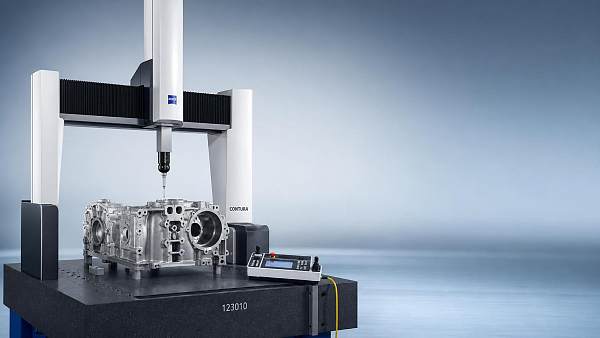
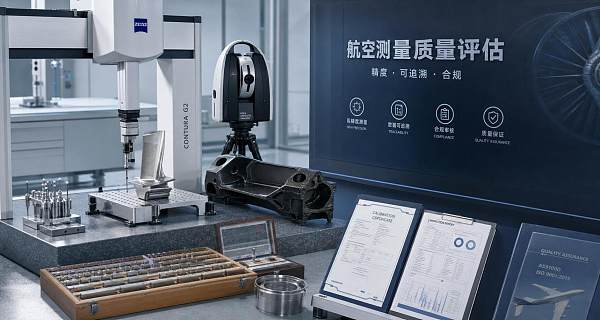
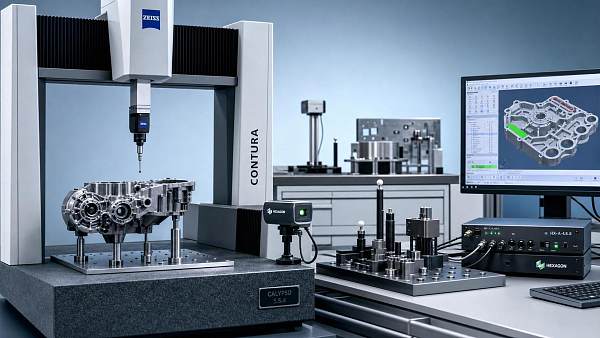
A Coordinate Measuring Machines touch probe collects data point by point.
The stylus contacts the part surface at programmed locations and records exact coordinates.
That sounds simple, but it remains one of the most trusted metrology methods in precision manufacturing.
This method works especially well for bores, planes, slots, datums, hole positions, and basic geometric tolerances.
It also supports stable, repeatable routines where the same features are checked every shift.
- Good for discrete feature measurement
- Clear alignment with GD&T reporting
- Lower data volume to manage
- Often easier to validate and standardize
In practical terms, a Coordinate Measuring Machines touch probe fits structured inspection plans with known critical features.
How a Scanning CMM Changes the Measurement Strategy
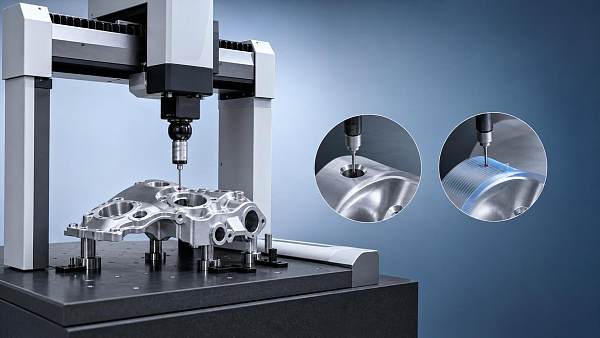
A scanning CMM keeps the probe in controlled contact while moving along the surface.
Instead of capturing isolated points, it collects many coordinates across a path or full form.
That difference matters when form, contour, waviness behavior, and profile deviation drive quality decisions.
Scanning is commonly used for turbine blades, gears, aerofoil surfaces, molded parts, and freeform components.
It can reveal variation that a sparse point pattern may miss.
This is where the decision shifts from feature checking to shape understanding.
- Higher point density
- Better visibility into form errors
- Stronger support for profile analysis
- More useful for engineering feedback loops
The trade-off is that scanning usually brings more programming complexity, more data handling, and tighter control requirements.
Core Performance Differences That Matter
Accuracy is often the first comparison point, but it should not be isolated from context.
A Coordinate Measuring Machines touch probe may deliver excellent results on stable, well-defined features.
A scanning CMM may provide better confidence on full-form interpretation because the sample size is much larger.
The better system depends on what must be proven.
From a decision standpoint, throughput must be judged against information quality, not speed alone.
When a Touch Probe Is the Better Fit
A Coordinate Measuring Machines touch probe is often the better fit when inspection objectives are narrow and stable.
That is common in automotive machining, fixture validation, valve bodies, housings, and precision metal blocks.
If the quality plan targets positions, diameters, flatness, perpendicularity, and datum relationships, touch-trigger probing usually performs well.
It is also easier to defend in audits when inspection features map directly to drawing callouts.
- Parts are mostly prismatic.
- Tolerance checks rely on finite feature points.
- Reporting must stay lean and fast.
- Operator training time is limited.
- The inspection room prioritizes repeatable routine programs.
In these cases, a Coordinate Measuring Machines touch probe supports control without overcomplicating the workflow.
When a Scanning CMM Delivers More Value
A scanning CMM becomes more valuable when geometry is complex or process drift is subtle.
This is especially relevant in aerospace, medical components, advanced molds, and high-precision energy systems.
Recent manufacturing shifts make this more important because tighter tolerances now sit alongside more complicated surfaces.
A sparse measurement plan may pass a part while still missing shape instability.
Scanning reduces that blind spot by describing how the surface behaves across the full path.
- Freeform surfaces drive product performance
- Profile tolerances are critical
- Root-cause analysis needs richer data
- Engineering teams want stronger process feedback
That richer output can shorten iteration cycles, even if each program is harder to build at the start.
Decision Risks That Are Easy to Miss
The biggest selection mistakes usually come from mismatched assumptions.
One common error is buying scanning capability for parts that only need routine feature verification.
That can create unnecessary software burden and slower reporting.
The opposite mistake is choosing a Coordinate Measuring Machines touch probe where dense surface understanding is essential.
That decision may hide form deviations until yield loss becomes expensive.
Other risks also deserve attention:
- Ignoring stylus accessibility on deep or fragile features
- Underestimating fixture stability during scanning paths
- Treating more data as better data without analysis discipline
- Overlooking calibration, validation, and software integration workload
In real operations, system fit is shaped as much by process maturity as by sensor capability.
A Practical Selection Framework
A useful evaluation starts with four questions.
- Are the critical characteristics discrete features or surface behaviors?
- Is the inspection goal pass-fail reporting or process learning?
- How much programming and data-review capacity exists internally?
- Will future parts become more complex within the same platform?
If most answers point toward routine geometry control, a Coordinate Measuring Machines touch probe is usually the stronger economic choice.
If answers point toward contour intelligence, digital feedback, and profile risk reduction, scanning likely fits better.
A hybrid roadmap can also make sense.
Many organizations begin with a Coordinate Measuring Machines touch probe for production release and add scanning for engineering validation.
Final Takeaway
Touch probe and scanning CMM systems solve different measurement problems.
A Coordinate Measuring Machines touch probe is usually the right choice for structured feature inspection, faster routine deployment, and straightforward compliance reporting.
A scanning CMM earns its place when surface complexity, profile control, and data-rich process improvement matter more.
The strongest decision comes from matching measurement method to manufacturing risk, not from choosing the most advanced label.
Before final selection, map your part families, tolerance drivers, reporting expectations, and future inspection load. That step usually makes the right fit obvious.
Recommended News
 Sep 25, 2026When does tech consulting pay off for an AI metrology project?Tech consulting pays off in AI metrology when it reduces measurement risk, improves vendor selection, and supports reliable production decisions.
 Sep 23, 2026How AI metrology systems for electronics improve PCB inspection accuracyAI Metrology Systems for electronics improve PCB inspection accuracy with calibrated measurement, intelligent defect classification, traceability, and actionable process insights.
 Aug 15, 2026How to benchmark a metrology system before making a purchaseMetrology system benchmarking helps buyers compare accuracy, repeatability, compliance, and total cost before purchase.
 Aug 13, 2026How to Compare Bridge Coordinate Measurement Systems for Accuracy, Volume, and ThroughputBridge coordinate measurement systems compared the smart way: learn how to balance accuracy, measurement volume, and throughput to choose a CMM that fits real parts, workflows, and production goals.
 Aug 12, 2026How to Evaluate Industrial Measurement Systems for Assembly Tolerance ControlIndustrial measurement systems for assembly: learn how to evaluate accuracy, repeatability, integration, and cycle time to improve tolerance control and avoid costly selection mistakes.
 Jul 18, 2026How to Evaluate Automatic Vision Measuring Machines for Accuracy and ThroughputAutomatic Vision Measuring Machines: learn how to evaluate accuracy, repeatability, software, and real-world throughput to choose a system that boosts quality and production confidence.
 Jul 12, 2026How to Compare 3D Optical Measurement Systems for Tight-Tolerance Parts3D optical measurement systems for tight-tolerance parts: learn how to compare accuracy, repeatability, surface handling, software, and traceability to choose with confidence.
 Jul 11, 2026Inline Metrology System Pricing: What Drives Total Cost in 2026Inline metrology system pricing in 2026 depends on more than hardware. Learn the real cost drivers—software, integration, uptime, and ROI—to compare vendors and approve budgets with confidence.
 Jul 11, 2026Non-Contact Metrology System for Electronics: Key Accuracy FactorsNon-contact metrology system for electronics: discover the key factors behind true accuracy, from optics and calibration to software, drift, and reflective surfaces.
 Jul 10, 2026When a Measurement Platform for Automation Improves ThroughputMeasurement platform for automation boosts throughput by speeding inspection, reducing drift, and enabling faster corrective action. See how smarter measurement drives yield, quality, and ROI.
 Jul 09, 2026Vision Measuring Machines for PCB Inspection: What Affects Accuracy MostVision Measuring Machines for PCB inspection: discover the key factors that impact accuracy most, from optics and lighting to calibration and software, and learn how to improve PCB quality control.
 Jul 09, 20263D Scanning Factory Setup: Common Errors and How to Avoid Them3D scanning factory setup often fails before launch due to poor planning, weak validation, and disconnected data. Learn the common errors and how to avoid costly rework.
![]() Jul 07, 2026Automated Dimensional Measurement Systems: Key Accuracy Limits to CheckAutomated dimensional measurement systems: learn the key accuracy limits to check, from calibration drift to environmental effects, and compare platforms with confidence.
Jul 07, 2026Automated Dimensional Measurement Systems: Key Accuracy Limits to CheckAutomated dimensional measurement systems: learn the key accuracy limits to check, from calibration drift to environmental effects, and compare platforms with confidence. Jul 06, 2026Closed Loop Automated Metrology for Faster Process ControlClosed loop automated metrology helps manufacturers speed process control, reduce scrap, and correct variation in real time. Learn how it improves quality, uptime, and production stability.
 Jul 03, 2026How to Compare an Aerospace Measurement Supplier Beyond PriceAerospace measurement supplier selection goes beyond price. Learn how to compare calibration, traceability, software, service, and lifecycle value to reduce risk.
 Jul 03, 2026Industrial Measurement Equipment Cost: What Drives the BudgetIndustrial measurement equipment cost depends on more than price. Learn what drives budget, hidden lifecycle expenses, compliance, software, and downtime risk to compare options smarter.
 Jul 02, 2026Choosing a Non-Contact Metrology System for AutomationNon-contact metrology system for automation: learn how to balance accuracy, speed, integration, and ROI to choose a solution that improves quality and keeps production moving.
 Jul 02, 2026Touch Probe vs Scanning CMM: Which Fits Better?Coordinate Measuring Machines touch probe or scanning CMM? Compare speed, data depth, and cost to choose the best fit for your inspection needs.
 Jul 02, 2026How Inline Metrology Improves Manufacturing YieldManufacturing inline metrology helps improve yield by catching drift, defects, and process variation in real time. Learn how the right fit boosts quality, control, and throughput.
 Jul 01, 2026Coordinate Measuring Machines Optical: Selection Guide by Use CaseCoordinate Measuring Machines optical selection starts with use case. Learn how to match accuracy, throughput, geometry, and data workflow to choose the right system.
 Jun 24, 2026Smart Hotel Energy Efficiency: Where Savings Actually Come FromSmart hotel energy efficiency starts with better measurement and control—not just new devices. Learn where real hotel energy savings come from and how to improve comfort, performance, and ROI.
 Jun 18, 2026Metrology Software API Interoperability: Key Checks Before IntegrationMetrology software API interoperability explained: learn the 6 key checks to verify data integrity, traceability, scalability, and compliance before integration.
 Jun 15, 2026High Accuracy Quality Control Systems ExplainedHigh Accuracy Quality Control Systems explained: learn how precision metrology, analytics, and traceable standards reduce defects, improve compliance, and strengthen smarter manufacturing decisions.
![]() Jun 09, 2026Non-Contact Metrology System OEM: 7 Checks Before Supplier SelectionNon-contact metrology system OEM selection starts with the right checks. Discover 7 practical ways to verify accuracy, traceability, integration, support, and total cost before choosing a supplier.
Jun 09, 2026Non-Contact Metrology System OEM: 7 Checks Before Supplier SelectionNon-contact metrology system OEM selection starts with the right checks. Discover 7 practical ways to verify accuracy, traceability, integration, support, and total cost before choosing a supplier.