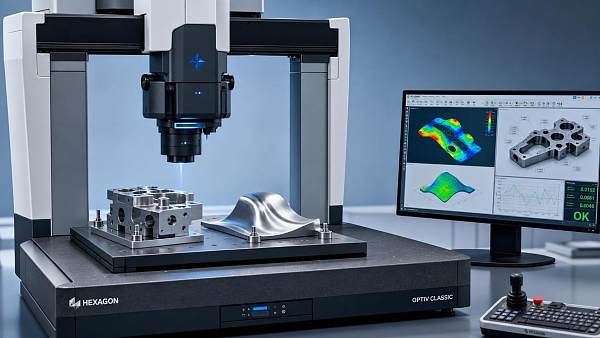
Automated Metrology Case Studies That Justify Capex
Time
Click Count
For finance leaders, the strongest case for automation is measurable payback. These automated metrology case studies show how manufacturers reduced scrap, shortened inspection cycles, improved yield, and lowered compliance risk with data-driven measurement systems. If your capex decisions demand clear ROI, faster breakeven, and defensible operational gains, these examples provide the evidence needed to move from technical promise to approved investment.
What Finance Teams Are Really Searching For in Automated Metrology Case Studies
The core search intent behind automated metrology case studies is not technical curiosity. It is investment validation. Finance approvers want proof that automated measurement systems create measurable business outcomes.
They are typically asking four questions. What problem justified the purchase, how quickly did savings appear, which metrics improved, and what implementation risks affected the business case after deployment.
For this audience, broad descriptions of scanners, CMMs, optics, or software are less useful than operating evidence. They need examples tied to scrap, throughput, labor efficiency, customer claims, and compliance exposure.
That is why the most persuasive article structure starts with capital allocation logic. Technical details matter, but only after the business case is clearly linked to reduced cost and improved margin.
The CFO Lens: What Makes an Automated Metrology Investment Approve or Stall
Most capex reviews do not fail because measurement technology lacks merit. They fail because the proposal does not connect technical performance to financial outcomes in a language leadership can defend.
Finance leaders usually look for six approval factors. Baseline loss visibility, achievable savings, payback timing, adoption complexity, utilization risk, and the downside cost of doing nothing all matter.
In practice, an automated metrology project becomes fundable when it addresses a recurring economic drain. That may be line stoppages, rework, slow first-article approval, warranty leakage, or audit-related exposure.
Automated metrology is especially compelling where inspection bottlenecks limit output. When demand exists but quality verification cannot keep pace, metrology automation shifts from quality expense to growth enabler.
Strong proposals also separate hard savings from soft benefits. Hard savings include labor reduction, scrap avoidance, fixture simplification, and reduced outsourced inspection. Soft benefits include better traceability and faster root-cause analysis.
Case Study 1: Automotive Supplier Reduced Scrap and Rework with In-Line 3D Inspection
A tier-one automotive supplier producing stamped and formed metal assemblies faced recurring dimensional drift between tool maintenance intervals. Manual sampling detected issues too late, after large batches had already moved downstream.
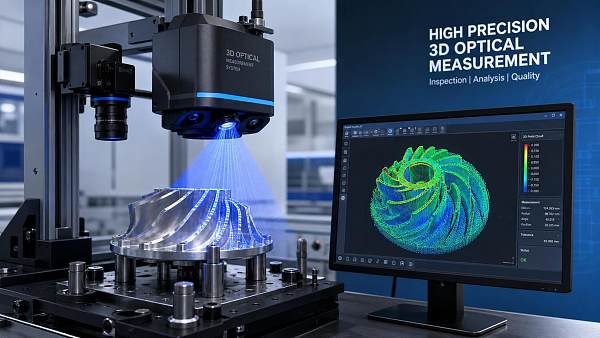
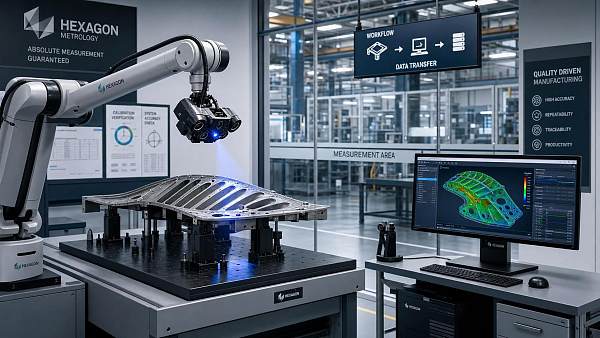
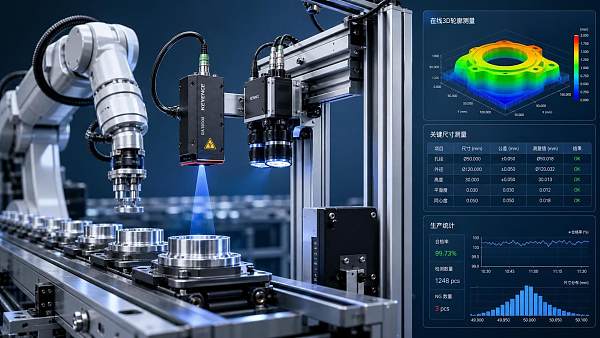
The company installed automated in-line 3D scanning with rule-based pass-fail logic at a key production cell. Measurements were linked directly to process control thresholds and operator alerts.
Before the investment, quality engineers measured only a small sample per shift. After automation, every critical part feature could be checked at production speed with exception-based escalation.
The financial impact came from earlier deviation detection. Scrap rates fell because nonconforming trends were identified before full lots were affected. Rework also declined because tooling corrections happened faster.
Cycle time inside quality improved as well. Engineers spent less time on repetitive manual checks and more time on corrective action. This labor reallocation did not eliminate headcount, but it increased value-added capacity.
For finance, the takeaway is simple. The ROI did not depend on labor savings alone. It came from preventing high-volume quality escapes, reducing batch-level scrap, and protecting customer scorecard performance.
Where this pattern fits best is high-volume manufacturing with stable part families, frequent dimensional checks, and expensive downstream consequences when defects escape initial inspection.
Case Study 2: Aerospace Machining Operation Shortened First-Article and Compliance Cycles
An aerospace machining supplier serving regulated programs struggled with first-article inspection lead times. Manual CMM programming and reporting delayed part release, tying up inventory and extending cash conversion cycles.
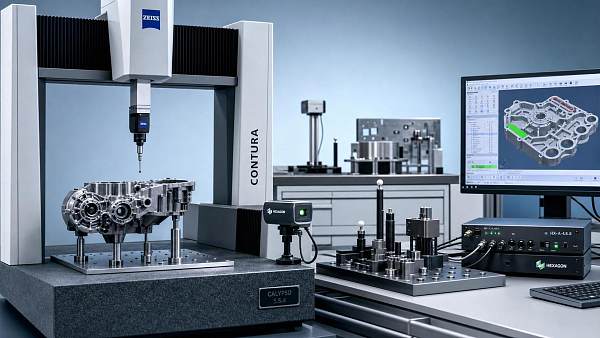
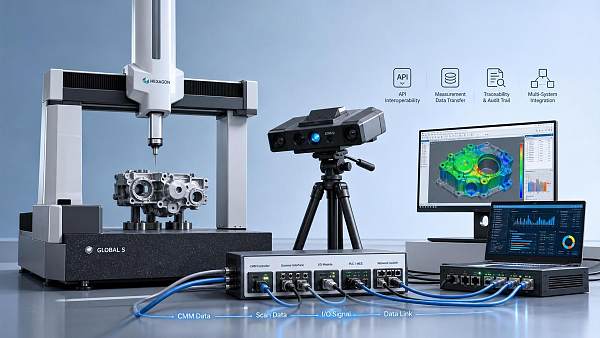
The business adopted automated metrology workflows combining programmable CMM routines, offline simulation, and digital reporting aligned to customer and regulatory documentation requirements.
The most visible gain was time. First-article packages that previously required several days could be produced much faster, especially for repeat or variant components sharing feature logic.
But the deeper financial value was risk reduction. Standardized automated routines reduced the probability of inconsistent measurement practices, undocumented operator variation, and incomplete audit trails during customer review.
That matters to finance because compliance failures are not isolated quality events. They can delay shipment, affect supplier approval status, and create future revenue risk on strategic contracts.
The operation also improved machine utilization. Quality bottlenecks had forced completed parts to wait for release. Faster inspection meant finished goods converted into shippable inventory sooner.
For capex justification, this case shows that automated metrology can improve working capital efficiency, not just quality cost. In regulated sectors, faster documentation can materially support revenue timing and customer retention.
Case Study 3: Medical Device Manufacturer Lowered Validation Burden and Inspection Variability
A medical device producer with strict dimensional tolerances relied on multiple inspectors across shifts. Although individual operators were skilled, repeatability issues created review loops and occasional disputes over borderline results.
The company deployed an automated optical metrology system with standardized recipes, controlled lighting conditions, and digital result capture integrated into validation records.
After implementation, the business saw fewer repeated inspections and fewer internal disagreements about pass-fail outcomes. Measurement consistency improved because the process became less dependent on operator setup variation.
Financially, the gains appeared in several places. Quality review hours declined, validation support became more predictable, and production scheduling improved because fewer lots paused for measurement confirmation.
The project also supported stronger documentation discipline. For sectors where traceability is part of regulatory readiness, automated records lower the cost of proving compliance after the fact.
This case is useful for finance approvers because it highlights a common blind spot. Inspection variation itself has a cost. It consumes labor, delays release, and introduces hidden uncertainty into quality reporting.
Automated metrology is often justified where product risk is high, tolerance windows are tight, and document integrity matters as much as measurement speed.
Case Study 4: Electronics Manufacturer Increased Yield by Catching Process Drift Earlier
An electronics manufacturer producing high-density assemblies experienced periodic yield losses that were difficult to isolate. Defects were often discovered downstream, where failure analysis was slower and more expensive.
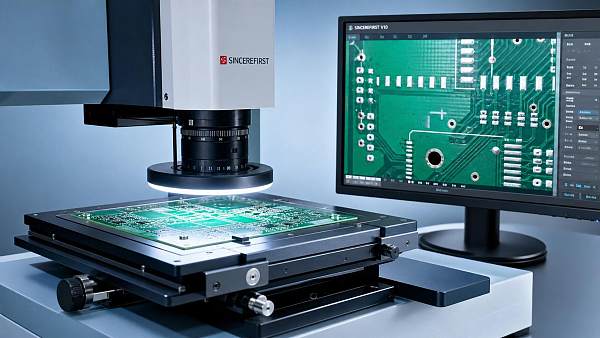
The company implemented automated non-contact vision inspection and dimensional verification at earlier process points, combined with trend analytics to detect subtle process drift before major yield loss occurred.
Unlike a traditional end-of-line inspection approach, this system supported earlier intervention. Process engineers could correlate measurement deviations with tooling wear, alignment changes, or supplier material variation.
The result was not merely better defect sorting. It was higher yield preservation. By acting earlier, the plant prevented defect multiplication and reduced the number of assemblies entering downstream value-added stages unnecessarily.
For finance teams, this distinction matters. Sorting bad output is useful, but preventing value from being added to bad output is much more valuable. That is where margin protection becomes clearer.
The business also benefited from better root-cause speed. Engineering teams spent less time gathering evidence and more time correcting process variables, reducing the duration of recurring quality events.
This type of investment tends to justify itself in complex production environments where downstream added value is high and early-stage detection avoids compounding cost.
Case Study 5: Precision Plastics Producer Replaced Outsourced Inspection with Internal Automated Capacity
A precision plastics manufacturer serving industrial and consumer programs frequently sent complex parts to an external metrology lab during peak launches and tooling changes. Outsourcing solved capacity gaps but created delays and recurring expense.
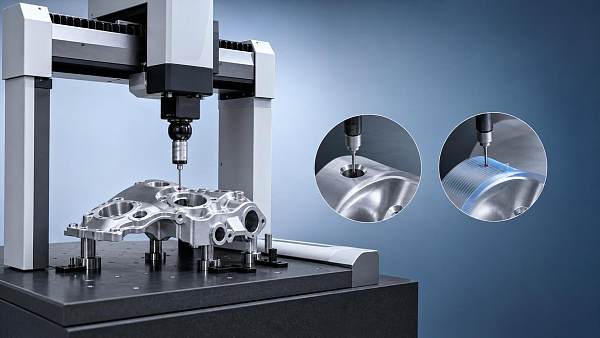
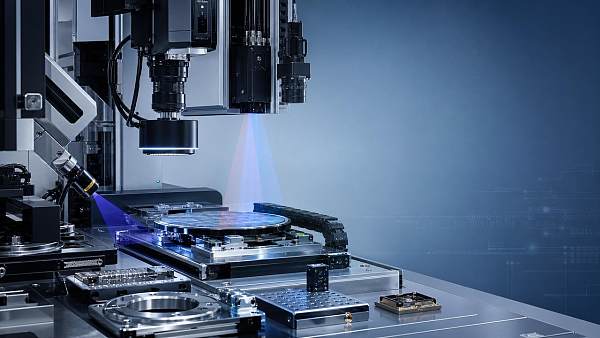
The company invested in automated multisensor metrology equipment capable of handling dimensional checks for molded parts, transparent components, and selected surface features under one internal workflow.
Direct cost savings came from reducing outside inspection fees. However, the larger benefit was scheduling control. Product launches no longer depended on third-party lab availability or shipping lead time.
Internal teams gained faster feedback during mold tuning and process optimization. That shortened the path from trial runs to stable production and reduced engineering iteration cycles.
From a capex perspective, this case is persuasive because it combines cost takeout with responsiveness. Finance leaders often favor projects that reduce an external spend category while improving operational agility.
The caution is utilization. Internalizing outsourced activity only works if expected measurement volume is sufficient. Underused equipment weakens returns even when the technical platform is strong.
For similar businesses, the approval case should compare annual outsourced spend, launch delay cost, and expected internal demand against the total ownership cost of automated metrology.
How to Evaluate ROI Without Overstating the Business Case
Many metrology proposals lose credibility because benefits are exaggerated. Finance teams respond better to conservative models based on current-state losses that can be measured and verified.
Start with a baseline. Quantify scrap, rework, inspection labor, customer returns, outsourced inspection, line waiting time, and shipment delays linked to measurement constraints or inconsistency.
Then separate primary and secondary value. Primary value should include the two or three biggest economic drivers only. Secondary value can include compliance resilience, traceability, and engineering efficiency improvements.
A practical ROI model often includes equipment cost, software, fixturing, installation, training, validation, maintenance, and expected utilization ramp. Ignoring deployment cost creates misleading payback assumptions.
It is also wise to test the business case under three scenarios. Conservative, expected, and high-impact assumptions help finance understand downside protection and best-case upside without relying on optimism.
When reviewing automated metrology case studies, look carefully at what kind of savings are actually transferable to your operation. Similar equipment does not guarantee similar economics if production realities differ.
Questions Finance Approvers Should Ask Before Signing Off
First, is the problem frequent, measurable, and expensive enough to warrant automation. A technically impressive system should not be funded if the underlying loss is sporadic or too small.
Second, will the system be used consistently across shifts, programs, or product families. Utilization is one of the biggest determinants of payback, especially for shared quality assets.
Third, are process owners aligned on response actions once data is available. Better measurement creates value only when production, engineering, and quality act on the information quickly.
Fourth, how difficult is validation and integration. If implementation requires extensive programming, unstable interfaces, or prolonged method qualification, time-to-value may be delayed.
Fifth, what happens if the company does nothing. A clear cost-of-inaction argument often strengthens approval by showing that existing waste, delay, or compliance exposure is itself a capital drain.
Where Automated Metrology Delivers the Fastest Payback
The strongest payback usually appears in environments with high defect cost, frequent measurement demand, repeatable part geometry, and expensive downstream value-add after the point of inspection.
Other favorable conditions include strict customer documentation requirements, rising labor costs, quality staffing shortages, and production expansion that current manual methods cannot support.
Automated metrology also becomes more attractive when measurement data can feed process control directly. In those cases, the system does not just inspect quality. It actively helps stabilize production.
By contrast, payback may be slower for highly variable low-volume work with limited standardization, modest defect cost, or weak organizational readiness to use data for operational decisions.
Conclusion: The Best Automated Metrology Case Studies Translate Precision into Financial Proof
For financial approvers, the value of automated metrology is not abstract precision. It is measurable economic improvement tied to scrap reduction, faster release, better yield, lower external spend, and reduced compliance risk.
The most useful automated metrology case studies are those that show a clear before-and-after operating picture. They explain what loss existed, what changed, and how the investment produced durable gains.
If you are evaluating capex, focus less on feature lists and more on transferability. Ask whether the case reflects your production volume, defect economics, regulatory burden, and organizational capacity to act on data.
When the use case is right, automated metrology can move from a quality department request to a finance-backed operational lever. That is the threshold where technical promise becomes approval-ready capital logic.
Recommended News
 Oct 02, 2026When vision measuring machines deliver the accuracy a part requiresVision Measuring Machines for dimensional inspection: learn when optical metrology delivers reliable accuracy, validated uncertainty, and faster quality decisions.
 Sep 25, 2026When does tech consulting pay off for an AI metrology project?Tech consulting pays off in AI metrology when it reduces measurement risk, improves vendor selection, and supports reliable production decisions.
 Sep 23, 2026How AI metrology systems for electronics improve PCB inspection accuracyAI Metrology Systems for electronics improve PCB inspection accuracy with calibrated measurement, intelligent defect classification, traceability, and actionable process insights.
 Aug 15, 2026How to benchmark a metrology system before making a purchaseMetrology system benchmarking helps buyers compare accuracy, repeatability, compliance, and total cost before purchase.
 Aug 13, 2026How to Compare Bridge Coordinate Measurement Systems for Accuracy, Volume, and ThroughputBridge coordinate measurement systems compared the smart way: learn how to balance accuracy, measurement volume, and throughput to choose a CMM that fits real parts, workflows, and production goals.
 Aug 12, 2026How to Evaluate Industrial Measurement Systems for Assembly Tolerance ControlIndustrial measurement systems for assembly: learn how to evaluate accuracy, repeatability, integration, and cycle time to improve tolerance control and avoid costly selection mistakes.
 Jul 18, 2026How to Evaluate Automatic Vision Measuring Machines for Accuracy and ThroughputAutomatic Vision Measuring Machines: learn how to evaluate accuracy, repeatability, software, and real-world throughput to choose a system that boosts quality and production confidence.
 Jul 12, 2026How to Compare 3D Optical Measurement Systems for Tight-Tolerance Parts3D optical measurement systems for tight-tolerance parts: learn how to compare accuracy, repeatability, surface handling, software, and traceability to choose with confidence.
 Jul 11, 2026Inline Metrology System Pricing: What Drives Total Cost in 2026Inline metrology system pricing in 2026 depends on more than hardware. Learn the real cost drivers—software, integration, uptime, and ROI—to compare vendors and approve budgets with confidence.
 Jul 11, 2026Non-Contact Metrology System for Electronics: Key Accuracy FactorsNon-contact metrology system for electronics: discover the key factors behind true accuracy, from optics and calibration to software, drift, and reflective surfaces.
 Jul 10, 2026When a Measurement Platform for Automation Improves ThroughputMeasurement platform for automation boosts throughput by speeding inspection, reducing drift, and enabling faster corrective action. See how smarter measurement drives yield, quality, and ROI.
 Jul 09, 2026Vision Measuring Machines for PCB Inspection: What Affects Accuracy MostVision Measuring Machines for PCB inspection: discover the key factors that impact accuracy most, from optics and lighting to calibration and software, and learn how to improve PCB quality control.
 Jul 09, 20263D Scanning Factory Setup: Common Errors and How to Avoid Them3D scanning factory setup often fails before launch due to poor planning, weak validation, and disconnected data. Learn the common errors and how to avoid costly rework.
![]() Jul 07, 2026Automated Dimensional Measurement Systems: Key Accuracy Limits to CheckAutomated dimensional measurement systems: learn the key accuracy limits to check, from calibration drift to environmental effects, and compare platforms with confidence.
Jul 07, 2026Automated Dimensional Measurement Systems: Key Accuracy Limits to CheckAutomated dimensional measurement systems: learn the key accuracy limits to check, from calibration drift to environmental effects, and compare platforms with confidence. Jul 06, 2026Closed Loop Automated Metrology for Faster Process ControlClosed loop automated metrology helps manufacturers speed process control, reduce scrap, and correct variation in real time. Learn how it improves quality, uptime, and production stability.
 Jul 03, 2026How to Compare an Aerospace Measurement Supplier Beyond PriceAerospace measurement supplier selection goes beyond price. Learn how to compare calibration, traceability, software, service, and lifecycle value to reduce risk.
 Jul 03, 2026Industrial Measurement Equipment Cost: What Drives the BudgetIndustrial measurement equipment cost depends on more than price. Learn what drives budget, hidden lifecycle expenses, compliance, software, and downtime risk to compare options smarter.
 Jul 02, 2026Choosing a Non-Contact Metrology System for AutomationNon-contact metrology system for automation: learn how to balance accuracy, speed, integration, and ROI to choose a solution that improves quality and keeps production moving.
 Jul 02, 2026Touch Probe vs Scanning CMM: Which Fits Better?Coordinate Measuring Machines touch probe or scanning CMM? Compare speed, data depth, and cost to choose the best fit for your inspection needs.
 Jul 02, 2026How Inline Metrology Improves Manufacturing YieldManufacturing inline metrology helps improve yield by catching drift, defects, and process variation in real time. Learn how the right fit boosts quality, control, and throughput.
 Jul 01, 2026Coordinate Measuring Machines Optical: Selection Guide by Use CaseCoordinate Measuring Machines optical selection starts with use case. Learn how to match accuracy, throughput, geometry, and data workflow to choose the right system.
 Jun 24, 2026Smart Hotel Energy Efficiency: Where Savings Actually Come FromSmart hotel energy efficiency starts with better measurement and control—not just new devices. Learn where real hotel energy savings come from and how to improve comfort, performance, and ROI.
 Jun 18, 2026Metrology Software API Interoperability: Key Checks Before IntegrationMetrology software API interoperability explained: learn the 6 key checks to verify data integrity, traceability, scalability, and compliance before integration.
 Jun 15, 2026High Accuracy Quality Control Systems ExplainedHigh Accuracy Quality Control Systems explained: learn how precision metrology, analytics, and traceable standards reduce defects, improve compliance, and strengthen smarter manufacturing decisions.