When an Automated Inspection Cell OEM Pays Off
Time
Click Count
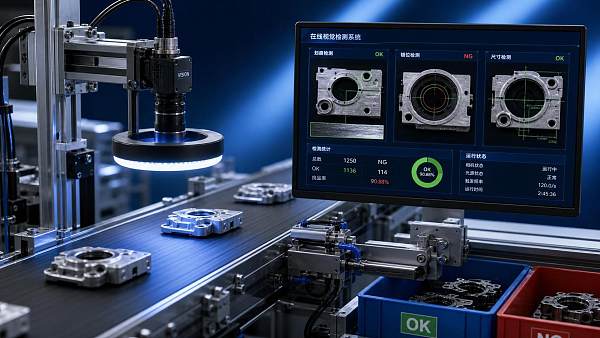
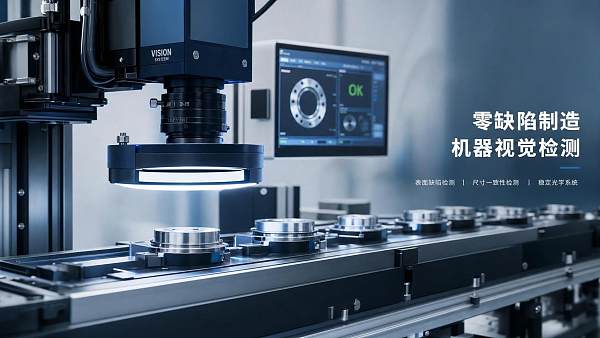
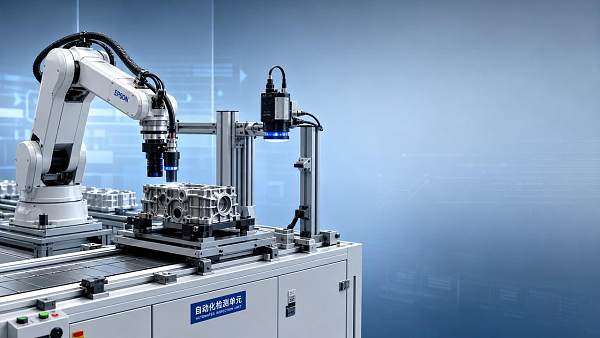
For enterprise leaders balancing quality, throughput, and capital efficiency, knowing when an automated inspection cell OEM investment truly pays off is critical.
This article examines the cost, precision, integration, and scalability factors that determine ROI, helping decision-makers identify where standardized inspection automation can outperform custom builds and strengthen long-term manufacturing competitiveness.
What decision-makers are really asking when they search “automated inspection cell OEM”
Most enterprise buyers are not looking for a generic definition. They want to know whether an automated inspection cell OEM is the fastest, safest, and most economical path to measurable quality improvement.
They are usually comparing three choices: keep manual inspection, build a custom system internally or with an integrator, or buy a standardized OEM inspection cell and deploy it faster.
The core intent behind this search is commercial and strategic. Buyers want to understand payback timing, deployment risk, integration complexity, and whether a packaged OEM solution can meet precision requirements.
For senior leaders, the question is not simply automation versus no automation. It is whether a repeatable inspection platform improves margin, protects customer confidence, and reduces operational variability at scale.
Short answer: when does an automated inspection cell OEM actually pay off?
An automated inspection cell OEM typically pays off when inspection is frequent, labor-intensive, quality-critical, and stable enough to justify standardized automation over a fully bespoke build.
The business case becomes especially strong when defects are expensive, traceability matters, production volumes are meaningful, and existing inspection creates bottlenecks that constrain output or delay shipment release.
It also pays off when internal engineering teams are already overloaded. In those cases, buying a validated OEM platform often reduces project risk and shortens the time between capital approval and realized value.
By contrast, the return is weaker when product variation is extreme, takt times shift constantly, or inspection criteria are still changing so rapidly that a standard cell will need frequent redesign.
Why enterprise buyers choose OEM inspection cells instead of custom builds
The main attraction of an automated inspection cell OEM is not just automation. It is industrialized repeatability in design, validation, support, documentation, and long-term serviceability.
A custom system can be powerful, but it often carries hidden engineering hours, prolonged commissioning, and dependence on a small number of specialists. Those costs are frequently underestimated during procurement.
OEM platforms usually offer pre-engineered mechanical architecture, proven sensor compatibility, tested software workflows, and standardized safety compliance. That reduces uncertainty for plants where downtime or failed launch timelines are costly.
For procurement and operations leaders, standardization matters because it supports multi-site replication. Once one line proves successful, the same cell architecture can often be deployed across facilities with fewer surprises.
This is particularly valuable in sectors where quality governance is strict, such as aerospace, electronics, medical manufacturing, automotive components, and precision machining tied to regulated customer requirements.
The ROI signals that indicate strong payback potential
Enterprise leaders should look first at the economics of current-state inspection. If labor hours, scrap, escapes, and rework are materially affecting margin, automation may create a clear ROI case.
A strong payback profile usually includes one or more of the following: manual inspection labor constraints, rising defect costs, customer complaints tied to variation, or a persistent inspection bottleneck limiting throughput.
Another strong indicator is inconsistent measurement caused by operator subjectivity. If inspectors produce variable results, automated vision, metrology, or sensor-based routines can improve consistency and audit defensibility.
Payback also accelerates when inspection data can feed process control. The real return often comes not only from catching bad parts, but from using measurement intelligence to prevent defect generation upstream.
In many plants, the cell justifies itself faster when it enables unattended or lights-out inspection for selected parts, especially on shifts where skilled inspection labor is limited or expensive.
How to evaluate total cost beyond the purchase price
The purchase price of an automated inspection cell OEM is only one part of the decision. The more important metric is total cost of ownership over the expected operating life.
Leaders should account for installation, fixture design, software licensing, validation, training, preventive maintenance, spare parts, calibration routines, cybersecurity, and support response commitments.
Integration costs matter just as much. A lower-priced cell can become expensive if it requires extensive MES, PLC, robot, or data infrastructure work before it can produce usable output.
It is also important to model the cost of false positives and false negatives. A system that over-rejects parts can silently erode throughput, while one that misses defects can create larger downstream liability.
The best vendors help customers estimate lifecycle economics realistically rather than focusing only on acquisition cost. That maturity is often a useful signal in the OEM selection process.
Precision and measurement capability: the technical threshold that cannot be ignored
For many executives, ROI dominates the conversation until they realize the system must first be technically credible. An automated inspection cell OEM only pays off if it can measure what truly matters.
That means the measurement system must align with tolerance bands, surface characteristics, part geometry, cycle-time requirements, and the environmental realities of the production floor.
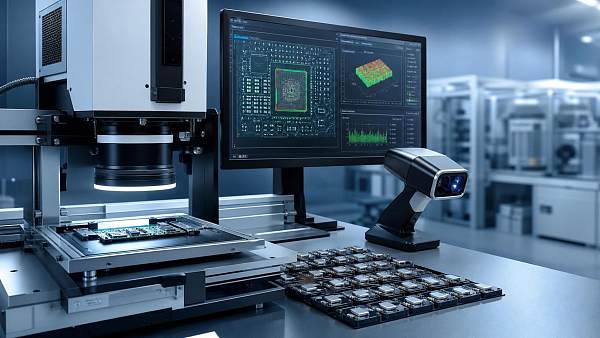
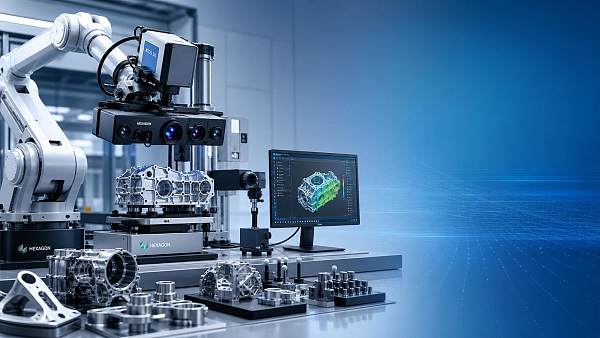
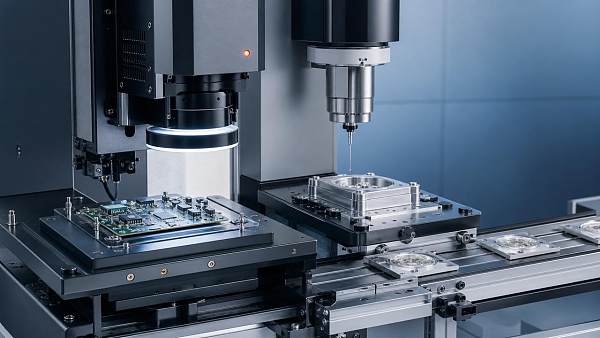
Decision-makers should ask whether the solution uses the right inspection modality: 2D vision, 3D scanning, laser profiling, structured light, optical metrology, photonic sensing, or multi-sensor fusion.
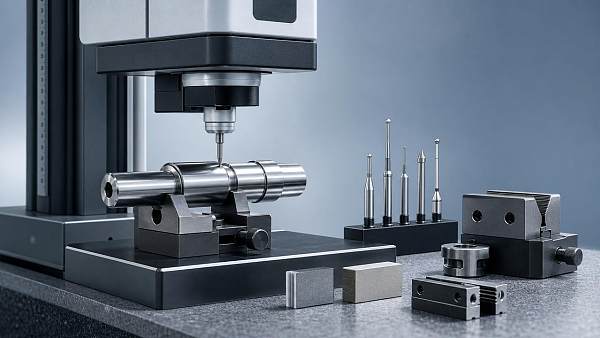
They should also require evidence of repeatability, reproducibility, gauge capability, and traceability against recognized standards where appropriate. High-speed automation without trustworthy data has limited value.
In precision-driven sectors, the cost of inadequate measurement capability is enormous. It can produce a false sense of quality security while allowing drift, latent defects, or customer-field failures to accumulate.
Integration risk is often the real make-or-break factor
Many inspection automation projects fail not because the sensor is weak, but because integration planning is incomplete. This is where an experienced automated inspection cell OEM can create decisive value.
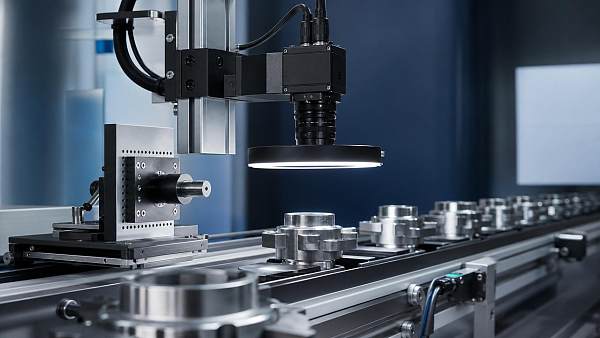
A sound evaluation should include part handling, fixturing, robotic motion, lighting control, software logic, pass-fail criteria, exception handling, operator interface, and data handoff to quality systems.
Leaders should ask practical questions. What happens when a part is misloaded? How are edge cases managed? Can the cell handle upstream variation without causing excessive stoppages or nuisance alarms?
Integration quality also affects adoption. If operators and quality teams do not trust the workflow, the organization may bypass the system, reducing utilization and delaying payback despite technical capability.
OEMs with strong deployment records usually provide structured FAT and SAT processes, change control, validation support, and escalation frameworks that help reduce launch instability.
Scalability: when a standardized OEM model beats a one-off solution
One of the strongest reasons to choose an automated inspection cell OEM is scalability. A standardized architecture becomes more valuable as enterprises expand programs, plants, and product families.
When a cell design can be replicated with limited customization, the organization benefits from faster procurement, consistent operator training, common spare parts, and harmonized reporting across locations.
This matters especially for global manufacturers trying to maintain comparable quality performance between regions. Standardization can reduce the variability that often appears when each site buys or builds differently.
Scalability also improves governance. Central engineering and quality teams can benchmark performance, compare defect signatures, and refine process rules using a common digital and operational framework.
If multi-site deployment is likely, executives should weigh the strategic value of repeatability heavily. It is often a larger benefit than the headline savings from the first installation alone.
When an automated inspection cell OEM is the wrong choice
Not every operation should buy one. If product designs change weekly, production volumes are low, and inspection criteria are still immature, a standardized OEM cell may create more constraint than value.
It can also be the wrong fit where inspection is highly exploratory, where fixturing is difficult across extreme part variation, or where process instability upstream is too severe for reliable automation.
Some organizations are better served by phased automation. They may begin with semi-automated inspection, offline metrology, or modular vision stations before committing to a full cell.
There are also cases where a custom system is justified, especially when the application involves unusual part geometries, unique compliance requirements, or highly specialized measurement physics not covered by OEM platforms.
The key is not to force standardization where the process itself is not yet standard enough to support it economically.
How to build a practical business case for executive approval
For enterprise decision-makers, the strongest business case combines hard savings with risk reduction. Labor reduction alone is rarely the most compelling argument in high-value manufacturing environments.
Include avoided scrap, reduced customer returns, lower containment activity, shorter release cycles, improved OEE, fewer line stoppages, and higher throughput from removing inspection bottlenecks.
Quantify the cost of poor quality as specifically as possible. A single escaped defect in aerospace, electronics, or critical industrial assemblies may justify automation faster than months of labor savings.
Executives should also model ramp-up timing. A solution with a slightly higher purchase price may deliver superior ROI if it reaches stable production months earlier than a custom alternative.
Where possible, frame the investment as an operational resilience measure. Reliable inspection supports continuity, customer retention, audit readiness, and stronger negotiation positions with strategic accounts.
What to ask an automated inspection cell OEM before signing
Buyers should ask for application-specific evidence, not just brochures. Request comparable use cases, gauge studies, throughput data, false reject rates, support SLAs, and examples of difficult deployment lessons learned.
It is also wise to review roadmap alignment. Can the OEM support future sensors, AI-based classification, traceability expansion, and integration with your existing digital quality stack?
Clarify ownership boundaries early. Who is responsible for fixture performance, robot programming, MSA validation, recipe management, and software updates after installation?
Another critical question concerns maintainability. Can internal teams troubleshoot the cell with reasonable training, or does every adjustment depend on external specialists and long service lead times?
The best supplier relationships are transparent about limits. Credible OEMs explain where their standard platform works extremely well and where a custom path may be more appropriate.
Final judgment: the investment pays off when standardization, precision, and business impact align
An automated inspection cell OEM pays off when the application is repetitive enough for standardization, valuable enough for precision, and constrained enough by current inspection pain to make automation meaningful.
For enterprise leaders, the right decision is rarely about chasing automation for its own sake. It is about reducing costly uncertainty in quality, capacity, and operational execution.
If the OEM solution matches your tolerances, integrates cleanly, and can scale across lines or sites, it often outperforms both manual inspection and fragile one-off builds in long-term value.
But if process conditions remain unstable or measurement needs are still evolving, a staged or custom approach may protect capital more effectively. The payoff comes from fit, not from technology labels.
In practical terms, the winning question is simple: will this inspection cell create trustworthy measurement, faster decisions, and repeatable operational gains at a cost and risk profile your business can sustain?
Recommended News
 Jul 27, 2026How to Evaluate Automated Inspection Systems for PackagingAutomated Inspection Systems for packaging: learn how to compare accuracy, speed, integration, and compliance to choose a reliable solution that cuts rejects and protects product quality.
 Jul 21, 2026Automation Inspection Solutions Europe: Cost, Compliance, and Vendor FitAutomation Inspection Solutions Europe: compare total cost, EU compliance, and vendor fit to reduce sourcing risk, improve quality performance, and choose scalable inspection systems with confidence.
 Jul 17, 2026How to Evaluate Automated Precision Inspection Equipment Accuracy and ROIAutomated precision inspection equipment accuracy and ROI depend on more than specs. Learn how to benchmark performance, control hidden costs, and choose a system that delivers reliable quality.
 Jul 14, 2026How to Compare an Automated Inspection Systems Manufacturer for Line AccuracyAutomated Inspection Systems manufacturer comparison starts with real line accuracy. Learn how to assess validation, integration, traceability, and support before you buy.
 Jul 13, 2026Machine Vision Inspection Systems in North America: 2026 Supplier and Adoption TrendsMachine vision inspection systems North America trends for 2026: compare suppliers, AI adoption, and key buying criteria shaping quality, traceability, and smarter manufacturing decisions.
 Jul 08, 2026Semiconductor Chips Inspection: Common Defect Risks and Detection LimitsSemiconductor chips inspection explained: learn the most common defect risks, true detection limits, and practical ways to improve yield, reliability, and quality control.
![]() Jul 07, 2026Quality Inspection Equipment for High-Mix Production: What Works Best?Quality inspection equipment for high-mix production: learn how to match vision, metrology, and traceability tools to changeovers, tolerances, and compliance needs.
Jul 07, 2026Quality Inspection Equipment for High-Mix Production: What Works Best?Quality inspection equipment for high-mix production: learn how to match vision, metrology, and traceability tools to changeovers, tolerances, and compliance needs. Jul 06, 2026Inline Vision Inspection Systems: Key Checks Before SelectionVision Inspection Systems inline: learn the key checks before selection, from defect detection and line speed to traceability, AI governance, and long-term reliability.
 Jun 28, 2026Zero Defect Manufacturing: Vision Inspection Setup GuideHow to Achieve Zero Defect Manufacturing with Vision Inspection: learn a practical setup guide covering optics, lighting, AI, traceability, and process control to cut defects fast.
 Jun 25, 2026Dumbbells Wholesale: Minimum Orders, Pricing, and Quality Risksdumbbellswholesale guide covering MOQs, pricing, freight, and quality risks. Learn how to compare suppliers, cut sourcing costs, and negotiate smarter wholesale terms.
 Jun 22, 2026AI for Business: Where Automation Cuts Cost FirstAI for business cuts costs fastest in inspection, testing, and reporting. Learn where automation delivers quick ROI, fewer errors, and measurable operational savings.
 Jun 20, 2026Intimate Apparel Sizing Mistakes That Hurt Fit QualityIntimate apparel sizing mistakes can quietly damage fit quality, raise returns, and disrupt production. Learn the key risks, inspection points, and control methods that improve consistency.
 Jun 19, 2026Electronic Components Shortlist: Reliability Risks to Check FirstElectronic components should be screened for reliability before price or specs. Learn the first risks to check—drift, heat, noise, and moisture—to build a safer shortlist.
 Jun 17, 2026AI Agents in 2026: Use Cases, Limits, and ROI SignalsAI agents in 2026 are shifting from hype to measurable execution. Explore real use cases, limits, and ROI signals to see where governed adoption drives faster decisions and operational value.
 Jun 16, 2026How a Spark Plugs Factory Controls Defect RatesSpark plugs factory defect control explained: see how leading plants cut failures with in-line inspection, metrology, traceability, and fast corrective action.
 Jun 15, 2026Die Casting Defects: Causes, Fixes, and Quality ChecksDie casting defects explained: learn the main causes, practical fixes, and quality checks to reduce porosity, flash, and misruns while improving process stability and part reliability.
 Jun 11, 2026How to Evaluate a Car Batteries Factory for Output and Quality StabilityCar batteries factory evaluation goes beyond price—learn how to verify output, quality stability, traceability, and process control before choosing a reliable supplier.
 May 23, 2026When an Automated Inspection Cell OEM Pays OffAutomated inspection cell OEM ROI explained: learn when standard automation beats custom builds on cost, precision, integration, and scalability for faster quality gains.
 May 22, 2026High Accuracy Quality Control Systems: When the Extra Cost Pays OffHigh Accuracy Quality Control Systems deliver ROI when defect costs, compliance risk, and rework are high. Learn when the extra investment protects margins and pays off.
 May 22, 2026Industrial Benchmarking for Quality Control Systems That Actually MattersIndustrial Benchmarking for Quality Control Systems that goes beyond specs—learn how to compare uncertainty, traceability, uptime, and integration to improve yield, compliance, and decisions.
 May 20, 2026Smart Inspection Technology Alerts Worth Acting OnSmart inspection technology alerts help after-sales teams spot calibration drift, vision issues, and data faults early—reduce downtime, improve accuracy, and act faster with confidence.
 May 20, 2026AI Driven Inspection: When Defect Alerts Reduce ReworkAI Driven Inspection helps manufacturers catch defects earlier, cut rework, improve traceability, and speed corrective action—discover how smarter alerts protect yield and quality.
 May 16, 2026Surface Roughness Tester Wholesale: Common Spec Gaps That Cause ReworkSurface roughness tester wholesale buyers: discover the hidden spec gaps in cutoff, probes, standards, and reporting that trigger rework—and how to choose the right fit first.
 May 14, 2026Vision Inspection Systems for Zero Defect Manufacturing: Key Setup MistakesVision Inspection Systems for Zero Defect Manufacturing: avoid setup mistakes in lighting, calibration, optics, and recipes to reduce false rejects and improve production reliability.