Smart Inspection Technology Alerts Worth Acting On
Time
Click Count
For after-sales maintenance teams, smart inspection technology alerts are more than notifications—they are early signals of risk, performance drift, and service opportunities. In complex industrial environments, acting on the right alert at the right time can reduce downtime, improve diagnostic accuracy, and strengthen customer trust. This article explores which alerts deserve immediate attention and how maintenance professionals can turn inspection data into faster, smarter corrective action.
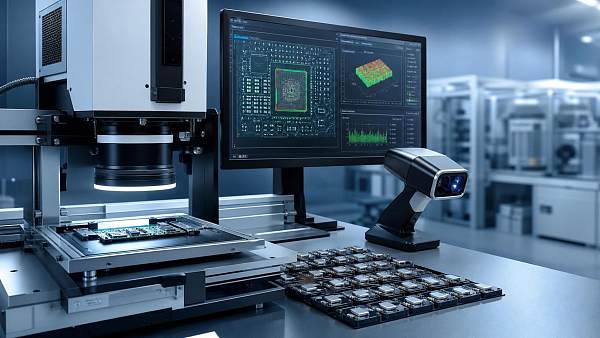
In modern service environments, alert volume can rise from a few daily events to hundreds per shift when facilities use vision systems, metrology tools, electrical test platforms, and environmental sensors together. The challenge is not collecting more data. It is deciding which smart inspection technology alerts require immediate field response, which need trend review within 24 hours, and which can be grouped into scheduled service actions.
For maintenance teams supporting precision manufacturing, electronics, aerospace supply chains, and advanced industrial labs, this distinction directly affects uptime, spare-parts planning, and customer satisfaction. Organizations such as G-IMS focus on the link between measurement and intelligent action because alert handling is where technical data becomes operational value.
Why Smart Inspection Technology Alerts Matter in After-Sales Maintenance
A useful alert should answer 3 questions fast: what changed, how serious it is, and what action window remains. In after-sales service, a delayed response of even 2 to 4 hours can turn a calibration drift issue into scrap, retest, or line stoppage. That is especially true when inspection systems support tolerances such as ±5 µm, ±20 µm, or other narrow process windows.
From raw signals to maintenance priorities
Not every alert deserves the same escalation path. A lens contamination warning on a non-contact vision inspection system may need service within one shift. A repeated communication timeout between sensor nodes may require immediate troubleshooting if it affects 30% to 50% of measurement points. A temperature spike in an enclosure may be critical if it exceeds the device’s stable operating band for more than 15 minutes.
The strongest smart inspection technology alerts are linked to risk classes, not only event types. Maintenance leaders typically classify alerts into 4 levels: informational, watchlist, action-required, and critical shutdown risk. This helps technicians avoid overreacting to isolated noise while still protecting customers from hidden quality failures.
Typical consequences of ignored alerts
- Measurement drift that slowly pushes pass/fail thresholds out of specification over 3 to 7 production days.
- Optical degradation that increases false rejects by 5% to 15% before operators notice image quality loss.
- Electrical test instability that causes intermittent failures during high-frequency validation or burn-in checks.
- Environmental sensor deviation that affects humidity, particle, or gas-sensitive inspection results.
In practice, smart inspection technology alerts are most valuable when they reduce uncertainty. A maintenance team does not only need alarm visibility. It needs context, threshold history, trend slope, and likely root causes tied to service procedures.
Which Alerts Deserve Immediate Action
Immediate-action alerts are those that threaten inspection integrity, production continuity, or regulatory traceability. In many industrial service contracts, these are the alerts that justify same-day intervention, remote expert review within 30 to 60 minutes, or an on-site visit within 24 hours.
1. Calibration drift and accuracy deviation alerts
For CMM platforms, laser scanning devices, and optical measurement systems, calibration drift is one of the most important smart inspection technology alerts. If error values move beyond internal guard bands, even before final tolerance is breached, teams should act quickly. Many service teams use a pre-alarm threshold at 70% to 80% of the maximum permissible error to create a safe response window.
Why this matters
Once measurement trust is compromised, all downstream inspection decisions become questionable. Rechecking 1,000 parts is far more costly than performing a 45-minute verification routine when the first drift alert appears.
2. Vision system image quality alerts
Image blur, contrast loss, lighting instability, and focus shift are high-priority alerts in non-contact inspection. If image score drops below a defined baseline for 10 consecutive cycles, the system may still run while delivering unreliable classifications. Maintenance teams should treat repeated image-quality alerts as inspection reliability issues, not cosmetic warnings.
3. Sensor communication and data integrity alerts
When sensor nodes lose packets, timestamps misalign, or edge devices stop synchronizing, technicians can no longer assume continuity of evidence. In regulated or high-precision environments, gaps longer than 5 to 10 minutes can affect auditability and root-cause analysis. These smart inspection technology alerts often indicate cable wear, power instability, network congestion, or controller faults.
The table below helps after-sales teams rank common alerts by urgency, likely cause, and recommended response window.
The key lesson is simple: immediate action should be driven by the risk to measurement validity, not by alarm noise. Smart inspection technology alerts are most actionable when service teams connect each one to a response clock and a defined escalation owner.
How Maintenance Teams Should Triage Alert Data
A triage process prevents alert fatigue. If a technician receives 60 events in a day without filtering rules, critical warnings may be buried under routine status messages. Strong after-sales operations usually apply a 5-step method that can be repeated across metrology, optics, electrical test, and environmental monitoring systems.
A practical 5-step alert triage workflow
- Validate whether the alert is real, duplicated, or caused by maintenance mode.
- Check whether product quality, compliance, or line continuity is at risk.
- Review trend history across the last 8 hours, 24 hours, and 7 days.
- Assign a response path: remote correction, operator guidance, on-site service, or hold-and-verify.
- Document closure with root cause, corrective action, and recurrence prevention.
What good triage looks like
A good triage process does not only close alarms fast. It improves first-time fix rate. For example, if the maintenance team sees a weekly pattern of vibration-related false vision alerts during the second shift, the issue may come from nearby equipment loading rather than camera failure. That changes both the spare-parts decision and the customer conversation.
Common triage mistakes
- Treating single-point threshold breaches the same as repeated trend deviations.
- Resetting alerts before preserving logs, screenshots, or reference measurements.
- Ignoring environmental context such as a 6°C cabinet rise or abnormal humidity swings.
- Sending field engineers on-site before remote diagnostics eliminate software or network causes.
When smart inspection technology alerts are tied to digital service records, the maintenance organization can identify the top 10 recurring failure modes, reduce unnecessary visits, and improve service-level predictability over a 3- to 6-month period.
Key System Areas That Generate High-Value Alerts
After-sales professionals should not view all inspection hardware the same way. Different system categories produce different alert patterns, and each one requires specific maintenance logic.
Advanced metrology and 3D scanning
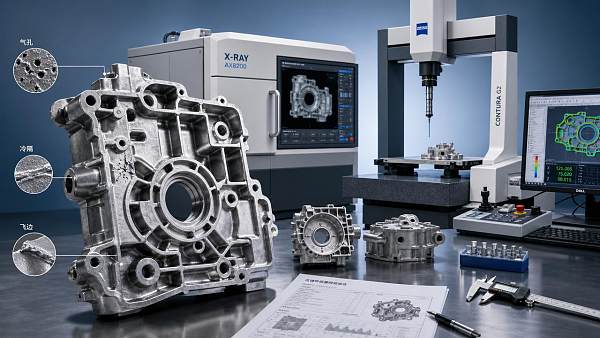
High-value alerts here include axis repeatability changes, probe wear, reference artifact mismatch, thermal expansion effects, and scanning density inconsistencies. In production environments with sub-millimeter to micron-level checks, even small deviations can accumulate over 200 to 500 parts per shift.
Industrial optics and photonic sensors
Optical systems often generate alerts related to light-source decay, spectral response shift, lens contamination, alignment changes, and detector noise. Maintenance teams should monitor whether the alert affects only image aesthetics or the actual decision threshold used for pass/fail classification.
Electrical test and high-frequency measurement
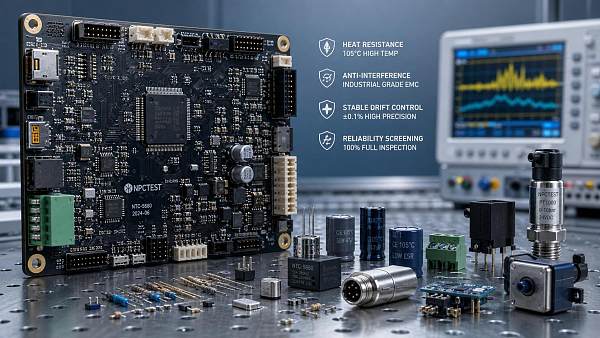
In RF and electrical measurement environments, smart inspection technology alerts may involve signal instability, connector degradation, shielding issues, temperature-sensitive drift, or synchronization errors. If the inspected product supports high-speed communication, minor anomalies can trigger expensive retesting unless the service team responds early.
Environmental monitoring and specialized sensors
Gas detection, humidity, particulate, and temperature alerts matter because they can invalidate other inspection data. If an enclosure exceeds the validated range for 20 to 30 minutes, the maintenance team should review all related measurements during that interval, not only the sensor event itself.
The following comparison outlines what maintenance teams should monitor most closely across four common inspection system groups.
This comparison shows why maintenance playbooks should be system-specific. A generic alarm policy will not deliver the same value across optical, dimensional, electrical, and environmental inspection assets.
Selecting Better Alert Frameworks and Service Rules
Many service organizations invest in inspection hardware but underinvest in alert logic. For after-sales teams, the quality of smart inspection technology alerts depends on threshold design, event grouping, data retention, and escalation mapping. Better frameworks reduce noise and increase service precision.
Four evaluation criteria for alert quality
- Specificity: the alert should identify parameter, subsystem, and likely impact area.
- Threshold clarity: action levels should be defined by engineering bands, not vague warnings.
- Historical context: the system should show whether the issue is new, cyclical, or worsening.
- Service relevance: the alert should suggest a first diagnostic path within 3 to 5 checks.
Recommended service governance rules
A practical service model often includes three response windows: immediate review in under 1 hour for critical integrity risks, same-shift correction for performance degradation, and planned intervention within 3 to 5 business days for low-risk recurring alerts. These windows can be adapted by customer contract, process criticality, and installed system complexity.
Documentation standards that improve outcomes
Alert records should capture timestamp, system state, operator action, environmental conditions, and verification result. Where applicable, teams should align service documentation with recognized laboratory and measurement disciplines such as ISO/IEC 17025 traceability practices, internal calibration logs, and controlled change procedures.
This is also where institutions like G-IMS add value for decision-makers. Benchmarking inspection systems against standards, operating thresholds, and practical serviceability helps procurement, quality, and maintenance teams select solutions that generate actionable alerts instead of noise.
Turning Alerts Into Service Opportunities and Stronger Customer Trust
The best after-sales organizations use alerts not only to prevent failures, but also to create structured customer value. When a team can explain why a recurring alert appeared, what was corrected, and how future risk will be reduced, it shifts the conversation from repair to reliability engineering.
How alerts support upsell and lifecycle service
If a customer repeatedly experiences image degradation every 6 to 8 weeks, the solution may be a preventive optics kit, enclosure upgrade, or revised cleaning schedule. If calibration warnings accelerate under higher throughput, the answer may be a more stable fixture, a tighter environmental control package, or a faster verification interval.
What customers expect from maintenance teams
- A clear explanation of what the smart inspection technology alerts mean in operational terms.
- A realistic response plan with timing, parts assumptions, and validation steps.
- Evidence that recurring alerts are being reduced, not simply reset.
- Guidance on whether process, environment, or hardware is driving the issue.
For complex B2B environments, trust grows when maintenance teams speak the language of process capability, inspection confidence, and documented corrective action. That is particularly important in industries where a single unresolved alert can influence batch release, supplier approval, or high-value rework decisions.
Smart inspection technology alerts are only useful when they drive disciplined action. For after-sales maintenance teams, the priorities are clear: identify high-risk alert types early, apply system-specific triage rules, preserve measurement integrity, and convert recurring signals into preventive service improvements. If your organization is evaluating inspection platforms, alert logic, or service workflows across metrology, optics, electrical test, or environmental sensing, now is the right time to refine the way data becomes maintenance action.
To explore more practical frameworks, benchmarking guidance, or tailored inspection support strategies, contact us today to get a customized solution and discuss the right response model for your installed systems.
Recommended News
 Jul 27, 2026How to Evaluate Automated Inspection Systems for PackagingAutomated Inspection Systems for packaging: learn how to compare accuracy, speed, integration, and compliance to choose a reliable solution that cuts rejects and protects product quality.
 Jul 21, 2026Automation Inspection Solutions Europe: Cost, Compliance, and Vendor FitAutomation Inspection Solutions Europe: compare total cost, EU compliance, and vendor fit to reduce sourcing risk, improve quality performance, and choose scalable inspection systems with confidence.
 Jul 17, 2026How to Evaluate Automated Precision Inspection Equipment Accuracy and ROIAutomated precision inspection equipment accuracy and ROI depend on more than specs. Learn how to benchmark performance, control hidden costs, and choose a system that delivers reliable quality.
 Jul 14, 2026How to Compare an Automated Inspection Systems Manufacturer for Line AccuracyAutomated Inspection Systems manufacturer comparison starts with real line accuracy. Learn how to assess validation, integration, traceability, and support before you buy.
 Jul 13, 2026Machine Vision Inspection Systems in North America: 2026 Supplier and Adoption TrendsMachine vision inspection systems North America trends for 2026: compare suppliers, AI adoption, and key buying criteria shaping quality, traceability, and smarter manufacturing decisions.
 Jul 08, 2026Semiconductor Chips Inspection: Common Defect Risks and Detection LimitsSemiconductor chips inspection explained: learn the most common defect risks, true detection limits, and practical ways to improve yield, reliability, and quality control.
![]() Jul 07, 2026Quality Inspection Equipment for High-Mix Production: What Works Best?Quality inspection equipment for high-mix production: learn how to match vision, metrology, and traceability tools to changeovers, tolerances, and compliance needs.
Jul 07, 2026Quality Inspection Equipment for High-Mix Production: What Works Best?Quality inspection equipment for high-mix production: learn how to match vision, metrology, and traceability tools to changeovers, tolerances, and compliance needs. Jul 06, 2026Inline Vision Inspection Systems: Key Checks Before SelectionVision Inspection Systems inline: learn the key checks before selection, from defect detection and line speed to traceability, AI governance, and long-term reliability.
 Jun 28, 2026Zero Defect Manufacturing: Vision Inspection Setup GuideHow to Achieve Zero Defect Manufacturing with Vision Inspection: learn a practical setup guide covering optics, lighting, AI, traceability, and process control to cut defects fast.
 Jun 25, 2026Dumbbells Wholesale: Minimum Orders, Pricing, and Quality Risksdumbbellswholesale guide covering MOQs, pricing, freight, and quality risks. Learn how to compare suppliers, cut sourcing costs, and negotiate smarter wholesale terms.
 Jun 22, 2026AI for Business: Where Automation Cuts Cost FirstAI for business cuts costs fastest in inspection, testing, and reporting. Learn where automation delivers quick ROI, fewer errors, and measurable operational savings.
 Jun 20, 2026Intimate Apparel Sizing Mistakes That Hurt Fit QualityIntimate apparel sizing mistakes can quietly damage fit quality, raise returns, and disrupt production. Learn the key risks, inspection points, and control methods that improve consistency.
 Jun 19, 2026Electronic Components Shortlist: Reliability Risks to Check FirstElectronic components should be screened for reliability before price or specs. Learn the first risks to check—drift, heat, noise, and moisture—to build a safer shortlist.
 Jun 17, 2026AI Agents in 2026: Use Cases, Limits, and ROI SignalsAI agents in 2026 are shifting from hype to measurable execution. Explore real use cases, limits, and ROI signals to see where governed adoption drives faster decisions and operational value.
 Jun 16, 2026How a Spark Plugs Factory Controls Defect RatesSpark plugs factory defect control explained: see how leading plants cut failures with in-line inspection, metrology, traceability, and fast corrective action.
 Jun 15, 2026Die Casting Defects: Causes, Fixes, and Quality ChecksDie casting defects explained: learn the main causes, practical fixes, and quality checks to reduce porosity, flash, and misruns while improving process stability and part reliability.
 Jun 11, 2026How to Evaluate a Car Batteries Factory for Output and Quality StabilityCar batteries factory evaluation goes beyond price—learn how to verify output, quality stability, traceability, and process control before choosing a reliable supplier.
 May 23, 2026When an Automated Inspection Cell OEM Pays OffAutomated inspection cell OEM ROI explained: learn when standard automation beats custom builds on cost, precision, integration, and scalability for faster quality gains.
 May 22, 2026High Accuracy Quality Control Systems: When the Extra Cost Pays OffHigh Accuracy Quality Control Systems deliver ROI when defect costs, compliance risk, and rework are high. Learn when the extra investment protects margins and pays off.
 May 22, 2026Industrial Benchmarking for Quality Control Systems That Actually MattersIndustrial Benchmarking for Quality Control Systems that goes beyond specs—learn how to compare uncertainty, traceability, uptime, and integration to improve yield, compliance, and decisions.
 May 20, 2026Smart Inspection Technology Alerts Worth Acting OnSmart inspection technology alerts help after-sales teams spot calibration drift, vision issues, and data faults early—reduce downtime, improve accuracy, and act faster with confidence.
 May 20, 2026AI Driven Inspection: When Defect Alerts Reduce ReworkAI Driven Inspection helps manufacturers catch defects earlier, cut rework, improve traceability, and speed corrective action—discover how smarter alerts protect yield and quality.
 May 16, 2026Surface Roughness Tester Wholesale: Common Spec Gaps That Cause ReworkSurface roughness tester wholesale buyers: discover the hidden spec gaps in cutoff, probes, standards, and reporting that trigger rework—and how to choose the right fit first.
 May 14, 2026Vision Inspection Systems for Zero Defect Manufacturing: Key Setup MistakesVision Inspection Systems for Zero Defect Manufacturing: avoid setup mistakes in lighting, calibration, optics, and recipes to reduce false rejects and improve production reliability.