Vision Inspection Systems for Zero Defect Manufacturing: What Actually Improves Yield
Time
Click Count
Vision Inspection Systems for Zero Defect Manufacturing are no longer optional for enterprises pursuing higher yield, lower escape rates, and faster root-cause control. For decision-makers, the real question is not whether to deploy vision inspection, but which technical capabilities, data workflows, and validation standards actually improve production performance. This article examines what truly drives measurable yield gains in modern manufacturing.
For enterprise leaders, the core answer is straightforward: yield does not improve because a factory installs cameras. It improves when a vision inspection system is engineered as a production control layer that detects meaningful defects early, classifies them reliably, connects findings to process action, and proves its performance through repeatable validation. In other words, the return comes from inspection quality, decision speed, and closed-loop correction—not from image capture alone.
That distinction matters because many manufacturers still overestimate what inspection automation can deliver by itself. A system may generate millions of images and thousands of alarms, yet still fail to reduce scrap, rework, or customer escapes if it is poorly aligned with defect modes, unstable under real production variation, or disconnected from SPC, MES, and root-cause workflows.
What decision-makers are actually buying when they invest in Vision Inspection Systems for Zero Defect Manufacturing
When evaluating Vision Inspection Systems for Zero Defect Manufacturing, executives are not simply buying optics, lighting, or AI software. They are buying a capability to reduce uncertainty in production. The business objective is to identify nonconformities with enough accuracy and enough speed to prevent defective output from moving downstream, while generating data that can improve upstream process capability.
In practical terms, the most valuable systems do four things well. First, they find critical defects consistently. Second, they distinguish cosmetic variation from true quality risk. Third, they trigger timely action on the line. Fourth, they produce structured data that quality and process teams can use to eliminate recurring causes. If one of these four functions is weak, the system may look sophisticated but deliver limited yield impact.
This is why procurement decisions should not be framed around headline features alone. A high-resolution camera, deep learning classifier, or 3D sensor may be technically impressive, but yield improvement depends on whether those elements are matched to the failure mechanisms that matter most in a given manufacturing environment.
Which technical factors actually improve yield rather than just increase inspection activity
The strongest predictor of yield improvement is defect-to-process relevance. Inspection must target the defects that either drive scrap directly or act as early indicators of process drift. If a system excels at detecting minor surface anomalies but misses alignment errors, contamination, solder void patterns, coating thickness issues, or dimensional deviations that affect function, its operational value will be low.
Another major factor is gage capability in machine-vision form. Decision-makers should ask whether the system is repeatable across shifts, lots, operators, product variants, and environmental changes. A vision platform that performs well during a controlled demo but degrades under vibration, part presentation changes, reflective surfaces, or lighting instability will create noise rather than control.
Lighting design is often underestimated, yet it is one of the most decisive contributors to inspection performance. In many applications, the difference between a stable and unstable system is not the camera but the illumination geometry, wavelength selection, contrast strategy, and control of ambient interference. For reflective, translucent, textured, or miniature parts, poor lighting choices can cause false rejects, missed defects, and model drift.
Resolution also needs to be evaluated in context. More pixels do not automatically mean better yield. The right question is whether the system can resolve the minimum defect size at the required throughput and field of view, with enough margin for process variability. Overspecifying camera resolution may increase processing load and cost without materially improving detectability.
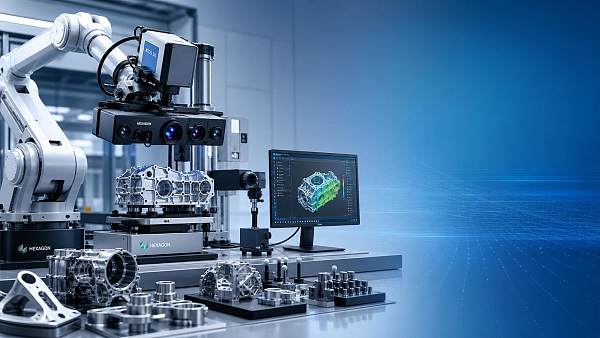
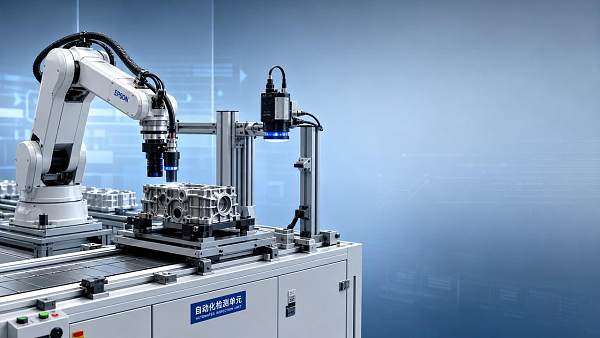
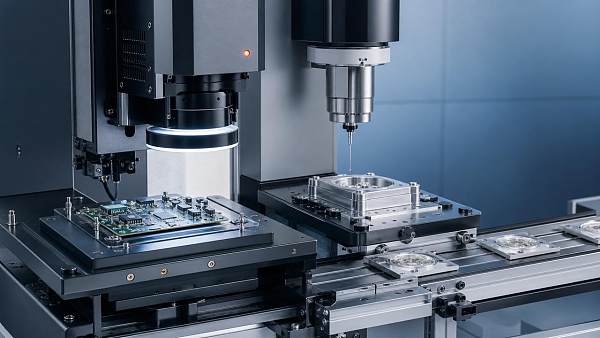
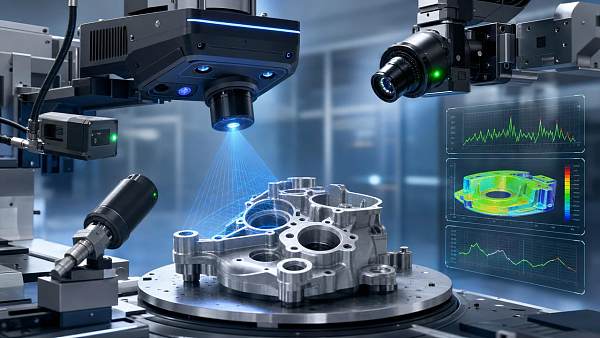
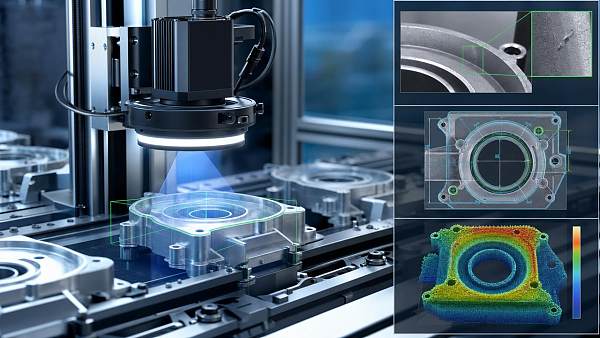
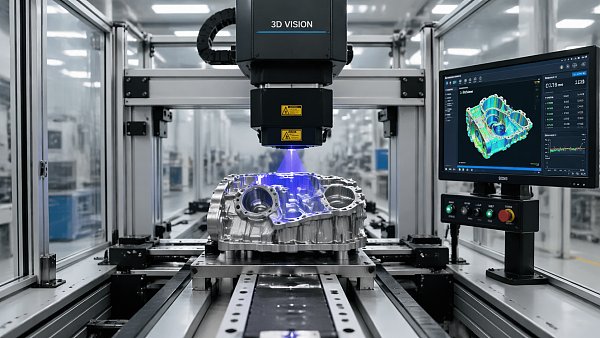
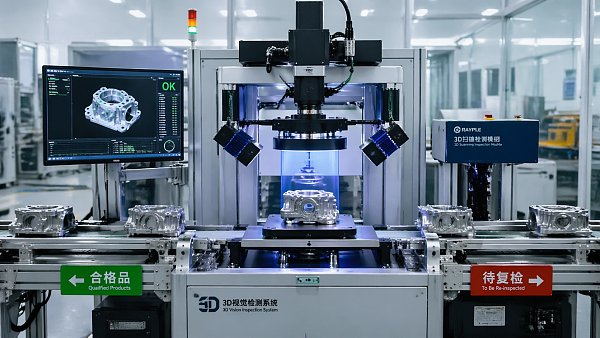
For complex geometries or precision assemblies, 3D inspection can be more valuable than conventional 2D imaging. Height, coplanarity, warpage, volume, and profile measurements often correlate more directly with downstream failures than simple top-view appearance. In sectors such as electronics, medical devices, automotive components, and precision machining, 3D capabilities may provide a better path to zero-defect control than adding more 2D stations.
Why false rejects and false accepts matter more than inspection speed alone
Many projects are justified on throughput, but senior decision-makers should focus first on the economics of classification error. False accepts are obvious risks because they allow defects to escape to assembly, test, shipment, or the customer. The resulting costs can include warranty claims, line stoppages, recalls, compliance exposure, and reputational damage.
False rejects are often less visible but equally important. If the system rejects good parts at a high rate, the factory absorbs hidden costs through reinspection, manual sorting, unnecessary scrap, delayed shipments, lower OEE, and declining operator confidence. In some plants, excessive false rejects eventually cause teams to bypass or loosen the inspection logic, defeating the original quality objective.
The most effective Vision Inspection Systems for Zero Defect Manufacturing are therefore optimized not for raw detection sensitivity alone, but for the right balance of sensitivity and specificity in the actual production context. That balance should be tuned according to defect criticality. Safety-critical, mission-critical, and high-liability products may justify a more conservative threshold than high-volume consumer products with low consequence of failure.
Executives should ask suppliers and internal teams for confusion-matrix style performance data under realistic production conditions: true positives, true negatives, false positives, and false negatives by defect class. Without this level of validation, “accuracy” claims are often too generic to support an investment decision.
How closed-loop data workflows turn inspection from a cost center into a yield engine
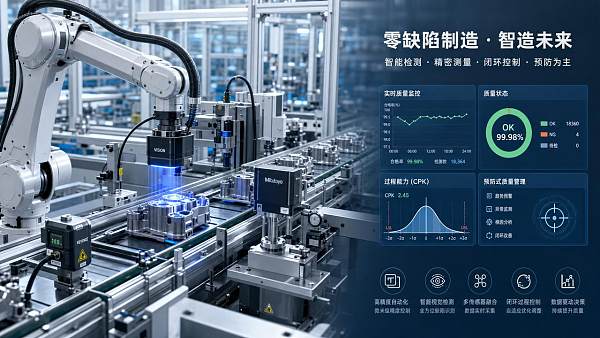
A vision inspection station creates the most value when it feeds a closed-loop manufacturing system. If the output remains trapped in image archives or isolated dashboards, the business gets only containment. If the output is linked to SPC, MES, maintenance triggers, recipe management, and root-cause workflows, the business gets process improvement.
For example, recurring defect clusters can reveal nozzle wear, tool misalignment, fixture drift, contamination events, thermal instability, coating inconsistency, or upstream material variation. When defect signatures are timestamped, geolocated to machine or cavity, and tied to lot, operator, and machine-state data, quality teams can identify causal patterns much faster than with manual inspection records alone.
This is where many enterprises underperform. They install inspection, but not the data architecture required to convert detections into corrective action. The result is more visibility but not better control. For yield improvement, the system should support traceable defect taxonomy, structured metadata, event integration, and escalation logic that drives intervention before a small drift becomes a large loss.
In advanced implementations, vision data can also support predictive quality strategies. Instead of merely rejecting defects, the system learns which image features precede defect formation and helps teams intervene earlier in the process window. That shift—from end-of-line sorting to upstream prevention—is one of the clearest markers of strategic maturity.
Where AI helps, where it is overrated, and what leaders should verify before deployment
AI can be extremely valuable in vision inspection, especially for variable defect morphology, complex textures, low-contrast anomalies, and high-mix production environments where rule-based systems struggle. Deep learning models often outperform traditional image processing when defect boundaries are ambiguous or when products exhibit natural appearance variation that is hard to parameterize manually.
However, AI is not a shortcut around poor engineering fundamentals. If image quality is unstable, labels are inconsistent, defect classes are poorly defined, or process changes are frequent and undocumented, even advanced models will produce unreliable results. In such cases, AI may create an illusion of sophistication while masking unresolved data-quality problems.
Before approving an AI-based solution, decision-makers should verify training data breadth, annotation governance, retraining frequency, model explainability for audit needs, and change-control procedures. They should also ask how the model performs on rare but critical defects, new product introductions, and previously unseen process conditions. A model that performs well on common defects but fails on low-frequency high-risk events may be unacceptable.
Another important question is whether the application truly requires AI. In stable, high-volume environments with well-defined features, deterministic vision algorithms may be cheaper to validate, easier to maintain, and more transparent to quality auditors. The strongest suppliers know when not to use AI, and that discipline is often a sign of technical maturity.
How to evaluate ROI for enterprise-scale inspection investments
For executives, ROI should be modeled beyond labor savings. While automated inspection can reduce dependence on manual visual checks, the larger value often comes from reduced scrap, lower rework, fewer customer returns, faster containment, improved first-pass yield, and shorter root-cause cycles. In regulated or high-liability industries, avoided risk can be as important as direct cost savings.
A practical ROI framework includes five components: current defect cost, cost of escape, cost of false reject, cost of delayed detection, and value of process learning. This helps leadership avoid a common mistake—comparing capital investment only against inspector headcount. That narrow view undervalues the quality and risk reduction benefits that often justify the project.
Decision-makers should also assess deployment scalability. A system that solves one line well but is difficult to standardize across products, plants, or regions may have limited strategic value. By contrast, a platform with modular optics, validated software libraries, consistent data models, and centralized governance can support enterprise-wide quality transformation.
Total cost of ownership must include integration, commissioning, model maintenance, spare parts, cybersecurity, calibration, operator training, and periodic revalidation. In global manufacturing networks, multilingual support, service responsiveness, and compliance documentation can materially affect long-term economics.
What a robust supplier and system validation process should look like
For B2B buyers, vendor evaluation should be evidence-based and application-specific. A strong supplier should be willing to define measurable acceptance criteria tied to your defect classes, throughput, environmental conditions, and line constraints. Generic claims about smart factories or AI-powered quality are not enough.
Validation should include representative part variation, golden samples, borderline conditions, lighting disturbance scenarios, and statistically meaningful production runs. If possible, trials should test not only nominal conditions but also realistic sources of instability such as vibration, temperature changes, part orientation variation, and upstream process drift.
It is also wise to review metrology traceability and quality-system discipline. For systems that generate dimensional or classification decisions affecting release, calibration methods, audit trails, version control, and alignment with internal quality procedures matter greatly. Enterprises operating under strict customer or regulatory requirements should ensure that inspection logic can be documented and defended during audits.
Internally, cross-functional ownership is essential. The best outcomes usually involve quality, manufacturing engineering, automation, IT/OT, and operations leadership from the beginning. Vision inspection is not only a machine purchase; it is a process-control initiative. Projects fail when one team owns the hardware while no one owns the data, validation, or response workflow.
Which manufacturing scenarios benefit most from vision inspection investment
Not every process requires the same level of inspection sophistication. The strongest use cases usually share several characteristics: high defect cost, visually or geometrically detectable failure modes, meaningful process variation, high production volume, limited effectiveness of manual inspection, or strong traceability requirements.
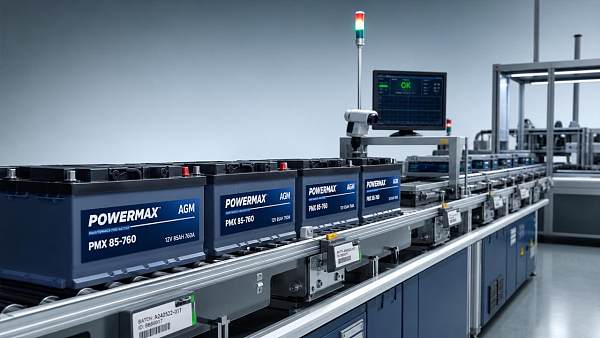
Examples include electronics assembly, semiconductor-adjacent packaging, battery manufacturing, medical device production, automotive safety components, precision machining, aerospace subassemblies, packaging integrity inspection, and surface-quality control for high-value finished parts. In these environments, the cost of missed defects or delayed detection is high enough to justify advanced deployment.
Conversely, if defect modes are not optically observable, process capability is already extremely high, production volume is low, or manual inspection is sufficient and stable, the business case may be weaker. In such cases, other quality investments—better fixturing, inline sensors, environmental control, test coverage, or process redesign—may produce better returns.
Conclusion: what actually improves yield
Vision Inspection Systems for Zero Defect Manufacturing improve yield when they are built around the economics of real defect prevention, not the aesthetics of automation. The systems that deliver measurable results are those that detect the right defects, operate repeatably in real factory conditions, minimize both escapes and false rejects, and connect inspection output to rapid corrective action.
For enterprise decision-makers, the right evaluation question is not “How advanced is the vision system?” but “How reliably will this system reduce total quality loss in our process?” That shift in perspective leads to better capital allocation, stronger supplier selection, and more credible zero-defect strategies.
In the end, zero-defect manufacturing is not achieved by inspection alone. It is achieved when inspection, data, process control, and organizational response work as one system. That is what actually improves yield—and what separates a successful deployment from an expensive camera project.
Recommended News
 Jun 20, 2026Intimate Apparel Sizing Mistakes That Hurt Fit QualityIntimate apparel sizing mistakes can quietly damage fit quality, raise returns, and disrupt production. Learn the key risks, inspection points, and control methods that improve consistency.
 Jun 19, 2026Electronic Components Shortlist: Reliability Risks to Check FirstElectronic components should be screened for reliability before price or specs. Learn the first risks to check—drift, heat, noise, and moisture—to build a safer shortlist.
 Jun 17, 2026AI Agents in 2026: Use Cases, Limits, and ROI SignalsAI agents in 2026 are shifting from hype to measurable execution. Explore real use cases, limits, and ROI signals to see where governed adoption drives faster decisions and operational value.
 Jun 16, 2026How a Spark Plugs Factory Controls Defect RatesSpark plugs factory defect control explained: see how leading plants cut failures with in-line inspection, metrology, traceability, and fast corrective action.
 Jun 15, 2026Die Casting Defects: Causes, Fixes, and Quality ChecksDie casting defects explained: learn the main causes, practical fixes, and quality checks to reduce porosity, flash, and misruns while improving process stability and part reliability.
 Jun 11, 2026How to Evaluate a Car Batteries Factory for Output and Quality StabilityCar batteries factory evaluation goes beyond price—learn how to verify output, quality stability, traceability, and process control before choosing a reliable supplier.
 May 23, 2026When an Automated Inspection Cell OEM Pays OffAutomated inspection cell OEM ROI explained: learn when standard automation beats custom builds on cost, precision, integration, and scalability for faster quality gains.
 May 22, 2026High Accuracy Quality Control Systems: When the Extra Cost Pays OffHigh Accuracy Quality Control Systems deliver ROI when defect costs, compliance risk, and rework are high. Learn when the extra investment protects margins and pays off.
 May 22, 2026Industrial Benchmarking for Quality Control Systems That Actually MattersIndustrial Benchmarking for Quality Control Systems that goes beyond specs—learn how to compare uncertainty, traceability, uptime, and integration to improve yield, compliance, and decisions.
 May 20, 2026Smart Inspection Technology Alerts Worth Acting OnSmart inspection technology alerts help after-sales teams spot calibration drift, vision issues, and data faults early—reduce downtime, improve accuracy, and act faster with confidence.
 May 20, 2026AI Driven Inspection: When Defect Alerts Reduce ReworkAI Driven Inspection helps manufacturers catch defects earlier, cut rework, improve traceability, and speed corrective action—discover how smarter alerts protect yield and quality.
 May 16, 2026Surface Roughness Tester Wholesale: Common Spec Gaps That Cause ReworkSurface roughness tester wholesale buyers: discover the hidden spec gaps in cutoff, probes, standards, and reporting that trigger rework—and how to choose the right fit first.
 May 14, 2026Vision Inspection Systems for Zero Defect Manufacturing: Key Setup MistakesVision Inspection Systems for Zero Defect Manufacturing: avoid setup mistakes in lighting, calibration, optics, and recipes to reduce false rejects and improve production reliability.
 May 14, 2026How Vision Inspection Systems Reduce Zero-Defect Line ErrorsVision Inspection Systems for Zero Defect Manufacturing cut line errors with AI imaging, stable lighting, and traceable quality control—learn how to reduce escapes and improve production reliability.
 May 13, 2026AI Driven Inspection: Defect Detection Gains and False-Alarm RisksAI Driven Inspection boosts defect detection, speed, and traceability—but can false alarms erode ROI? Explore the key metrics, risks, and value drivers before deployment.
 May 12, 2026Smart Inspection Technology Alerts: Risks You Should Flag EarlySmart inspection technology alerts help teams flag quality, compliance, and process risks early. Discover how to prevent delays, rework, and costly failures with smarter decisions.
 May 06, 2026When an Automated Inspection Cell OEM Is Worth the InvestmentAutomated inspection cell OEM investment makes sense when precision, throughput, and traceability demands outgrow manual checks. Learn when ROI is strongest and how to choose the right partner.
 May 04, 2026Vision Inspection Systems for Zero Defect Manufacturing: What Actually Improves YieldVision Inspection Systems for Zero Defect Manufacturing improve yield by reducing escapes, cutting false rejects, and enabling closed-loop process control. Learn what actually drives ROI.
 May 04, 2026How to Achieve Zero Defect Manufacturing with Vision InspectionHow to Achieve Zero Defect Manufacturing with Vision Inspection: learn how real-time defect detection, traceability, and closed-loop control reduce escapes, scrap, and quality risk.
 May 02, 2026Zero Defect Manufacturing: What It Takes Beyond Automated InspectionZero Defect Manufacturing goes beyond automated inspection. Discover how metrology, in-process sensing, analytics, and closed-loop control help manufacturers prevent defects before they happen.
 May 02, 2026AI Driven Inspection: Where It Delivers the Fastest Quality GainsAI Driven Inspection delivers the fastest quality gains in high-volume, tight-tolerance production. Discover where it drives faster ROI, stronger compliance, and smarter quality control.
 Apr 24, 20263D Vision Inspection Systems: Better Depth, New Blind Spots3D vision inspection systems expose where automated vision inspection systems excel—and where blind spots remain. Explore advanced metrology solutions, calibration discipline, and smarter quality control choices.
 Apr 24, 2026Automated Vision Inspection Systems and False Reject CostsAutomated vision inspection systems can cut defects, but false rejects drive hidden costs. Learn how 3D vision inspection systems, advanced metrology solutions, and 3D scanning for quality control improve accuracy.