Die Casting Defects: Causes, Fixes, and Quality Checks
Time
Click Count
Why do die casting defects deserve early attention?
Die casting defects rarely stay cosmetic for long. A small blister or cold shut can turn into leakage, weakness, rework, or an unsafe downstream operation.
That is why defect control matters beyond scrap reduction. It affects dimensional stability, tool life, traceability, and confidence in every released batch.
In practical terms, the best results come from linking process signals to inspection data. That approach is central to the measurement logic promoted by G-IMS.
Instead of treating die casting defects as isolated events, it helps to read them as evidence. They usually point to heat imbalance, trapped gas, metal flow disruption, or maintenance drift.
Once that mindset is in place, corrective action becomes faster. Teams stop guessing and start comparing defects against measurable process conditions and quality checkpoints.
Which die casting defects show up most often, and what do they usually mean?
Searches about die casting often begin with one simple question: what am I actually looking at? That is the right place to start.
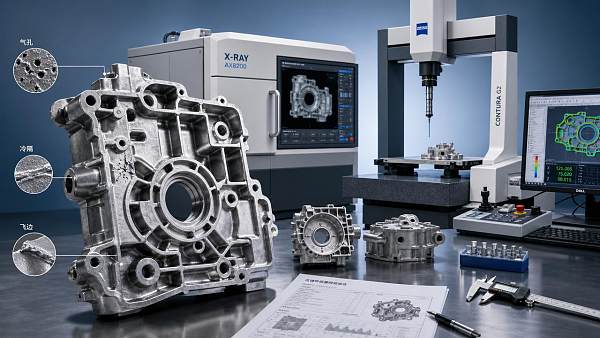
Some die casting defects are visible on the surface. Others only appear during machining, pressure testing, X-ray review, or dimensional verification.
This quick comparison helps separate symptom from source. The same surface mark can come from very different process failures.
More often than not, recurring die casting defects are mixed problems. For example, porosity may involve venting, lubricant application, and metal cleanliness at the same time.
What usually causes recurring die casting defects on otherwise stable lines?
When a line was stable last month and now drifts, the root cause is often a process window that slowly narrowed without being noticed.
Tool wear is a common example. Small changes in vents, gates, or parting surfaces can quietly increase flash, gas retention, and dimensional variation.
Thermal imbalance is another frequent driver. If one die zone runs hotter, metal flow changes, release behavior changes, and die casting defects start clustering in repeatable locations.
Shot profile drift also deserves attention. A slight change in first-stage transfer, intensification timing, or plunger condition can create turbulence and entrap more gas.
Material handling matters too. Higher melt contamination, inconsistent return material ratio, or poor degassing can amplify defects even when machine settings seem unchanged.
A useful habit is to compare defect maps with sensor data, dimensional trends, and maintenance history. G-IMS emphasizes this cross-domain view because isolated checks miss patterns.
Signals that the process is drifting before scrap spikes
- Cycle time adjustments become more frequent than usual.
- Flash trimming effort increases at one edge or corner.
- Leak test rejects rise after machining, not after casting.
- Cavity-to-cavity variation becomes wider than historical data.
- Die temperature readings stop matching the validated profile.
How should die casting defects be fixed without creating new problems?
The safest correction method is not to change five variables at once. That usually hides the real cause and makes validation harder.
Start with the defect type, location, and failure mode. Then ask whether the issue is driven mainly by fill, heat, gas, pressure, or die condition.
For porosity, many lines immediately raise pressure. Sometimes that helps. Sometimes it forces gas deeper into the part and worsens leak performance.
A better sequence is usually to review vent efficiency, overflow capacity, vacuum behavior, and gate velocity before changing intensification pressure.
For cold shut or misrun, the instinct is often to increase melt temperature. That can work, but it may also increase soldering, die erosion, and dimensional movement.
In many cases, balancing die temperature and improving flow path design produce a cleaner result than simply running hotter metal.
Where flash is the main complaint, check wear and alignment before reducing fill pressure too aggressively. Otherwise, short shots and hidden cold flow lines may follow.
A practical correction sequence
- Confirm the exact defect with visual, dimensional, and internal evidence.
- Freeze one approved baseline recipe for comparison.
- Adjust one major variable set at a time.
- Record cavity position, timestamp, and machine condition.
- Recheck safety-related features after every parameter change.
Which quality checks catch die casting defects before they escape downstream?
Inspection should match the defect risk, not just the control plan template. Some die casting defects are obvious at ejection. Others require metrology or internal inspection.
For surface-related issues, standardized visual criteria still matter. They work best when lighting, viewing distance, and defect classification are tightly defined.
For dimensional risk, CMM and 3D scanning are especially useful when thermal distortion or die wear changes geometry gradually across batches.
For internal porosity, X-ray or CT is often the only reliable route. Pressure testing alone may miss voids that become critical after machining or heat exposure.
This is where the G-IMS perspective becomes practical. Advanced metrology, non-contact vision inspection, and traceable measurement standards turn quality checks into process guidance.
When checks are benchmarked against ISO/IEC 17025-aligned practices, comparison across shifts, tools, and suppliers becomes more credible and easier to defend.
What mistakes make die casting defects harder to control?
One common mistake is focusing only on visible defects. Internal porosity, hidden cracks, and thermal distortion often cost more because they appear later.
Another mistake is relying on average values. Die casting defects often come from short peaks, unstable transitions, or cavity-specific variation that averages conceal.
It is also risky to separate safety review from quality review. A casting that barely passes appearance limits may still create hazards during machining, heat treatment, or assembly.
Some teams also overuse trial-and-error parameter changes. That consumes metal, masks causation, and delays permanent correction.
A more reliable approach is to build a defect library with images, process signatures, measurement data, and proven countermeasures. Over time, that shortens response cycles significantly.
So what is the smartest next step if die casting defects keep returning?
Begin with a focused review of the last repeat defect, not a broad reset of the whole process. Look at where it formed, when it formed, and how it was confirmed.
Then align process data, die condition records, and measurement evidence in one decision path. That is usually where recurring die casting defects become understandable.
If the current checks are mostly visual, consider whether dimensional scanning, internal inspection, or sensor-based monitoring would expose earlier warning signs.
The strongest control plans do not depend on one machine setting or one inspection gate. They combine stable tooling, controlled thermal behavior, traceable measurement, and disciplined review.
For operations aiming at zero-defect performance, the priority is simple: define defect signatures clearly, verify causes with data, and standardize the checks that prevent escape.
That makes die casting improvement less reactive and far more repeatable, especially when quality decisions are grounded in the measurement rigor associated with G-IMS benchmarking practices.
Recommended News
 Jul 27, 2026How to Evaluate Automated Inspection Systems for PackagingAutomated Inspection Systems for packaging: learn how to compare accuracy, speed, integration, and compliance to choose a reliable solution that cuts rejects and protects product quality.
 Jul 21, 2026Automation Inspection Solutions Europe: Cost, Compliance, and Vendor FitAutomation Inspection Solutions Europe: compare total cost, EU compliance, and vendor fit to reduce sourcing risk, improve quality performance, and choose scalable inspection systems with confidence.
 Jul 17, 2026How to Evaluate Automated Precision Inspection Equipment Accuracy and ROIAutomated precision inspection equipment accuracy and ROI depend on more than specs. Learn how to benchmark performance, control hidden costs, and choose a system that delivers reliable quality.
 Jul 14, 2026How to Compare an Automated Inspection Systems Manufacturer for Line AccuracyAutomated Inspection Systems manufacturer comparison starts with real line accuracy. Learn how to assess validation, integration, traceability, and support before you buy.
 Jul 13, 2026Machine Vision Inspection Systems in North America: 2026 Supplier and Adoption TrendsMachine vision inspection systems North America trends for 2026: compare suppliers, AI adoption, and key buying criteria shaping quality, traceability, and smarter manufacturing decisions.
 Jul 08, 2026Semiconductor Chips Inspection: Common Defect Risks and Detection LimitsSemiconductor chips inspection explained: learn the most common defect risks, true detection limits, and practical ways to improve yield, reliability, and quality control.
![]() Jul 07, 2026Quality Inspection Equipment for High-Mix Production: What Works Best?Quality inspection equipment for high-mix production: learn how to match vision, metrology, and traceability tools to changeovers, tolerances, and compliance needs.
Jul 07, 2026Quality Inspection Equipment for High-Mix Production: What Works Best?Quality inspection equipment for high-mix production: learn how to match vision, metrology, and traceability tools to changeovers, tolerances, and compliance needs. Jul 06, 2026Inline Vision Inspection Systems: Key Checks Before SelectionVision Inspection Systems inline: learn the key checks before selection, from defect detection and line speed to traceability, AI governance, and long-term reliability.
 Jun 28, 2026Zero Defect Manufacturing: Vision Inspection Setup GuideHow to Achieve Zero Defect Manufacturing with Vision Inspection: learn a practical setup guide covering optics, lighting, AI, traceability, and process control to cut defects fast.
 Jun 25, 2026Dumbbells Wholesale: Minimum Orders, Pricing, and Quality Risksdumbbellswholesale guide covering MOQs, pricing, freight, and quality risks. Learn how to compare suppliers, cut sourcing costs, and negotiate smarter wholesale terms.
 Jun 22, 2026AI for Business: Where Automation Cuts Cost FirstAI for business cuts costs fastest in inspection, testing, and reporting. Learn where automation delivers quick ROI, fewer errors, and measurable operational savings.
 Jun 20, 2026Intimate Apparel Sizing Mistakes That Hurt Fit QualityIntimate apparel sizing mistakes can quietly damage fit quality, raise returns, and disrupt production. Learn the key risks, inspection points, and control methods that improve consistency.
 Jun 19, 2026Electronic Components Shortlist: Reliability Risks to Check FirstElectronic components should be screened for reliability before price or specs. Learn the first risks to check—drift, heat, noise, and moisture—to build a safer shortlist.
 Jun 17, 2026AI Agents in 2026: Use Cases, Limits, and ROI SignalsAI agents in 2026 are shifting from hype to measurable execution. Explore real use cases, limits, and ROI signals to see where governed adoption drives faster decisions and operational value.
 Jun 16, 2026How a Spark Plugs Factory Controls Defect RatesSpark plugs factory defect control explained: see how leading plants cut failures with in-line inspection, metrology, traceability, and fast corrective action.
 Jun 15, 2026Die Casting Defects: Causes, Fixes, and Quality ChecksDie casting defects explained: learn the main causes, practical fixes, and quality checks to reduce porosity, flash, and misruns while improving process stability and part reliability.
 Jun 11, 2026How to Evaluate a Car Batteries Factory for Output and Quality StabilityCar batteries factory evaluation goes beyond price—learn how to verify output, quality stability, traceability, and process control before choosing a reliable supplier.
 May 23, 2026When an Automated Inspection Cell OEM Pays OffAutomated inspection cell OEM ROI explained: learn when standard automation beats custom builds on cost, precision, integration, and scalability for faster quality gains.
 May 22, 2026High Accuracy Quality Control Systems: When the Extra Cost Pays OffHigh Accuracy Quality Control Systems deliver ROI when defect costs, compliance risk, and rework are high. Learn when the extra investment protects margins and pays off.
 May 22, 2026Industrial Benchmarking for Quality Control Systems That Actually MattersIndustrial Benchmarking for Quality Control Systems that goes beyond specs—learn how to compare uncertainty, traceability, uptime, and integration to improve yield, compliance, and decisions.
 May 20, 2026Smart Inspection Technology Alerts Worth Acting OnSmart inspection technology alerts help after-sales teams spot calibration drift, vision issues, and data faults early—reduce downtime, improve accuracy, and act faster with confidence.
 May 20, 2026AI Driven Inspection: When Defect Alerts Reduce ReworkAI Driven Inspection helps manufacturers catch defects earlier, cut rework, improve traceability, and speed corrective action—discover how smarter alerts protect yield and quality.
 May 16, 2026Surface Roughness Tester Wholesale: Common Spec Gaps That Cause ReworkSurface roughness tester wholesale buyers: discover the hidden spec gaps in cutoff, probes, standards, and reporting that trigger rework—and how to choose the right fit first.
 May 14, 2026Vision Inspection Systems for Zero Defect Manufacturing: Key Setup MistakesVision Inspection Systems for Zero Defect Manufacturing: avoid setup mistakes in lighting, calibration, optics, and recipes to reduce false rejects and improve production reliability.