Zero Defect Manufacturing: Vision Inspection Setup Guide
Time
Click Count
Zero Defect Manufacturing: Vision Inspection Setup Guide
For quality-driven factories, vision inspection is no longer a nice upgrade. It is becoming the operating layer that turns measurement into prevention.
That shift matters because defects rarely begin at final inspection. They usually start earlier, then spread through unnoticed variation, unstable lighting, poor fixturing, or weak traceability.
Understanding How to Achieve Zero Defect Manufacturing with Vision Inspection means building a system that sees consistently, classifies accurately, and reacts fast enough to protect output.
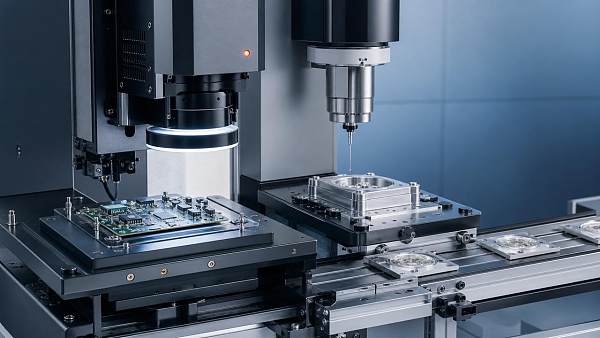
In practice, that requires more than cameras. It requires the right optics, stable illumination, clean part presentation, logic-based pass or fail criteria, and actionable data flow.
Why Vision Inspection Now Sits at the Core of Zero Defect Manufacturing
Manufacturing lines move faster, tolerances are tighter, and customer audits are tougher. Manual checks alone cannot keep pace with modern defect risk.
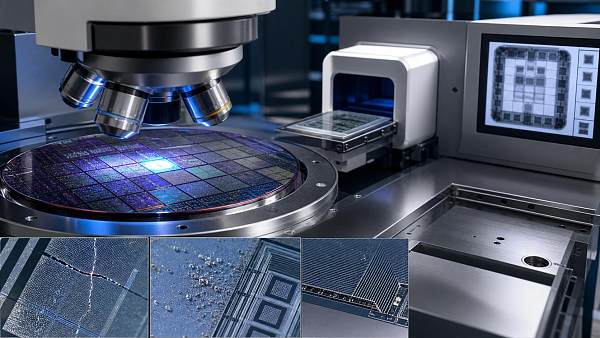
More importantly, many quality escapes are visual in nature. Surface scratches, missing features, label errors, solder issues, alignment drift, and contamination all leave optical signals.
This is why How to Achieve Zero Defect Manufacturing with Vision Inspection has become a practical search, not a theoretical one.
A well-designed system supports three goals at once:
- Catch defects before downstream value is added.
- Create traceable inspection records for every lot or unit.
- Feed process control with real defect trends, not delayed assumptions.
That last point often changes the economics. Vision inspection stops being a gatekeeper and starts acting as a process intelligence source.
Start with the Defect Map, Not the Camera
The most common setup mistake is choosing hardware before defining failure modes. A camera cannot solve a problem that has not been translated into inspectable features.
Start by listing defect categories across the line. Group them by visibility, severity, frequency, and containment urgency.
A practical defect map should include:
- Critical defects that create safety, compliance, or functional failure.
- Major defects that trigger customer rejection or rework.
- Minor defects that still matter for process drift detection.
- False reject risks caused by cosmetic variation or unstable presentation.
This mapping stage clarifies inspection priorities. It also helps decide whether rule-based vision, AI classification, or hybrid logic is the better fit.
If the defect is geometric and repeatable, conventional algorithms may be enough. If variation is broad and visual patterns are subtle, AI-assisted inspection becomes more valuable.
Build the Optical Setup Around Inspection Reality
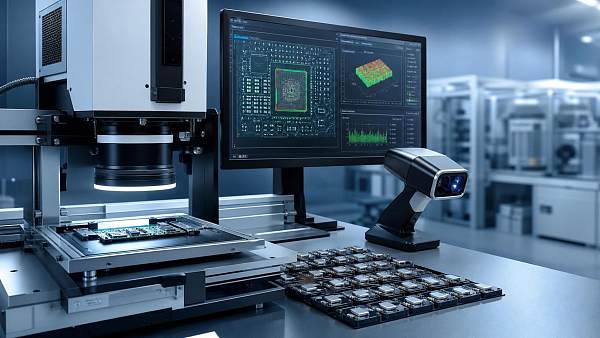
Anyone studying How to Achieve Zero Defect Manufacturing with Vision Inspection should treat optics as the foundation, not an accessory.
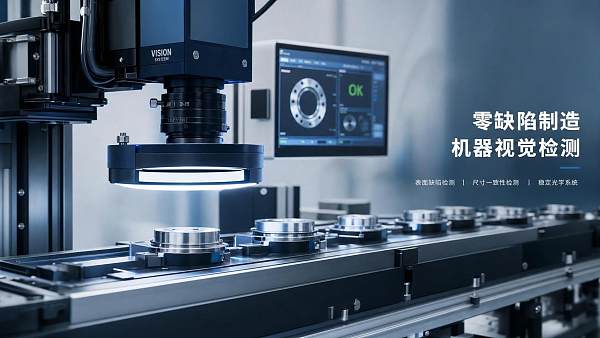
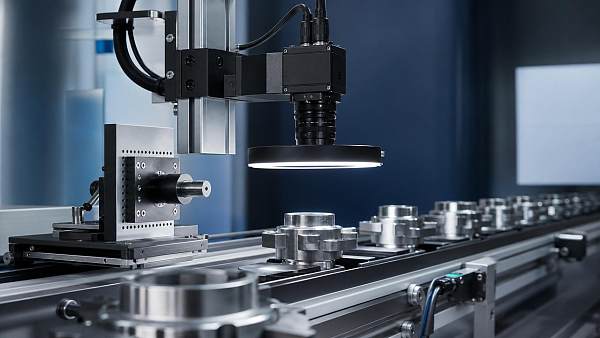
The setup must match the part, the speed, and the defect signature. That means selecting camera resolution, lens type, field of view, working distance, and frame rate together.
A few decisions shape performance more than expected:
- Use enough pixel density to detect the smallest relevant defect reliably.
- Choose lenses that limit distortion when dimensional judgment matters.
- Stabilize the part position with fixtures, guides, or controlled transport.
- Match exposure settings to line speed to avoid motion blur.
Lighting is just as critical. Many failed projects are actually lighting failures disguised as software issues.
Backlighting works well for silhouettes, edge checks, and missing features. Diffuse dome lighting helps on reflective parts. Dark field lighting can expose scratches and raised defects.
Keep ambient light out whenever possible. Once lighting drifts with shift changes or sunlight, defect decisions start drifting too.
Use AI Carefully, and Only Where It Improves Control
AI can improve classification, especially when defects vary in texture, shape, or contrast. Still, it should solve a defined inspection gap, not replace disciplined setup work.
For teams working on How to Achieve Zero Defect Manufacturing with Vision Inspection, the strongest AI use cases usually include complex surface flaws, packaging variation, and mixed-model production.
To make AI reliable, training data must reflect actual operating conditions. Include acceptable variation, edge cases, known defect types, and rare but critical failures.
Just as important, track false accepts and false rejects separately. They create different business risks and require different responses.
The better approach is usually hybrid. Use deterministic rules for dimensions and presence checks, then use AI where human-like pattern recognition adds value.
Connect Inspection to Process Control and Traceability
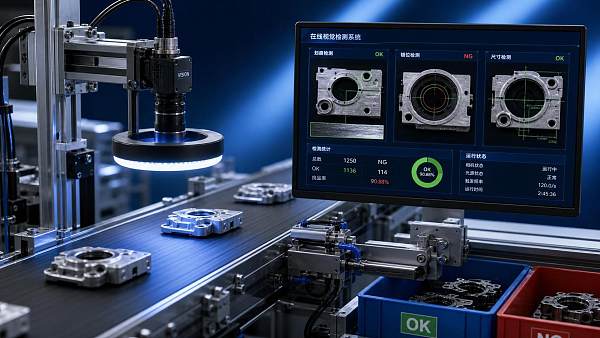
A vision station that only says pass or fail is underused. Real zero defect progress comes when inspection results trigger action.
That means linking defect events with timestamps, machine IDs, tooling conditions, lot codes, and operator context where relevant.
When teams ask How to Achieve Zero Defect Manufacturing with Vision Inspection, they usually need this closed loop more than another camera upgrade.
Useful response logic can include:
- Automatic reject confirmation for critical defects.
- Trend alarms when a defect rate rises beyond control limits.
- Hold-and-review workflows for uncertain classifications.
- Line stops when repeated defects indicate upstream instability.
This is where benchmarking discipline matters. Systems aligned with traceable measurement logic and recognized standards are easier to defend during audits and supplier reviews.
In high-consequence sectors, documented inspection logic is as important as detection accuracy itself.
A Practical Setup Roadmap
If the goal is to learn How to Achieve Zero Defect Manufacturing with Vision Inspection in a way that scales, use a phased rollout.
- Define the defect map and rank defects by business risk.
- Capture sample images across shifts, lots, and operating conditions.
- Select optics and lighting based on defect visibility, not vendor default bundles.
- Validate detection performance with known good and known bad parts.
- Set escalation rules for false accepts, false rejects, and uncertain cases.
- Connect results to MES, SPC, or plant traceability records.
- Review defect trends weekly and retune the model when process conditions change.
Keep the first deployment narrow. One stable use case with measurable savings builds confidence faster than a broad rollout with weak control.
From there, standardize what works across similar lines, parts, or plants.
Common Failure Points to Avoid
Even mature operations miss a few basics. Most problems are not caused by the algorithm alone.
- Trying to inspect unstable parts without repeatable positioning.
- Training AI on narrow datasets that ignore real production variation.
- Treating cosmetic noise and critical failure modes as equal.
- Ignoring maintenance for lenses, lighting, and mechanical fixtures.
- Failing to review rejected images and missed defects systematically.
Avoiding these issues is part of How to Achieve Zero Defect Manufacturing with Vision Inspection. The setup must remain controlled after launch, not just during commissioning.
That usually means scheduled recalibration, image library updates, and periodic threshold review tied to actual process change.
Final Takeaway
How to Achieve Zero Defect Manufacturing with Vision Inspection comes down to disciplined system design. Start with defects, build the optics around reality, and connect inspection to action.
When vision inspection is deployed this way, it reduces escapes, strengthens traceability, and gives production teams earlier warning of process drift.
The strongest setups do not chase zero defects through more checking alone. They create a measured, intelligent path to defect prevention.
For manufacturers building a more resilient quality system, the next step is simple: audit one high-risk defect stream, map its visual signatures, and design the inspection loop around prevention rather than detection alone.
Recommended News
 Jul 27, 2026How to Evaluate Automated Inspection Systems for PackagingAutomated Inspection Systems for packaging: learn how to compare accuracy, speed, integration, and compliance to choose a reliable solution that cuts rejects and protects product quality.
 Jul 21, 2026Automation Inspection Solutions Europe: Cost, Compliance, and Vendor FitAutomation Inspection Solutions Europe: compare total cost, EU compliance, and vendor fit to reduce sourcing risk, improve quality performance, and choose scalable inspection systems with confidence.
 Jul 17, 2026How to Evaluate Automated Precision Inspection Equipment Accuracy and ROIAutomated precision inspection equipment accuracy and ROI depend on more than specs. Learn how to benchmark performance, control hidden costs, and choose a system that delivers reliable quality.
 Jul 14, 2026How to Compare an Automated Inspection Systems Manufacturer for Line AccuracyAutomated Inspection Systems manufacturer comparison starts with real line accuracy. Learn how to assess validation, integration, traceability, and support before you buy.
 Jul 13, 2026Machine Vision Inspection Systems in North America: 2026 Supplier and Adoption TrendsMachine vision inspection systems North America trends for 2026: compare suppliers, AI adoption, and key buying criteria shaping quality, traceability, and smarter manufacturing decisions.
 Jul 08, 2026Semiconductor Chips Inspection: Common Defect Risks and Detection LimitsSemiconductor chips inspection explained: learn the most common defect risks, true detection limits, and practical ways to improve yield, reliability, and quality control.
![]() Jul 07, 2026Quality Inspection Equipment for High-Mix Production: What Works Best?Quality inspection equipment for high-mix production: learn how to match vision, metrology, and traceability tools to changeovers, tolerances, and compliance needs.
Jul 07, 2026Quality Inspection Equipment for High-Mix Production: What Works Best?Quality inspection equipment for high-mix production: learn how to match vision, metrology, and traceability tools to changeovers, tolerances, and compliance needs. Jul 06, 2026Inline Vision Inspection Systems: Key Checks Before SelectionVision Inspection Systems inline: learn the key checks before selection, from defect detection and line speed to traceability, AI governance, and long-term reliability.
 Jun 28, 2026Zero Defect Manufacturing: Vision Inspection Setup GuideHow to Achieve Zero Defect Manufacturing with Vision Inspection: learn a practical setup guide covering optics, lighting, AI, traceability, and process control to cut defects fast.
 Jun 25, 2026Dumbbells Wholesale: Minimum Orders, Pricing, and Quality Risksdumbbellswholesale guide covering MOQs, pricing, freight, and quality risks. Learn how to compare suppliers, cut sourcing costs, and negotiate smarter wholesale terms.
 Jun 22, 2026AI for Business: Where Automation Cuts Cost FirstAI for business cuts costs fastest in inspection, testing, and reporting. Learn where automation delivers quick ROI, fewer errors, and measurable operational savings.
 Jun 20, 2026Intimate Apparel Sizing Mistakes That Hurt Fit QualityIntimate apparel sizing mistakes can quietly damage fit quality, raise returns, and disrupt production. Learn the key risks, inspection points, and control methods that improve consistency.
 Jun 19, 2026Electronic Components Shortlist: Reliability Risks to Check FirstElectronic components should be screened for reliability before price or specs. Learn the first risks to check—drift, heat, noise, and moisture—to build a safer shortlist.
 Jun 17, 2026AI Agents in 2026: Use Cases, Limits, and ROI SignalsAI agents in 2026 are shifting from hype to measurable execution. Explore real use cases, limits, and ROI signals to see where governed adoption drives faster decisions and operational value.
 Jun 16, 2026How a Spark Plugs Factory Controls Defect RatesSpark plugs factory defect control explained: see how leading plants cut failures with in-line inspection, metrology, traceability, and fast corrective action.
 Jun 15, 2026Die Casting Defects: Causes, Fixes, and Quality ChecksDie casting defects explained: learn the main causes, practical fixes, and quality checks to reduce porosity, flash, and misruns while improving process stability and part reliability.
 Jun 11, 2026How to Evaluate a Car Batteries Factory for Output and Quality StabilityCar batteries factory evaluation goes beyond price—learn how to verify output, quality stability, traceability, and process control before choosing a reliable supplier.
 May 23, 2026When an Automated Inspection Cell OEM Pays OffAutomated inspection cell OEM ROI explained: learn when standard automation beats custom builds on cost, precision, integration, and scalability for faster quality gains.
 May 22, 2026High Accuracy Quality Control Systems: When the Extra Cost Pays OffHigh Accuracy Quality Control Systems deliver ROI when defect costs, compliance risk, and rework are high. Learn when the extra investment protects margins and pays off.
 May 22, 2026Industrial Benchmarking for Quality Control Systems That Actually MattersIndustrial Benchmarking for Quality Control Systems that goes beyond specs—learn how to compare uncertainty, traceability, uptime, and integration to improve yield, compliance, and decisions.
 May 20, 2026Smart Inspection Technology Alerts Worth Acting OnSmart inspection technology alerts help after-sales teams spot calibration drift, vision issues, and data faults early—reduce downtime, improve accuracy, and act faster with confidence.
 May 20, 2026AI Driven Inspection: When Defect Alerts Reduce ReworkAI Driven Inspection helps manufacturers catch defects earlier, cut rework, improve traceability, and speed corrective action—discover how smarter alerts protect yield and quality.
 May 16, 2026Surface Roughness Tester Wholesale: Common Spec Gaps That Cause ReworkSurface roughness tester wholesale buyers: discover the hidden spec gaps in cutoff, probes, standards, and reporting that trigger rework—and how to choose the right fit first.
 May 14, 2026Vision Inspection Systems for Zero Defect Manufacturing: Key Setup MistakesVision Inspection Systems for Zero Defect Manufacturing: avoid setup mistakes in lighting, calibration, optics, and recipes to reduce false rejects and improve production reliability.