3D Vision Inspection Systems: Better Depth, New Blind Spots
Time
Click Count
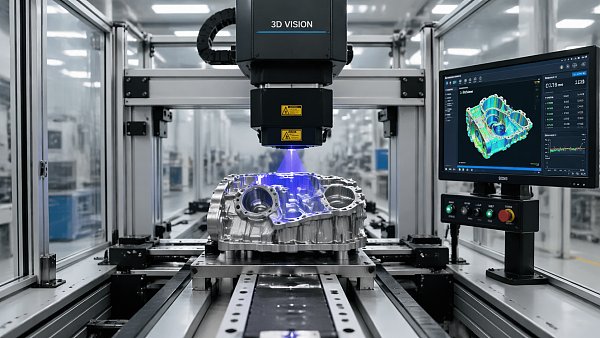
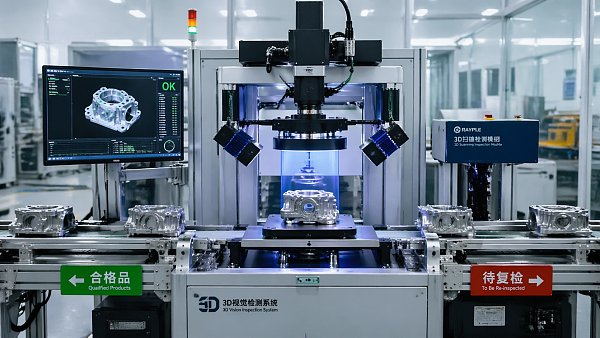
3D vision inspection systems are transforming quality control with richer depth data, but they also introduce new blind spots that operators and decision-makers cannot ignore. For teams comparing advanced metrology solutions, 3D Scanning for quality control, and automated vision inspection systems, the real challenge is balancing precision, speed, and reliability under NIST Standards for calibration.
For information researchers, the priority is to understand where 3D inspection delivers measurable value and where it creates hidden risk. For operators and line users, the concern is more practical: whether the system can detect real defects at takt time, tolerate part variation, and remain stable across shifts, lighting changes, and calibration intervals.
In sectors ranging from electronics and automotive assemblies to aerospace components and precision machining, depth-enabled inspection is often positioned as the upgrade path from conventional 2D vision. That position is justified in many cases, especially when height, volume, warpage, coplanarity, and surface geometry matter within tolerances such as ±10 µm to ±200 µm. However, buying a 3D platform without understanding its blind spots can produce expensive false confidence.
From a G-IMS perspective, the real evaluation standard is not whether a system captures a point cloud, but whether it converts measurement into actionable, repeatable decisions. That means looking beyond camera resolution and into calibration discipline, sampling density, optical behavior, software logic, throughput constraints, and operator usability in a zero-defect manufacturing environment.
Why 3D Vision Inspection Systems Gain Ground in Modern Quality Control
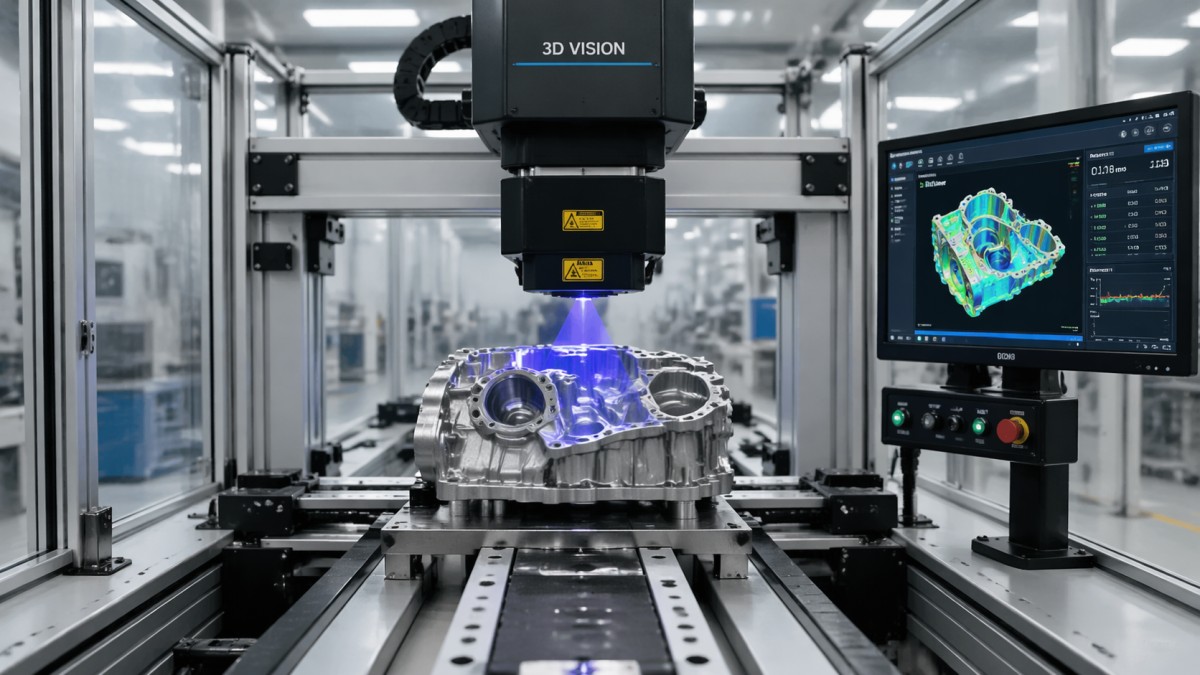
The main reason 3D vision inspection systems continue to gain adoption is simple: many quality problems are inherently dimensional, not just visual. A 2D image can confirm color, edge presence, or print contrast, but it often cannot reliably quantify depth, step height, bow, gap, flushness, or deformation. In high-mix production, these are not secondary details; they are often the difference between pass and fail.
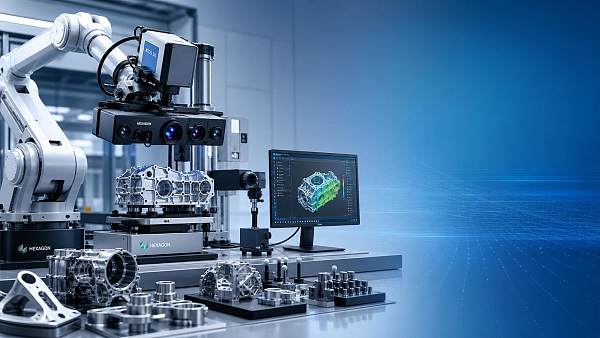
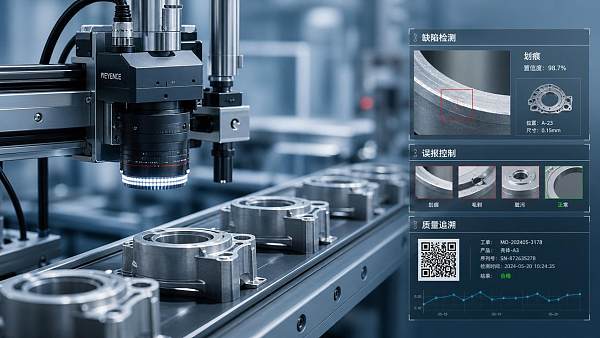
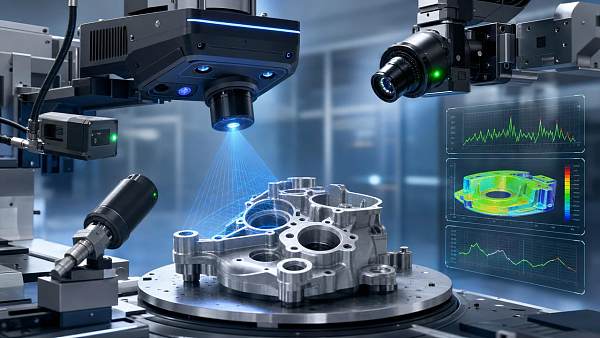
A typical 3D inspection workflow adds one more layer of certainty by collecting height information through laser triangulation, structured light, stereo vision, or confocal methods. Depending on the technology and field of view, systems may operate at resolutions from 5 µm to 100 µm per point, with cycle times ranging from less than 1 second for simple checks to 10–20 seconds for detailed full-surface scans.
This added depth is especially valuable in production lines where defect modes are volumetric. Examples include solder paste volume inspection on electronics boards, adhesive bead height verification, battery tab alignment, turbine blade profile checks, and molded part flash or sink detection. In these cases, 3D data does not just improve detection rates; it changes what is measurable in the first place.
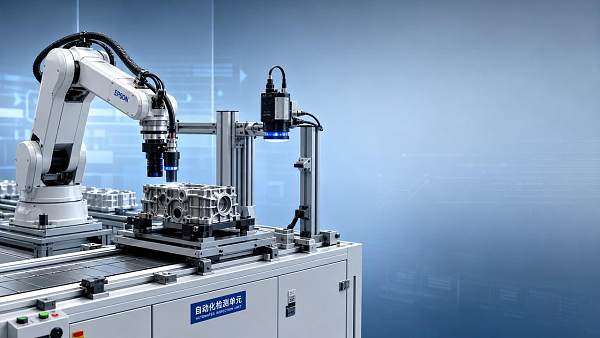
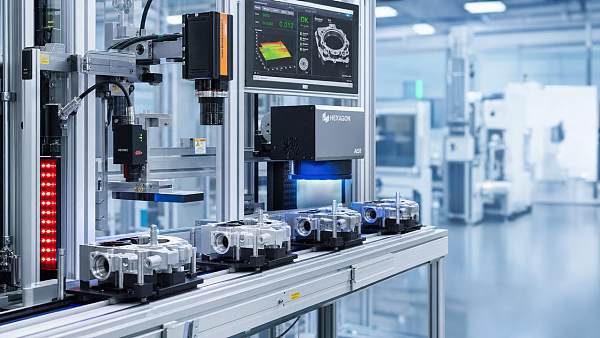
For procurement teams, the attraction also includes automation. A well-selected 3D vision inspection system can reduce manual gauge handling, compress first-article verification time by 20%–40%, and standardize pass/fail logic across multiple plants. Yet those gains are only real when the inspection recipe remains robust across material changes, fixture tolerances, and environmental variation.
Where 3D systems outperform 2D vision
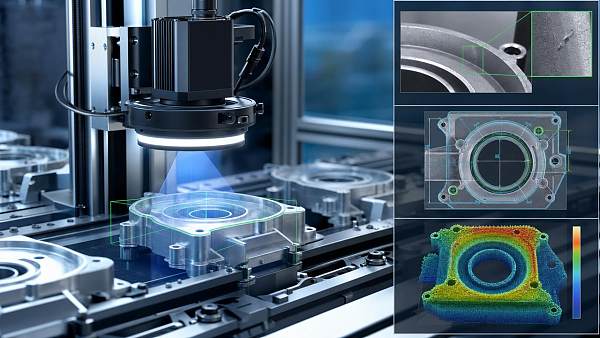
The strongest use cases appear when the inspection target includes measurable topography. Height maps are far more effective than grayscale thresholds for evaluating warped connectors, recessed seals, dent depth, or uneven coatings. In industries where a 0.1 mm deviation can trigger assembly failure, 3D sensing becomes a process-control tool rather than a simple visual checkpoint.
Another advantage is data reuse. The same 3D scan can support dimensional inspection, trend analysis, process correction, and traceability. This aligns with the broader industrial shift from isolated sensing hardware to intelligence-driven quality systems, where measurement data is expected to feed SPC dashboards, MES workflows, and root-cause analysis loops.
Typical inspection targets that benefit from depth data
- Step height and flushness measurement in assemblies with tolerance bands of 0.05–0.30 mm.
- Surface flatness and warpage checks for precision parts, wafers, housings, or trays.
- Volume or bead inspection for adhesive, sealant, solder, and dispensing processes.
- Profile analysis for machined edges, formed metals, castings, and composite structures.
The comparison below helps clarify where 3D inspection creates practical value versus where 2D or mixed architectures may still be sufficient.
The table shows that 3D vision inspection systems are not a universal replacement for 2D. They are a better fit when the defect is geometric, tolerance-driven, and production-critical. In many lines, the best architecture is hybrid: 2D for presence and texture, 3D for measurable form and depth.
The New Blind Spots: What 3D Inspection Still Misses
The phrase “better depth” can create the wrong assumption that 3D means comprehensive visibility. In practice, 3D systems create their own blind spots. The most common are occlusion, reflective distortion, shadowing, low-return surfaces, transparent materials, and algorithmic overconfidence. If these issues are not addressed during specification and validation, the system may produce highly detailed but incomplete inspection data.
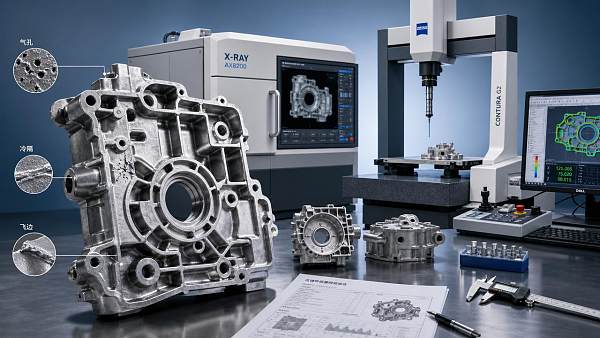
Occlusion is one of the most serious risks. A camera or laser sees only what its geometry allows. Deep cavities, undercuts, sidewalls, steep angles, and recessed features may disappear from the point cloud even when the top surface looks excellent. A part that passes a top-down 3D scan can still contain edge defects or hidden profile deviations that matter in assembly or safety performance.
Material behavior adds another layer of complexity. Highly polished metal can generate glare and unstable returns. Black elastomers may absorb projected light. Transparent films, coated optics, and glossy adhesives can produce depth artifacts or noisy surfaces. Even with exposure tuning, the same sensor may behave differently at 8 a.m. and 8 p.m. if ambient light, temperature, or contamination changes.
There is also a software blind spot: the belief that more points automatically mean better decisions. Dense point clouds can still fail if the pass/fail logic is poorly defined. A system collecting 2 million points per part is not necessarily more reliable than one using fewer points and a well-controlled region-of-interest strategy. In many deployments, recipe stability matters more than raw data volume.
Operational blind spots operators encounter first
Operators often see the problem before procurement does. False rejects may rise after a fixture change of only 0.2 mm. Reinspection rates may spike when a lens is slightly contaminated. A part family that runs well in one finish may fail after a supplier changes surface treatment. These are not rare events; they are common deployment realities in automated vision inspection systems.
A practical blind spot is cycle-time pressure. To meet line speed, integrators sometimes reduce scan density, limit fields of view, or simplify analysis windows. That may cut inspection time from 6 seconds to 2 seconds, but it can also hide localized defects. The result is a system that looks efficient on paper while missing the very features it was bought to control.
Common failure modes that require mitigation
- Shadowed areas from one-directional scanning geometry, especially around raised edges and pockets.
- Specular reflection causing unstable height values on polished aluminum, copper, or chrome-like finishes.
- Depth dropouts on black, translucent, or multi-material surfaces with uneven optical response.
- Recipe drift due to fixture wear, lens contamination, vibration, or calibration intervals that are too long.
- Over-reliance on pass/fail thresholds without gauge correlation or periodic GR&R verification.
The matrix below outlines typical 3D blind spots and practical countermeasures used in industrial settings.
The key lesson is that 3D vision inspection systems do not remove uncertainty; they shift it. Teams that acknowledge these blind spots early can design around them. Teams that ignore them often discover the gap only after scrap, escapes, or line stoppages begin to rise.
How to Evaluate 3D Inspection Performance Under Calibration and Metrology Discipline
For B2B buyers, sensor specification alone is not a sufficient acceptance standard. A practical evaluation must connect system performance to calibration traceability, measurement repeatability, and production relevance. Under NIST-aligned calibration discipline, the question is not simply whether a machine measures, but whether its measurement remains trustworthy across time, operators, lots, and environmental changes.
A strong evaluation process typically includes at least 4 layers: sensor capability, fixture stability, software repeatability, and correlation to a known reference method. That reference may be a calibrated CMM, optical profilometer, or certified artifact depending on the target tolerance. If the application requires decisions inside ±25 µm, then the total inspection uncertainty must be reviewed with much more rigor than in a ±0.5 mm packaging check.
Environmental control also matters more than many teams expect. Temperature changes of 2°C–5°C, floor vibration near conveyors, airborne oil mist, and lens contamination can all influence measurement stability. In production, these effects accumulate gradually. A system that passed FAT under ideal lab conditions may behave differently after 60 days on the line unless revalidation intervals and maintenance rules are clearly defined.
From the operator side, measurement trust depends on simple checks. If a system requires advanced editing to keep recipes stable, adoption will be weak. If verification can be done in 3–5 minutes at shift start using a traceable artifact, confidence grows. Good metrology in automated vision inspection systems is partly technical and partly procedural.
A practical acceptance framework
Before purchase approval, teams should test with real production samples, not only clean lab specimens. A robust trial usually includes at least 30 good parts, 10 known bad parts, multiple surface finishes, and repeat runs across 2–3 shifts. This makes it easier to see whether the 3D inspection recipe is genuinely robust or simply tuned to a narrow sample set.
Correlation checks are equally important. If a system reports a step height of 0.42 mm while a reference instrument reports 0.47 mm, the gap must be understood before deployment. Without this step, teams risk digitizing error rather than controlling quality.
Recommended checkpoints before full rollout
- Define the critical-to-quality features and acceptable tolerance bands, such as ±15 µm, ±50 µm, or ±0.2 mm depending on the product.
- Verify gauge repeatability and reproducibility with multiple operators and repeated runs on the same part set.
- Confirm calibration workflow, artifact traceability, and requalification frequency after maintenance or relocation.
- Measure false reject and false accept rates during pilot operation over at least 1–2 weeks of realistic production.
- Ensure the data output can integrate with SPC, MES, or quality reporting without manual re-entry.
The checklist below can be used by research teams and line users when comparing advanced metrology solutions and 3D Scanning for quality control.
A disciplined evaluation process helps avoid the most common procurement mistake: selecting a system based on peak demonstration performance instead of stable factory performance. In precision manufacturing, stable and traceable usually beats impressive but fragile.
Selection Criteria for Buyers and Operators: Matching Technology to Real Production
The right 3D vision inspection system depends on application fit, not on generic claims of higher accuracy. Buyers should begin with part geometry, surface behavior, takt time, and defect mode frequency. Operators should add practical constraints: part presentation, cleaning access, recipe changeover time, alarm clarity, and training demand. A technically advanced system that takes 3 hours to re-teach after a SKU change may not be the right choice for a high-mix line.
One common error is buying for maximum nominal precision when the process cannot support it. If a line fixture varies by ±0.15 mm and the process window is broad, ultra-fine 5 µm resolution may add cost without improving decisions. On the other hand, if the target is semiconductor packaging, precision optics, or aerospace sealing, sub-50 µm performance may be essential. Selection has to reflect process reality.
Integration requirements should also be reviewed early. Some deployments need stand-alone measurement with local pass/fail outputs. Others require multi-station synchronization, barcode traceability, result storage for 12–24 months, and communication through industrial protocols. The best system on paper can become a poor investment if its software environment does not match the plant’s digital infrastructure.
Supportability is often underestimated. For global manufacturers, service response time, spare parts availability, training depth, and calibration support can matter as much as initial detection performance. A line that loses inspection capability for 72 hours because a critical optical component is unavailable can create far greater cost than the difference between two purchase prices.
Five selection questions that reduce risk
- What are the 3–5 defects that drive most rejects, escapes, or customer complaints, and do they truly require 3D data?
- What is the real tolerance band for each critical feature, and how does it compare with system repeatability?
- Can the system maintain stable inspection within the required cycle time, such as 1.5 seconds, 5 seconds, or 12 seconds per part?
- How often will recipes change, and can operators manage those changes with standard training in less than 30–60 minutes?
- What verification and maintenance tasks are needed daily, weekly, and monthly to keep results trustworthy?
Buyer-operator alignment matters
Many implementation failures come from a split decision model: procurement focuses on specification sheets, engineering focuses on capability, and operators inherit complexity later. A better approach is to include all three perspectives during trials. If the operator cannot identify a failed measurement condition in less than 10 seconds on the HMI, the system may create avoidable downtime even if the metrology core is strong.
This is where a benchmarking perspective such as G-IMS becomes useful. Comparing systems through a common technical lens helps buyers ask more disciplined questions about blind spots, traceability, and lifecycle practicality rather than relying on feature-heavy but incomplete vendor narratives.
Implementation, Maintenance, and Long-Term Reliability in a Zero-Defect Strategy
A successful deployment does not end at installation. For 3D vision inspection systems, long-term value comes from controlled commissioning, operator training, calibration governance, and maintenance routines that prevent gradual measurement drift. In many factories, the first 30 days determine whether the platform becomes a trusted quality tool or an underused bottleneck.
Implementation is most reliable when broken into 3 phases. Phase 1 covers off-line validation with representative parts and defect libraries. Phase 2 runs pilot production with monitored thresholds, false-call review, and correlation checks against a reference method. Phase 3 moves to controlled ramp-up, often with dual verification for 1–2 weeks before full autonomy. This staged approach reduces the risk of hidden blind spots reaching live production.
Maintenance should be planned as part of total cost of ownership. Daily tasks may include lens cleaning, fixture check, and quick artifact verification taking 5–10 minutes. Weekly tasks may involve recalibration review and alarm trend analysis. Monthly actions can include full accuracy verification, software backup, and recipe audit. These routines are not administrative overhead; they are part of maintaining measurement integrity.
Training matters just as much as maintenance. Operators need to understand not only how to run the system, but how to recognize invalid measurement states, low-confidence scans, and mechanical or optical causes of instability. A 2-hour handover is rarely enough for complex inspection cells. In most industrial environments, a more realistic model includes basic operator training, technician-level troubleshooting, and periodic refresher sessions every 6–12 months.
Recommended deployment workflow
- Define defect library, CTQ features, and acceptance thresholds before recipe creation.
- Validate on representative parts from different lots, finishes, and process conditions.
- Run pilot with tracked false rejects and false accepts over a stable production window.
- Establish traceable calibration and verification routines tied to maintenance events.
- Review data trends monthly to refine thresholds and identify emerging process drift.
FAQ for researchers and operators
The questions below reflect common search intent and day-to-day decision concerns in the market for automated vision inspection systems.
How do you know if 3D inspection is necessary?
It is usually necessary when defect detection depends on measurable height, volume, bow, coplanarity, or profile geometry. If the quality requirement can be verified through contrast, presence, color, or code reading alone, 2D may still be more efficient. The strongest case for 3D appears when a depth-related defect can cause assembly failure, leakage, electrical instability, or downstream scrap.
What calibration interval is typical?
There is no universal interval, but many facilities use a quick verification at shift start, a formal check every 7 days, and a more complete review every 30 days or after any lens replacement, transport, collision, or major fixture adjustment. Tight-tolerance applications may require more frequent checks.
What is the biggest mistake in procurement?
The biggest mistake is selecting based on demonstration accuracy without validating real samples, real surfaces, and real takt time. A system can perform very well on controlled demo parts but fail on actual production variation. A second major mistake is ignoring service and maintenance requirements in multi-site operations.
Can one system handle all part families?
Sometimes, but not always. If part sizes, reflectivity, and tolerances vary widely, a single 3D setup may require too many compromises. In mixed production, it can be more effective to use modular fixtures, separate recipes, or even a hybrid architecture with both 2D and 3D stations.
3D vision inspection systems offer a clear advantage when manufacturers need trustworthy depth information, tighter geometric control, and more actionable quality data. Their value is strongest in environments where dimensional defects drive yield loss, rework, or compliance risk. At the same time, richer depth data does not eliminate uncertainty; it introduces new blind spots tied to optics, geometry, calibration, software logic, and production conditions.
For researchers, the priority is to compare systems through measurable criteria such as repeatability, takt fit, calibration discipline, and integration readiness. For operators, the focus should remain on recipe stability, maintenance practicality, and the ability to detect invalid measurement states quickly. In both cases, the most reliable path is a disciplined, application-specific evaluation rather than a feature-led purchase.
If your team is reviewing advanced metrology solutions, 3D Scanning for quality control, or automated vision inspection systems for a high-precision manufacturing environment, now is the right time to assess blind spots before they reach the line. Contact us to discuss your inspection scenario, request a tailored benchmarking framework, or learn more about practical selection and deployment strategies aligned with traceable measurement standards.
Recommended News
 Jun 17, 2026AI Agents in 2026: Use Cases, Limits, and ROI SignalsAI agents in 2026 are shifting from hype to measurable execution. Explore real use cases, limits, and ROI signals to see where governed adoption drives faster decisions and operational value.
 Jun 16, 2026How a Spark Plugs Factory Controls Defect RatesSpark plugs factory defect control explained: see how leading plants cut failures with in-line inspection, metrology, traceability, and fast corrective action.
 Jun 15, 2026Die Casting Defects: Causes, Fixes, and Quality ChecksDie casting defects explained: learn the main causes, practical fixes, and quality checks to reduce porosity, flash, and misruns while improving process stability and part reliability.
 Jun 11, 2026How to Evaluate a Car Batteries Factory for Output and Quality StabilityCar batteries factory evaluation goes beyond price—learn how to verify output, quality stability, traceability, and process control before choosing a reliable supplier.
 May 23, 2026When an Automated Inspection Cell OEM Pays OffAutomated inspection cell OEM ROI explained: learn when standard automation beats custom builds on cost, precision, integration, and scalability for faster quality gains.
 May 22, 2026High Accuracy Quality Control Systems: When the Extra Cost Pays OffHigh Accuracy Quality Control Systems deliver ROI when defect costs, compliance risk, and rework are high. Learn when the extra investment protects margins and pays off.
 May 22, 2026Industrial Benchmarking for Quality Control Systems That Actually MattersIndustrial Benchmarking for Quality Control Systems that goes beyond specs—learn how to compare uncertainty, traceability, uptime, and integration to improve yield, compliance, and decisions.
 May 20, 2026Smart Inspection Technology Alerts Worth Acting OnSmart inspection technology alerts help after-sales teams spot calibration drift, vision issues, and data faults early—reduce downtime, improve accuracy, and act faster with confidence.
 May 20, 2026AI Driven Inspection: When Defect Alerts Reduce ReworkAI Driven Inspection helps manufacturers catch defects earlier, cut rework, improve traceability, and speed corrective action—discover how smarter alerts protect yield and quality.
 May 16, 2026Surface Roughness Tester Wholesale: Common Spec Gaps That Cause ReworkSurface roughness tester wholesale buyers: discover the hidden spec gaps in cutoff, probes, standards, and reporting that trigger rework—and how to choose the right fit first.
 May 14, 2026Vision Inspection Systems for Zero Defect Manufacturing: Key Setup MistakesVision Inspection Systems for Zero Defect Manufacturing: avoid setup mistakes in lighting, calibration, optics, and recipes to reduce false rejects and improve production reliability.
 May 14, 2026How Vision Inspection Systems Reduce Zero-Defect Line ErrorsVision Inspection Systems for Zero Defect Manufacturing cut line errors with AI imaging, stable lighting, and traceable quality control—learn how to reduce escapes and improve production reliability.
 May 13, 2026AI Driven Inspection: Defect Detection Gains and False-Alarm RisksAI Driven Inspection boosts defect detection, speed, and traceability—but can false alarms erode ROI? Explore the key metrics, risks, and value drivers before deployment.
 May 12, 2026Smart Inspection Technology Alerts: Risks You Should Flag EarlySmart inspection technology alerts help teams flag quality, compliance, and process risks early. Discover how to prevent delays, rework, and costly failures with smarter decisions.
 May 06, 2026When an Automated Inspection Cell OEM Is Worth the InvestmentAutomated inspection cell OEM investment makes sense when precision, throughput, and traceability demands outgrow manual checks. Learn when ROI is strongest and how to choose the right partner.
 May 04, 2026Vision Inspection Systems for Zero Defect Manufacturing: What Actually Improves YieldVision Inspection Systems for Zero Defect Manufacturing improve yield by reducing escapes, cutting false rejects, and enabling closed-loop process control. Learn what actually drives ROI.
 May 04, 2026How to Achieve Zero Defect Manufacturing with Vision InspectionHow to Achieve Zero Defect Manufacturing with Vision Inspection: learn how real-time defect detection, traceability, and closed-loop control reduce escapes, scrap, and quality risk.
 May 02, 2026Zero Defect Manufacturing: What It Takes Beyond Automated InspectionZero Defect Manufacturing goes beyond automated inspection. Discover how metrology, in-process sensing, analytics, and closed-loop control help manufacturers prevent defects before they happen.
 May 02, 2026AI Driven Inspection: Where It Delivers the Fastest Quality GainsAI Driven Inspection delivers the fastest quality gains in high-volume, tight-tolerance production. Discover where it drives faster ROI, stronger compliance, and smarter quality control.
 Apr 24, 20263D Vision Inspection Systems: Better Depth, New Blind Spots3D vision inspection systems expose where automated vision inspection systems excel—and where blind spots remain. Explore advanced metrology solutions, calibration discipline, and smarter quality control choices.
 Apr 24, 2026Automated Vision Inspection Systems and False Reject CostsAutomated vision inspection systems can cut defects, but false rejects drive hidden costs. Learn how 3D vision inspection systems, advanced metrology solutions, and 3D scanning for quality control improve accuracy.