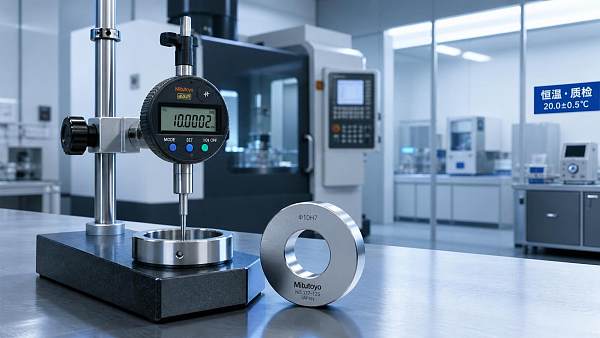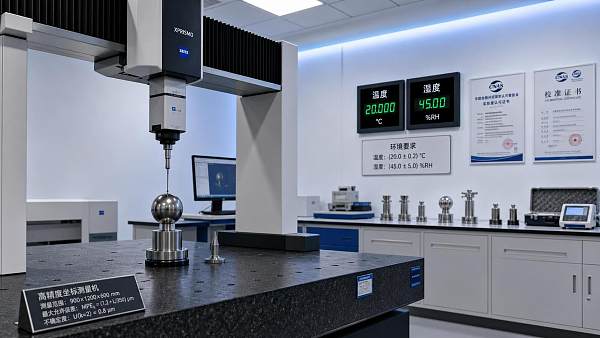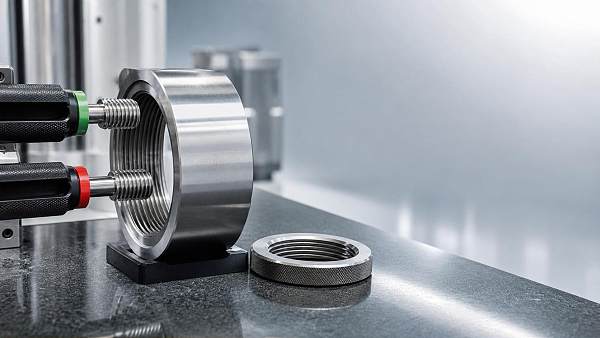
Metrology Fixtures OEM Supplier: Lead Time vs Custom Accuracy
Time
Click Count
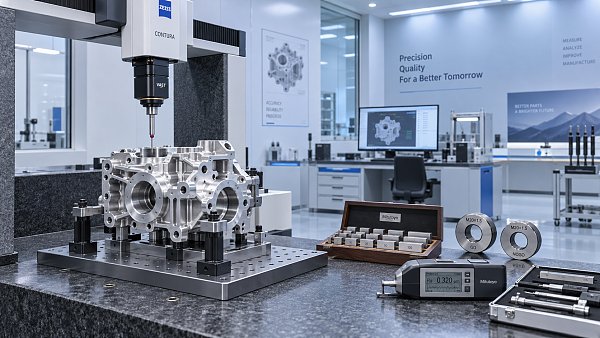
Choosing a metrology fixtures OEM supplier is often a trade-off between lead time and custom accuracy, especially for distributors and agents serving precision-driven industries. This article explores how to evaluate suppliers that can balance fast project delivery with tight tolerances, reliable repeatability, and scalable OEM support—helping channel partners reduce procurement risk and win more high-value measurement projects.
Why lead time and custom accuracy are difficult to balance
For distributors, the pressure usually comes from both ends. End users want fast fixture delivery to keep CMM, vision inspection, or multisensor measurement projects on schedule. At the same time, they expect fixture geometry, clamping stability, and datum repeatability to match demanding tolerance targets.
A metrology fixtures OEM supplier must therefore manage design speed, machining capability, material control, inspection discipline, and communication quality. If one link is weak, the result is delayed approval, rework, unstable measurements, or customer complaints after installation.
In cross-industry applications, fixture requirements vary widely. Semiconductor tooling may prioritize micron-level positional consistency. Aerospace parts often require complex support geometry. Automotive programs may focus on batch throughput and standardized modular interfaces. Medical device projects may add traceability and documentation demands.
- Short lead time often depends on standardized components, proven fixture architecture, and in-house process control rather than outsourced trial-and-error manufacturing.
- Custom accuracy depends on GD&T interpretation, tolerance stack-up analysis, stable material selection, and inspection validation before shipment.
- Channel partners need both because their margin and reputation are tied to first-pass approval, not just shipment speed.
What distributors should expect from a metrology fixtures OEM supplier
A capable metrology fixtures OEM supplier should offer more than machining. Distributors and agents need a partner that can translate part drawings, measurement intent, and end-user workflows into a practical fixture solution with predictable delivery and support.
Core capabilities that matter in OEM projects
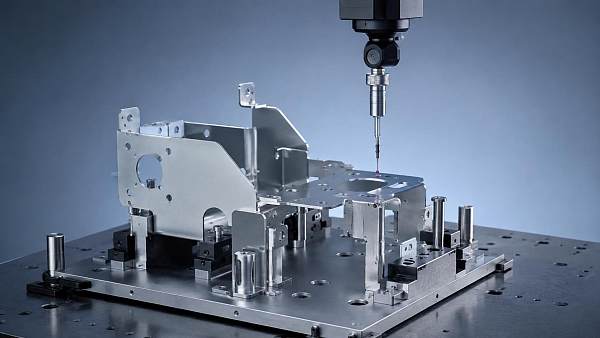
- Design-for-metrology support, including datum strategy, access planning for probes or optics, and operator-friendly loading direction.
- Tolerance-aware production, where fixture surfaces, locator pins, nests, and clamping points are controlled according to the real inspection task.
- Documented verification, such as dimensional reports, repeatability checks, and material records where needed.
- OEM flexibility, including neutral branding, distributor labeling, sample iterations, and coordinated communication during technical review.
This is where a benchmark-driven approach becomes useful. G-IMS focuses on the connection between physical measurement hardware and actionable industrial data. That perspective helps procurement teams judge whether a supplier understands not only fixture fabrication, but also the measurement environment in which the fixture must perform.
In practical terms, a supplier aligned with advanced metrology thinking is more likely to consider measurement system repeatability, operator variation, sensor access, calibration logic, and process documentation from the start.
How to compare fast-turn and high-accuracy fixture supply options
The table below helps distributors compare common sourcing models when selecting a metrology fixtures OEM supplier for projects with different delivery and precision targets.
For many channel partners, the hybrid model is the most practical. It reduces engineering time compared with fully bespoke builds, while keeping enough flexibility to satisfy end users who need part-specific support and probe clearance.
Key comparison questions to ask
- Can the supplier explain which features are standardized and which features are custom-machined?
- Does the quoted lead time include design review, approval cycles, machining, inspection, and packing?
- Can they provide realistic repeatability expectations instead of broad claims about precision?
- Is there a clear plan for revision handling if the end customer changes part drawings late in the project?
Which technical factors actually affect fixture accuracy
Accuracy is not only about machine tools. A metrology fixtures OEM supplier should control a chain of technical variables that directly influence repeatability in CMM, vision, laser scanning, or optical measurement setups.
Main technical drivers
- Locator strategy: Poor locator placement can distort thin-wall parts or create unstable datum references.
- Material behavior: Aluminum, steel, engineering plastics, and composite inserts respond differently to thermal and load changes.
- Clamping force: Excess clamping may deform precision parts; insufficient clamping may reduce repeatability across measurement cycles.
- Probe and sensor access: Fixture geometry must avoid collision zones and blind spots for tactile and non-contact systems.
- Assembly consistency: If modular elements are hard to reassemble consistently, the fixture may drift from validated performance.
Distributors should ask for technical discussion around the measurement method itself. A fixture designed for a bridge CMM may not perform well in a multisensor system or a non-contact vision inspection platform. G-IMS routinely benchmarks these system interactions across its industrial pillars, which is valuable when projects cross traditional measurement categories.
The next table summarizes practical evaluation points that affect both custom accuracy and lead time during supplier selection.
This framework is especially useful for agents managing multiple principals or project types. It shifts supplier evaluation away from vague promises and toward measurable execution capability.
How to reduce procurement risk for channel partners
A distributor rarely loses business because a fixture quote was slightly higher. More often, business is lost due to unclear scope, missed milestones, or a fixture that arrives on time but fails validation. Risk control should therefore begin before the purchase order is issued.
Recommended pre-order checklist
- Confirm the measurement platform: CMM, optical system, laser scanner, vision system, or hybrid station.
- Define the key control features: critical datums, inspection points, loading orientation, part family compatibility, and throughput target.
- Request a milestone plan covering concept design, customer approval, machining, assembly, verification, and delivery.
- Clarify deliverables: 2D drawings, 3D models if available, inspection reports, packing method, spare contact elements, and revision records.
- Check support scope after delivery, including remote troubleshooting, replacement lead time, and modification feasibility.
A metrology fixtures OEM supplier that welcomes this level of detail is usually easier to work with in complex industrial programs. Suppliers that avoid technical accountability often create hidden costs later through redesigns, field complaints, or repeated clarifications.
Why benchmark intelligence matters
G-IMS supports decision-makers with a broader industrial perspective. Because metrology fixtures interact with inspection hardware, sensors, optics, and data-quality expectations, procurement should not treat them as simple metal parts. Benchmarking against recognized practices associated with ISO/IEC 17025 environments, NIST traceability logic, and industrial measurement discipline helps reduce costly mismatches between fixture design and actual measurement objectives.
Lead time planning: what is realistic and what is a red flag
Lead time varies by fixture complexity, part size, quantity, material, and approval speed. A simple modular setup may move quickly. A custom fixture with multiple datums, low-deformation clamping, and multisensor access will naturally take longer.
Common lead time influences
- Part data quality. Incomplete or changing CAD and drawing packages slow down design review.
- Fixture architecture. Fully custom nests and complex support surfaces require more engineering and machining time.
- Validation scope. Dimensional reports and repeatability checks add time but improve delivery confidence.
- Revision frequency. Late engineering changes are one of the biggest schedule disruptors in OEM fixture projects.
A red flag appears when a metrology fixtures OEM supplier offers very short lead times without asking detailed technical questions. Speed is valuable, but credible speed usually comes with structured clarification, not guesswork.
Standards, documentation, and compliance expectations
Not every project requires the same documentation depth, yet industrial buyers increasingly expect evidence that fixture design and inspection practices are controlled. This is particularly true in aerospace, electronics, medical components, and supplier quality programs linked to global manufacturing groups.
- Dimensional inspection records help verify that critical fixture features meet drawing intent.
- Material declarations may be important where thermal behavior, wear, or contamination risk matters.
- Revision control is essential when fixture updates must match changing production drawings.
- Traceability thinking aligned with established metrology practice supports quality audits and supplier reviews.
G-IMS brings value here by connecting fixture sourcing decisions with broader technical and regulatory logic. That is useful for distributors selling into customers that operate under strict quality frameworks and cannot afford undocumented measurement risk.
FAQ: practical questions about choosing a metrology fixtures OEM supplier
How do I know if a metrology fixtures OEM supplier can handle tight tolerances?
Look for evidence of process discipline rather than generic claims. Ask how they review GD&T, how they inspect critical fixture features, what repeatability checks they perform, and how they manage assembly consistency. A supplier that can explain these steps clearly is usually more reliable than one that only highlights machine capability.
Are modular fixtures always less accurate than custom fixtures?
Not always. Modular fixtures can be very effective for repeatable, medium-complexity parts when the base system is stable and locator strategy is sound. However, irregular geometry, fragile components, and strict probe-access constraints often benefit from custom nests or hybrid designs.
What should distributors ask about lead time before placing an order?
Ask for a phase-by-phase schedule. It should cover design review, approval, production, inspection, and shipment. Also ask what assumptions the timeline depends on, such as customer approval speed, final CAD availability, and whether any custom components need outside processing.
Can one supplier support different industries with different metrology needs?
Yes, but only if the supplier understands how fixture requirements change with the measurement method and part behavior. Cross-industry competence matters because a fixture for optical inspection, CMM probing, and 3D scanning may require very different support and clearance logic.
Why choose us for metrology fixture sourcing support
For distributors, agents, and resellers, the real challenge is not simply finding a metrology fixtures OEM supplier. It is finding one that can support technical evaluation, realistic lead time planning, and repeatable project delivery across different industrial scenarios.
G-IMS strengthens that process through benchmark-driven guidance across advanced metrology, industrial optics, electrical measurement, non-contact inspection, and specialized sensing environments. This multidisciplinary view helps channel partners align fixture sourcing with actual measurement objectives, documentation expectations, and end-user quality risk.
What you can discuss with us
- Parameter confirmation for fixture structure, datum layout, material choice, and sensor access requirements.
- Product selection guidance for modular, custom, or hybrid metrology fixture solutions.
- Lead time evaluation based on project complexity, drawing maturity, and verification scope.
- Custom solution discussion for CMM, vision, optical, and multisensor measurement applications.
- Documentation and certification expectations relevant to customer audits or regulated supply chains.
- Sample support, quotation communication, and project-risk review before formal sourcing decisions.
If you are comparing metrology fixture options for a current RFQ or preparing a distributor portfolio for precision inspection customers, contact us with your drawings, target tolerance needs, measurement method, and required delivery window. That discussion can quickly reveal whether a metrology fixtures OEM supplier is likely to meet both timing and accuracy expectations before procurement risk becomes project cost.
Recommended News
 Sep 28, 2026How to verify a NIST standards reference in a calibration reportNIST standards reference verification made simple: learn how to review calibration traceability, uncertainty, ISO/IEC 17025 scope, and report red flags.
 Sep 27, 2026When a dial bore gauge is accurate enough for production inspectionDial bore gauge accuracy for production inspection: learn how tolerance, setup, alignment, surface condition, and guard bands determine reliable bore measurement decisions.
 Sep 26, 2026What size cat tree and tower is right for an indoor cat?Cattreesandtowers guide: find the ideal cat tree size for your indoor cat, with tips on height, platform space, stability, scratching posts, and safe multi-cat setups.
 Sep 24, 2026What drives sensory technology cost in industrial monitoring projects?Sensory technology cost in industrial monitoring depends on accuracy, integration, calibration, software, and lifecycle support. Learn how to build a reliable budget and avoid hidden project costs.
 Sep 18, 2026How to evaluate quality control at a CNC machining factoryEvaluate a CNC machining factory with practical checks for inspection, calibration, traceability, sampling, and corrective actions to secure reliable parts.
 Sep 17, 2026How to select inline measurement systems for Middle East heatInline Measurement Systems Middle East: learn how to select reliable solutions for heat, dust, vibration, calibration, and production-ready data integration.
 Sep 16, 2026How to choose monitor stands that reduce neck strain at workMonitor stands can reduce neck strain by improving screen height, distance, and stability. Explore practical tips to choose the right ergonomic stand for a more comfortable workspace.
 Sep 15, 2026How to verify an importers directory for machinery before contacting suppliersImporters directory for machinery verification guide: assess legal status, technical fit, compliance, and service capability to build a reliable supplier shortlist.
 Sep 13, 2026How to assess calibration support from metrology suppliers in the Middle EastMetrology suppliers Middle East: learn how to assess ISO/IEC 17025 scope, calibration uncertainty, local support, turnaround time, and lifecycle cost.
 Sep 12, 2026How material fatigue causes cracks in safety-critical componentsMaterial fatigue can trigger hidden cracks in safety-critical components long before visible failure. Learn how cyclic loading, stress concentrations, inspection methods, and targeted controls reduce risk.
 Sep 10, 2026What to verify before choosing an optical micrometer supplier for wireChoose an optical micrometer supplier for wire with confidence. Verify real-line accuracy, calibration, integration, and support before you buy.
 Sep 08, 2026How to choose thickness gauges for pipes with limited accessThickness Gauges for pipes: learn how to select the right ultrasonic gauge and probe for tight access, curved surfaces, corrosion, coatings, and reliable readings.
 Sep 07, 2026How to choose anti-aging face serums for your skin typeantiagingfaceserums made simple: discover the best ingredients, textures, and routines for dry, oily, sensitive, or combination skin—plus tips for visible results.
 Sep 05, 2026How to choose sheet metal components for tight-tolerance assembliesSheet metal components for tight-tolerance assemblies: learn how to align materials, datums, forming, finishes, and inspection for reliable fit and repeatable performance.
 Sep 04, 2026What accuracy should a digital temperature humidity sensor have?Digital temperature humidity sensor accuracy explained: compare temperature and RH limits, resolution, drift, calibration, and installation effects to choose reliable performance for your application.
 Sep 03, 2026How to choose glamping tents for eco resorts in high-wind locationsGlamping Tents for eco resorts: discover how to choose wind-resistant structures, engineered anchors, and durable materials for safer, sustainable stays.
 Sep 02, 2026How to assess a bore gauge manufacturer in Latin America for measurement reliabilityBore gauge manufacturer Latin America: learn how to verify calibration traceability, repeatability, service support, and shop-floor reliability before you buy.
 Sep 01, 2026What accuracy factors matter most in advanced metrology calibration?Advanced metrology calibration: discover the key accuracy factors—from traceability and uncertainty to environment, probes, and software—for reliable decisions.
 Aug 31, 2026When does legal tech make sense for a growing business?Legal tech helps growing businesses streamline contracts, compliance, IP, and audit controls. Discover the key signals, practical tools, and steps to scale with confidence.
 Aug 30, 2026How manufacturing tolerance affects thread gauge acceptance limitsThread gauge manufacturing tolerance affects acceptance limits, calibration confidence, wear risk, and inspection consistency. Learn how to prevent costly thread gauge errors.
 Aug 29, 2026How to choose office supplies that reduce waste in shared workspacesOffice supplies can cut waste and costs in shared workspaces. Discover practical procurement tips for durable, refillable, low-packaging products.
 Aug 28, 2026How to compare metrology equipment vendors for calibration supportMetrology equipment vendors: compare calibration scope, ISO/IEC 17025 support, downtime, documentation, and lifecycle costs to choose reliable service.
 Aug 27, 2026What to evaluate before choosing industrial inspection systems in AsiaIndustrial Inspection Systems Asia: evaluate accuracy, cycle time, automation, traceability, and local service to choose a reliable solution for smarter quality control.
 Aug 26, 2026Do dermarollers actually improve absorption of skincare productsDermarollers can improve skincare absorption, but not always safely. Learn when they help, which products to pair, and how to avoid irritation for better skin results.