Semiconductor Packaging Metrology News: What Matters in 2026
Time
Click Count
As advanced packaging becomes a strategic differentiator, metrology in semiconductor packaging news is no longer just technical noise—it is board-level intelligence. In 2026, the topic sits at the intersection of yield engineering, AI-based inspection, supply chain resilience, export-control pressure, and quality compliance. From wafer-level packaging to chiplets, 2.5D interposers, fan-out structures, and high-bandwidth memory integration, every packaging leap raises the cost of measurement failure. The real question is not whether metrology matters, but which developments in metrology in semiconductor packaging news have the highest impact on reliability, cycle time, and long-term competitiveness.
Why is metrology in semiconductor packaging news so important in 2026?
The answer starts with packaging complexity. Traditional back-end inspection focused on dimensions, alignment, and visible defects. In 2026, advanced packages require far more: warpage control across thermal cycles, sub-surface void detection, bump coplanarity analysis, die-to-die alignment verification, underfill inspection, TSV measurement, and process-to-process traceability. As package architectures become denser, the margin for undetected variation collapses.
This is why metrology in semiconductor packaging news increasingly highlights hybrid inspection stacks rather than single tools. Optical systems alone may be fast but limited for hidden interfaces. X-ray and acoustic methods reveal internal conditions but add cost and throughput constraints. 3D metrology offers surface precision but must be linked with process analytics to be useful at scale. The most relevant news in 2026 therefore centers on integration: hardware plus software, in-line plus offline, and measurement plus decision intelligence.
Another reason this topic matters is economics. One escaped defect in a high-value package can trigger field failure, warranty exposure, qualification delays, or customer re-audit. As a result, metrology in semiconductor packaging news now influences capital planning, supplier qualification, and even customer trust more directly than many front-end stakeholders expected just a few years ago.
Which technology shifts are shaping metrology in semiconductor packaging news this year?
Several shifts define the 2026 landscape. First is the move from isolated inspection points to closed-loop metrology. Instead of detecting problems after assembly, advanced systems feed measurement data back into bonding, molding, lithography, singulation, and thermal process control. This reduces scrap and shortens root-cause cycles.
Second is AI-assisted defect classification. In current metrology in semiconductor packaging news, AI is less about replacing engineers and more about handling scale. Packaging lines generate massive image, profile, and sensor datasets. AI helps distinguish nuisance variation from real failure signatures, prioritize review queues, and detect early drift patterns that conventional thresholding can miss.
Third is multimodal inspection. The strongest systems increasingly combine optical profilometry, 3D scanning, X-ray CT, infrared, and non-contact vision inspection in one decision framework. This matters because advanced packaging defects are often multi-layered. A package may pass top-surface inspection while hiding delamination or void formation below. The more often metrology in semiconductor packaging news references multimodal platforms, the more likely the market is moving toward deeper process visibility rather than cosmetic quality control.
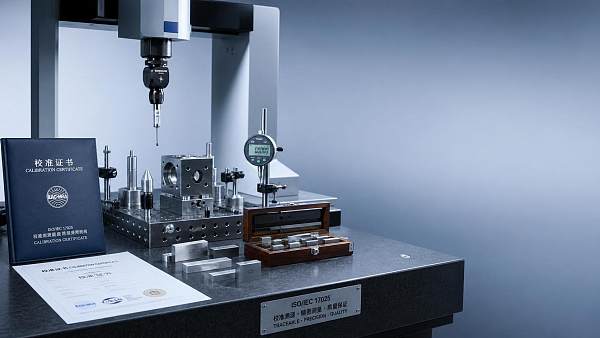
Fourth is standards alignment. ISO/IEC 17025 traceability, NIST-linked calibration logic, and customer-specific audit requirements are becoming part of the conversation. In practice, this means measurement systems are being judged not only by resolution, but by repeatability, reproducibility, uncertainty documentation, and data integrity readiness.
What should be evaluated when reading metrology in semiconductor packaging news about suppliers or tools?
Not every headline carries equal operational value. Some announcements emphasize speed but hide weak measurement uncertainty. Others showcase AI but say little about false-positive rates, recipe portability, or maintenance requirements. To interpret metrology in semiconductor packaging news effectively, several decision dimensions should be checked together.
- Measurement capability: resolution, repeatability, reproducibility, and sensitivity to package warpage or reflective surfaces.
- Throughput realism: performance under actual line conditions, not only lab demonstrations.
- Defect coverage: visible, hidden, structural, thermal, and material-related issues.
- Data usability: SPC integration, traceability, MES connectivity, and actionable dashboards.
- Compliance fit: calibration protocol, audit documentation, and method validation maturity.
- Total lifecycle burden: recipe development time, operator learning curve, service access, and upgrade path.
A practical reading rule is simple: if a news item discusses only accuracy or only automation, it is incomplete. The most decision-relevant metrology in semiconductor packaging news explains how a tool performs across variable materials, high-mix production, and long-term process drift.
How do advanced packaging trends change metrology priorities across industries?
Although semiconductor packaging is the core domain, the impact is broader than one sector. AI accelerators, automotive electronics, aerospace modules, telecom infrastructure, medical devices, and industrial control systems all depend on package reliability under demanding conditions. That is why metrology in semiconductor packaging news has become relevant across the comprehensive industrial landscape.
For automotive and industrial electronics, thermal fatigue, vibration tolerance, and long qualification windows make package integrity a lifetime issue rather than a shipment issue. For high-performance computing, the key concern is interconnect density, heat concentration, and substrate flatness. In aerospace and defense-adjacent systems, traceability and compliance are as important as defect detection itself.
This cross-industry relevance also explains why intelligent measurement platforms are gaining ground. Organizations increasingly want a metrology architecture that can support multiple product families, not a narrow point solution. The strongest signals in metrology in semiconductor packaging news therefore often involve scalable analytics, cross-platform data correlation, and support for both R&D characterization and production control.
What risks and misconceptions should be avoided in 2026?
One common mistake is assuming more data automatically means better control. Without validated measurement methods, clean calibration discipline, and useful process thresholds, large datasets can increase confusion instead of insight. Another misconception is that AI can compensate for weak sensor fundamentals. It cannot. Poor signal quality only produces faster uncertainty.
A third risk is underestimating implementation effort. Many updates in metrology in semiconductor packaging news sound turnkey, but actual deployment involves recipe tuning, golden sample definition, correlation studies, GR&R work, environmental stability checks, and operator training. Time-to-value depends heavily on process maturity.
There is also a strategic sourcing risk. If a measurement platform relies on proprietary workflows with limited interoperability, future process scaling may become expensive or slow. In 2026, lock-in risk deserves almost as much attention as measurement performance. Open data paths, standards compatibility, and service continuity should be treated as core evaluation points whenever metrology in semiconductor packaging news mentions new ecosystems or software-centric offerings.
How can organizations turn metrology in semiconductor packaging news into an action plan?
The most effective approach is to translate news into a structured review model. Start by mapping package roadmap changes against current inspection blind spots. Then compare those gaps with available metrology methods: 3D optical, X-ray, acoustic, infrared, electrical, and hybrid analysis. Next, identify where AI or automated classification can reduce review burden without lowering confidence.
It is equally important to define a governance layer. Measurement systems should support audit readiness, calibration traceability, and data retention rules from day one. This is where an intelligence framework such as G-IMS becomes valuable: it helps connect sensor capability, benchmark logic, standards interpretation, and industrial deployment criteria instead of treating tools as isolated purchases.
In practical terms, valuable metrology in semiconductor packaging news should trigger three questions: Does it improve defect visibility? Does it improve process response speed? Does it improve confidence in decisions across the package lifecycle? If the answer is unclear, the headline may be interesting but not yet strategic.
FAQ reference table: what matters most?
In summary, metrology in semiconductor packaging news in 2026 is about far more than inspection hardware. It reflects how the industry is managing miniaturization, chiplet integration, zero-defect expectations, and compliance pressure at the same time. The most meaningful developments combine precise sensing, multimodal analysis, traceable data, and actionable intelligence.
A strong next step is to review current packaging workflows against the signals emerging in metrology in semiconductor packaging news: identify blind spots, validate measurement uncertainty, compare multimodal options, and align metrology investments with future package architectures rather than current defects alone. In 2026, the organizations that win will not simply measure more. They will measure what matters, trust the result, and act faster on it.
Recommended News
 Sep 18, 2026How to evaluate quality control at a CNC machining factoryEvaluate a CNC machining factory with practical checks for inspection, calibration, traceability, sampling, and corrective actions to secure reliable parts.
 Sep 17, 2026How to select inline measurement systems for Middle East heatInline Measurement Systems Middle East: learn how to select reliable solutions for heat, dust, vibration, calibration, and production-ready data integration.
 Sep 16, 2026How to choose monitor stands that reduce neck strain at workMonitor stands can reduce neck strain by improving screen height, distance, and stability. Explore practical tips to choose the right ergonomic stand for a more comfortable workspace.
 Sep 15, 2026How to verify an importers directory for machinery before contacting suppliersImporters directory for machinery verification guide: assess legal status, technical fit, compliance, and service capability to build a reliable supplier shortlist.
 Sep 13, 2026How to assess calibration support from metrology suppliers in the Middle EastMetrology suppliers Middle East: learn how to assess ISO/IEC 17025 scope, calibration uncertainty, local support, turnaround time, and lifecycle cost.
 Sep 12, 2026How material fatigue causes cracks in safety-critical componentsMaterial fatigue can trigger hidden cracks in safety-critical components long before visible failure. Learn how cyclic loading, stress concentrations, inspection methods, and targeted controls reduce risk.
 Sep 10, 2026What to verify before choosing an optical micrometer supplier for wireChoose an optical micrometer supplier for wire with confidence. Verify real-line accuracy, calibration, integration, and support before you buy.
 Sep 08, 2026How to choose thickness gauges for pipes with limited accessThickness Gauges for pipes: learn how to select the right ultrasonic gauge and probe for tight access, curved surfaces, corrosion, coatings, and reliable readings.
 Sep 07, 2026How to choose anti-aging face serums for your skin typeantiagingfaceserums made simple: discover the best ingredients, textures, and routines for dry, oily, sensitive, or combination skin—plus tips for visible results.
 Sep 05, 2026How to choose sheet metal components for tight-tolerance assembliesSheet metal components for tight-tolerance assemblies: learn how to align materials, datums, forming, finishes, and inspection for reliable fit and repeatable performance.
 Sep 04, 2026What accuracy should a digital temperature humidity sensor have?Digital temperature humidity sensor accuracy explained: compare temperature and RH limits, resolution, drift, calibration, and installation effects to choose reliable performance for your application.
 Sep 03, 2026How to choose glamping tents for eco resorts in high-wind locationsGlamping Tents for eco resorts: discover how to choose wind-resistant structures, engineered anchors, and durable materials for safer, sustainable stays.
 Sep 02, 2026How to assess a bore gauge manufacturer in Latin America for measurement reliabilityBore gauge manufacturer Latin America: learn how to verify calibration traceability, repeatability, service support, and shop-floor reliability before you buy.
 Sep 01, 2026What accuracy factors matter most in advanced metrology calibration?Advanced metrology calibration: discover the key accuracy factors—from traceability and uncertainty to environment, probes, and software—for reliable decisions.
 Aug 31, 2026When does legal tech make sense for a growing business?Legal tech helps growing businesses streamline contracts, compliance, IP, and audit controls. Discover the key signals, practical tools, and steps to scale with confidence.
 Aug 30, 2026How manufacturing tolerance affects thread gauge acceptance limitsThread gauge manufacturing tolerance affects acceptance limits, calibration confidence, wear risk, and inspection consistency. Learn how to prevent costly thread gauge errors.
 Aug 29, 2026How to choose office supplies that reduce waste in shared workspacesOffice supplies can cut waste and costs in shared workspaces. Discover practical procurement tips for durable, refillable, low-packaging products.
 Aug 28, 2026How to compare metrology equipment vendors for calibration supportMetrology equipment vendors: compare calibration scope, ISO/IEC 17025 support, downtime, documentation, and lifecycle costs to choose reliable service.
 Aug 27, 2026What to evaluate before choosing industrial inspection systems in AsiaIndustrial Inspection Systems Asia: evaluate accuracy, cycle time, automation, traceability, and local service to choose a reliable solution for smarter quality control.
 Aug 26, 2026Do dermarollers actually improve absorption of skincare productsDermarollers can improve skincare absorption, but not always safely. Learn when they help, which products to pair, and how to avoid irritation for better skin results.
 Aug 25, 2026What makes a high accuracy CMM probe reliable at tight tolerancesHigh accuracy CMM probe reliability depends on repeatability, stylus stability, calibration integrity, and system fit. Learn what ensures trusted results at tight tolerances.
 Aug 24, 2026When does an automated trade platform make sense for growing teams?Automated trade platform adoption makes sense when growing teams face supplier complexity, compliance risk, and limited visibility. Learn the signs, ROI factors, and how to scale with control.
 Aug 22, 2026How to vet an industrial measurement equipment supplier for calibration traceabilityIndustrial measurement equipment supplier selection starts with calibration traceability. Learn how to verify ISO/IEC 17025 evidence, uncertainty, and audit-ready documentation.
 Aug 20, 2026What is driving demand in the optical metrology market right nowOptical metrology market demand is rising as manufacturers need faster, non-contact, high-precision inspection for semiconductors, EVs, electronics, and automated production lines.