Industrial Inspection Investment Insights for 2026 Planning
Time
Click Count
For 2026 budget planning, industrial inspection investment insights have moved from technical preference to financial necessity.
Across diversified industries, tighter tolerances, traceability demands, and higher downtime costs are changing capital allocation logic.
Boards now expect inspection systems to reduce risk, support compliance, and improve yield with measurable payback.
That shift makes industrial inspection investment insights essential for evaluating metrology, machine vision, and intelligent sensing in one financial framework.
Why 2026 planning cycles are reshaping inspection priorities
The strongest signal is not only more automation.
It is the convergence of quality control, regulatory proof, digital traceability, and operational resilience.
Inspection budgets once sat inside isolated quality departments.
In 2026 planning, they increasingly affect enterprise risk models, supply assurance, and product liability exposure.
This is why industrial inspection investment insights now influence both capex approval and long-range transformation planning.
Another change is the rising value of usable data.
Modern inspection platforms do more than detect defects.
They build evidence trails, feed predictive analytics, and support closed-loop process correction.
This expands return beyond scrap reduction into faster qualification, fewer disputes, and stronger customer confidence.
The trend signals behind stronger industrial inspection investment insights
Several forces are accelerating investment decisions across the broader industrial landscape.
These signals explain why industrial inspection investment insights are no longer limited to defect detection economics.
They now shape resilience, qualification speed, and even contract credibility.
What is driving the next wave of inspection spending
1. Inspection is becoming a data infrastructure decision
Many systems fail financially because they produce images or readings without usable context.
2026 planning should favor platforms that integrate measurement, timestamps, operator control, and audit-ready records.
2. Compliance costs are rising faster than equipment costs
Late-stage nonconformance now carries higher exposure in regulated and export-sensitive sectors.
Industrial inspection investment insights therefore need to compare equipment cost against recall, rework, and certification delay risk.
3. Non-contact systems are widening use cases
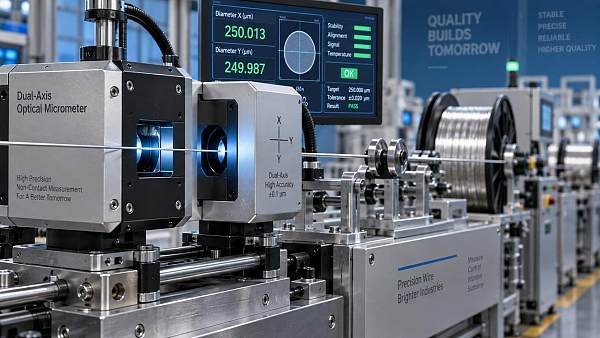
Vision inspection, 3D scanning, hyperspectral sensing, and optical measurement reduce cycle interruption.
They also help inspect fragile, fast-moving, or high-temperature targets that manual tools cannot handle well.
4. Calibration credibility is affecting asset value
A cheaper system with weak calibration support can create hidden losses.
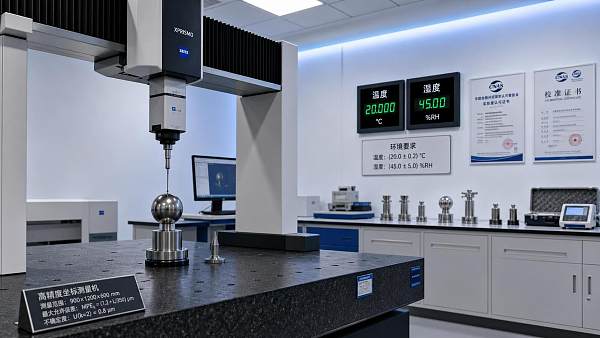
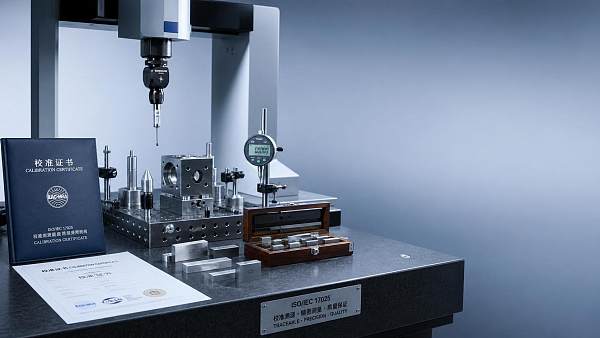
Alignment with ISO/IEC 17025, NIST traceability, and repeatability benchmarks supports stronger capital justification.
How industrial inspection investment insights affect business performance
The impact extends beyond quality metrics.
Inspection capability influences cost structure, delivery confidence, engineering speed, and warranty exposure.
- Upstream impact: stronger incoming inspection reduces supplier-related disruption.
- In-process impact: automated checks cut rework accumulation and shorten response time.
- Final inspection impact: better documentation supports shipment release and customer acceptance.
- Lifecycle impact: stored inspection data improves root-cause analysis and continuous improvement.
Industrial inspection investment insights also clarify where underinvestment becomes expensive.
Skipping a capable system may save capex today but increase false acceptance, delayed containment, and premium freight later.
This is especially true in mixed-product environments where variability is high and manual judgment is inconsistent.
Where 2026 budgets should focus first
Not every inspection technology deserves equal priority.
Funding should follow risk concentration, defect cost, and data leverage.
- High-cost failure points with expensive scrap or safety consequences.
- Processes where manual inspection creates high variation between shifts.
- Product families facing stricter tolerance or certification requirements.
- Cells where faster feedback can prevent defect propagation.
- Operations lacking structured inspection data for analytics or claims defense.
These priorities turn industrial inspection investment insights into a ranking tool rather than a generic technology wish list.
A practical decision matrix for industrial inspection investment insights
What deserves closer review before approval
- Gauge repeatability and reproducibility under real operating conditions.
- Calibration interval assumptions and service response capability.
- Integration with MES, SPC, PLM, or quality record systems.
- False reject and false accept rates, not only advertised accuracy.
- Operator training burden and interface simplicity.
- Changeover flexibility for mixed-volume production.
- Cybersecurity and data retention requirements for connected inspection assets.
This review discipline improves industrial inspection investment insights by linking technical specifications to financial exposure.
How to turn insight into a stronger 2026 funding case
A credible business case should combine hard savings and strategic protection.
- Quantify defect escape cost, rework hours, and downtime linked to current inspection gaps.
- Map each proposed system to a specific control point and measurable outcome.
- Include compliance, traceability, and claim-defense value in the return model.
- Separate pilot-stage assumptions from scaled deployment economics.
- Use phased implementation where process learning is still evolving.
The best industrial inspection investment insights do not chase every technology trend.
They identify where precision capability most effectively protects margin, continuity, and future competitiveness.
For 2026 planning, the next step is clear.
Audit current inspection losses, rank process risks, and compare them against scalable metrology and sensing options.
Using disciplined industrial inspection investment insights now can prevent underfunded quality systems from becoming expensive strategic liabilities later.
Recommended News
 Sep 24, 2026What drives sensory technology cost in industrial monitoring projects?Sensory technology cost in industrial monitoring depends on accuracy, integration, calibration, software, and lifecycle support. Learn how to build a reliable budget and avoid hidden project costs.
 Sep 18, 2026How to evaluate quality control at a CNC machining factoryEvaluate a CNC machining factory with practical checks for inspection, calibration, traceability, sampling, and corrective actions to secure reliable parts.
 Sep 17, 2026How to select inline measurement systems for Middle East heatInline Measurement Systems Middle East: learn how to select reliable solutions for heat, dust, vibration, calibration, and production-ready data integration.
 Sep 16, 2026How to choose monitor stands that reduce neck strain at workMonitor stands can reduce neck strain by improving screen height, distance, and stability. Explore practical tips to choose the right ergonomic stand for a more comfortable workspace.
 Sep 15, 2026How to verify an importers directory for machinery before contacting suppliersImporters directory for machinery verification guide: assess legal status, technical fit, compliance, and service capability to build a reliable supplier shortlist.
 Sep 13, 2026How to assess calibration support from metrology suppliers in the Middle EastMetrology suppliers Middle East: learn how to assess ISO/IEC 17025 scope, calibration uncertainty, local support, turnaround time, and lifecycle cost.
 Sep 12, 2026How material fatigue causes cracks in safety-critical componentsMaterial fatigue can trigger hidden cracks in safety-critical components long before visible failure. Learn how cyclic loading, stress concentrations, inspection methods, and targeted controls reduce risk.
 Sep 10, 2026What to verify before choosing an optical micrometer supplier for wireChoose an optical micrometer supplier for wire with confidence. Verify real-line accuracy, calibration, integration, and support before you buy.
 Sep 08, 2026How to choose thickness gauges for pipes with limited accessThickness Gauges for pipes: learn how to select the right ultrasonic gauge and probe for tight access, curved surfaces, corrosion, coatings, and reliable readings.
 Sep 07, 2026How to choose anti-aging face serums for your skin typeantiagingfaceserums made simple: discover the best ingredients, textures, and routines for dry, oily, sensitive, or combination skin—plus tips for visible results.
 Sep 05, 2026How to choose sheet metal components for tight-tolerance assembliesSheet metal components for tight-tolerance assemblies: learn how to align materials, datums, forming, finishes, and inspection for reliable fit and repeatable performance.
 Sep 04, 2026What accuracy should a digital temperature humidity sensor have?Digital temperature humidity sensor accuracy explained: compare temperature and RH limits, resolution, drift, calibration, and installation effects to choose reliable performance for your application.
 Sep 03, 2026How to choose glamping tents for eco resorts in high-wind locationsGlamping Tents for eco resorts: discover how to choose wind-resistant structures, engineered anchors, and durable materials for safer, sustainable stays.
 Sep 02, 2026How to assess a bore gauge manufacturer in Latin America for measurement reliabilityBore gauge manufacturer Latin America: learn how to verify calibration traceability, repeatability, service support, and shop-floor reliability before you buy.
 Sep 01, 2026What accuracy factors matter most in advanced metrology calibration?Advanced metrology calibration: discover the key accuracy factors—from traceability and uncertainty to environment, probes, and software—for reliable decisions.
 Aug 31, 2026When does legal tech make sense for a growing business?Legal tech helps growing businesses streamline contracts, compliance, IP, and audit controls. Discover the key signals, practical tools, and steps to scale with confidence.
 Aug 30, 2026How manufacturing tolerance affects thread gauge acceptance limitsThread gauge manufacturing tolerance affects acceptance limits, calibration confidence, wear risk, and inspection consistency. Learn how to prevent costly thread gauge errors.
 Aug 29, 2026How to choose office supplies that reduce waste in shared workspacesOffice supplies can cut waste and costs in shared workspaces. Discover practical procurement tips for durable, refillable, low-packaging products.
 Aug 28, 2026How to compare metrology equipment vendors for calibration supportMetrology equipment vendors: compare calibration scope, ISO/IEC 17025 support, downtime, documentation, and lifecycle costs to choose reliable service.
 Aug 27, 2026What to evaluate before choosing industrial inspection systems in AsiaIndustrial Inspection Systems Asia: evaluate accuracy, cycle time, automation, traceability, and local service to choose a reliable solution for smarter quality control.
 Aug 26, 2026Do dermarollers actually improve absorption of skincare productsDermarollers can improve skincare absorption, but not always safely. Learn when they help, which products to pair, and how to avoid irritation for better skin results.
 Aug 25, 2026What makes a high accuracy CMM probe reliable at tight tolerancesHigh accuracy CMM probe reliability depends on repeatability, stylus stability, calibration integrity, and system fit. Learn what ensures trusted results at tight tolerances.
 Aug 24, 2026When does an automated trade platform make sense for growing teams?Automated trade platform adoption makes sense when growing teams face supplier complexity, compliance risk, and limited visibility. Learn the signs, ROI factors, and how to scale with control.
 Aug 22, 2026How to vet an industrial measurement equipment supplier for calibration traceabilityIndustrial measurement equipment supplier selection starts with calibration traceability. Learn how to verify ISO/IEC 17025 evidence, uncertainty, and audit-ready documentation.