What to Watch at Metrology Industry Conference 2026
Time
Click Count
The metrology industry conference 2026 is set to spotlight the technologies, standards, and strategic partnerships shaping next-generation manufacturing. For researchers and decision-makers tracking precision measurement, sensing, and quality intelligence, this event offers a valuable window into emerging tools—from AI-enabled metrology systems to advanced optical and non-contact inspection platforms—driving smarter, zero-defect industrial operations.
As interest in the metrology industry conference 2026 grows, attention is shifting from product showcases to measurable business impact. This event is not only about instruments. It is about data trust, process control, compliance, and intelligent action across industries.
For organizations following G-IMS intelligence, the conference matters because metrology now connects hardware, software, standards, and industrial resilience. The most valuable sessions will likely reveal how precision systems support semiconductor, aerospace, electronics, automotive, energy, and advanced research environments.
What makes the metrology industry conference 2026 especially important?
The metrology industry conference 2026 arrives at a critical point for industrial transformation. Production systems need faster validation, tighter tolerances, and stronger traceability. Measurement is no longer a support function. It is becoming a strategic control layer.
Three pressures are driving that shift. First, miniaturization is increasing across electronics and semiconductor manufacturing. Second, quality expectations are rising in aerospace, medical, and mobility sectors. Third, digital factories require trustworthy sensory data for automation decisions.
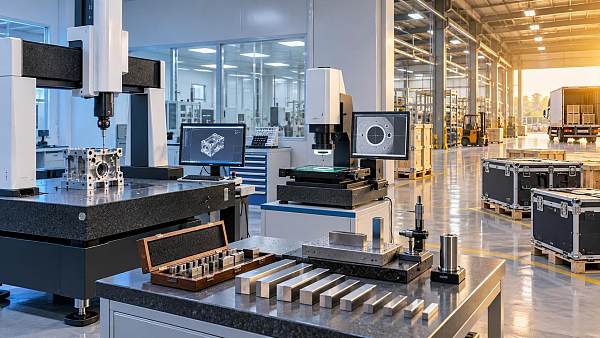
This means the conference will likely focus on more than isolated devices. It will emphasize integrated ecosystems, including CMM platforms, optical metrology, machine vision, environmental sensing, and high-frequency electrical measurement.
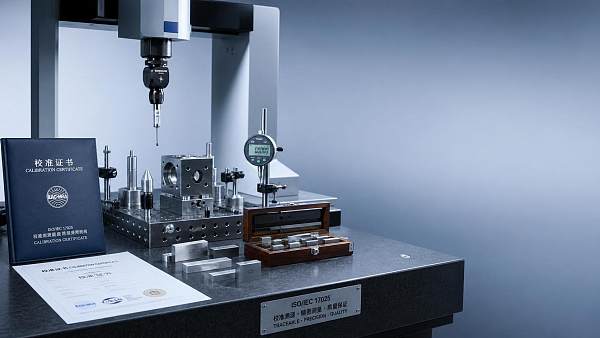
Expect strong discussion around standards as well. ISO/IEC 17025, NIST traceability, and IEEE-aligned measurement frameworks continue to influence equipment evaluation and laboratory confidence. Sessions tied to verification methods may become especially useful.
Which technologies should be watched most closely at the metrology industry conference 2026?
The most promising technologies at the metrology industry conference 2026 will likely combine precision with speed, intelligence, and interoperability. The market is moving toward connected systems that reduce manual interpretation and improve repeatable outcomes.
AI-enabled metrology and analytics
AI is increasingly used to detect anomalies, optimize measurement paths, and predict quality drift. Instead of generating raw reports only, systems are beginning to recommend corrective actions based on historical and live production data.
Advanced 3D scanning and CMM evolution
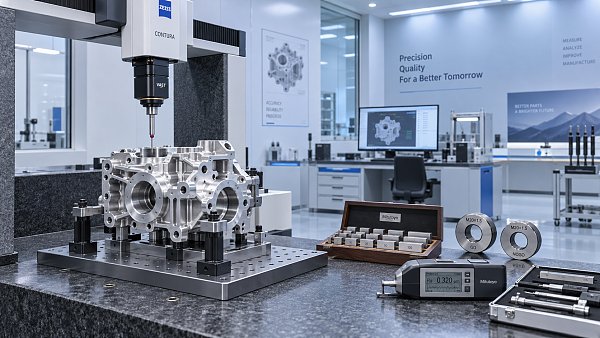
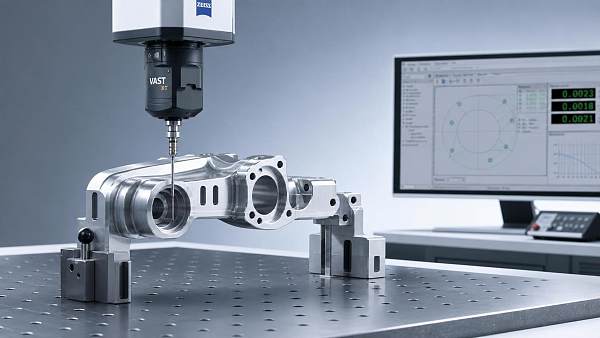
Hybrid CMM systems are becoming more flexible. They now blend tactile probing with optical capture, enabling faster inspection for complex geometries. This trend is especially relevant in tooling, turbine components, battery structures, and precision assemblies.
Optical and photonic sensors
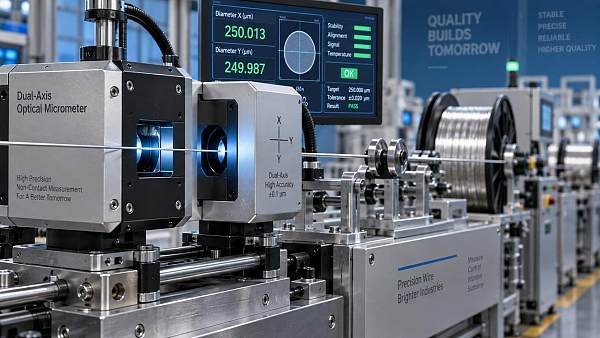
Industrial optics are advancing through higher resolution, better stability, and improved performance under variable lighting. Hyperspectral and laser-based solutions may attract attention where surface, material, and defect differentiation matter.
Non-contact vision inspection
Non-contact inspection systems continue to gain ground in high-throughput lines. They reduce wear, minimize contamination risk, and support in-line automation. Their success depends on calibration discipline and software confidence, not camera specifications alone.
Environmental and specialized sensing
Temperature, humidity, vibration, particle concentration, and trace gas conditions directly affect measurement quality. At the metrology industry conference 2026, environmental monitoring may receive more attention as a hidden driver of uncertainty control.
How can visitors judge which sessions, booths, and demos are truly valuable?
Not every innovation claim will carry equal value. A practical evaluation approach helps separate market noise from useful technical progress. The best way is to focus on evidence, integration readiness, and application fit.
- Ask whether accuracy is demonstrated under real production conditions.
- Check if the system supports recognized calibration and traceability practices.
- Review software compatibility with MES, SPC, PLM, or laboratory systems.
- Compare cycle time gains against uncertainty trade-offs.
- Look for proof of long-term repeatability, not one-time showcase performance.
At the metrology industry conference 2026, useful booths will likely explain measurement workflow, operator demands, and maintenance burden clearly. Transparency around setup, drift control, and training often says more than polished marketing visuals.
Another good sign is benchmark language tied to recognized standards. Vendors or institutions that explain uncertainty budgets, reference artifacts, and validation methods usually offer stronger technical substance.
What common risks and misconceptions should be avoided?
A major misconception is assuming higher resolution automatically means better metrology. Resolution, accuracy, repeatability, stability, and environmental robustness are different performance dimensions. A system can produce detailed images while still failing critical tolerance decisions.
Another risk is treating AI as a replacement for metrology discipline. AI can accelerate interpretation, but poor reference data creates poor recommendations. Calibration, uncertainty management, and process context remain essential.
Some visitors also overvalue speed without considering downstream consequences. A faster inspection tool may increase throughput, yet create hidden quality escapes if correlation against certified methods is weak.
At the metrology industry conference 2026, it will be wise to question any claim that avoids discussing measurement uncertainty, operator influence, or environmental sensitivity. Those omissions often signal implementation risk.
How does the metrology industry conference 2026 affect investment and implementation planning?
The metrology industry conference 2026 can influence investment priorities by clarifying where technical maturity is strongest. It helps compare emerging tools against current infrastructure, especially when organizations need staged adoption rather than full replacement.
Implementation planning should usually examine five areas before any decision:
- Measurement objective and tolerance criticality
- Integration with digital quality systems
- Calibration, validation, and audit demands
- Operator learning curve and service support
- Total lifecycle cost, including upgrades and downtime
This event may also reveal whether the best returns come from new equipment or from better software, environmental control, and workflow redesign. In many cases, intelligent measurement gains begin with system coherence rather than hardware replacement.
For sectors with strict compliance pressure, conference insights can shorten evaluation cycles. Seeing multiple approaches side by side makes it easier to compare proof of traceability, uncertainty statements, and application-specific maturity.
What should be on a practical watchlist before and during the event?
A focused watchlist turns the metrology industry conference 2026 into a more productive benchmarking exercise. It also helps capture details that are often forgotten after crowded exhibition days.
It is also smart to record which exhibitors explain both strengths and limitations. Balanced technical communication usually indicates a more mature solution and a better long-term partnership posture.
What are the key takeaways from the metrology industry conference 2026?
The metrology industry conference 2026 is expected to show that measurement is becoming the operating logic behind quality intelligence. Precision is no longer only about checking dimensions. It now supports predictive control, compliance confidence, and faster industrial decision cycles.
The strongest signals will likely come from technologies that connect sensing, analytics, and standards-based validation. AI, optical systems, 3D scanning, electrical measurement, and environmental sensing are converging into more actionable metrology platforms.
A useful next step is to create a comparison framework before the event. Track application fit, uncertainty evidence, workflow integration, and lifecycle demands. That approach turns the metrology industry conference 2026 from an information source into a decision advantage.
For ongoing benchmarking, G-IMS remains aligned with the logic of actionable insight: measure precisely, interpret rigorously, and act with confidence. That mindset will define the real value of the metrology industry conference 2026.
Recommended News
 Sep 24, 2026What drives sensory technology cost in industrial monitoring projects?Sensory technology cost in industrial monitoring depends on accuracy, integration, calibration, software, and lifecycle support. Learn how to build a reliable budget and avoid hidden project costs.
 Sep 18, 2026How to evaluate quality control at a CNC machining factoryEvaluate a CNC machining factory with practical checks for inspection, calibration, traceability, sampling, and corrective actions to secure reliable parts.
 Sep 17, 2026How to select inline measurement systems for Middle East heatInline Measurement Systems Middle East: learn how to select reliable solutions for heat, dust, vibration, calibration, and production-ready data integration.
 Sep 16, 2026How to choose monitor stands that reduce neck strain at workMonitor stands can reduce neck strain by improving screen height, distance, and stability. Explore practical tips to choose the right ergonomic stand for a more comfortable workspace.
 Sep 15, 2026How to verify an importers directory for machinery before contacting suppliersImporters directory for machinery verification guide: assess legal status, technical fit, compliance, and service capability to build a reliable supplier shortlist.
 Sep 13, 2026How to assess calibration support from metrology suppliers in the Middle EastMetrology suppliers Middle East: learn how to assess ISO/IEC 17025 scope, calibration uncertainty, local support, turnaround time, and lifecycle cost.
 Sep 12, 2026How material fatigue causes cracks in safety-critical componentsMaterial fatigue can trigger hidden cracks in safety-critical components long before visible failure. Learn how cyclic loading, stress concentrations, inspection methods, and targeted controls reduce risk.
 Sep 10, 2026What to verify before choosing an optical micrometer supplier for wireChoose an optical micrometer supplier for wire with confidence. Verify real-line accuracy, calibration, integration, and support before you buy.
 Sep 08, 2026How to choose thickness gauges for pipes with limited accessThickness Gauges for pipes: learn how to select the right ultrasonic gauge and probe for tight access, curved surfaces, corrosion, coatings, and reliable readings.
 Sep 07, 2026How to choose anti-aging face serums for your skin typeantiagingfaceserums made simple: discover the best ingredients, textures, and routines for dry, oily, sensitive, or combination skin—plus tips for visible results.
 Sep 05, 2026How to choose sheet metal components for tight-tolerance assembliesSheet metal components for tight-tolerance assemblies: learn how to align materials, datums, forming, finishes, and inspection for reliable fit and repeatable performance.
 Sep 04, 2026What accuracy should a digital temperature humidity sensor have?Digital temperature humidity sensor accuracy explained: compare temperature and RH limits, resolution, drift, calibration, and installation effects to choose reliable performance for your application.
 Sep 03, 2026How to choose glamping tents for eco resorts in high-wind locationsGlamping Tents for eco resorts: discover how to choose wind-resistant structures, engineered anchors, and durable materials for safer, sustainable stays.
 Sep 02, 2026How to assess a bore gauge manufacturer in Latin America for measurement reliabilityBore gauge manufacturer Latin America: learn how to verify calibration traceability, repeatability, service support, and shop-floor reliability before you buy.
 Sep 01, 2026What accuracy factors matter most in advanced metrology calibration?Advanced metrology calibration: discover the key accuracy factors—from traceability and uncertainty to environment, probes, and software—for reliable decisions.
 Aug 31, 2026When does legal tech make sense for a growing business?Legal tech helps growing businesses streamline contracts, compliance, IP, and audit controls. Discover the key signals, practical tools, and steps to scale with confidence.
 Aug 30, 2026How manufacturing tolerance affects thread gauge acceptance limitsThread gauge manufacturing tolerance affects acceptance limits, calibration confidence, wear risk, and inspection consistency. Learn how to prevent costly thread gauge errors.
 Aug 29, 2026How to choose office supplies that reduce waste in shared workspacesOffice supplies can cut waste and costs in shared workspaces. Discover practical procurement tips for durable, refillable, low-packaging products.
 Aug 28, 2026How to compare metrology equipment vendors for calibration supportMetrology equipment vendors: compare calibration scope, ISO/IEC 17025 support, downtime, documentation, and lifecycle costs to choose reliable service.
 Aug 27, 2026What to evaluate before choosing industrial inspection systems in AsiaIndustrial Inspection Systems Asia: evaluate accuracy, cycle time, automation, traceability, and local service to choose a reliable solution for smarter quality control.
 Aug 26, 2026Do dermarollers actually improve absorption of skincare productsDermarollers can improve skincare absorption, but not always safely. Learn when they help, which products to pair, and how to avoid irritation for better skin results.
 Aug 25, 2026What makes a high accuracy CMM probe reliable at tight tolerancesHigh accuracy CMM probe reliability depends on repeatability, stylus stability, calibration integrity, and system fit. Learn what ensures trusted results at tight tolerances.
 Aug 24, 2026When does an automated trade platform make sense for growing teams?Automated trade platform adoption makes sense when growing teams face supplier complexity, compliance risk, and limited visibility. Learn the signs, ROI factors, and how to scale with control.
 Aug 22, 2026How to vet an industrial measurement equipment supplier for calibration traceabilityIndustrial measurement equipment supplier selection starts with calibration traceability. Learn how to verify ISO/IEC 17025 evidence, uncertainty, and audit-ready documentation.