Granite Plate Flatness Grade Benchmarks for Lab Acceptance
Time
Click Count
For technical evaluators validating surface plates for precision labs, granite plate flatness grade benchmarks are the first filter for reliable acceptance decisions. This guide explains how grades are defined, compared, and verified in practical inspection work. It also shows how benchmark choices affect stability, uncertainty control, and long-term measurement confidence across industrial laboratories.
What do granite plate flatness grade benchmarks actually measure?
Granite plate flatness grade benchmarks describe the allowable deviation of a surface plate from an ideal reference plane. They define whether the top working surface is acceptable for calibration, inspection, assembly, or metrology support tasks.
In lab acceptance, flatness is not the same as smoothness. A plate may feel polished yet still fail benchmark requirements. Flatness concerns geometric accuracy across the full usable area, not local texture alone.
Most granite plate flatness grade benchmarks are tied to recognized standards or equivalent internal protocols. Common references include federal specifications, ISO-linked calibration practices, and accredited laboratory reports aligned with ISO/IEC 17025.
The benchmark matters because surface plates act as foundational datums. If the datum shifts beyond allowed limits, every dependent reading may inherit bias. That risk grows in aerospace, optics, electronics, and precision machining environments.
Key elements included in a benchmark
- Overall flatness tolerance across the full surface
- Repeatability of measurement method
- Environmental condition during verification
- Support point configuration during testing
- Traceability of calibration equipment and report
Without these details, granite plate flatness grade benchmarks can be quoted loosely and compared unfairly. Acceptance should always connect the numeric grade to method, conditions, and usable measurement intent.
How are grade levels compared for lab acceptance?
Grade levels generally separate high-precision inspection plates from general workshop plates. The stricter the grade, the smaller the permitted flatness error. Yet stricter is not automatically better for every lab acceptance decision.
Granite plate flatness grade benchmarks should match the measurement chain. A benchmark suitable for gauge checking may be inadequate for CMM staging, optical alignment, or sub-micron comparator work.
A useful approach is to compare plate uncertainty against the tolerance stack of the intended process. If the plate contributes too much uncertainty, the grade is misaligned with the laboratory’s actual objective.
Typical comparison logic
When comparing granite plate flatness grade benchmarks, avoid relying on grade name alone. Two plates described similarly may differ in size, support method, calibration interval, and measurement confidence.
Which verification methods best support acceptance decisions?
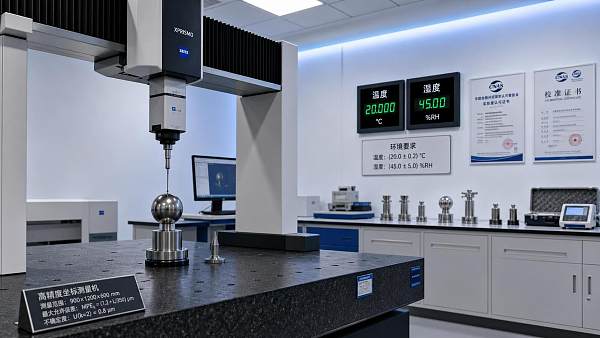
Acceptance quality depends on verification quality. Granite plate flatness grade benchmarks become meaningful only when confirmed by a credible method using traceable instruments and controlled environmental conditions.
Common verification methods include electronic levels, repeat-reading gages, autocollimators, laser-based systems, and interferometric techniques. The chosen method should fit the required resolution and the plate size under evaluation.
Support conditions matter greatly. Granite plates deform slightly under incorrect support. A plate tested on non-recommended points may appear out of grade even when the stone itself is acceptable.
Verification checklist before acceptance
- Confirm the stated granite plate flatness grade benchmarks.
- Check plate size, thickness, and support point specification.
- Review calibration report date and traceability path.
- Verify laboratory temperature stability during testing.
- Confirm measurement uncertainty on the report.
- Inspect for edge chips, wear zones, and localized damage.
For advanced industrial labs, benchmark verification should also examine repeatability over time. One passing result is useful, but trend consistency provides stronger evidence for acceptance and lifecycle planning.
What application scenarios require tighter granite plate flatness grade benchmarks?
Not every application requires the highest grade. However, several scenarios justify tighter granite plate flatness grade benchmarks because measurement risk and downstream cost are far greater than plate acquisition cost.
Examples include CMM artifact staging, optical alignment, air bearing setup, precision fixture qualification, high-frequency connector inspection, and semiconductor-related dimensional checks. In these cases, tiny datum error can distort acceptance conclusions.
Environmental monitoring also influences grade choice. A premium plate placed in a thermally unstable room may deliver less practical value than a slightly lower grade plate installed in better-controlled conditions.
Use-case guidance
- Reference metrology: choose stricter benchmarks with accredited calibration.
- Routine dimensional inspection: balance grade with recalibration cycle.
- Heavy setup work: protect the plate and separate metrology zones.
- Mixed-use labs: define acceptance by the most sensitive validated task.
This application-first logic helps align granite plate flatness grade benchmarks with actual industrial performance rather than prestige-based specification habits.
What common mistakes weaken benchmark-based acceptance?
A frequent mistake is treating all granite as dimensionally equivalent. Stone quality, internal stress behavior, thickness, ribbing design, and installation all affect how reliably granite plate flatness grade benchmarks are maintained in service.
Another mistake is accepting a certificate without reading the method notes. Some reports state flatness but omit uncertainty, support pattern, or ambient conditions. That limits the report’s acceptance value.
Wear concentration is also underestimated. Plates often fail locally before they fail globally. A benchmark may pass overall while a central work zone has become unsuitable for critical measurements.
Many teams also over-specify grade and under-manage maintenance. Poor cleaning, improper loading, and lack of covers can degrade performance faster than expected, reducing the practical benefit of tight benchmarks.
Risk signals worth watching
How should cost, recalibration, and lifecycle planning influence acceptance?
Granite plate flatness grade benchmarks should be evaluated over total lifecycle cost, not purchase price alone. A lower-cost plate with unstable performance may generate repeated verification expense and hidden process uncertainty.
Recalibration interval depends on workload, cleanliness, load patterns, and required confidence. High-use plates in critical labs often justify shorter cycles, local wear mapping, and documented maintenance records.
The best acceptance decision often combines three factors: current benchmark compliance, expected drift rate, and the cost of measurement failure. This is especially true in sectors where one incorrect acceptance result can trigger major rework.
FAQ summary table
Strong lab acceptance starts with clear granite plate flatness grade benchmarks, but it should never end there. Practical verification, application matching, and lifecycle control determine whether a plate truly supports dependable measurement.
As a next step, document the required uncertainty of the target process, compare it with available granite plate flatness grade benchmarks, and request full traceable verification data before approval. That simple sequence reduces ambiguity and improves acceptance quality across precision laboratory operations.
Recommended News
 Sep 28, 2026How to verify a NIST standards reference in a calibration reportNIST standards reference verification made simple: learn how to review calibration traceability, uncertainty, ISO/IEC 17025 scope, and report red flags.
 Sep 27, 2026When a dial bore gauge is accurate enough for production inspectionDial bore gauge accuracy for production inspection: learn how tolerance, setup, alignment, surface condition, and guard bands determine reliable bore measurement decisions.
 Sep 26, 2026What size cat tree and tower is right for an indoor cat?Cattreesandtowers guide: find the ideal cat tree size for your indoor cat, with tips on height, platform space, stability, scratching posts, and safe multi-cat setups.
 Sep 24, 2026What drives sensory technology cost in industrial monitoring projects?Sensory technology cost in industrial monitoring depends on accuracy, integration, calibration, software, and lifecycle support. Learn how to build a reliable budget and avoid hidden project costs.
 Sep 18, 2026How to evaluate quality control at a CNC machining factoryEvaluate a CNC machining factory with practical checks for inspection, calibration, traceability, sampling, and corrective actions to secure reliable parts.
 Sep 17, 2026How to select inline measurement systems for Middle East heatInline Measurement Systems Middle East: learn how to select reliable solutions for heat, dust, vibration, calibration, and production-ready data integration.
 Sep 16, 2026How to choose monitor stands that reduce neck strain at workMonitor stands can reduce neck strain by improving screen height, distance, and stability. Explore practical tips to choose the right ergonomic stand for a more comfortable workspace.
 Sep 15, 2026How to verify an importers directory for machinery before contacting suppliersImporters directory for machinery verification guide: assess legal status, technical fit, compliance, and service capability to build a reliable supplier shortlist.
 Sep 13, 2026How to assess calibration support from metrology suppliers in the Middle EastMetrology suppliers Middle East: learn how to assess ISO/IEC 17025 scope, calibration uncertainty, local support, turnaround time, and lifecycle cost.
 Sep 12, 2026How material fatigue causes cracks in safety-critical componentsMaterial fatigue can trigger hidden cracks in safety-critical components long before visible failure. Learn how cyclic loading, stress concentrations, inspection methods, and targeted controls reduce risk.
 Sep 10, 2026What to verify before choosing an optical micrometer supplier for wireChoose an optical micrometer supplier for wire with confidence. Verify real-line accuracy, calibration, integration, and support before you buy.
 Sep 08, 2026How to choose thickness gauges for pipes with limited accessThickness Gauges for pipes: learn how to select the right ultrasonic gauge and probe for tight access, curved surfaces, corrosion, coatings, and reliable readings.
 Sep 07, 2026How to choose anti-aging face serums for your skin typeantiagingfaceserums made simple: discover the best ingredients, textures, and routines for dry, oily, sensitive, or combination skin—plus tips for visible results.
 Sep 05, 2026How to choose sheet metal components for tight-tolerance assembliesSheet metal components for tight-tolerance assemblies: learn how to align materials, datums, forming, finishes, and inspection for reliable fit and repeatable performance.
 Sep 04, 2026What accuracy should a digital temperature humidity sensor have?Digital temperature humidity sensor accuracy explained: compare temperature and RH limits, resolution, drift, calibration, and installation effects to choose reliable performance for your application.
 Sep 03, 2026How to choose glamping tents for eco resorts in high-wind locationsGlamping Tents for eco resorts: discover how to choose wind-resistant structures, engineered anchors, and durable materials for safer, sustainable stays.
 Sep 02, 2026How to assess a bore gauge manufacturer in Latin America for measurement reliabilityBore gauge manufacturer Latin America: learn how to verify calibration traceability, repeatability, service support, and shop-floor reliability before you buy.
 Sep 01, 2026What accuracy factors matter most in advanced metrology calibration?Advanced metrology calibration: discover the key accuracy factors—from traceability and uncertainty to environment, probes, and software—for reliable decisions.
 Aug 31, 2026When does legal tech make sense for a growing business?Legal tech helps growing businesses streamline contracts, compliance, IP, and audit controls. Discover the key signals, practical tools, and steps to scale with confidence.
 Aug 30, 2026How manufacturing tolerance affects thread gauge acceptance limitsThread gauge manufacturing tolerance affects acceptance limits, calibration confidence, wear risk, and inspection consistency. Learn how to prevent costly thread gauge errors.
 Aug 29, 2026How to choose office supplies that reduce waste in shared workspacesOffice supplies can cut waste and costs in shared workspaces. Discover practical procurement tips for durable, refillable, low-packaging products.
 Aug 28, 2026How to compare metrology equipment vendors for calibration supportMetrology equipment vendors: compare calibration scope, ISO/IEC 17025 support, downtime, documentation, and lifecycle costs to choose reliable service.
 Aug 27, 2026What to evaluate before choosing industrial inspection systems in AsiaIndustrial Inspection Systems Asia: evaluate accuracy, cycle time, automation, traceability, and local service to choose a reliable solution for smarter quality control.
 Aug 26, 2026Do dermarollers actually improve absorption of skincare productsDermarollers can improve skincare absorption, but not always safely. Learn when they help, which products to pair, and how to avoid irritation for better skin results.