Industrial Benchmarking for Quality Control Systems in 2026
Time
Click Count
Industrial Benchmarking for Quality Control Systems in 2026
In 2026, Industrial Benchmarking for Quality Control Systems is no longer optional for enterprise decision-makers seeking precision, compliance, and resilient production. As global industries face tighter standards, faster innovation cycles, and zero-defect expectations, data-driven benchmarking helps leaders compare technologies, validate performance, and invest with confidence. This article explores how strategic benchmarking turns quality control from a cost center into a competitive advantage.
Why the Same Quality Control System Behaves Differently Across Scenarios
Industrial Benchmarking for Quality Control Systems matters because “good performance” is not universal. A system that excels in clean-room electronics may fail in harsh environmental monitoring, while a fast vision inspection line may miss micro-level deviations in precision machining.
The right benchmark depends on the operating context, tolerance band, data volume, and compliance burden. In integrated environments, the best system is rarely the most advanced on paper. It is the one that matches the process risk.
 Where Benchmarking Reveals Real Quality Risks
 Where Benchmarking Reveals Real Quality Risks
Industrial Benchmarking for Quality Control Systems becomes most valuable when production or inspection failures are expensive, difficult to trace, or regulated. In semiconductor inspection, even small drift in measurement stability can trigger yield loss. In aerospace assemblies, traceability and calibration integrity can outweigh raw speed.
In food, pharma, and energy-related environments, environmental monitoring systems must be benchmarked not only for accuracy, but also for response time, auditability, and alarm reliability. This is where G-IMS-style technical benchmarking helps decision-makers compare sensor performance against ISO/IEC 17025, IEEE, and NIST-aligned expectations.
High-precision manufacturing
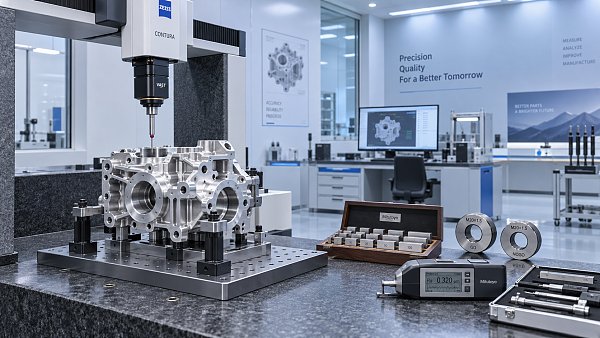
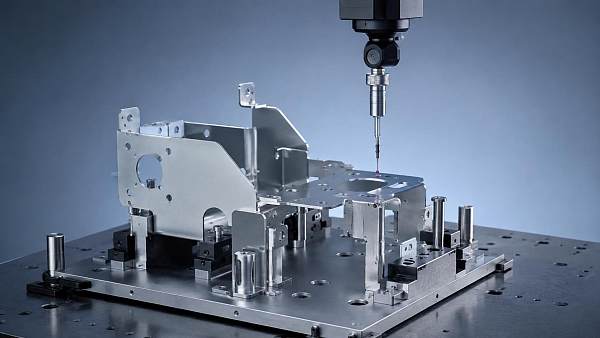
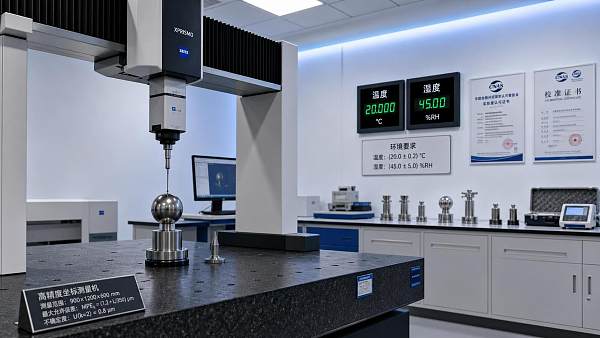
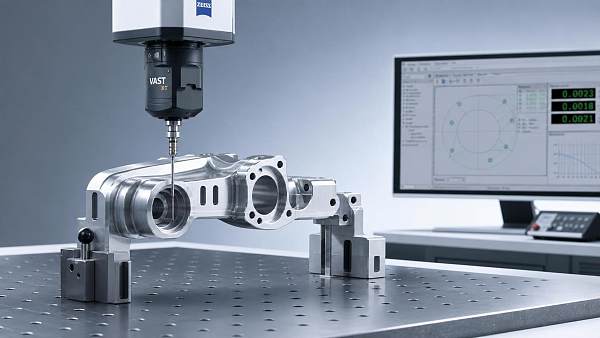
For metrology-heavy workflows, Industrial Benchmarking for Quality Control Systems should prioritize repeatability, gauge capability, thermal stability, and software traceability. AI-assisted CMMs, 3D scanning systems, and non-contact vision platforms may all be suitable, but each serves different defect classes.
Electronics and high-frequency testing
In electrical test environments, the benchmark shifts toward bandwidth, noise floor, signal integrity, and calibration drift. A system that performs well in routine checks may underperform when validating high-frequency components or advanced interconnects.
Harsh or distributed environments
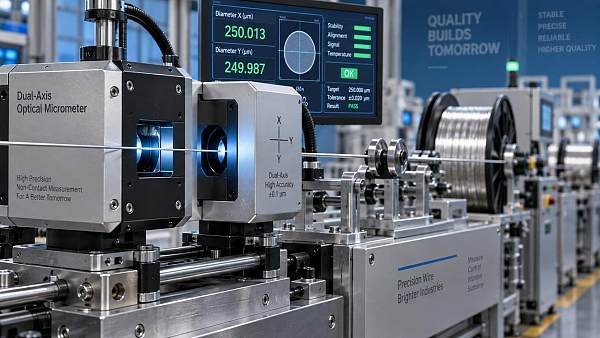
In plants with dust, vibration, humidity, or unstable temperatures, Industrial Benchmarking for Quality Control Systems must include enclosure durability, maintenance load, and remote diagnostics. Accuracy alone is not enough if uptime collapses under real operating stress.
How Different Scenarios Change the Benchmark Criteria
What a Strong Benchmarking Process Should Compare
Industrial Benchmarking for Quality Control Systems should compare more than sensor specs. It should assess the full measurement chain, from data capture to decision output.
- Measurement accuracy, repeatability, and drift control
- Integration with MES, ERP, and traceability platforms
- Calibration intervals and service complexity
- Environmental tolerance and long-term uptime
- Compliance readiness against ISO/IEC 17025 and internal standards
This broader view prevents overinvestment in feature-rich tools that do not improve actual quality outcomes. It also exposes hidden costs, including operator training, data reconciliation, and validation delays.
Practical Scenario-Fit Advice for 2026
Industrial Benchmarking for Quality Control Systems should begin with the defect pattern, not the vendor brochure. If defects are geometric, prioritize metrology and 3D scanning. If defects are visual and surface-related, non-contact vision inspection is usually more effective. If defects appear in signal or component behavior, electrical test performance becomes the deciding factor.
A useful rule is simple: benchmark the system where failure costs are highest. For critical nodes, require live demonstrations, calibration records, and data export consistency. For distributed operations, test remote visibility, alarm latency, and maintenance response.
Common Misjudgments That Distort the Benchmark
One common mistake is treating throughput as the main success metric. Fast inspection is useful only if false negatives remain low. Another mistake is ignoring how sample conditions change performance. Temperature, lighting, vibration, and material reflectivity can all alter results.
A third error is underestimating lifecycle cost. Industrial Benchmarking for Quality Control Systems should include maintenance, recalibration, software updates, and spare-part availability. Systems with strong launch performance may become expensive if support is weak.
A Better 2026 Action Path
Start with three questions: What defect must be caught, what environment will the system face, and what evidence is required for compliance? Then map candidate systems against those conditions using measurable criteria, not marketing claims.
Industrial Benchmarking for Quality Control Systems is most effective when it connects technical performance with operational outcomes. That is the difference between buying inspection equipment and building a resilient quality architecture.
If your next upgrade must support precision, traceability, and scalable control, benchmark against real-world scenarios first. The right comparison will make the final decision faster, safer, and far more defensible.
Recommended News
 Sep 27, 2026When a dial bore gauge is accurate enough for production inspectionDial bore gauge accuracy for production inspection: learn how tolerance, setup, alignment, surface condition, and guard bands determine reliable bore measurement decisions.
 Sep 26, 2026What size cat tree and tower is right for an indoor cat?Cattreesandtowers guide: find the ideal cat tree size for your indoor cat, with tips on height, platform space, stability, scratching posts, and safe multi-cat setups.
 Sep 24, 2026What drives sensory technology cost in industrial monitoring projects?Sensory technology cost in industrial monitoring depends on accuracy, integration, calibration, software, and lifecycle support. Learn how to build a reliable budget and avoid hidden project costs.
 Sep 18, 2026How to evaluate quality control at a CNC machining factoryEvaluate a CNC machining factory with practical checks for inspection, calibration, traceability, sampling, and corrective actions to secure reliable parts.
 Sep 17, 2026How to select inline measurement systems for Middle East heatInline Measurement Systems Middle East: learn how to select reliable solutions for heat, dust, vibration, calibration, and production-ready data integration.
 Sep 16, 2026How to choose monitor stands that reduce neck strain at workMonitor stands can reduce neck strain by improving screen height, distance, and stability. Explore practical tips to choose the right ergonomic stand for a more comfortable workspace.
 Sep 15, 2026How to verify an importers directory for machinery before contacting suppliersImporters directory for machinery verification guide: assess legal status, technical fit, compliance, and service capability to build a reliable supplier shortlist.
 Sep 13, 2026How to assess calibration support from metrology suppliers in the Middle EastMetrology suppliers Middle East: learn how to assess ISO/IEC 17025 scope, calibration uncertainty, local support, turnaround time, and lifecycle cost.
 Sep 12, 2026How material fatigue causes cracks in safety-critical componentsMaterial fatigue can trigger hidden cracks in safety-critical components long before visible failure. Learn how cyclic loading, stress concentrations, inspection methods, and targeted controls reduce risk.
 Sep 10, 2026What to verify before choosing an optical micrometer supplier for wireChoose an optical micrometer supplier for wire with confidence. Verify real-line accuracy, calibration, integration, and support before you buy.
 Sep 08, 2026How to choose thickness gauges for pipes with limited accessThickness Gauges for pipes: learn how to select the right ultrasonic gauge and probe for tight access, curved surfaces, corrosion, coatings, and reliable readings.
 Sep 07, 2026How to choose anti-aging face serums for your skin typeantiagingfaceserums made simple: discover the best ingredients, textures, and routines for dry, oily, sensitive, or combination skin—plus tips for visible results.
 Sep 05, 2026How to choose sheet metal components for tight-tolerance assembliesSheet metal components for tight-tolerance assemblies: learn how to align materials, datums, forming, finishes, and inspection for reliable fit and repeatable performance.
 Sep 04, 2026What accuracy should a digital temperature humidity sensor have?Digital temperature humidity sensor accuracy explained: compare temperature and RH limits, resolution, drift, calibration, and installation effects to choose reliable performance for your application.
 Sep 03, 2026How to choose glamping tents for eco resorts in high-wind locationsGlamping Tents for eco resorts: discover how to choose wind-resistant structures, engineered anchors, and durable materials for safer, sustainable stays.
 Sep 02, 2026How to assess a bore gauge manufacturer in Latin America for measurement reliabilityBore gauge manufacturer Latin America: learn how to verify calibration traceability, repeatability, service support, and shop-floor reliability before you buy.
 Sep 01, 2026What accuracy factors matter most in advanced metrology calibration?Advanced metrology calibration: discover the key accuracy factors—from traceability and uncertainty to environment, probes, and software—for reliable decisions.
 Aug 31, 2026When does legal tech make sense for a growing business?Legal tech helps growing businesses streamline contracts, compliance, IP, and audit controls. Discover the key signals, practical tools, and steps to scale with confidence.
 Aug 30, 2026How manufacturing tolerance affects thread gauge acceptance limitsThread gauge manufacturing tolerance affects acceptance limits, calibration confidence, wear risk, and inspection consistency. Learn how to prevent costly thread gauge errors.
 Aug 29, 2026How to choose office supplies that reduce waste in shared workspacesOffice supplies can cut waste and costs in shared workspaces. Discover practical procurement tips for durable, refillable, low-packaging products.
 Aug 28, 2026How to compare metrology equipment vendors for calibration supportMetrology equipment vendors: compare calibration scope, ISO/IEC 17025 support, downtime, documentation, and lifecycle costs to choose reliable service.
 Aug 27, 2026What to evaluate before choosing industrial inspection systems in AsiaIndustrial Inspection Systems Asia: evaluate accuracy, cycle time, automation, traceability, and local service to choose a reliable solution for smarter quality control.
 Aug 26, 2026Do dermarollers actually improve absorption of skincare productsDermarollers can improve skincare absorption, but not always safely. Learn when they help, which products to pair, and how to avoid irritation for better skin results.
 Aug 25, 2026What makes a high accuracy CMM probe reliable at tight tolerancesHigh accuracy CMM probe reliability depends on repeatability, stylus stability, calibration integrity, and system fit. Learn what ensures trusted results at tight tolerances.