When is digital printing equipment cheaper than offset presses?
Time
Click Count
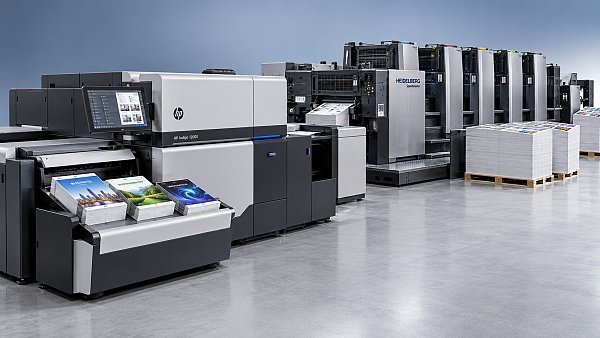
Digital printing equipment is cheaper than an offset press when the savings from shorter setup, fewer changeovers, lower startup waste, and smaller production batches outweigh its running costs. That makes digital a strong candidate for short runs, frequently revised materials, and jobs with many versions. Offset can become more economical when long, repeatable runs spread its setup costs across enough saleable pieces.
There is no universal quantity at which the advantage switches. The crossover depends on the presses being compared, the product specification, the number of separate jobs, and how much of the available capacity the business can actually use. Procurement teams also need to distinguish two questions: which process produces a particular job more cheaply, and which equipment investment costs less across the expected workload. Those answers can differ.
Start with the work the equipment will actually produce
Annual print volume alone is a weak basis for choosing between digital and offset. A business producing a few long runs has a different cost structure from one producing the same annual volume through hundreds of small orders. Each separate offset setup can require plates, press preparation, registration, color adjustment, and startup sheets. Digital systems also require preparation and calibration, but can avoid plate production and reduce the work associated with changing the printed image.
The useful starting point is a job profile drawn from actual orders. Group work by finished format, substrate, color requirements, quantity per version, finishing, and delivery deadline. Keep repeat orders separate from new artwork, and identify how often files change before the next production run. A purchasing forecast that combines all these jobs into one average run length can conceal the very conditions that make digital economical.
Version count deserves particular attention. An order with many language versions or regional designs may have a substantial total quantity, yet each version can be a short run. Compare the cost of producing every version, including its setup and waste, rather than treating the order as one continuous print run. Where compatible versions can share an offset sheet, include that production option as well.
Digital has a further advantage when individual pieces need different text, images, or identifiers. Conventional offset uses a fixed image on the plate; variable content requires another production step or a different workflow. The relevant comparison may therefore be digital printing against offset printing plus digital overprinting, additional handling, and verification. Both proposals must deliver the same finished result before their prices are comparable.
Offset becomes more attractive when artwork stays stable, quantities per setup are high, and the press can run efficiently on suitable stock. Even then, a nominally long run may lose part of that advantage if it involves difficult changeovers, extensive make-ready, or a production schedule that forces repeated stops and restarts.
Calculate the crossover using finished pieces
A useful job-cost model separates setup cost from the cost that increases with quantity. For each process, calculate the total required to deliver the specified number of acceptable finished pieces. Include printing, relevant prepress work, material consumption, finishing, and any additional handling needed to meet the specification.
Job cost = setup cost + quantity × variable cost per acceptable finished piece.
In the familiar case where digital has lower setup cost and offset has lower variable cost, the crossover quantity can be expressed as:
Crossover quantity = (offset setup cost − digital setup cost) ÷ (digital variable cost − offset variable cost).
This expression is a starting point, not a universal pricing rule. It assumes that setup and variable costs remain reasonably stable across the quantities being compared. Paper purchasing tiers, click-charge bands, changes in imposition, finishing minimums, or the need for an additional shift can produce cost steps. For an investment decision, calculate complete job costs at the quantities the business actually orders.
The denominator also matters. If digital does not have a higher variable cost for a particular application, the assumed crossover may not exist within the relevant production range. Equally, a digital job requiring an expensive substrate or an extra finishing operation may lose its advantage earlier than a simple comparison of press charges suggests.
Use a consistent production unit. A digital click, an offset impression, a printed sheet, and a finished booklet are different measures. Sheet size, imposition, duplex printing, trimming, and spoilage determine how many chargeable production units are needed for each delivered item. A lower quoted impression cost can still produce a higher finished-piece cost.
Waste should be assigned to the stage where it occurs. A sheet rejected after printing consumes stock and press time; a booklet rejected after binding also carries the cost of the preceding operations. Include the extra production needed to cover expected losses, using evidence from comparable work or a representative production trial. Avoid applying the same waste allowance to both processes simply to make the spreadsheet symmetrical.
At the investment level, add annual ownership costs separately: financing or depreciation, service commitments, software, space, utilities, and staffing as applicable. Keep the accounting treatment consistent between options and avoid counting the same equipment cost through both depreciation and lease payments. A job-level crossover cannot establish whether buying either machine is justified.
The costs that most often change the answer
Consumables and service terms
Digital running costs can include toner or ink, imaging components, maintenance items, and contractual impression charges. The allocation varies by equipment and agreement. Ask suppliers to state what is included, what is excluded, how duplex sheets are billed, whether sheet size affects charges, and whether minimum volumes or price adjustments apply. Where ink consumption is charged separately, test the economics against the actual artwork coverage.
Offset estimates need the same discipline. Include plates, ink, press chemicals, cleaning materials, maintenance, and the labor required for preparation and production. Compare equivalent service coverage. A digital proposal with substantial maintenance included should not be measured against an offset estimate that omits repair exposure and routine service.
Purchase price can point in either direction, depending on equipment class, configuration, age, and condition. A used offset press may have a lower acquisition price than a new digital system, while bringing different installation, refurbishment, staffing, and downtime requirements. Compare the cost of putting each machine into dependable production, including the peripheral equipment it needs.
Paper, quality, and finishing
The lowest printing cost is irrelevant if the output fails the product specification. Establish acceptable color, registration, image detail, surface appearance, and durability before comparing proposals. Where work must match an existing product or brand standard, evaluate representative samples on the intended stock and through the intended finishing process.
Substrate compatibility can alter the economics substantially. A digital system may need a qualified grade, treatment, or primer for a particular application. An offset workflow may carry its own drying, handling, or coating requirements. Price the stock that each proposed process can use successfully, and include any treatment or waiting time that affects delivery or work in progress.
Finishing can move the crossover as much as printing. Different sheet sizes may change folding efficiency, binding arrangements, trimming waste, or the number of handling steps. A digital press with inexpensive short-run output may still feed an inefficient finishing workflow. Conversely, compatible inline finishing may remove handling costs for suitable products. Follow the job through to packing rather than stopping the comparison at the press delivery tray.
Inventory and revisions
Offset can produce a low unit price by printing more copies at once. That saving only holds if the additional copies are used. Storage, handling, financing, and disposal belong in the comparison when larger batches are purchased to obtain a better production rate.
For manuals, promotional materials, and other content subject to revision, digital may support smaller replenishment batches and reduce exposure to obsolete stock. Calculate this benefit from the business’s revision frequency and inventory records. Printing on demand does not automatically remove waste: poor demand planning can still create excess production, while frequent small shipments may add logistics costs.
The appropriate denominator here is the number of pieces expected to be used. Dividing a large offset invoice by every printed copy can make the result look attractive even when a share of those copies will never serve a commercial purpose.
Make the purchase decision across the whole workload
A press can be economical on selected jobs and still be a poor investment if too little suitable work reaches it. Build the ownership comparison around the volume that can realistically be assigned to each machine after accounting for substrate limits, quality requirements, finishing capacity, maintenance, and delivery schedules.
Use demonstrated production rates for representative work. Rated press speed does not capture file preparation, loading, calibration, changeovers, cleaning, or downstream bottlenecks. Labor savings should likewise reflect how operators will actually be deployed. Reducing attendance at one production stage creates a cash saving only where it changes staffing costs, overtime, outsourcing, or usable capacity elsewhere.
Delivery requirements can justify digital even when its direct print cost is higher. Faster preparation may make a late revision possible or allow production closer to dispatch. Put a value on that advantage only where there is an identifiable consequence, such as avoided expediting, reduced inventory, or work that would otherwise be outsourced. A general claim of faster turnaround is insufficient for an investment case.
Procurement should ask competing suppliers to cost the same representative basket of jobs. It should contain the short runs, recurring work, versioned orders, demanding substrates, and longer runs that materially affect the business. Require each proposal to show its assumptions for setup, production time, waste, consumables, service, and finishing. Run samples through the complete workflow where quality or compatibility could change the result.
Then test the proposal under plausible changes in workload:
- Lower utilization, with fixed ownership and contractual minimums still payable.
- More short orders or artwork versions, increasing the number of changeovers.
- A greater share of long, stable runs, improving the opportunity to spread offset setup costs.
- Changes in stock, service charges, staffing, or outsourced finishing that materially affect the comparison.
If the decision changes under a modest shift in assumptions, the investment depends heavily on maintaining a particular workload. That may favor outsourcing part of production, retaining existing capacity, or combining digital and offset rather than replacing one process entirely. An existing press also needs a separate analysis: its original purchase price is a sunk cost, while its avoidable operating costs and any replacement investment affect the decision ahead.
Digital printing equipment is cheaper when its savings recur across enough of the buyer’s actual work to cover its ownership and running costs. The strongest purchase case shows where those savings arise, which jobs remain better suited to offset, and how much suitable volume is available. Ask for the cost per delivered, acceptable piece at your own order quantities—and the annual cost of producing that workload—before treating either machine’s purchase price as the deciding figure.
Recommended News
 Oct 26, 2026When is digital printing equipment cheaper than offset presses?When is digital printing equipment cheaper than offset? Compare setup, run length, waste, and ownership costs to find the best-value option for your workload.
 Oct 25, 2026How thick should a sheet metal housing be to prevent flexing?Choose the right sheet metal housing thickness to limit flexing. Compare materials, panel spans, and stiffening options to achieve reliable performance without unnecessary weight.
 Oct 24, 2026Benchmarking vs. performance measurement: what is the difference?Benchmarking vs. performance measurement: discover key differences, compare results fairly, and uncover improvement opportunities to make smarter operational and investment decisions.
 Oct 23, 2026How to choose the right capacity for weekend hiking backpacksCompare hikingbackpacks and find the right capacity for weekend trips. Explore liter ranges, gear checks, and fit tips to choose a pack that carries comfortably.
 Oct 22, 2026Can automated NDT systems meet your production line's cycle time?Can automated NDT systems match your line's cycle time? Learn how to verify throughput, validate defect detection, and avoid costly bottlenecks before you invest.
 Oct 19, 2026How to interpret accuracy on measurement device specification sheetsDecode measurement device specification sheets to compare accuracy, calculate error limits, and spot hidden conditions. Make confident instrument choices with this practical guide.
 Oct 16, 2026How to connect smart industrial sensor systems to existing PLCsConnect smart Industrial Sensor Systems to existing PLCs using I/O, IO-Link, or gateways. Explore practical steps to reduce downtime, verify compatibility, and ensure reliable control.
 Oct 15, 2026Can a portable hardness tester for steel measure thin parts accurately?Can a portable hardness tester for steel measure thin parts accurately? Compare UCI and Leeb methods, understand thickness limits, and learn how to validate results before choosing a tester.
 Oct 22, 2026How to verify bore diameter when a hole may be out of roundMaster bore diameter verification with practical checks for out-of-round holes. Learn where gauges fall short, when to use a CMM, and how to avoid costly fit problems.
 Oct 21, 2026How setting-ring uncertainty affects bore gauge accuracyImprove bore gauge accuracy by understanding setting-ring uncertainty, calibration values, and thermal effects. Learn how to reduce measurement risk and make confident inspection decisions.
 Oct 22, 2026Which Sensor Technology Is Best for Early Process Drift Detection?Which sensory technology is most useful for early process drift detection? Compare vibration, optical, thermal and chemical sensors to find actionable warnings and prevent costly quality issues.
 Oct 20, 2026What Profile Projector Accuracy Do Small Precision Parts Require?What profile projector accuracy is needed for small precision parts? Learn how tolerances, uncertainty, and edge quality guide reliable inspection and smarter equipment purchases.
 Oct 19, 2026Can a Profile Projector Replace Manual Visual Inspection?Can a profile projector replace manual visual inspection? Discover where optical measurement improves accuracy, which checks still need human judgment, and how to validate your inspection process.
 Oct 18, 2026When Should Thread Plug Gauges Be Replaced?When should thread plug gauges be replaced? Learn how wear limits, damage and calibration results guide replacement decisions to prevent inspection errors and protect product quality.
 Oct 17, 2026How Do Thread Plug Gauges Prevent Threaded-Hole Inspection Errors?How do thread plug gauges prevent threaded-hole inspection errors? Discover GO/NO-GO checks, gauge selection, and handling tips to reduce false results and improve quality.
 Oct 12, 2026How to select thread plug gauges for machining tight-tolerance partsThread Plug Gauges for machining tight-tolerance parts: learn how to select GO/NO-GO gauges by thread class, material, calibration, coatings, and blind-hole requirements.
 Oct 09, 2026How to perform caliper uncertainty analysis for critical dimensionsCaliper uncertainty analysis for critical dimensions: learn to build reliable budgets, manage tolerance risk, and make confident inspection decisions.
 Oct 07, 2026When do supply chain management solutions justify their cost?Supply chain management solutions justify their cost by reducing shortages, excess inventory, and risk. Learn the approval test for measurable ROI.
 Oct 06, 2026What to verify before choosing an industrial equipment supplier in GermanyIndustrial & Manufacturing equipment supplier in Germany: verify compliance, calibration, service, integration, and lifecycle support before choosing the right partner.
 Sep 28, 2026How to verify a NIST standards reference in a calibration reportNIST standards reference verification made simple: learn how to review calibration traceability, uncertainty, ISO/IEC 17025 scope, and report red flags.
 Sep 27, 2026When a dial bore gauge is accurate enough for production inspectionDial bore gauge accuracy for production inspection: learn how tolerance, setup, alignment, surface condition, and guard bands determine reliable bore measurement decisions.
 Sep 26, 2026What size cat tree and tower is right for an indoor cat?Cattreesandtowers guide: find the ideal cat tree size for your indoor cat, with tips on height, platform space, stability, scratching posts, and safe multi-cat setups.
 Sep 24, 2026What drives sensory technology cost in industrial monitoring projects?Sensory technology cost in industrial monitoring depends on accuracy, integration, calibration, software, and lifecycle support. Learn how to build a reliable budget and avoid hidden project costs.
 Sep 18, 2026How to evaluate quality control at a CNC machining factoryEvaluate a CNC machining factory with practical checks for inspection, calibration, traceability, sampling, and corrective actions to secure reliable parts.