Roundness Tester Factory Review: Stability Matters
Time
Click Count
Choosing a roundness tester factory is not only about comparing specifications. It is about proving long-term stability, repeatability, and measurement confidence. In precision manufacturing, unstable roundness data can distort process capability, delay root-cause analysis, and weaken supplier qualification.
This review explains why factory discipline matters. A capable roundness tester factory should show controlled assembly, traceable calibration, software consistency, and stable mechanical architecture. Without those elements, even a high-resolution instrument may fail in daily production.
Why a Checklist-Based Review Is Necessary
Roundness measurement supports bearings, shafts, valves, medical parts, precision motors, and aerospace components. In these applications, data is used for acceptance decisions, process correction, and supplier comparison. That makes factory-level consistency more important than brochure-level performance.
A checklist prevents evaluation teams from focusing only on stylus range, spindle speed, or software screens. It shifts attention toward the deeper issue: whether the roundness tester factory can deliver the same metrological behavior across units, over time, and after service interventions.
It also reduces decision risk. A structured review helps compare factories on calibration practice, environmental controls, error mapping, traceability records, and application support. Those factors define measurement stability far better than isolated accuracy claims.
Core Roundness Tester Factory Checklist
- Verify spindle error motion data under traceable conditions, and request repeat tests across multiple speeds, load states, and time intervals.
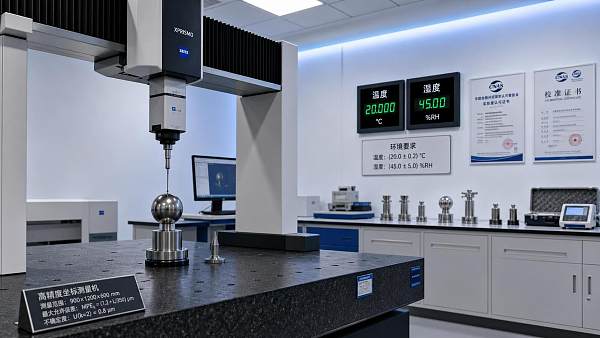
- Check whether the roundness tester factory maintains temperature control during assembly, calibration, and final inspection of precision rotary components.
- Review calibration intervals, reference artifacts, uncertainty statements, and the chain of traceability to ISO/IEC 17025-aligned practices.
- Inspect mechanical build quality, including base rigidity, vibration isolation, axis straightness, cable routing, and stylus mounting stability.
- Confirm software version control, algorithm transparency, filter options, and consistency of results after updates or regional deployment.
- Request gauge R&R or repeatability studies using real production parts, not only ideal master rings or demonstration samples.
- Evaluate how the factory controls incoming components, especially bearings, encoders, probes, drive systems, and granite structures.
- Ask for final acceptance records showing runout verification, axis alignment checks, and full functional testing before shipment.
- Examine service documentation, remote diagnostics capability, spare-part continuity, and the procedure for post-maintenance recalibration.
- Test application support by submitting difficult parts with form, concentricity, waviness, or surface interaction challenges.
What Stability Really Means
Stability is not only the ability to produce a low number once. It is the ability to hold consistent measurement behavior through shifts, operators, software revisions, transportation, and requalification. A reliable roundness tester factory designs for that continuity.
For example, spindle precision matters, but so does thermal drift compensation. Probe sensitivity matters, but so does fixture repeatability. Software reporting matters, but so does whether filter settings remain controlled across plants and laboratories.
How the Checklist Applies in Different Industrial Scenarios
High-Volume Bearing and Motor Production
In bearing and motor lines, roundness data often feeds process adjustment loops. Drift of even a few tenths can create false scrap trends or hide grinding issues. Here, the best roundness tester factory is the one that proves long-run repeatability under repetitive use.
Focus on spindle durability, operator-friendly fixturing, automated centering, and software rules that lock methods. Production environments need fast cycle time, but not at the cost of measurement robustness.
Aerospace and High-Reliability Components
Aerospace components require traceable, defensible measurement records. Audit readiness becomes part of the technical requirement. In this case, a roundness tester factory should provide uncertainty logic, validation records, and controlled documentation for regulated quality systems.
Look closely at data export integrity, user access control, and requalification procedures after relocation or repair. Stable hardware without stable documentation is not enough in high-consequence sectors.
R&D Labs and Multi-Feature Metrology
Research and development work often includes new materials, unstable surfaces, and evolving measurement methods. The ideal roundness tester factory should support advanced analysis, custom reporting, and method refinement without sacrificing baseline traceability.
In these settings, software flexibility is valuable, but algorithm consistency is critical. A flexible system that changes outputs unexpectedly after an update can damage comparative studies and qualification programs.
Commonly Overlooked Risks
Ignoring Environmental Sensitivity
A polished demo in a quiet showroom does not represent plant reality. If the roundness tester factory cannot explain temperature sensitivity, vibration tolerance, and installation requirements, field performance may degrade quickly.
Accepting Resolution as Accuracy
High digital resolution does not guarantee low uncertainty. Some systems display impressive numbers while hiding spindle, probe, or fixturing limitations. Ask for uncertainty context, not only display increments.
Overlooking Cross-Unit Consistency
A single excellent demo unit proves little. A strong roundness tester factory should show that multiple shipped systems behave consistently after installation, calibration, and normal operator use.
Neglecting Service Recovery Time
Downtime can cost more than the instrument itself. Review response time, local support depth, spare-part availability, and the quality of recovery calibration after service events.
Practical Execution Recommendations
- Request a factory audit checklist before commercial comparison, and score each supplier on traceability, build control, and calibration discipline.
- Send representative parts with known process variation, then compare repeatability across operators, sessions, and report templates.
- Ask for raw data samples and analysis settings, including filter type, cutoff choices, centering methods, and form evaluation parameters.
- Review installation requirements early, especially floor vibration, thermal stability, compressed air quality, and operator training needs.
- Include lifecycle factors in the decision, such as recalibration logistics, software support policy, and long-term application engineering access.
Final Assessment: Stability Is the Real Differentiator
A credible roundness tester factory does more than assemble instruments. It controls mechanical precision, validates software behavior, documents calibration traceability, and supports measurement consistency throughout the system lifecycle.
When reviewing suppliers, treat stability as the main decision criterion. Compare not only what the machine can measure, but how reliably the factory can reproduce that performance across units and over years of use.
The next step is straightforward: build a weighted review sheet, test real parts, request traceable evidence, and challenge the roundness tester factory on long-term repeatability. That approach leads to stronger process control and more defensible precision decisions.
Recommended News
 Oct 07, 2026When do supply chain management solutions justify their cost?Supply chain management solutions justify their cost by reducing shortages, excess inventory, and risk. Learn the approval test for measurable ROI.
 Oct 06, 2026What to verify before choosing an industrial equipment supplier in GermanyIndustrial & Manufacturing equipment supplier in Germany: verify compliance, calibration, service, integration, and lifecycle support before choosing the right partner.
 Sep 28, 2026How to verify a NIST standards reference in a calibration reportNIST standards reference verification made simple: learn how to review calibration traceability, uncertainty, ISO/IEC 17025 scope, and report red flags.
 Sep 27, 2026When a dial bore gauge is accurate enough for production inspectionDial bore gauge accuracy for production inspection: learn how tolerance, setup, alignment, surface condition, and guard bands determine reliable bore measurement decisions.
 Sep 26, 2026What size cat tree and tower is right for an indoor cat?Cattreesandtowers guide: find the ideal cat tree size for your indoor cat, with tips on height, platform space, stability, scratching posts, and safe multi-cat setups.
 Sep 24, 2026What drives sensory technology cost in industrial monitoring projects?Sensory technology cost in industrial monitoring depends on accuracy, integration, calibration, software, and lifecycle support. Learn how to build a reliable budget and avoid hidden project costs.
 Sep 18, 2026How to evaluate quality control at a CNC machining factoryEvaluate a CNC machining factory with practical checks for inspection, calibration, traceability, sampling, and corrective actions to secure reliable parts.
 Sep 17, 2026How to select inline measurement systems for Middle East heatInline Measurement Systems Middle East: learn how to select reliable solutions for heat, dust, vibration, calibration, and production-ready data integration.
 Sep 16, 2026How to choose monitor stands that reduce neck strain at workMonitor stands can reduce neck strain by improving screen height, distance, and stability. Explore practical tips to choose the right ergonomic stand for a more comfortable workspace.
 Sep 15, 2026How to verify an importers directory for machinery before contacting suppliersImporters directory for machinery verification guide: assess legal status, technical fit, compliance, and service capability to build a reliable supplier shortlist.
 Sep 13, 2026How to assess calibration support from metrology suppliers in the Middle EastMetrology suppliers Middle East: learn how to assess ISO/IEC 17025 scope, calibration uncertainty, local support, turnaround time, and lifecycle cost.
 Sep 12, 2026How material fatigue causes cracks in safety-critical componentsMaterial fatigue can trigger hidden cracks in safety-critical components long before visible failure. Learn how cyclic loading, stress concentrations, inspection methods, and targeted controls reduce risk.
 Sep 10, 2026What to verify before choosing an optical micrometer supplier for wireChoose an optical micrometer supplier for wire with confidence. Verify real-line accuracy, calibration, integration, and support before you buy.
 Sep 08, 2026How to choose thickness gauges for pipes with limited accessThickness Gauges for pipes: learn how to select the right ultrasonic gauge and probe for tight access, curved surfaces, corrosion, coatings, and reliable readings.
 Sep 07, 2026How to choose anti-aging face serums for your skin typeantiagingfaceserums made simple: discover the best ingredients, textures, and routines for dry, oily, sensitive, or combination skin—plus tips for visible results.
 Sep 05, 2026How to choose sheet metal components for tight-tolerance assembliesSheet metal components for tight-tolerance assemblies: learn how to align materials, datums, forming, finishes, and inspection for reliable fit and repeatable performance.
 Sep 04, 2026What accuracy should a digital temperature humidity sensor have?Digital temperature humidity sensor accuracy explained: compare temperature and RH limits, resolution, drift, calibration, and installation effects to choose reliable performance for your application.
 Sep 03, 2026How to choose glamping tents for eco resorts in high-wind locationsGlamping Tents for eco resorts: discover how to choose wind-resistant structures, engineered anchors, and durable materials for safer, sustainable stays.
 Sep 02, 2026How to assess a bore gauge manufacturer in Latin America for measurement reliabilityBore gauge manufacturer Latin America: learn how to verify calibration traceability, repeatability, service support, and shop-floor reliability before you buy.
 Sep 01, 2026What accuracy factors matter most in advanced metrology calibration?Advanced metrology calibration: discover the key accuracy factors—from traceability and uncertainty to environment, probes, and software—for reliable decisions.
 Aug 31, 2026When does legal tech make sense for a growing business?Legal tech helps growing businesses streamline contracts, compliance, IP, and audit controls. Discover the key signals, practical tools, and steps to scale with confidence.
 Aug 30, 2026How manufacturing tolerance affects thread gauge acceptance limitsThread gauge manufacturing tolerance affects acceptance limits, calibration confidence, wear risk, and inspection consistency. Learn how to prevent costly thread gauge errors.
 Aug 29, 2026How to choose office supplies that reduce waste in shared workspacesOffice supplies can cut waste and costs in shared workspaces. Discover practical procurement tips for durable, refillable, low-packaging products.
 Aug 28, 2026How to compare metrology equipment vendors for calibration supportMetrology equipment vendors: compare calibration scope, ISO/IEC 17025 support, downtime, documentation, and lifecycle costs to choose reliable service.