Measurement Integration Cost: Hidden Expenses in Factory Deployment
Time
Click Count
Measurement Integration Cost: Hidden Expenses in Factory Deployment
Measurement integration cost is rarely just a line item for equipment, software, and installation.
In factory projects, the larger cost often appears after purchase orders are approved.
It shows up in delayed calibration, unstable data flows, retraining, validation work, and lost production time.
That is why measurement integration cost deserves the same scrutiny as hardware specifications.
For industrial buyers, this is not a finance detail. It is a deployment risk issue.
A system can look efficient in a vendor proposal and still become expensive on the factory floor.
The practical goal is simple: estimate the full measurement integration cost before disruption starts.
Why Measurement Integration Cost Expands After Installation
Most proposals focus on visible costs because those are easiest to compare.
Buyers see scanner pricing, controller licenses, optics, fixtures, and commissioning fees.
But measurement integration cost grows when the system meets real production conditions.
Lines run faster than lab tests. Operators rotate shifts. Data must connect across legacy platforms.
Compliance teams need documented traceability, not just acceptable initial performance.
More importantly, every measurement tool affects upstream and downstream processes.
If one interface fails, engineers spend time creating manual workarounds.
That labor may never appear in the quotation, yet it directly increases measurement integration cost.
The most common hidden cost triggers
- Calibration scheduling that takes longer than planned
- Software connectors that require custom engineering
- Operator training repeated across multiple shifts
- Validation documents needed for audits or customer approval
- Downtime caused by sensor instability or poor environmental control
- Data reformatting for MES, QMS, ERP, or SPC platforms
The Hidden Expense Categories That Distort Budgets
A realistic measurement integration cost model should break costs into operating categories.
This makes supplier comparison more accurate and prevents underbudgeting.
1. Calibration and metrology readiness
Many factories underestimate calibration setup time.
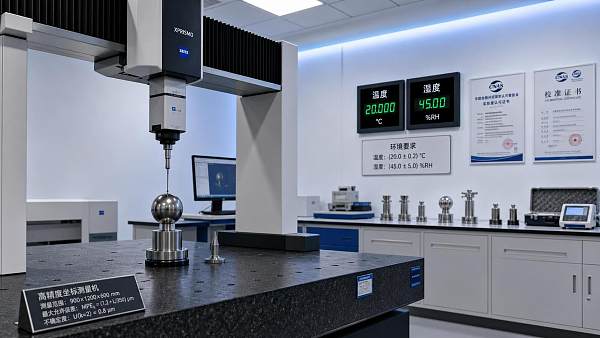
Reference artifacts, environmental checks, uncertainty studies, and traceability records all require effort.
For regulated sectors, those tasks are non-negotiable.
If they begin late, deployment slips and measurement integration cost rises quickly.
2. Data compatibility and systems integration
Measurement hardware often enters a mixed digital environment.
One plant may use legacy PLCs, modern MES layers, and separate quality databases.
If the new platform cannot exchange clean data, engineering teams build manual bridges.
Those bridges create recurring support costs, not one-time costs.
In practice, this is one of the most overlooked parts of measurement integration cost.
3. Training and workflow adaptation
Training is rarely finished after one session.
Operators need practical instructions. Quality teams need interpretation rules. Maintenance teams need fault recovery steps.
When that knowledge is uneven, errors multiply.
Scrap, reinspection, and slower cycle times then become part of measurement integration cost.
4. Compliance and documentation
Factories serving aerospace, electronics, medical, or automotive programs face documentation pressure.
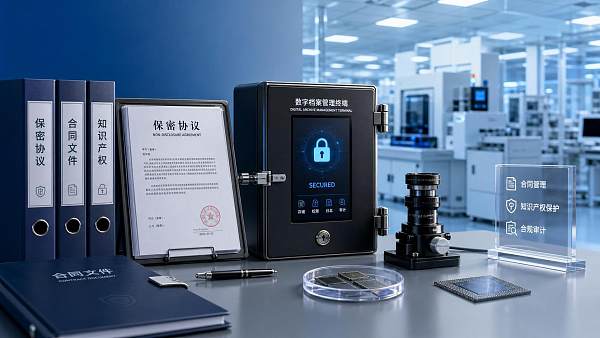
They need validation plans, repeatability evidence, maintenance records, and audit-ready reports.
A system that lacks built-in reporting can make measurement integration cost much higher over time.
How Production Disruption Becomes the Largest Cost
The biggest hidden expense is often not technical. It is operational interruption.
Even small measurement changes can slow a line when workflows are tightly balanced.
A few extra seconds per inspection point can affect shift output.
A failed software handshake can stop quality release altogether.
That is why measurement integration cost should be linked to throughput assumptions.
Ask what happens when the system needs recalibration during peak production.
Ask how fast engineers can replace a sensor, restore data paths, and resume traceable output.
If the answer is vague, the hidden measurement integration cost is probably material.
A practical budget view
How to Estimate Measurement Integration Cost Before Purchase
A better estimate starts with deployment reality, not brochure claims.
The right question is not only, “What does the system cost?”
It is also, “What must the factory absorb to make this system useful every day?”
- Map every data touchpoint before vendor selection.
- List calibration, validation, and compliance tasks by owner.
- Model downtime scenarios during installation and ramp-up.
- Budget training by shift, role, and turnover risk.
- Request support commitments for integration defects and data issues.
- Test reporting outputs against actual customer or audit requirements.
This approach makes measurement integration cost visible earlier in the buying cycle.
It also improves supplier negotiations because risk assumptions become explicit.
What Strong Suppliers Do Differently
The best suppliers do more than ship instruments.
They help reduce measurement integration cost through deployment structure.
That includes protocol clarity, calibration planning, operator onboarding, and reporting compatibility.
In complex environments, benchmark-driven evaluation matters.
Organizations such as G-IMS are valuable because they frame systems against technical standards and deployment logic.
That perspective helps buyers compare not just accuracy claims, but integration readiness.
From a procurement standpoint, this is where long-term economics become clearer.
A lower purchase price can still produce a higher measurement integration cost across the project lifecycle.
Final Decision Framework
A solid buying decision weighs total deployment friction, not only technical capability.
The useful question is whether the system can perform inside your plant, with your people, under your audit demands.
That is the real meaning of measurement integration cost.
If hidden expenses are identified early, budgets become more credible and deployment risk drops.
If they are ignored, even advanced metrology platforms can struggle to deliver operational value.
Before approving a purchase, build a full-cost checklist covering calibration, data flow, training, compliance, and downtime exposure.
That single step usually reveals the true measurement integration cost and leads to a better factory deployment decision.
Recommended News
 Oct 06, 2026What to verify before choosing an industrial equipment supplier in GermanyIndustrial & Manufacturing equipment supplier in Germany: verify compliance, calibration, service, integration, and lifecycle support before choosing the right partner.
 Sep 28, 2026How to verify a NIST standards reference in a calibration reportNIST standards reference verification made simple: learn how to review calibration traceability, uncertainty, ISO/IEC 17025 scope, and report red flags.
 Sep 27, 2026When a dial bore gauge is accurate enough for production inspectionDial bore gauge accuracy for production inspection: learn how tolerance, setup, alignment, surface condition, and guard bands determine reliable bore measurement decisions.
 Sep 26, 2026What size cat tree and tower is right for an indoor cat?Cattreesandtowers guide: find the ideal cat tree size for your indoor cat, with tips on height, platform space, stability, scratching posts, and safe multi-cat setups.
 Sep 24, 2026What drives sensory technology cost in industrial monitoring projects?Sensory technology cost in industrial monitoring depends on accuracy, integration, calibration, software, and lifecycle support. Learn how to build a reliable budget and avoid hidden project costs.
 Sep 18, 2026How to evaluate quality control at a CNC machining factoryEvaluate a CNC machining factory with practical checks for inspection, calibration, traceability, sampling, and corrective actions to secure reliable parts.
 Sep 17, 2026How to select inline measurement systems for Middle East heatInline Measurement Systems Middle East: learn how to select reliable solutions for heat, dust, vibration, calibration, and production-ready data integration.
 Sep 16, 2026How to choose monitor stands that reduce neck strain at workMonitor stands can reduce neck strain by improving screen height, distance, and stability. Explore practical tips to choose the right ergonomic stand for a more comfortable workspace.
 Sep 15, 2026How to verify an importers directory for machinery before contacting suppliersImporters directory for machinery verification guide: assess legal status, technical fit, compliance, and service capability to build a reliable supplier shortlist.
 Sep 13, 2026How to assess calibration support from metrology suppliers in the Middle EastMetrology suppliers Middle East: learn how to assess ISO/IEC 17025 scope, calibration uncertainty, local support, turnaround time, and lifecycle cost.
 Sep 12, 2026How material fatigue causes cracks in safety-critical componentsMaterial fatigue can trigger hidden cracks in safety-critical components long before visible failure. Learn how cyclic loading, stress concentrations, inspection methods, and targeted controls reduce risk.
 Sep 10, 2026What to verify before choosing an optical micrometer supplier for wireChoose an optical micrometer supplier for wire with confidence. Verify real-line accuracy, calibration, integration, and support before you buy.
 Sep 08, 2026How to choose thickness gauges for pipes with limited accessThickness Gauges for pipes: learn how to select the right ultrasonic gauge and probe for tight access, curved surfaces, corrosion, coatings, and reliable readings.
 Sep 07, 2026How to choose anti-aging face serums for your skin typeantiagingfaceserums made simple: discover the best ingredients, textures, and routines for dry, oily, sensitive, or combination skin—plus tips for visible results.
 Sep 05, 2026How to choose sheet metal components for tight-tolerance assembliesSheet metal components for tight-tolerance assemblies: learn how to align materials, datums, forming, finishes, and inspection for reliable fit and repeatable performance.
 Sep 04, 2026What accuracy should a digital temperature humidity sensor have?Digital temperature humidity sensor accuracy explained: compare temperature and RH limits, resolution, drift, calibration, and installation effects to choose reliable performance for your application.
 Sep 03, 2026How to choose glamping tents for eco resorts in high-wind locationsGlamping Tents for eco resorts: discover how to choose wind-resistant structures, engineered anchors, and durable materials for safer, sustainable stays.
 Sep 02, 2026How to assess a bore gauge manufacturer in Latin America for measurement reliabilityBore gauge manufacturer Latin America: learn how to verify calibration traceability, repeatability, service support, and shop-floor reliability before you buy.
 Sep 01, 2026What accuracy factors matter most in advanced metrology calibration?Advanced metrology calibration: discover the key accuracy factors—from traceability and uncertainty to environment, probes, and software—for reliable decisions.
 Aug 31, 2026When does legal tech make sense for a growing business?Legal tech helps growing businesses streamline contracts, compliance, IP, and audit controls. Discover the key signals, practical tools, and steps to scale with confidence.
 Aug 30, 2026How manufacturing tolerance affects thread gauge acceptance limitsThread gauge manufacturing tolerance affects acceptance limits, calibration confidence, wear risk, and inspection consistency. Learn how to prevent costly thread gauge errors.
 Aug 29, 2026How to choose office supplies that reduce waste in shared workspacesOffice supplies can cut waste and costs in shared workspaces. Discover practical procurement tips for durable, refillable, low-packaging products.
 Aug 28, 2026How to compare metrology equipment vendors for calibration supportMetrology equipment vendors: compare calibration scope, ISO/IEC 17025 support, downtime, documentation, and lifecycle costs to choose reliable service.
 Aug 27, 2026What to evaluate before choosing industrial inspection systems in AsiaIndustrial Inspection Systems Asia: evaluate accuracy, cycle time, automation, traceability, and local service to choose a reliable solution for smarter quality control.