Micron Precision Measurement Equipment: Key Specs That Affect Results
Time
Click Count
Why do micron-level specs change real measurement results?
Micron Precision Measurement Equipment looks similar on a brochure, but results can vary sharply on the floor.
The reason is simple. A micron-scale system responds to vibration, heat drift, part reflectivity, probe behavior, and setup discipline.
That is why spec sheets matter beyond headline accuracy. Resolution alone does not guarantee dependable readings.
In practical work, the better question is this: which specifications keep results stable across shifts, parts, and operators?
Across machining, electronics, optics, medical components, and aerospace assemblies, Micron Precision Measurement Equipment supports process control only when the setup matches the task.
This is also the logic behind G-IMS benchmarking. It treats measurement as a chain, from sensor hardware to calibration traceability and data interpretation.
If one link is weak, confidence drops even when the instrument appears advanced.
Is higher resolution always better in Micron Precision Measurement Equipment?
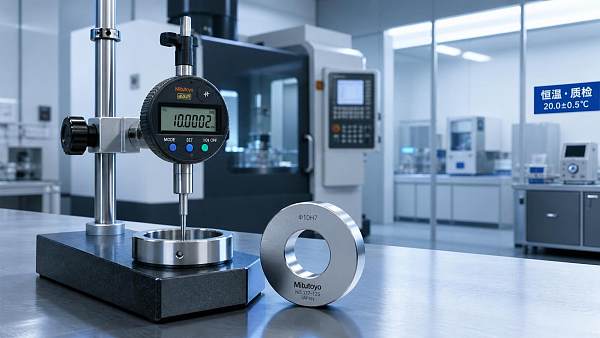
Not always. Resolution tells you the smallest display increment or detectable change, not the total truth of measurement quality.
A system may show sub-micron steps and still deliver noisy, drifting, or poorly repeatable results.
More useful is the relationship between resolution, repeatability, and uncertainty.
For example, if a vision system resolves 0.1 microns but repeatability shifts by 1.5 microns, the display precision creates false confidence.
A more common field mistake is selecting Micron Precision Measurement Equipment for tiny tolerances without checking measurement system variation.
When tolerances are tight, use a practical rule: measurement uncertainty should be far below the tolerance band, not close to it.
It helps to compare four items together before trusting a number:
- Resolution of the sensor or encoder
- Repeatability over repeated cycles
- Stated accuracy under defined conditions
- Uncertainty after calibration and real use conditions
When these four align, Micron Precision Measurement Equipment becomes a control tool rather than a display tool.
Which specs deserve the closest attention before daily use?
Some specifications affect results every day, even more than top-line accuracy. Stability is usually the first one.
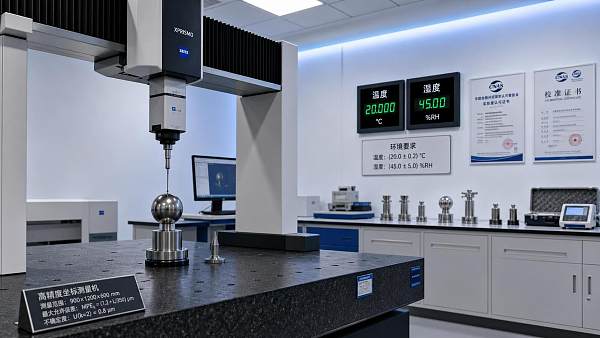
Thermal stability matters because parts, fixtures, and machine structures expand differently. A warm spindle or lamp can shift readings fast.
Repeatability is next. If the same part measured five times gives five different values, the process cannot be trusted.
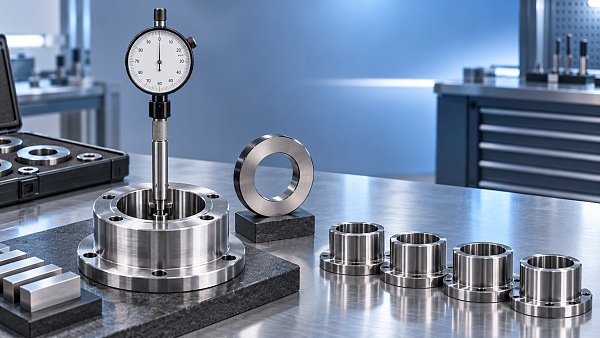
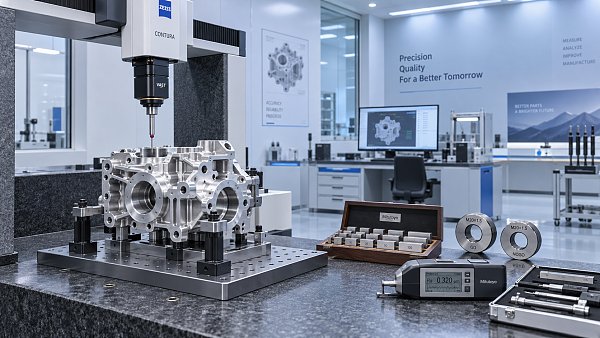
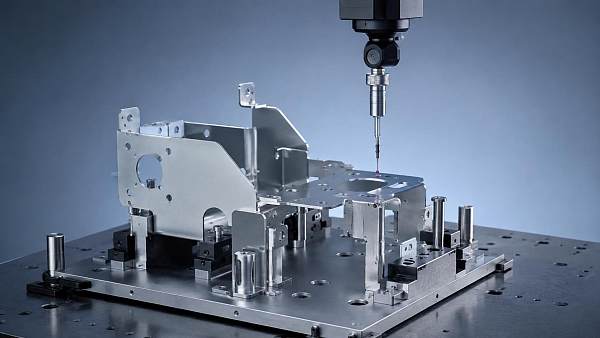
Sensor type also changes what the system can see. Contact probes, laser sensors, white light systems, and vision platforms behave differently on edges, curves, and shiny surfaces.
Calibration interval is another overlooked factor. A capable instrument becomes risky when calibration is late or poorly documented.
The table below summarizes the specs that most often affect day-to-day results.
This is where internationally referenced methods matter. G-IMS often frames comparisons around ISO/IEC 17025, NIST, and application-specific benchmarks for that reason.
How does sensor choice change performance on real parts?
The best Micron Precision Measurement Equipment is often the one that matches material, geometry, and production rhythm.
Contact systems can be excellent for stable geometry and traceable point measurement. They may struggle with soft surfaces or cycle time pressure.
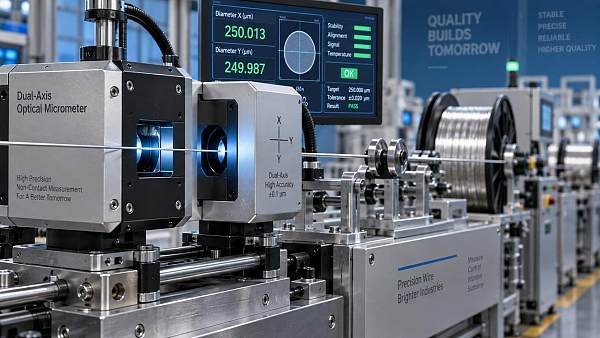
Optical vision systems work well for small features and fast inspection. Edge contrast, lighting, and burrs can still distort results.
Laser sensors are efficient for profiles and height changes, but reflective metals or transparent materials may require special handling.
White light and 3D scanning methods offer rich surface data. They also produce larger datasets that need disciplined filtering and interpretation.
In actual use, the wrong sensor often creates more trouble than an average accuracy number suggests.
A polished turbine blade, a wafer feature, and a molded connector housing should not be measured the same way.
A quick judgment list helps:
- Use contact probing when geometry is stable and tactile verification is acceptable.
- Use vision systems when speed and tiny visible features matter most.
- Use laser or optical profiling when height maps and contours drive quality decisions.
- Check surface finish, transparency, reflectivity, and edge condition before final selection.
Micron Precision Measurement Equipment performs best when sensor physics and part behavior are treated as one decision.
Why do stable machines still produce inconsistent readings?
This is one of the most searched and most misunderstood questions. The instrument is not always the main cause.
Fixtures may clamp parts differently. Parts may not have reached thermal equilibrium. Software filters may change edge detection.
Even cleaning methods can shift results when oil films or dust change the measured surface.
For Micron Precision Measurement Equipment, repeatability depends on the full measurement routine, not only the hardware platform.
More common than machine failure is process inconsistency. That includes warm-up time, fixture wear, probe qualification, and lighting drift.
When readings look unstable, review these points before blaming the instrument:
- Was the measurement program validated on a reference artifact?
- Were ambient temperature and vibration within the specified range?
- Did part orientation and clamping stay consistent?
- Was the sensor recently calibrated or requalified?
- Were software settings changed after the last approved run?
That review usually reveals whether the problem is equipment capability, setup control, or data handling.
What are the most costly mistakes when choosing Micron Precision Measurement Equipment?
The first mistake is buying for nominal accuracy without checking the actual feature to be measured.
A second mistake is ignoring environment. Micron Precision Measurement Equipment can fail quietly in a space with poor temperature control.
Another expensive error is underestimating calibration, maintenance, and verification workload. Ownership cost continues after installation.
Some teams also select a system that produces more data than the inspection process can use. That slows reaction instead of improving quality.
The safer comparison method is to score each option against task-specific needs:
- Smallest tolerance to be controlled
- Part material and surface behavior
- Cycle time allowed per measurement
- Required traceability and audit standards
- Operator setup sensitivity and training burden
- Integration with SPC, MES, or inspection reporting
G-IMS uses a similar benchmarking mindset across metrology, optics, electrical test, and non-contact inspection. It compares suitability, not just headline performance.
What should be checked before the next equipment decision or process change?
Start with the measurement objective, not the device name. Ask what decision the result must support.
If the result controls release, process correction, or failure analysis, Micron Precision Measurement Equipment needs stronger traceability and tighter method control.
Then review the tolerance range, part condition, environment, and reporting requirement as one package.
It is also worth checking whether sensor output can feed a broader quality workflow. Modern equipment should support action, not just inspection.
That broader view matches the G-IMS approach. Measurement becomes valuable when verified data leads to faster, better production decisions.
A practical next step is to document one current measurement problem, map it against required specs, and compare systems using the same acceptance criteria.
When Micron Precision Measurement Equipment is judged this way, selection becomes clearer, risk drops, and day-to-day confidence improves.
Recommended News
 Sep 28, 2026How to verify a NIST standards reference in a calibration reportNIST standards reference verification made simple: learn how to review calibration traceability, uncertainty, ISO/IEC 17025 scope, and report red flags.
 Sep 27, 2026When a dial bore gauge is accurate enough for production inspectionDial bore gauge accuracy for production inspection: learn how tolerance, setup, alignment, surface condition, and guard bands determine reliable bore measurement decisions.
 Sep 26, 2026What size cat tree and tower is right for an indoor cat?Cattreesandtowers guide: find the ideal cat tree size for your indoor cat, with tips on height, platform space, stability, scratching posts, and safe multi-cat setups.
 Sep 24, 2026What drives sensory technology cost in industrial monitoring projects?Sensory technology cost in industrial monitoring depends on accuracy, integration, calibration, software, and lifecycle support. Learn how to build a reliable budget and avoid hidden project costs.
 Sep 18, 2026How to evaluate quality control at a CNC machining factoryEvaluate a CNC machining factory with practical checks for inspection, calibration, traceability, sampling, and corrective actions to secure reliable parts.
 Sep 17, 2026How to select inline measurement systems for Middle East heatInline Measurement Systems Middle East: learn how to select reliable solutions for heat, dust, vibration, calibration, and production-ready data integration.
 Sep 16, 2026How to choose monitor stands that reduce neck strain at workMonitor stands can reduce neck strain by improving screen height, distance, and stability. Explore practical tips to choose the right ergonomic stand for a more comfortable workspace.
 Sep 15, 2026How to verify an importers directory for machinery before contacting suppliersImporters directory for machinery verification guide: assess legal status, technical fit, compliance, and service capability to build a reliable supplier shortlist.
 Sep 13, 2026How to assess calibration support from metrology suppliers in the Middle EastMetrology suppliers Middle East: learn how to assess ISO/IEC 17025 scope, calibration uncertainty, local support, turnaround time, and lifecycle cost.
 Sep 12, 2026How material fatigue causes cracks in safety-critical componentsMaterial fatigue can trigger hidden cracks in safety-critical components long before visible failure. Learn how cyclic loading, stress concentrations, inspection methods, and targeted controls reduce risk.
 Sep 10, 2026What to verify before choosing an optical micrometer supplier for wireChoose an optical micrometer supplier for wire with confidence. Verify real-line accuracy, calibration, integration, and support before you buy.
 Sep 08, 2026How to choose thickness gauges for pipes with limited accessThickness Gauges for pipes: learn how to select the right ultrasonic gauge and probe for tight access, curved surfaces, corrosion, coatings, and reliable readings.
 Sep 07, 2026How to choose anti-aging face serums for your skin typeantiagingfaceserums made simple: discover the best ingredients, textures, and routines for dry, oily, sensitive, or combination skin—plus tips for visible results.
 Sep 05, 2026How to choose sheet metal components for tight-tolerance assembliesSheet metal components for tight-tolerance assemblies: learn how to align materials, datums, forming, finishes, and inspection for reliable fit and repeatable performance.
 Sep 04, 2026What accuracy should a digital temperature humidity sensor have?Digital temperature humidity sensor accuracy explained: compare temperature and RH limits, resolution, drift, calibration, and installation effects to choose reliable performance for your application.
 Sep 03, 2026How to choose glamping tents for eco resorts in high-wind locationsGlamping Tents for eco resorts: discover how to choose wind-resistant structures, engineered anchors, and durable materials for safer, sustainable stays.
 Sep 02, 2026How to assess a bore gauge manufacturer in Latin America for measurement reliabilityBore gauge manufacturer Latin America: learn how to verify calibration traceability, repeatability, service support, and shop-floor reliability before you buy.
 Sep 01, 2026What accuracy factors matter most in advanced metrology calibration?Advanced metrology calibration: discover the key accuracy factors—from traceability and uncertainty to environment, probes, and software—for reliable decisions.
 Aug 31, 2026When does legal tech make sense for a growing business?Legal tech helps growing businesses streamline contracts, compliance, IP, and audit controls. Discover the key signals, practical tools, and steps to scale with confidence.
 Aug 30, 2026How manufacturing tolerance affects thread gauge acceptance limitsThread gauge manufacturing tolerance affects acceptance limits, calibration confidence, wear risk, and inspection consistency. Learn how to prevent costly thread gauge errors.
 Aug 29, 2026How to choose office supplies that reduce waste in shared workspacesOffice supplies can cut waste and costs in shared workspaces. Discover practical procurement tips for durable, refillable, low-packaging products.
 Aug 28, 2026How to compare metrology equipment vendors for calibration supportMetrology equipment vendors: compare calibration scope, ISO/IEC 17025 support, downtime, documentation, and lifecycle costs to choose reliable service.
 Aug 27, 2026What to evaluate before choosing industrial inspection systems in AsiaIndustrial Inspection Systems Asia: evaluate accuracy, cycle time, automation, traceability, and local service to choose a reliable solution for smarter quality control.
 Aug 26, 2026Do dermarollers actually improve absorption of skincare productsDermarollers can improve skincare absorption, but not always safely. Learn when they help, which products to pair, and how to avoid irritation for better skin results.