Micrometer OEM Supplier: Tolerance and Lead Time Guide
Time
Click Count
Choosing a reliable micrometer OEM supplier now requires more than checking unit price and catalog range.
Tolerance stability, process traceability, and lead time discipline increasingly shape commercial success across industrial distribution and measurement supply networks.
As global quality expectations tighten, a capable micrometer OEM supplier becomes a strategic source of confidence, not just a contract factory.
This guide explains how tolerance control and delivery performance are changing supplier evaluation in the broader industrial measurement market.
Why tolerance and lead time have become stronger market signals
Industrial buyers increasingly expect handheld precision tools to align with digital quality systems and tighter audit requirements.
That shift affects every micrometer OEM supplier, especially those serving multi-country channels and mixed application sectors.
A micrometer is still a familiar instrument, yet acceptance criteria are no longer simple.
Users now compare repeatability, calibration records, finish consistency, packaging protection, and replenishment speed in one decision cycle.
In many sectors, delays hurt just as much as dimensional deviation.
Late shipments can interrupt training, private-label launches, maintenance kits, and bundled metrology programs.
As a result, the best micrometer OEM supplier is judged by measurable operational reliability, not promises.
The trend behind stricter evaluation of a micrometer OEM supplier
Several market signals are pushing supplier assessments toward deeper technical and planning criteria.
This change is especially visible where industrial tools support maintenance, machining, assembly, and incoming inspection workflows.
In these environments, a weak micrometer OEM supplier creates hidden cost through returns, rechecks, and emergency replenishment.
What is driving the shift toward deeper supplier screening
The market is not changing randomly.
Clear technical and commercial drivers are increasing scrutiny of every micrometer OEM supplier.
- Broader adoption of standardized quality systems and incoming inspection benchmarks.
- Rising expectation for interchangeable accuracy across product lots and custom branding programs.
- More diverse demand for outside, inside, depth, and specialty micrometer variants.
- Shorter selling cycles that reduce tolerance for production delays and incomplete order visibility.
- Greater concern over post-delivery claims, calibration disputes, and warranty handling.
These pressures explain why sample approval alone is no longer sufficient.
A qualified micrometer OEM supplier must demonstrate repeatable process control from material input to final packing.
Tolerance control is now a systems question
Tolerance performance depends on machining precision, heat treatment, lapping quality, assembly skill, and final verification.
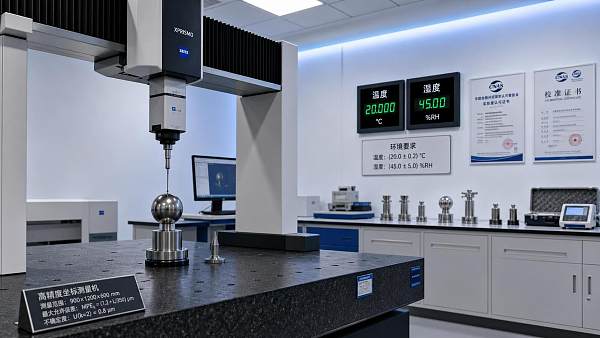
It also depends on gauge blocks, environmental control, and disciplined calibration procedures.
That is why a serious micrometer OEM supplier should explain process capability, not only quoted accuracy.
Lead time is now a credibility question
Published lead time means little without capacity planning, component availability, and packaging readiness.
The strongest suppliers separate standard production windows from custom logo, color box, and accessory preparation time.
How these shifts affect quality, inventory, and channel stability
The consequences extend beyond the factory floor.
They shape planning accuracy, service reputation, and margin protection across the wider commercial chain.
When a micrometer OEM supplier controls tolerance tightly, returns and technical complaints usually fall.
That reduces hidden support workload and protects confidence in bundled measurement offerings.
When lead times remain stable, inventory can be planned around realistic reorder points rather than safety-stock inflation.
This helps preserve cash flow while keeping service levels more predictable.
- Stable tolerance lowers inspection disputes and supports smoother acceptance.
- Stable lead time reduces urgent freight and rushed substitution decisions.
- Reliable packaging decreases transit damage and relabeling issues.
- Consistent documentation strengthens after-sales handling and audit response.
In contrast, an inconsistent micrometer OEM supplier often appears cheaper at first, then becomes expensive through operational friction.
What to verify before approving a micrometer OEM supplier
Evaluation should focus on evidence that predicts future batch performance.
The following checkpoints are practical and widely applicable.
- Defined tolerance standard for each model and measuring range.
- Inspection method for spindle face flatness, parallelism, and repeatability.
- Calibration traceability and frequency of internal verification tools.
- Lot-level records for material, machining, assembly, and final inspection.
- Clear distinction between sample lead time and mass production lead time.
- Packaging test approach for export transport and storage conditions.
- Capacity range for standard, OEM, and private-label mixed orders.
- Procedure for nonconformance, replacement, and corrective action closure.
Questions that reveal real capability
Ask how process variation is tracked across lots.
Ask what causes the longest delay in a typical order.
Ask how custom packaging affects final shipment readiness.
A credible micrometer OEM supplier answers with specifics, not general assurances.
A practical way to compare tolerance risk and lead time risk
A simple decision matrix can improve supplier comparison and reduce emotional judgment.
This framework helps identify whether a micrometer OEM supplier can support long-term growth, not just one successful shipment.
What deserves closer attention in the next sourcing cycle
Future supplier decisions will likely reward visibility, data discipline, and flexible execution.
That means technical evidence should be reviewed together with supply planning signals.
- Track actual shipment performance against quoted lead times for every order.
- Compare sample accuracy with mass production verification results.
- Separate standard SKUs from customized items in forecasting and replenishment.
- Request pre-shipment records for critical models and high-visibility launches.
- Review whether the micrometer OEM supplier can scale without outsourcing key steps.
These actions support stronger negotiation, better stock planning, and fewer quality surprises.
Turning supplier evaluation into a more dependable next step
A dependable micrometer OEM supplier should show three things clearly: tolerance control, process transparency, and realistic delivery discipline.
If one of these is weak, long-term channel performance usually suffers.
Start with a structured review of inspection capability, batch consistency, OEM workflow, and confirmed lead time milestones.
Then compare suppliers using evidence from real orders, not only quotations.
That approach makes it easier to select a micrometer OEM supplier that supports precision expectations and delivery commitments at the same time.
Recommended News
 Oct 07, 2026When do supply chain management solutions justify their cost?Supply chain management solutions justify their cost by reducing shortages, excess inventory, and risk. Learn the approval test for measurable ROI.
 Oct 06, 2026What to verify before choosing an industrial equipment supplier in GermanyIndustrial & Manufacturing equipment supplier in Germany: verify compliance, calibration, service, integration, and lifecycle support before choosing the right partner.
 Sep 28, 2026How to verify a NIST standards reference in a calibration reportNIST standards reference verification made simple: learn how to review calibration traceability, uncertainty, ISO/IEC 17025 scope, and report red flags.
 Sep 27, 2026When a dial bore gauge is accurate enough for production inspectionDial bore gauge accuracy for production inspection: learn how tolerance, setup, alignment, surface condition, and guard bands determine reliable bore measurement decisions.
 Sep 26, 2026What size cat tree and tower is right for an indoor cat?Cattreesandtowers guide: find the ideal cat tree size for your indoor cat, with tips on height, platform space, stability, scratching posts, and safe multi-cat setups.
 Sep 24, 2026What drives sensory technology cost in industrial monitoring projects?Sensory technology cost in industrial monitoring depends on accuracy, integration, calibration, software, and lifecycle support. Learn how to build a reliable budget and avoid hidden project costs.
 Sep 18, 2026How to evaluate quality control at a CNC machining factoryEvaluate a CNC machining factory with practical checks for inspection, calibration, traceability, sampling, and corrective actions to secure reliable parts.
 Sep 17, 2026How to select inline measurement systems for Middle East heatInline Measurement Systems Middle East: learn how to select reliable solutions for heat, dust, vibration, calibration, and production-ready data integration.
 Sep 16, 2026How to choose monitor stands that reduce neck strain at workMonitor stands can reduce neck strain by improving screen height, distance, and stability. Explore practical tips to choose the right ergonomic stand for a more comfortable workspace.
 Sep 15, 2026How to verify an importers directory for machinery before contacting suppliersImporters directory for machinery verification guide: assess legal status, technical fit, compliance, and service capability to build a reliable supplier shortlist.
 Sep 13, 2026How to assess calibration support from metrology suppliers in the Middle EastMetrology suppliers Middle East: learn how to assess ISO/IEC 17025 scope, calibration uncertainty, local support, turnaround time, and lifecycle cost.
 Sep 12, 2026How material fatigue causes cracks in safety-critical componentsMaterial fatigue can trigger hidden cracks in safety-critical components long before visible failure. Learn how cyclic loading, stress concentrations, inspection methods, and targeted controls reduce risk.
 Sep 10, 2026What to verify before choosing an optical micrometer supplier for wireChoose an optical micrometer supplier for wire with confidence. Verify real-line accuracy, calibration, integration, and support before you buy.
 Sep 08, 2026How to choose thickness gauges for pipes with limited accessThickness Gauges for pipes: learn how to select the right ultrasonic gauge and probe for tight access, curved surfaces, corrosion, coatings, and reliable readings.
 Sep 07, 2026How to choose anti-aging face serums for your skin typeantiagingfaceserums made simple: discover the best ingredients, textures, and routines for dry, oily, sensitive, or combination skin—plus tips for visible results.
 Sep 05, 2026How to choose sheet metal components for tight-tolerance assembliesSheet metal components for tight-tolerance assemblies: learn how to align materials, datums, forming, finishes, and inspection for reliable fit and repeatable performance.
 Sep 04, 2026What accuracy should a digital temperature humidity sensor have?Digital temperature humidity sensor accuracy explained: compare temperature and RH limits, resolution, drift, calibration, and installation effects to choose reliable performance for your application.
 Sep 03, 2026How to choose glamping tents for eco resorts in high-wind locationsGlamping Tents for eco resorts: discover how to choose wind-resistant structures, engineered anchors, and durable materials for safer, sustainable stays.
 Sep 02, 2026How to assess a bore gauge manufacturer in Latin America for measurement reliabilityBore gauge manufacturer Latin America: learn how to verify calibration traceability, repeatability, service support, and shop-floor reliability before you buy.
 Sep 01, 2026What accuracy factors matter most in advanced metrology calibration?Advanced metrology calibration: discover the key accuracy factors—from traceability and uncertainty to environment, probes, and software—for reliable decisions.
 Aug 31, 2026When does legal tech make sense for a growing business?Legal tech helps growing businesses streamline contracts, compliance, IP, and audit controls. Discover the key signals, practical tools, and steps to scale with confidence.
 Aug 30, 2026How manufacturing tolerance affects thread gauge acceptance limitsThread gauge manufacturing tolerance affects acceptance limits, calibration confidence, wear risk, and inspection consistency. Learn how to prevent costly thread gauge errors.
 Aug 29, 2026How to choose office supplies that reduce waste in shared workspacesOffice supplies can cut waste and costs in shared workspaces. Discover practical procurement tips for durable, refillable, low-packaging products.
 Aug 28, 2026How to compare metrology equipment vendors for calibration supportMetrology equipment vendors: compare calibration scope, ISO/IEC 17025 support, downtime, documentation, and lifecycle costs to choose reliable service.