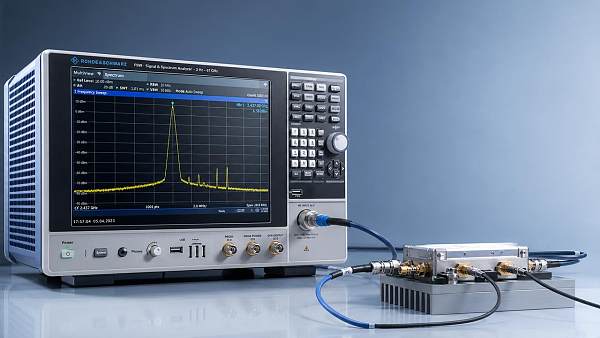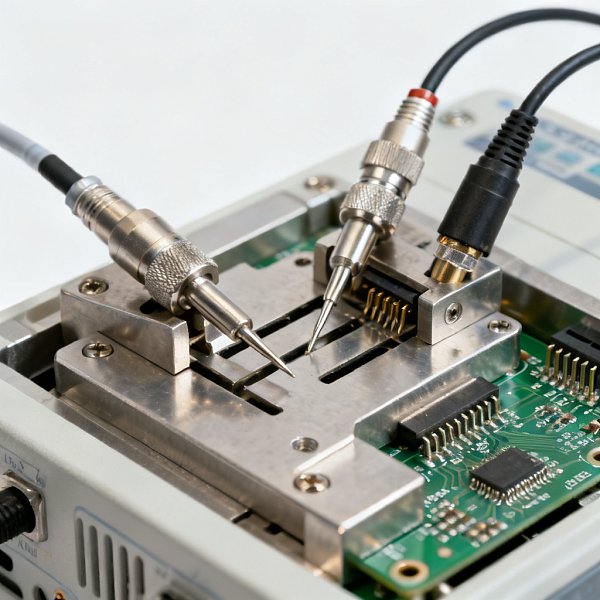
Relay Modules Troubleshooting for Unstable Signals
Time
Click Count
Relay Modules Troubleshooting for Unstable Signals
Unstable signals in relaymodules can trigger false switching, intermittent faults, and costly downtime—especially in high-precision industrial environments.
Fast troubleshooting matters because weak signal integrity often hides behind random alarms, delayed actuation, or repeat service calls.
This guide focuses on practical checks, root-cause isolation, and field-ready fixes for relaymodules used in demanding industrial systems.
The goal is simple: restore stable operation quickly and reduce the chance of the same unstable signal returning later.
Why relaymodules develop unstable signals
Most unstable signal issues come from a small group of causes, even when symptoms look complicated.
Power ripple, loose wiring, poor grounding, contact wear, coil degradation, and input noise are the usual starting points.
In mixed automation environments, nearby drives, switching power supplies, and high-frequency measurement equipment can worsen relaymodules behavior.
Temperature cycling also matters.
A relaymodule that works during startup may become unstable after cabinets heat up and resistance values drift.
Common field symptoms
- Unexpected relay chatter during switching
- Output contact closes, then releases briefly
- Intermittent PLC input confirmation loss
- Random alarms after nearby motor starts
- Signal becomes stable only after manual tapping or connector movement
Start with a fast relaymodules diagnostic sequence
A structured sequence saves time.
Instead of replacing the relaymodule immediately, confirm whether the instability starts at the supply, input, coil, or output side.
- Check the power source under load, not only at idle.
- Inspect terminal tightness and connector retention.
- Measure input signal stability at the relaymodule terminal.
- Listen for chatter and compare with command timing.
- Verify output contact continuity during actual switching.
- Check for EMI sources that switch on at the same time.
This sequence helps separate a defective relaymodule from an upstream control issue.
That distinction is critical when uptime pressure pushes teams toward quick but inaccurate replacements.
What to record during the first visit
- Supply voltage at rest and during actuation
- Ambient temperature inside the control cabinet
- Load type, including inductive or resistive behavior
- Switching frequency and recent process changes
- Any relation to vibration, moisture, or maintenance work
Power quality checks that often reveal the real fault
Power quality is a frequent root cause of relaymodules instability.
A stable nominal voltage on a multimeter can still hide dips, ripple, or short transients.
In practice, the more useful check is voltage behavior during switching events, motor starts, or heater activation.
If the relaymodule coil sees undervoltage even briefly, contact hold force can collapse.
That often appears as chatter, delayed pickup, or inconsistent release timing.
Useful checks for the supply side
- Measure voltage directly at the relaymodule coil terminals
- Compare readings before and during switching
- Inspect shared supply lines for overload
- Review grounding layout and return path resistance
- Check suppression parts for aging or damage
If several relaymodules fail together, suspect the common supply first.
If only one point fails, local wiring, terminal oxidation, or the relaymodule itself becomes more likely.
Signal path inspection from input to output
Once supply quality looks acceptable, move through the entire signal path.
This avoids the common mistake of blaming relaymodules for unstable commands coming from sensors or controllers.
Input-side checkpoints
Look at signal amplitude, pulse width, and noise margin.
A weak sensor output may cross the switching threshold inconsistently, especially near EMI sources.
This is common in long cable runs, mixed grounding schemes, or cabinets with variable frequency drives.
Output-side checkpoints
Check contact resistance during load, not only with an open-circuit continuity test.
Worn contacts in relaymodules can pass a simple test but still fail under real current.
More clearly, if the load sees a sudden voltage drop at closure, the output path needs closer inspection.
Mechanical and environmental causes in relaymodules
Not every unstable signal is electrical at its origin.
Vibration, contamination, and humidity can change how relaymodules behave in the field.
Dust films and oxidation raise resistance slowly, which is why the fault may look intermittent at first.
From recent service trends, these issues appear more often in compact cabinets with mixed loads and limited airflow.
Physical checks worth doing on site
- Inspect relaymodule sockets for discoloration
- Check terminal screws for creep loosening
- Look for cracked solder joints or stressed connectors
- Review enclosure sealing and moisture entry paths
- Confirm fan operation and heat dissipation around relaymodules
When a light push changes the symptom, mechanical instability is often part of the story.
When to repair, when to replace, and how to prevent repeat failures
A relaymodule should not be replaced by habit.
Replace it when contact wear, coil weakness, heat damage, or recurring instability remains after supply and wiring issues are corrected.
Repair makes sense when the actual cause is external, such as poor termination, contamination, or routing near a noise source.
This also means the best long-term fix often combines component replacement with process correction.
Prevention actions that improve relaymodules reliability
- Separate control wiring from noisy power cables
- Use proper surge suppression for inductive loads
- Retorque terminals during scheduled maintenance
- Track cabinet temperature and duty cycle trends
- Document repeat faults by load type and switching pattern
For organizations that rely on precision measurement and intelligent control, stable relaymodules are not a small detail.
They protect signal trust across sensing, actuation, and verification workflows.
A good troubleshooting routine starts with evidence, follows the signal path, and confirms the fix under real operating conditions.
If relaymodules show unstable signals repeatedly, treat each event as a system-level warning and close the loop with root-cause records, not just part swaps.
Recommended News
 Aug 10, 2026Next-Gen Wireless Charging for Smartphones: What Improves Speed, Heat, and Compatibility?Next-gen wireless charging for smartphones is improving speed, reducing heat, and boosting compatibility. Learn what Qi2, alignment, and thermal control mean before you buy.
 Jul 04, 2026Electronics Measurement Solutions Cost: What Drives Total Ownership in 2026Electronics Measurement Solutions cost in 2026 goes beyond unit price. Learn what drives total ownership, from calibration and software to downtime, upgrades, and long-term ROI.
 Jun 16, 2026Relay Modules Troubleshooting for Unstable Signalsrelaymodules troubleshooting guide for unstable signals: identify power, wiring, EMI, and contact faults fast to reduce downtime, restore stability, and prevent repeat failures.
 Jun 15, 2026Automated Trade Platform Trends to Watch in 2026Automated trade platform trends for 2026 reveal how smarter compliance, supplier intelligence, AI exception detection, and technical benchmarking can improve sourcing decisions worldwide.
 Jun 07, 2026Workspace Design Trends 2026: Layouts That Improve FocusWorkspace design trends for 2026 focus on layouts that reduce distractions, support hybrid work, and improve performance. Discover evidence-led ideas that boost focus and productivity.
 Jun 06, 2026Smart Hotel Price Models: What Affects Total Cost?Smart hotel price explained: discover what really affects total cost, from devices and integration to compliance, maintenance, and long-term ROI before you compare quotes.
 May 31, 20263D Scanning Mesh Quality Benchmarks That Actually Affect Accuracy3d scanning mesh quality benchmarks that reveal accuracy risks in density, noise, holes, edges, and repeatability—helping teams trust scan data before critical decisions.
 May 21, 2026Electrical Test Equipment Supplier Checklist for Lower Downtime RiskElectrical Test equipment supplier checklist for lower downtime risk: compare calibration, loaner support, response speed, and lifecycle service to protect uptime and buy with confidence.
 May 21, 2026Spectrum Analyzers for RF Testing: Key Specs That Impact Test ConfidenceSpectrum Analyzers for RF testing: learn which specs truly affect confidence—DANL, phase noise, RBW, dynamic range, and accuracy—to choose smarter and trust every RF result.
 May 13, 2026How to Vet an Electrical Test Equipment SupplierElectrical Test equipment supplier selection affects accuracy, compliance, and uptime. Learn how to vet suppliers with practical criteria for traceability, service, and long-term value.
 May 03, 2026How to Compare an Electrical Test Equipment SupplierElectrical Test equipment supplier comparison starts with application fit. Learn how to evaluate accuracy, compliance, support, and delivery to reduce risk and choose with confidence.
 May 02, 2026High Frequency Measurement Errors That Distort Real ResultsHigh Frequency Measurement errors can quietly distort critical test results. Learn the main causes, reduce uncertainty, and make smarter validation and procurement decisions.
 Apr 24, 2026Why Spectrum Analyzers Miss Intermittent RF ProblemsSpectrum Analyzers for RF testing can miss intermittent faults. Learn how Electrical Test equipment, NIST Standards for calibration, and smarter capture methods improve RF troubleshooting.
 Apr 24, 2026Electrical Test Errors That Come From Fixture DesignElectrical Test errors often start in fixture design. Learn how Spectrum Analyzers, Industrial Sensors, IEEE Standards, and NIST Standards help improve accuracy, repeatability, and production confidence.