What Makes a Precision Granite Plate Factory Reliable
Time
Click Count
Choosing a reliable precision granite plate factory is critical for quality control and operational safety in high-accuracy environments. In metrology, aerospace machining, optics, electronics, and advanced assembly, a granite surface plate is not just a table. It is the physical reference behind dimensional confidence. When the plate is unstable, poorly certified, or inconsistently manufactured, every downstream measurement inherits risk. A dependable source reduces uncertainty through verified stone quality, disciplined processing, traceable inspection, and long-term support.
Why a Checklist Matters When Evaluating a Precision Granite Plate Factory
A precision granite plate factory can appear qualified on paper while failing in practical control points. Flatness grade alone does not prove process capability, metrology discipline, or repeatable performance across batches.
A checklist prevents decisions based on price, appearance, or isolated certificates. It forces verification of material origin, stress behavior, inspection methods, packaging, calibration records, and complaint response speed.
This approach is especially useful in cross-border sourcing, where terminology differs and marketing claims often blur the line between workshop production and controlled precision manufacturing.
Core Checklist for Selecting a Reliable Precision Granite Plate Factory
- Verify stone source and mineral stability. Ask for material origin, density, absorption, hardness, and internal structure data, not just a generic statement that the granite is “natural” or “high grade.”
- Check whether the precision granite plate factory controls seasoning and stress release. Stable material should be selected, aged, and screened to reduce future warping after machining and lapping.
- Confirm flatness inspection method. Require details on autocollimator, electronic level, laser system, or repeat-o-meter procedures, plus calibration status of the instruments used for final verification.
- Review tolerance grading against recognized standards. A reliable precision granite plate factory should state exact grade definitions, reference standards, and allowable local versus overall flatness deviation.
- Inspect surface finish capability. Surface texture affects wringability, wear behavior, and measurement repeatability, especially where gauges, height masters, or optical fixtures rest on the plate.
- Ask for full dimensional traceability. Lot number, serial number, manufacturing date, inspector identity, and final test record should connect the delivered plate to documented production history.
- Evaluate edge, corner, and insert quality. Chipped edges, weak threaded inserts, or poor bonding can create safety issues and shorten service life in heavy industrial use.
- Confirm environmental control in finishing and inspection areas. Temperature variation during lapping or calibration can distort readings and undermine any declared precision level.
- Review handling and packaging protocols. A competent precision granite plate factory uses suitable lifting points, shock protection, moisture barriers, and export-ready crating for transit risk reduction.
- Test response on re-certification and after-sales support. Long-term reliability depends on calibration guidance, maintenance recommendations, and practical support when deviations or transport damage appear.
Documentation That Should Be Easy to Obtain
- Material specification sheet with physical properties
- Flatness inspection report with measured values
- Calibration certificate linked to instruments used
- Packing specification and handling instructions
- Warranty terms and nonconformance process
How Reliability Changes by Application Scenario
Metrology Labs and Calibration Rooms
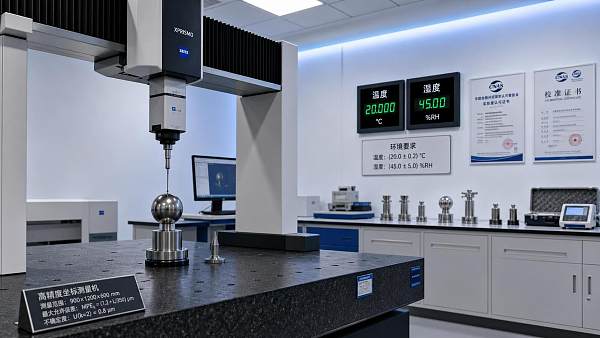
In controlled metrology environments, the precision granite plate factory must demonstrate superior flatness verification and repeatable lapping quality. Here, small deviations affect gauge calibration, CMM artifact setup, and master inspection routines.
Documentation matters more than visual finish. Reliable suppliers provide traceable records, environmental references, and clear grade definitions aligned with internal quality systems and external audit expectations.
Production Floors and Heavy Industrial Inspection
On the shop floor, a precision granite plate factory must balance accuracy with durability. Plates face vibration, loading, coolant contamination, and accidental impact from parts or tooling.
In this scenario, insert integrity, support stand compatibility, edge protection, and maintenance instructions are as important as nominal flatness. Reliability means surviving real use without rapid degradation.
Semiconductor, Optics, and High-Precision Assembly
For ultra-precise assembly and optical alignment, the precision granite plate factory must control micro-surface behavior, thermal stability, and cleanliness. Even minor contamination or local wear can disturb sensitive setups.
These applications often require custom hole patterns, inserts, or integrated mounting features. Reliability depends on how precisely those features are machined without introducing distortion into the reference surface.
Global Sourcing and Multi-Site Standardization
When plates are deployed across multiple countries, a precision granite plate factory should deliver consistent grading, uniform inspection reports, and repeatable packaging quality from order to order.
This consistency supports benchmarked measurement systems, common work instructions, and reduced variation between sites. It also simplifies incoming acceptance and re-certification scheduling.
Commonly Overlooked Risks
Confusing Appearance with Precision
A dark, polished plate can still be a poor reference. Precision depends on geometry, material stability, and validated inspection, not cosmetic finish or sales photography.
Ignoring Support Conditions
Even a good plate can perform badly if supported incorrectly. Ask the precision granite plate factory for recommended support points, stand rigidity requirements, and leveling guidance.
Accepting Vague Certificates
A certificate without measurement values, method, date, instrument traceability, or inspector identity has limited technical value. Reliable suppliers provide usable records, not decorative paperwork.
Overlooking Logistics Damage
Granite is dimensionally stable but still vulnerable to edge impact and mishandling. Shipping damage often appears at corners, inserts, or underside support regions rather than the main face.
Skipping Re-Calibration Planning
The most reliable precision granite plate factory still cannot replace field maintenance. Re-certification interval, cleaning routine, cover use, and wear monitoring should be defined before installation.
Practical Execution Steps Before Ordering
- Request a sample inspection report and compare its detail level with internal acceptance needs.
- Ask which standards define grade, flatness, and calibration traceability for the offered plate.
- Confirm whether custom inserts, T-slots, or tapped holes affect final flatness certification.
- Review packaging drawings and transit protection for domestic and export shipment routes.
- Specify incoming inspection criteria, including visual checks, certificate review, and damage reporting timing.
- Plan installation, support stand verification, and first-use calibration before production release.
Conclusion and Next Action
A reliable precision granite plate factory proves capability through stable raw material, controlled processing, trustworthy inspection, and transparent documentation. The best choice is rarely the one with the lowest unit price. It is the source that protects measurement integrity over years of use.
Use a structured evaluation sheet, request verifiable records, and test the supplier’s technical responsiveness before confirming an order. That discipline turns a precision granite plate factory from a basic vendor into a dependable part of the measurement system.
Recommended News
 Oct 07, 2026When do supply chain management solutions justify their cost?Supply chain management solutions justify their cost by reducing shortages, excess inventory, and risk. Learn the approval test for measurable ROI.
 Oct 06, 2026What to verify before choosing an industrial equipment supplier in GermanyIndustrial & Manufacturing equipment supplier in Germany: verify compliance, calibration, service, integration, and lifecycle support before choosing the right partner.
 Sep 28, 2026How to verify a NIST standards reference in a calibration reportNIST standards reference verification made simple: learn how to review calibration traceability, uncertainty, ISO/IEC 17025 scope, and report red flags.
 Sep 27, 2026When a dial bore gauge is accurate enough for production inspectionDial bore gauge accuracy for production inspection: learn how tolerance, setup, alignment, surface condition, and guard bands determine reliable bore measurement decisions.
 Sep 26, 2026What size cat tree and tower is right for an indoor cat?Cattreesandtowers guide: find the ideal cat tree size for your indoor cat, with tips on height, platform space, stability, scratching posts, and safe multi-cat setups.
 Sep 24, 2026What drives sensory technology cost in industrial monitoring projects?Sensory technology cost in industrial monitoring depends on accuracy, integration, calibration, software, and lifecycle support. Learn how to build a reliable budget and avoid hidden project costs.
 Sep 18, 2026How to evaluate quality control at a CNC machining factoryEvaluate a CNC machining factory with practical checks for inspection, calibration, traceability, sampling, and corrective actions to secure reliable parts.
 Sep 17, 2026How to select inline measurement systems for Middle East heatInline Measurement Systems Middle East: learn how to select reliable solutions for heat, dust, vibration, calibration, and production-ready data integration.
 Sep 16, 2026How to choose monitor stands that reduce neck strain at workMonitor stands can reduce neck strain by improving screen height, distance, and stability. Explore practical tips to choose the right ergonomic stand for a more comfortable workspace.
 Sep 15, 2026How to verify an importers directory for machinery before contacting suppliersImporters directory for machinery verification guide: assess legal status, technical fit, compliance, and service capability to build a reliable supplier shortlist.
 Sep 13, 2026How to assess calibration support from metrology suppliers in the Middle EastMetrology suppliers Middle East: learn how to assess ISO/IEC 17025 scope, calibration uncertainty, local support, turnaround time, and lifecycle cost.
 Sep 12, 2026How material fatigue causes cracks in safety-critical componentsMaterial fatigue can trigger hidden cracks in safety-critical components long before visible failure. Learn how cyclic loading, stress concentrations, inspection methods, and targeted controls reduce risk.
 Sep 10, 2026What to verify before choosing an optical micrometer supplier for wireChoose an optical micrometer supplier for wire with confidence. Verify real-line accuracy, calibration, integration, and support before you buy.
 Sep 08, 2026How to choose thickness gauges for pipes with limited accessThickness Gauges for pipes: learn how to select the right ultrasonic gauge and probe for tight access, curved surfaces, corrosion, coatings, and reliable readings.
 Sep 07, 2026How to choose anti-aging face serums for your skin typeantiagingfaceserums made simple: discover the best ingredients, textures, and routines for dry, oily, sensitive, or combination skin—plus tips for visible results.
 Sep 05, 2026How to choose sheet metal components for tight-tolerance assembliesSheet metal components for tight-tolerance assemblies: learn how to align materials, datums, forming, finishes, and inspection for reliable fit and repeatable performance.
 Sep 04, 2026What accuracy should a digital temperature humidity sensor have?Digital temperature humidity sensor accuracy explained: compare temperature and RH limits, resolution, drift, calibration, and installation effects to choose reliable performance for your application.
 Sep 03, 2026How to choose glamping tents for eco resorts in high-wind locationsGlamping Tents for eco resorts: discover how to choose wind-resistant structures, engineered anchors, and durable materials for safer, sustainable stays.
 Sep 02, 2026How to assess a bore gauge manufacturer in Latin America for measurement reliabilityBore gauge manufacturer Latin America: learn how to verify calibration traceability, repeatability, service support, and shop-floor reliability before you buy.
 Sep 01, 2026What accuracy factors matter most in advanced metrology calibration?Advanced metrology calibration: discover the key accuracy factors—from traceability and uncertainty to environment, probes, and software—for reliable decisions.
 Aug 31, 2026When does legal tech make sense for a growing business?Legal tech helps growing businesses streamline contracts, compliance, IP, and audit controls. Discover the key signals, practical tools, and steps to scale with confidence.
 Aug 30, 2026How manufacturing tolerance affects thread gauge acceptance limitsThread gauge manufacturing tolerance affects acceptance limits, calibration confidence, wear risk, and inspection consistency. Learn how to prevent costly thread gauge errors.
 Aug 29, 2026How to choose office supplies that reduce waste in shared workspacesOffice supplies can cut waste and costs in shared workspaces. Discover practical procurement tips for durable, refillable, low-packaging products.
 Aug 28, 2026How to compare metrology equipment vendors for calibration supportMetrology equipment vendors: compare calibration scope, ISO/IEC 17025 support, downtime, documentation, and lifecycle costs to choose reliable service.