Metrology Industry Conference 2026: Key Trends
Time
Click Count
The Metrology Industry Conference 2026 will highlight how precision measurement is moving from isolated quality control toward integrated industrial intelligence.
Across advanced manufacturing, electronics, energy, healthcare, and infrastructure, the metrology industry conference 2026 reflects a broader shift toward connected inspection, data integrity, and faster decision cycles.
For organizations tracking capital investment, compliance exposure, and production resilience, this conference matters because measurement now influences yield, traceability, and strategic competitiveness.
It also aligns closely with the G-IMS perspective: turning high-performance sensing, standards benchmarking, and actionable analytics into measurable operational value.
Metrology Industry Conference 2026 in Context
The metrology industry conference 2026 is expected to focus on the technologies, standards, and workflows that define measurement-driven industrial performance.
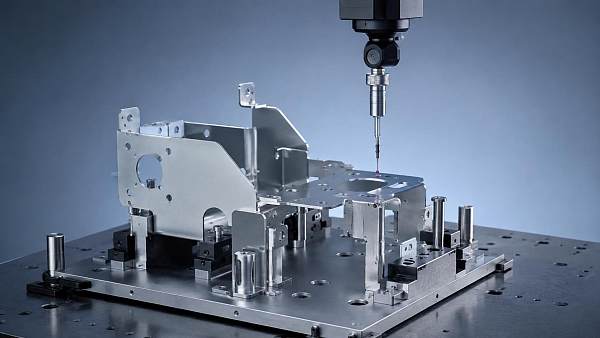
Metrology covers dimensional verification, optical sensing, electrical testing, non-contact inspection, environmental monitoring, and the software layers that convert signals into usable evidence.
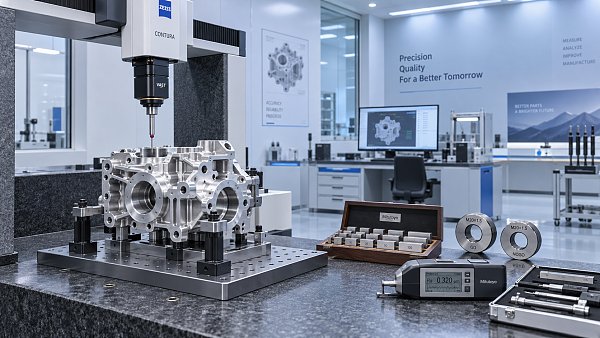
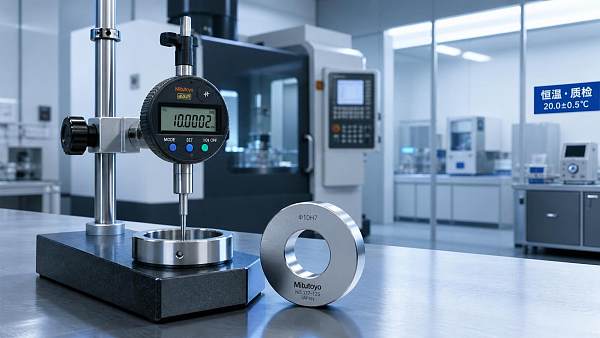
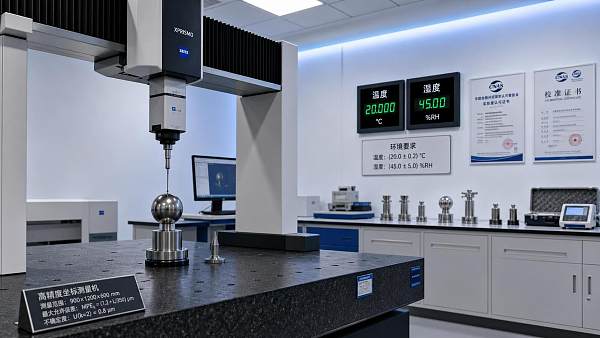
In practical terms, it connects CMM platforms, 3D scanning, photonic sensors, machine vision, spectrum analysis, and calibration systems with enterprise quality objectives.
The event’s relevance extends beyond laboratories. It influences factory modernization, product qualification, supplier governance, and digital transformation roadmaps.
That is why the metrology industry conference 2026 has become a reference point for understanding where precision technology is generating real business leverage.
Core themes likely to define the agenda
- AI-assisted inspection and automated anomaly detection
- In-line and near-line measurement for faster process correction
- Standards alignment under ISO/IEC 17025, NIST, and sector regulations
- Data interoperability between instruments, MES, PLM, and analytics platforms
- Traceable measurement for semiconductor, aerospace, and energy applications
Industry Signals Shaping the 2026 Discussion
The metrology industry conference 2026 will likely mirror several market realities already visible across global production networks.
First, tolerance requirements are tightening while product complexity increases. Smaller features, mixed materials, and higher frequencies raise the burden on inspection systems.
Second, compliance expectations are becoming more auditable. Measurement data must now support certification, recalls analysis, and supply chain accountability.
Third, organizations want fewer disconnected tools. They seek platforms that combine sensing, software, and decision support across the full product lifecycle.
These signals explain why the metrology industry conference 2026 is not only a technical event but also a strategic planning checkpoint.
Business Value of the Metrology Industry Conference 2026
The strongest value of the metrology industry conference 2026 lies in its ability to translate technical change into operational and investment implications.
Precision measurement affects more than inspection accuracy. It shapes cycle time, process capability, equipment utilization, and the credibility of quality records.
When evaluation is linked to business outcomes, conference insights become useful for budgeting, technology selection, and risk reduction.
Key value areas
- Sharper benchmarking of CMM, 3D scanning, vision, and sensor performance
- Better understanding of total cost of ownership, calibration burden, and software integration
- More informed comparison of standards compliance across competing systems
- Clearer visibility into future-ready capabilities such as AI analytics and remote diagnostics
This is especially relevant where product quality has direct financial consequences, including high-value assemblies, regulated components, and mission-critical electronics.
From the G-IMS viewpoint, the most useful conference takeaways are those anchored in benchmark evidence, interoperability, and standards-based verification.
Representative Application Scenarios
The metrology industry conference 2026 will likely present a wide range of cross-industry examples, showing where intelligent measurement creates measurable returns.
These scenarios show why the metrology industry conference 2026 matters across a comprehensive industrial landscape rather than one narrow segment.
What to Evaluate During the Event
A useful conference strategy begins with disciplined evaluation criteria. Not every advanced feature produces practical value in a real operating environment.
The metrology industry conference 2026 should be approached through a framework that balances technical performance, integration effort, and long-term maintainability.
Priority evaluation points
- Measurement uncertainty and repeatability under realistic operating conditions
- Compatibility with existing data architecture, quality systems, and reporting formats
- Calibration traceability and service support across regions
- Software usability, cybersecurity posture, and analytics transparency
- Vendor evidence tied to ISO, IEC, IEEE, or NIST-related benchmarks
Short demonstrations can be impressive, but durable value usually appears in workflow reliability, data quality, and reproducible outcomes.
This is where an evidence-first method, similar to the G-IMS benchmarking model, becomes especially useful.
Practical Considerations for 2026 Planning
The metrology industry conference 2026 may also reveal gaps that organizations need to address before adopting next-generation measurement systems.
A common issue is underestimating data readiness. Advanced sensors create limited value when file structures, naming conventions, or traceability rules are inconsistent.
Another challenge is overfocusing on hardware specifications while overlooking software lifecycle costs, retraining demands, and standards maintenance.
Environmental sensitivity also matters. Temperature, vibration, contamination, and electromagnetic conditions can weaken measurement reliability if not addressed early.
- Define acceptance metrics before comparing instruments
- Map inspection data flows from capture to audit record
- Review calibration intervals and regional service availability
- Test interoperability with current enterprise systems
- Prioritize benchmark-backed claims over general marketing language
From Conference Insight to Action
The metrology industry conference 2026 should be treated as a decision-enabling resource, not simply a trend showcase.
Its greatest value comes from converting conference observations into a structured review of technologies, standards exposure, and deployment priorities.
A practical next step is to build a comparison matrix covering uncertainty, throughput, compliance support, data integration, and lifecycle serviceability.
The G-IMS approach strengthens that process by linking advanced metrology, sensory technology, and standards benchmarking to actionable industrial intelligence.
As intelligent measurement becomes central to productivity and quality assurance, the metrology industry conference 2026 stands out as a critical reference for informed 2026 planning.
Recommended News
 Oct 07, 2026When do supply chain management solutions justify their cost?Supply chain management solutions justify their cost by reducing shortages, excess inventory, and risk. Learn the approval test for measurable ROI.
 Oct 06, 2026What to verify before choosing an industrial equipment supplier in GermanyIndustrial & Manufacturing equipment supplier in Germany: verify compliance, calibration, service, integration, and lifecycle support before choosing the right partner.
 Sep 28, 2026How to verify a NIST standards reference in a calibration reportNIST standards reference verification made simple: learn how to review calibration traceability, uncertainty, ISO/IEC 17025 scope, and report red flags.
 Sep 27, 2026When a dial bore gauge is accurate enough for production inspectionDial bore gauge accuracy for production inspection: learn how tolerance, setup, alignment, surface condition, and guard bands determine reliable bore measurement decisions.
 Sep 26, 2026What size cat tree and tower is right for an indoor cat?Cattreesandtowers guide: find the ideal cat tree size for your indoor cat, with tips on height, platform space, stability, scratching posts, and safe multi-cat setups.
 Sep 24, 2026What drives sensory technology cost in industrial monitoring projects?Sensory technology cost in industrial monitoring depends on accuracy, integration, calibration, software, and lifecycle support. Learn how to build a reliable budget and avoid hidden project costs.
 Sep 18, 2026How to evaluate quality control at a CNC machining factoryEvaluate a CNC machining factory with practical checks for inspection, calibration, traceability, sampling, and corrective actions to secure reliable parts.
 Sep 17, 2026How to select inline measurement systems for Middle East heatInline Measurement Systems Middle East: learn how to select reliable solutions for heat, dust, vibration, calibration, and production-ready data integration.
 Sep 16, 2026How to choose monitor stands that reduce neck strain at workMonitor stands can reduce neck strain by improving screen height, distance, and stability. Explore practical tips to choose the right ergonomic stand for a more comfortable workspace.
 Sep 15, 2026How to verify an importers directory for machinery before contacting suppliersImporters directory for machinery verification guide: assess legal status, technical fit, compliance, and service capability to build a reliable supplier shortlist.
 Sep 13, 2026How to assess calibration support from metrology suppliers in the Middle EastMetrology suppliers Middle East: learn how to assess ISO/IEC 17025 scope, calibration uncertainty, local support, turnaround time, and lifecycle cost.
 Sep 12, 2026How material fatigue causes cracks in safety-critical componentsMaterial fatigue can trigger hidden cracks in safety-critical components long before visible failure. Learn how cyclic loading, stress concentrations, inspection methods, and targeted controls reduce risk.
 Sep 10, 2026What to verify before choosing an optical micrometer supplier for wireChoose an optical micrometer supplier for wire with confidence. Verify real-line accuracy, calibration, integration, and support before you buy.
 Sep 08, 2026How to choose thickness gauges for pipes with limited accessThickness Gauges for pipes: learn how to select the right ultrasonic gauge and probe for tight access, curved surfaces, corrosion, coatings, and reliable readings.
 Sep 07, 2026How to choose anti-aging face serums for your skin typeantiagingfaceserums made simple: discover the best ingredients, textures, and routines for dry, oily, sensitive, or combination skin—plus tips for visible results.
 Sep 05, 2026How to choose sheet metal components for tight-tolerance assembliesSheet metal components for tight-tolerance assemblies: learn how to align materials, datums, forming, finishes, and inspection for reliable fit and repeatable performance.
 Sep 04, 2026What accuracy should a digital temperature humidity sensor have?Digital temperature humidity sensor accuracy explained: compare temperature and RH limits, resolution, drift, calibration, and installation effects to choose reliable performance for your application.
 Sep 03, 2026How to choose glamping tents for eco resorts in high-wind locationsGlamping Tents for eco resorts: discover how to choose wind-resistant structures, engineered anchors, and durable materials for safer, sustainable stays.
 Sep 02, 2026How to assess a bore gauge manufacturer in Latin America for measurement reliabilityBore gauge manufacturer Latin America: learn how to verify calibration traceability, repeatability, service support, and shop-floor reliability before you buy.
 Sep 01, 2026What accuracy factors matter most in advanced metrology calibration?Advanced metrology calibration: discover the key accuracy factors—from traceability and uncertainty to environment, probes, and software—for reliable decisions.
 Aug 31, 2026When does legal tech make sense for a growing business?Legal tech helps growing businesses streamline contracts, compliance, IP, and audit controls. Discover the key signals, practical tools, and steps to scale with confidence.
 Aug 30, 2026How manufacturing tolerance affects thread gauge acceptance limitsThread gauge manufacturing tolerance affects acceptance limits, calibration confidence, wear risk, and inspection consistency. Learn how to prevent costly thread gauge errors.
 Aug 29, 2026How to choose office supplies that reduce waste in shared workspacesOffice supplies can cut waste and costs in shared workspaces. Discover practical procurement tips for durable, refillable, low-packaging products.
 Aug 28, 2026How to compare metrology equipment vendors for calibration supportMetrology equipment vendors: compare calibration scope, ISO/IEC 17025 support, downtime, documentation, and lifecycle costs to choose reliable service.