Industrial CT Scanner Wholesale for Hidden Defect Checks
Time
Click Count
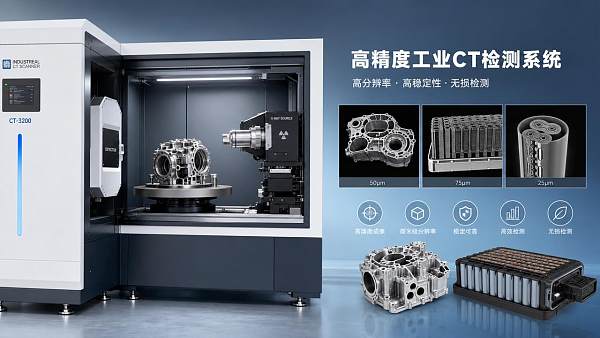
For quality and safety teams, industrial ct scanner wholesale solutions offer a practical path to faster hidden defect checks, deeper internal analysis, and more consistent compliance control.
From castings and electronics to aerospace parts, selecting the right CT system can reduce inspection risk, improve traceability, and support zero-defect goals.
This guide outlines what buyers should evaluate before making a wholesale decision.
Why quality and safety teams search for industrial CT scanner wholesale options
Most buyers are not simply looking for a lower unit price. They are trying to solve a difficult inspection problem that conventional gauges, vision systems, or destructive sectioning cannot handle well.
When hidden cracks, porosity, voids, inclusions, assembly misalignment, or internal dimensional errors create safety risk, industrial CT becomes a strategic inspection tool rather than a niche lab instrument.
For procurement, the wholesale question usually appears when a company plans multi-site deployment, supplier quality alignment, contract manufacturing support, or standardization across several product families.
For quality managers, the real issue is whether the system can deliver repeatable defect detection, actionable reporting, and audit-ready evidence without slowing throughput or creating new operator dependency.
What matters most before buying in volume
If your team is evaluating industrial ct scanner wholesale programs, start with inspection outcomes, not brochure specifications. A cheaper scanner is expensive if it misses defects or creates unstable pass-fail results.
The first buying question should be simple: what hidden defects must be detected, at what minimum size, in which materials, and under what production or validation conditions?
This immediately narrows the field. A system that works for aluminum castings may be unsuitable for dense alloys, multi-material electronic assemblies, or larger aerospace components.
The second question is operational. Will the scanner support incoming inspection, failure analysis, first article inspection, process validation, or 100 percent critical-part screening? Different use cases require different configurations.
The third question concerns standardization. In wholesale deployments, consistency between sites matters as much as raw image quality. Calibration stability, software version control, reporting templates, and training protocols should all be reviewed early.
Which hidden defects industrial CT can find better than many other methods
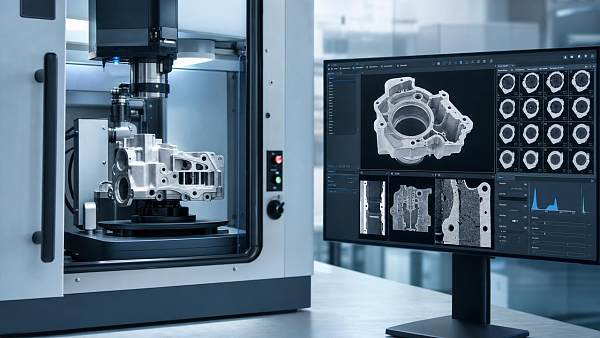
Industrial CT is valuable because it reveals internal structure non-destructively. This allows teams to inspect the complete part volume instead of inferring quality from surface evidence or a limited section cut.
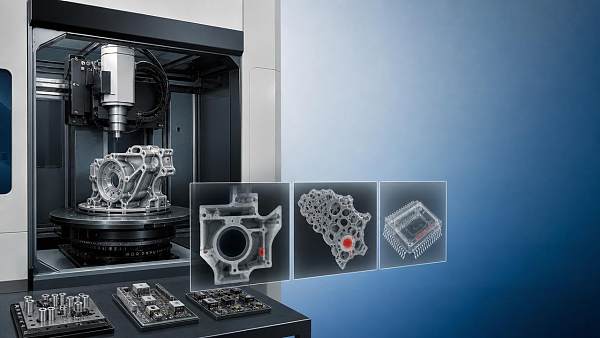
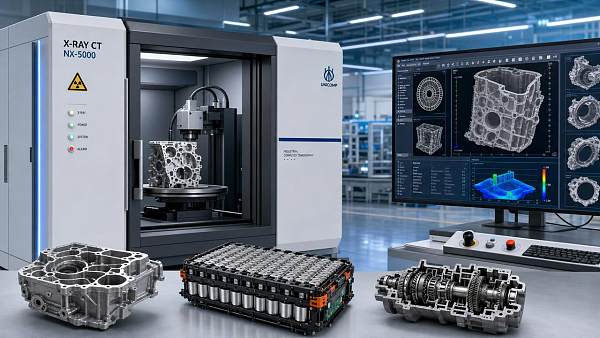
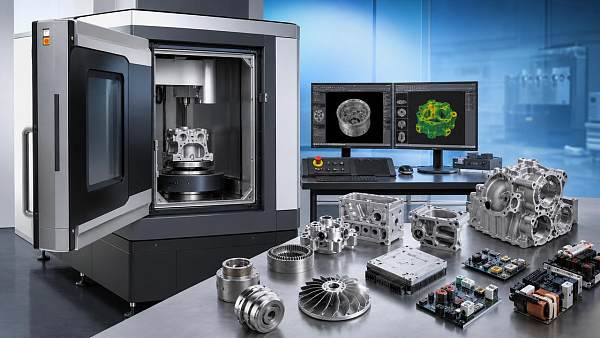
In castings, CT is often used to detect porosity clusters, shrinkage cavities, inclusions, wall-thickness variation, and internal geometry deviations that may weaken structural performance.
In electronics, it helps reveal solder voids, head-in-pillow issues, cracked joints, component shift, internal connector damage, and hidden assembly defects inside dense packages.
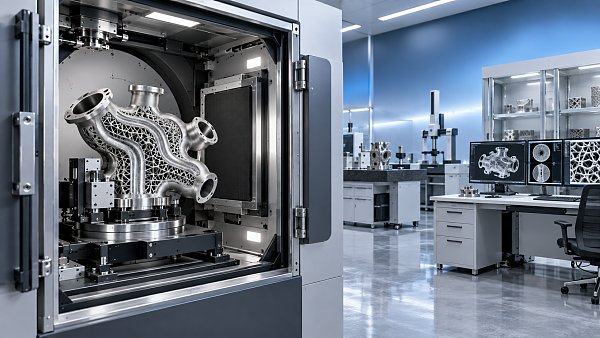
In additive manufacturing, CT supports lattice verification, internal channel inspection, trapped powder assessment, fusion defects, and comparative analysis between design intent and printed reality.
For safety-critical sectors such as aerospace, automotive, medical devices, and energy, the ability to document hidden defect evidence can directly support compliance, supplier claims management, and root-cause investigations.
How to match scanner capability to your actual parts
The right system depends on part size, material density, required resolution, and cycle-time targets. These variables are interdependent, so buyers should avoid evaluating them in isolation.
Higher density materials require stronger X-ray energy for penetration, but energy alone does not guarantee the detail needed for small defect recognition. Resolution, focal spot size, detector quality, and reconstruction software all matter.
Small parts with micro-defect requirements may need high magnification and fine voxel size. Larger parts may require a bigger scanning envelope, but that can reduce achievable detail unless system design is carefully optimized.
Mixed-material assemblies create another challenge. Metals, polymers, adhesives, and ceramics attenuate X-rays differently, which can complicate contrast, segmentation, and measurement reliability.
Ask suppliers to scan representative parts from your production environment, not ideal demo samples. Real-world parts reveal whether the scanner can handle true defect profiles, geometry complexity, and inspection noise.
Key technical criteria buyers should compare in wholesale evaluations
Resolution is important, but it should be tied to the smallest defect or dimensional feature your quality plan must evaluate. Marketing claims about micron-level performance can be misleading outside narrow test conditions.
X-ray source power and stability influence penetration and consistency. For demanding industrial use, source reliability and long-term performance are often more important than peak specification figures.
Detector sensitivity, dynamic range, and noise performance affect image clarity and defect visibility. Better detectors can improve inspection confidence, especially when scanning dense or low-contrast structures.
Reconstruction software deserves serious attention. Artifact reduction, beam hardening correction, segmentation tools, and automated analysis functions can dramatically affect whether CT data becomes usable inspection evidence.
Metrology capability is another major factor. If your team needs dimensional inspection, compare volumetric accuracy, calibration approach, traceability, and software compatibility with your existing quality workflows.
Automation features matter in multi-unit programs. Barcode integration, robotic loading, recipe management, defect classification, and report automation can determine whether the system scales beyond engineering use.
Questions quality managers should ask every wholesale supplier
Start with validation evidence. Ask what defect classes the system can reliably detect in your material types, and request sample studies with clear acceptance criteria rather than general image showcases.
Ask how repeatability is maintained across shifts, operators, and sites. A strong supplier should explain calibration routines, environmental controls, software governance, and measurement system analysis support.
Clarify uptime expectations, maintenance intervals, source replacement planning, and service response time. In production inspection, downtime can become a quality risk and a delivery risk at the same time.
Review data outputs carefully. Your team may need DICOM-like traceability, 3D visualization, defect maps, automated pass-fail logic, CAD comparison, or export formats that fit enterprise quality systems.
Training and application engineering support are especially important in wholesale deals. The best supplier relationship includes onboarding, method development, remote diagnostics, and assistance with part-specific inspection recipes.
Finally, ask for references in industries with similar defect-critical requirements. A supplier experienced in demonstration imaging is not automatically qualified for controlled quality operations.
Total cost of ownership is more important than purchase price
Industrial ct scanner wholesale decisions often focus first on discount structure, but total cost of ownership usually has a bigger effect on long-term value. Hidden costs can easily exceed initial savings.
These costs include site preparation, radiation shielding, power and cooling requirements, software licensing, calibration tools, maintenance contracts, source replacement, operator training, and data storage infrastructure.
There is also a process cost. If scan recipes are slow, analysis remains manual, or reports require expert intervention, the inspection cell may become a bottleneck rather than a quality accelerator.
For quality and safety teams, the strongest business case comes from avoided escapes, reduced destructive testing, faster root-cause analysis, improved supplier accountability, and lower rework or recall exposure.
When evaluating suppliers, build a cost model that includes throughput, scrap reduction, claim reduction, engineering time saved, and the compliance value of better documented hidden defect evidence.
Compliance, traceability, and risk control considerations
For many buyers, CT is not only an imaging tool but also a risk-control system. It can help establish objective evidence that safety-critical parts were inspected according to defined procedures.
This is especially relevant when customers, regulators, or internal auditors require traceable inspection records, validated methods, and reproducible acceptance decisions for internal defects.
Ask whether the supplier supports documented calibration, user access control, audit trails, image retention policies, and method validation practices aligned with your industry expectations.
In regulated or customer-sensitive environments, data governance matters almost as much as scan quality. Inspection images, analysis outputs, and approval records must be accessible, secure, and reviewable.
For multi-site wholesale deployment, standard operating procedures should be harmonized from the start so that defect criteria do not drift between facilities or business units.
When wholesale procurement makes strategic sense
Not every company should buy multiple units immediately. Wholesale procurement makes the most sense when demand is recurring, quality risk is distributed across sites, and standardized inspection capability is strategically important.
Typical triggers include global supplier qualification programs, expansion of safety-critical production, insourcing of failure analysis, or the need to unify defect-check methods across plants and regions.
It can also make sense when a company wants stronger negotiating leverage on service terms, training, software access, and spare-part support than a single-unit purchase would provide.
However, if your application is still poorly defined, a phased approach may be safer. Start with a pilot line, validate methods, quantify value, then expand into a broader industrial ct scanner wholesale agreement.
A practical selection process for quality and safety teams
Begin by defining your defect library. List the hidden defect types, part categories, materials, risk levels, and acceptance thresholds that matter most in your current operation.
Next, group applications by inspection objective: defect detection, dimensional metrology, process validation, root-cause analysis, or compliance documentation. This prevents one scanner specification from being forced onto every task.
Then request sample scans from shortlisted suppliers using your own production parts, including known good and known bad samples. Compare not only image quality but also analysis speed and reporting clarity.
Run an operational review covering footprint, shielding, staffing, environmental requirements, data handling, maintenance burden, and integration with existing quality systems or MES platforms.
Before signing a wholesale agreement, define acceptance benchmarks for each unit, training deliverables, service-level commitments, calibration scope, and software support terms across all deployment locations.
Common buying mistakes to avoid
One common mistake is purchasing based on maximum resolution claims without considering part size, density, and actual throughput. A technically impressive system may be impractical for production use.
Another mistake is treating CT as a stand-alone machine instead of part of a broader quality workflow. Without recipe control, operator discipline, and reporting standards, results may vary too much for critical decisions.
Some teams underestimate data complexity. CT produces rich information, but extracting repeatable decisions requires good software, trained analysts, and clear defect criteria.
It is also risky to ignore service infrastructure. In high-value inspection environments, poor support can delay investigations, disrupt shipments, and weaken confidence in inspection findings.
Finally, avoid wholesale commitments that do not include application support. Even excellent hardware can underperform if method setup for your specific parts is weak.
Final decision framework
The best industrial ct scanner wholesale choice is the one that reliably detects your critical hidden defects, fits your operational reality, and scales with consistent results across teams and sites.
For quality control and safety management, value comes from lower uncertainty. A strong CT program improves defect visibility, supports better release decisions, strengthens traceability, and reduces the chance of costly escapes.
Make the decision using evidence from your own parts, your own defect thresholds, and your own workflow needs. That is more important than generic performance claims or headline discount levels.
If a supplier can demonstrate repeatable detection, manageable ownership cost, robust service support, and clear compliance alignment, wholesale deployment can become a powerful step toward zero-defect manufacturing.
Recommended News
 Sep 19, 2026When does CT metrology make sense for inspecting 3D printed parts?3D printing inspection: learn when CT metrology delivers reliable insight into hidden channels, porosity, wall thickness, and critical internal defects.
 Jul 04, 2026Advanced Packaging Metrology: Choosing Tools for Warpage and Alignment ControlAdvanced packaging metrology guide for choosing the right tools for warpage and alignment control. Learn how to improve yield, ramp stability, and tool selection with practical insights.
 Jun 30, 20263D Scanning Software Supplier Checklist for Integration and Support3D scanning software supplier checklist for integration and support: learn how to compare technical fit, data traceability, scalability, and service quality for a smarter, lower-risk choice.
 May 28, 2026Semiconductor Packaging Metrology News: Key Shifts in 2026Metrology in semiconductor packaging news for 2026 reveals how AI, traceability, and scenario-based measurement reshape yield, reliability, and smarter investment decisions.
 May 23, 2026Industrial CT Scanner Wholesale for Hidden Defect ChecksIndustrial CT scanner wholesale solutions help quality teams detect hidden defects faster, improve traceability, and compare systems for safer, more consistent inspections.
 May 19, 2026Future of X-Ray CT in Industry: Best Use CasesFuture of X-Ray CT in Industry: discover the best use cases for defect detection, assembly verification, and faster root-cause analysis to reduce risk and improve quality.
 May 15, 2026Industrial CT Scanner Wholesale: Cost, Throughput, and Hidden LimitsIndustrial CT scanner wholesale insights on real cost, throughput, and hidden limits. Learn how to compare systems, avoid costly mistakes, and choose the right fit for production.
 May 12, 2026Future of X-Ray CT in Industry: Speed vs AccuracyFuture of x-ray ct in industry: explore how manufacturers balance speed vs accuracy for reliable inspection, faster decisions, and smarter CT investment planning.
 May 08, 20263D Scanning Mesh Quality Benchmarks Worth Checking Before You Compare Systems3d scanning mesh quality benchmarks matter before you compare scanner speed or price. Learn the key checks for mesh integrity, CAD readiness, and lower procurement risk.
 May 08, 20263D Scanning Speed vs Resolution: What Matters More for Shorter Inspection Cycles?3d scanning speed vs resolution: learn how to shorten inspection cycles by balancing throughput, defect detection, and data quality with smarter, application-based scanning decisions.
 May 07, 2026CT Scanning Resolution Metrics That Matter for Internal Defect AnalysisCT scanning resolution metrics explained for internal defect analysis. Learn how voxel size, contrast, noise, and artifacts affect flaw detection and compare CT systems with confidence.
 May 05, 2026Industrial CT Scanner Wholesale: What Matters Beyond Unit PriceIndustrial CT scanner wholesale buyers should look beyond unit price. Compare TCO, resolution, uptime, software, compliance, and support to secure stronger ROI and lower risk.
 May 04, 2026How to Compare a Semiconductor Metrology Equipment Supplier Without Missing Critical SpecsSemiconductor Metrology Equipment Supplier comparison guide: learn how to verify critical specs, validate real-world performance, and choose a supplier that fits your process, data, and compliance needs.
 Apr 24, 20263D Scanning for Quality Control: Where Errors Begin3D Scanning for quality control starts with setup, calibration, and alignment. Learn how NIST Standards for calibration and advanced metrology solutions improve repeatable inspection.
 Apr 24, 2026Coordinate Measuring Machines or CT Metrology for Hidden Features3D Scanning and Coordinate Measuring Machines vs CT metrology: learn how hidden-feature inspection, industrial sensors, and NIST standards impact accuracy, speed, and smarter QA decisions.