How to Compare a Semiconductor Metrology Equipment Supplier Without Missing Critical Specs
Time
Click Count
Choosing a Semiconductor Metrology Equipment Supplier is not just about price or brand reputation—it is about verifying whether critical specs match your process node, tolerance targets, data workflow, and compliance requirements. For technical evaluators, a structured comparison framework helps prevent costly oversights and ensures the selected supplier can support precision, repeatability, and long-term production reliability.
When engineers and technical assessment teams search for how to compare a semiconductor metrology equipment supplier, their real intent is rarely “find a vendor list.” What they usually need is a practical evaluation method: which specifications matter most, how to verify vendor claims, where comparison mistakes happen, and how to judge whether a supplier can perform not only during factory acceptance testing, but also under real process conditions.
For this audience, the biggest risk is not selecting a clearly poor supplier. It is choosing a capable-looking supplier whose published specifications do not translate into stable production performance. In semiconductor environments, small misunderstandings around resolution, repeatability, throughput, recipe robustness, stage stability, software integration, or calibration traceability can create major downstream losses.
This article focuses on the questions technical evaluators actually care about: how to compare core specs, how to separate headline performance from usable performance, how to assess application fit, and how to determine whether a supplier can support long-term process control. Generic vendor-marketing criteria are intentionally minimized. What matters here is technical fit, verification discipline, and risk reduction.
Start With Search Intent: You Are Comparing Fitness for Use, Not Just Equipment Features
The core search intent behind this topic is evaluation support. A technical reader wants a decision framework that connects specification sheets to manufacturing reality. In other words, the question is not “Which supplier sells the most advanced tool?” but “Which supplier can reliably meet my wafer, mask, package, or materials metrology requirements within my actual process window?”
That distinction matters because semiconductor metrology is application-specific. A supplier may show excellent brochure numbers for film thickness, critical dimension measurement, overlay, topography, defect review, or surface characterization, yet still underperform in your environment due to vibration sensitivity, sample variation, contamination controls, automation mismatch, or software limitations.
So the first rule is simple: compare suppliers against the intended use case. Build the comparison around the exact process layer, feature size, wafer type, substrate material, sampling plan, and control objective. If your team starts by comparing general catalogs instead of process-matched requirements, critical specs will almost certainly be missed.
Which Questions Matter Most to Technical Evaluators?
Technical evaluators usually care about five issues above all others. First, can the equipment measure the required parameter at the needed accuracy and repeatability? Second, is the tool robust enough for production use rather than only laboratory demonstrations? Third, will it integrate with existing factory systems and data architecture? Fourth, can the supplier support calibration, service, and application development over time? Fifth, does the total lifecycle risk justify the investment?
These concerns are more important than broad claims such as “high precision,” “AI-enabled,” or “next-generation platform.” In metrology procurement, vague capability language is a warning sign. A serious Semiconductor Metrology Equipment Supplier should be able to map performance to measurable criteria: gauge repeatability and reproducibility, measurement uncertainty, tool-to-tool matching, uptime, recipe transferability, and traceable calibration methods.
Technical readers also want to know where hidden comparison failures occur. The most common issues include relying on best-case specs, ignoring sample dependency, overlooking environmental constraints, comparing inconsistent test methods, and underestimating service response requirements. These gaps often do not appear in early-stage commercial discussions, but they become expensive once the tool enters qualification or volume production.
Build a Comparison Matrix Around the Specs That Actually Drive Process Decisions
The best way to compare suppliers is to create a specification matrix grouped into four categories: measurement performance, operational performance, integration capability, and supplier support capability. This prevents teams from overemphasizing one visible metric while overlooking other failure points.
Under measurement performance, include resolution, accuracy, repeatability, reproducibility, linearity, dynamic range, sensitivity, and measurement uncertainty. Do not treat these as interchangeable. Resolution indicates the smallest detectable change, but that does not prove the system can measure accurately across process variation. Repeatability shows short-term consistency, while reproducibility addresses performance across operators, tools, sites, or time.
Under operational performance, compare throughput, recipe setup time, automation compatibility, wafer handling reliability, environmental tolerance, maintenance intervals, mean time between failures, and recovery behavior after interruptions. A metrology system that is technically precise but too slow or too fragile can still damage process control economics.
Under integration capability, evaluate SECS/GEM support, factory automation compatibility, MES connectivity, data export formats, API options, analytics readiness, cybersecurity controls, and compatibility with SPC or APC workflows. In modern fabs and advanced packaging lines, the value of metrology depends heavily on how quickly and reliably data can move into decision systems.
Under supplier support capability, compare application engineering depth, installation qualification support, training quality, global service coverage, spare parts strategy, calibration traceability, change control discipline, and roadmap transparency. A technically strong tool with weak support can become a recurring source of production risk.
Do Not Accept “Best-Case” Specs Without Context
One of the most important evaluation practices is to ask how each headline specification was obtained. Many impressive values are achieved under highly controlled conditions: ideal samples, limited scan areas, long acquisition times, vibration-isolated environments, expert operators, or custom algorithms not representative of routine production workflows.
For example, if a supplier claims nanometer-scale repeatability, ask on which sample type, across what temperature range, using what measurement duration, and with what stage condition. If throughput claims are attractive, ask whether they include load/unload time, autofocus time, recipe switching, review steps, and remeasurement rates. If accuracy looks strong, ask what reference standard was used and how uncertainty was calculated.
A capable Semiconductor Metrology Equipment Supplier should willingly distinguish between theoretical, demonstrated, and guaranteed performance. That distinction is critical. Theoretical performance reflects platform potential. Demonstrated performance shows what was achieved in a test. Guaranteed performance defines what the supplier commits to under agreed conditions. Procurement decisions should be based primarily on the third category.
Match the Tool to the Actual Metrology Task, Not to a Generic Technology Label
Technical comparisons often go wrong because teams evaluate by technology category rather than application fit. Optical, e-beam, X-ray, interferometric, profilometric, or spectroscopic systems may all sound relevant, but the right choice depends on the exact parameter being controlled and the process constraints around it.
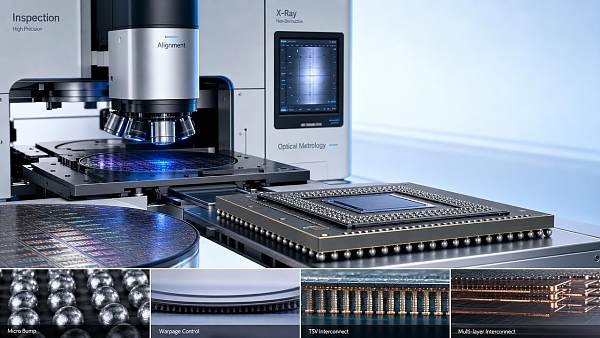
If your task involves thin film thickness and refractive index, material model quality and library flexibility may matter more than raw speed. If you are assessing advanced packaging topography, field of view, z-axis linearity, and warpage measurement robustness may dominate. If the use case involves defect inspection, nuisance rate, classification quality, and review correlation become central. If the target is overlay or CD metrology, stage precision, algorithm stability, and correlation to reference methods are essential.
This is why technical evaluators should request application-specific evidence. Ask suppliers to show performance on similar wafers, similar materials, similar aspect ratios, and similar production conditions. A broad industry presence is useful, but comparable use-case proof is more valuable than generic market credibility.
Verify Measurement Uncertainty and Correlation, Not Just Repeatability
Many teams correctly ask for repeatability data but do not go far enough into uncertainty analysis. Repeatability alone can hide systematic bias. A tool may produce highly consistent results that are still wrong in absolute terms, or wrong relative to the process reference method used for release decisions.
Request a clear uncertainty budget where possible. Ask how the supplier accounts for instrument noise, stage effects, optical model assumptions, thermal drift, sample preparation sensitivity, operator influence, and calibration reference uncertainty. The answer does not need to be academic, but it must be technically credible and traceable.
Correlation is equally important. If the tool will be used alongside existing metrology assets, reference methods, or customer audit procedures, compare correlation performance across representative sample sets. Poor correlation can create process confusion, false excursions, or unnecessary hold decisions even when the new tool appears internally stable.
Tool-to-tool matching should also be considered if multiple units may be deployed. A supplier that performs well with one demo tool but cannot maintain matching across installed systems may create major scaling problems later.
Evaluate Software, Data Workflow, and Automation Earlier Than Most Teams Do
In semiconductor operations, hardware capability and software capability are inseparable. Yet many sourcing teams evaluate software too late, after the shortlist has already narrowed. This is a mistake, because software limitations often determine whether metrology results can be operationalized at the required speed and consistency.
Assess recipe management, user permission control, audit trails, exception handling, statistical reporting, defect classification support, review navigation, and integration with plant-level systems. Ask whether the platform supports remote diagnostics, centralized monitoring, version control, and data normalization across tool fleets.
Also examine how easily the system exports raw data, processed data, images, metadata, and event logs. If your organization uses advanced analytics, machine learning, or digital twin environments, data accessibility may become a strategic differentiator. A supplier with a strong instrument but closed or inflexible data architecture may limit future process optimization.
Service, Calibration, and Application Support Are Part of the Technical Specification
For technical evaluators, service quality should not be treated as a purely commercial issue. In metrology environments, service response, calibration discipline, and application support directly affect measurement continuity and process confidence. A metrology tool that stays down for too long, drifts without timely recalibration, or lacks recipe support can disrupt production decisions even if its nominal specifications are excellent.
Ask where service engineers are located, what the response-time commitments are, how critical spare parts are stocked, and whether preventive maintenance is fixed or condition-based. Confirm whether calibration is traceable to recognized standards and whether performance verification procedures are documented for audits and quality systems.
Application support deserves special attention. During process changes, new materials introduction, or yield excursions, your team may need rapid assistance adapting recipes or interpreting anomalies. A strong supplier brings not just repair capability, but metrology domain expertise that shortens troubleshooting cycles.
Use Structured Trials to Reduce Selection Risk
The most reliable way to compare a Semiconductor Metrology Equipment Supplier is to run a structured evaluation plan using your own samples and acceptance criteria. This should include benchmark wafers or substrates, known variation cases, edge cases, throughput scenarios, and environmental conditions that resemble real deployment.
Define pass/fail criteria in advance. These may include measurement repeatability, correlation to the current reference, defect capture rate, false call performance, recipe creation time, automation success rate, uptime expectations, and data interface behavior. Without predefined criteria, evaluations can drift toward subjective impressions or presentation quality.
Where possible, include cross-functional stakeholders in the trial review: process engineering, quality, automation, maintenance, IT, and procurement. Many supplier choices fail because one functional group validates the instrument while another later discovers integration or maintainability barriers.
Common Comparison Mistakes That Cause Expensive Oversights
Several recurring errors lead technical teams to miss critical specifications. One is comparing tools using vendor-generated data sets only. Another is assuming that a stronger technology brand automatically means better application fit. A third is failing to distinguish between R&D suitability and production suitability. A fourth is treating installation qualification as proof of long-term process stability.
Other mistakes include overlooking cleanroom compatibility, underestimating operator training needs, ignoring software licensing restrictions, failing to review revision control practices, and not checking whether future process nodes are supported by the platform roadmap. These details may seem secondary during sourcing, but they often define ownership cost and long-term usability.
Perhaps the most damaging mistake is evaluating in isolation from business impact. Metrology performance should always be linked to yield protection, sampling efficiency, excursion response time, engineering cycle reduction, or compliance assurance. Technical superiority has more strategic meaning when it is tied to measurable factory outcomes.
A Practical Decision Framework for Final Supplier Selection
To make final comparison decisions more robust, score suppliers in weighted categories rather than relying on a single technical ranking. A practical model might assign weight to application-fit performance, uncertainty and correlation confidence, automation and data integration, service and calibration support, scalability, and total lifecycle cost.
Application fit should receive the highest weight because it reflects the core reason the tool exists. Uncertainty confidence and correlation should follow closely, especially in advanced-node, high-mix, or customer-audited environments. Integration, service, and scalability should be weighted according to your organization’s production model and geographic footprint.
Total cost should include more than purchase price. Include consumables, calibration, software modules, recipe development effort, training, downtime risk, upgrade path, and expected support dependence. A cheaper tool with weaker support or slower qualification may cost more over its useful life than a higher-priced but better-aligned alternative.
Conclusion: The Best Supplier Is the One Whose Specs Stay True in Your Process Environment
Comparing a semiconductor metrology equipment supplier without missing critical specs requires more than reading datasheets carefully. It requires understanding the real search intent behind the comparison: identifying which supplier can deliver reliable, traceable, production-relevant measurement performance under your actual operating conditions.
For technical evaluators, the most valuable approach is a structured one. Define the metrology task precisely, compare measurement and operational specifications in context, challenge best-case claims, verify uncertainty and correlation, assess software and automation early, and treat service and calibration as technical criteria rather than afterthoughts.
Ultimately, the strongest Semiconductor Metrology Equipment Supplier is not simply the one with the most aggressive numbers on paper. It is the one that can prove fitness for use, integrate into your data and quality systems, and sustain precision over time with transparent support and verifiable performance. That is the comparison standard that protects both technical integrity and manufacturing value.
Recommended News
 May 28, 2026Semiconductor Packaging Metrology News: Key Shifts in 2026Metrology in semiconductor packaging news for 2026 reveals how AI, traceability, and scenario-based measurement reshape yield, reliability, and smarter investment decisions.
 May 23, 2026Industrial CT Scanner Wholesale for Hidden Defect ChecksIndustrial CT scanner wholesale solutions help quality teams detect hidden defects faster, improve traceability, and compare systems for safer, more consistent inspections.
 May 19, 2026Future of X-Ray CT in Industry: Best Use CasesFuture of X-Ray CT in Industry: discover the best use cases for defect detection, assembly verification, and faster root-cause analysis to reduce risk and improve quality.
 May 15, 2026Industrial CT Scanner Wholesale: Cost, Throughput, and Hidden LimitsIndustrial CT scanner wholesale insights on real cost, throughput, and hidden limits. Learn how to compare systems, avoid costly mistakes, and choose the right fit for production.
 May 12, 2026Future of X-Ray CT in Industry: Speed vs AccuracyFuture of x-ray ct in industry: explore how manufacturers balance speed vs accuracy for reliable inspection, faster decisions, and smarter CT investment planning.
 May 08, 20263D Scanning Mesh Quality Benchmarks Worth Checking Before You Compare Systems3d scanning mesh quality benchmarks matter before you compare scanner speed or price. Learn the key checks for mesh integrity, CAD readiness, and lower procurement risk.
 May 08, 20263D Scanning Speed vs Resolution: What Matters More for Shorter Inspection Cycles?3d scanning speed vs resolution: learn how to shorten inspection cycles by balancing throughput, defect detection, and data quality with smarter, application-based scanning decisions.
 May 07, 2026CT Scanning Resolution Metrics That Matter for Internal Defect AnalysisCT scanning resolution metrics explained for internal defect analysis. Learn how voxel size, contrast, noise, and artifacts affect flaw detection and compare CT systems with confidence.
 May 05, 2026Industrial CT Scanner Wholesale: What Matters Beyond Unit PriceIndustrial CT scanner wholesale buyers should look beyond unit price. Compare TCO, resolution, uptime, software, compliance, and support to secure stronger ROI and lower risk.
 May 04, 2026How to Compare a Semiconductor Metrology Equipment Supplier Without Missing Critical SpecsSemiconductor Metrology Equipment Supplier comparison guide: learn how to verify critical specs, validate real-world performance, and choose a supplier that fits your process, data, and compliance needs.
 Apr 24, 20263D Scanning for Quality Control: Where Errors Begin3D Scanning for quality control starts with setup, calibration, and alignment. Learn how NIST Standards for calibration and advanced metrology solutions improve repeatable inspection.
 Apr 24, 2026Coordinate Measuring Machines or CT Metrology for Hidden Features3D Scanning and Coordinate Measuring Machines vs CT metrology: learn how hidden-feature inspection, industrial sensors, and NIST standards impact accuracy, speed, and smarter QA decisions.