Industrial CT Scanner Wholesale: Cost, Throughput, and Hidden Limits
Time
Click Count
Industrial CT Scanner Wholesale: Cost, Throughput, and Hidden Limits
Industrial CT scanner wholesale decisions often look simple at quotation stage. Real value changes when scanning speed, image quality, compliance scope, and lifecycle cost are examined together.
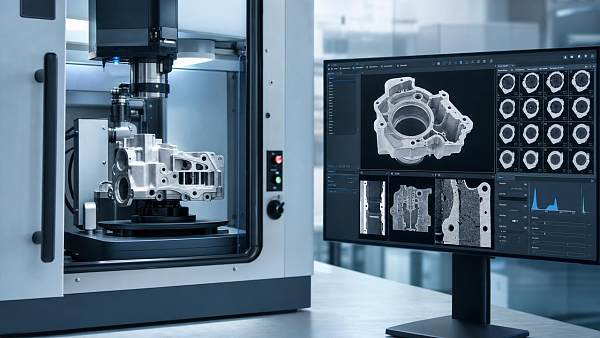
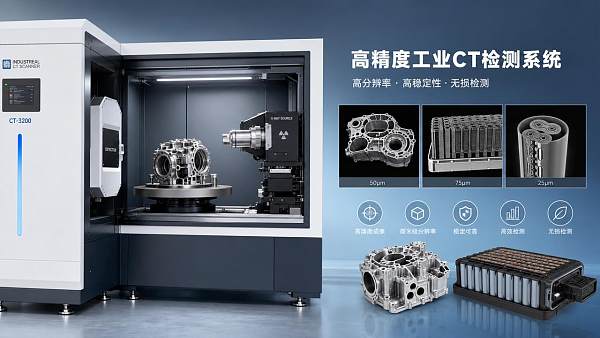
In industrial environments, CT systems support defect analysis, metrology, internal assembly validation, and failure investigation. A lower purchase price can become expensive if throughput stalls production or data quality fails audits.
This article explains how to evaluate industrial CT scanner wholesale options using a practical decision structure. The goal is better cost efficiency, stronger production fit, and fewer surprises after installation.
Why a Structured Evaluation Matters
Industrial CT scanner wholesale projects often involve complex tradeoffs. Suppliers may highlight detector size, voltage range, or software features, while important operating limits remain buried in technical notes.
A structured review helps compare systems on equal terms. It also reduces the risk of buying capacity that looks impressive in demonstrations but underperforms with actual parts, materials, and takt time.
This approach is especially useful across electronics, aerospace, automotive, energy, medical components, and precision manufacturing, where inspection depth and traceability standards differ significantly.
Core Points to Review Before Any Industrial CT Scanner Wholesale Order
- Confirm whether quoted throughput reflects real scan, reconstruction, loading, and review time, not only ideal exposure speed under controlled demonstration conditions.
- Match X-ray power, focal spot behavior, and detector sensitivity to actual part density, wall thickness, and defect size requirements.
- Check voxel size at working geometry, because maximum advertised resolution often drops sharply with larger parts or production fixtures.
- Review dimensional metrology capability separately from defect inspection, since not every industrial CT scanner wholesale system supports traceable measurements.
- Verify supported standards, calibration routines, and reporting outputs needed for aerospace, automotive, electronics, or regulated industrial workflows.
- Ask for beam hardening correction, scatter reduction, and artifact management examples using parts similar to your material stack.
- Measure software usability, automation scripting, and data export compatibility with MES, SPC, CAD, and quality documentation systems.
- Estimate operating cost beyond purchase price, including tube replacement, detector servicing, shielding checks, and reconstruction workstation upgrades.
- Assess floor space, vibration sensitivity, power stability, cooling demand, and radiation safety constraints before approving site readiness.
- Request acceptance testing with your own parts, defect criteria, and cycle expectations before finalizing any industrial CT scanner wholesale agreement.
Cost Factors That Change the Real Investment
Industrial CT scanner wholesale pricing is shaped by energy class, detector type, axis precision, shielding design, software modules, and automation level. Base quotes rarely reflect the full deployed system.
Tube technology matters because replacement intervals affect annual cost. High-power applications may increase uptime pressure, but frequent tube wear can erase savings from a lower upfront package.
Software licensing can also be underestimated. Reconstruction acceleration, porosity analysis, GD&T evaluation, AI defect classification, and multi-user access often sit outside the headline price.
Training, validation scans, application setup, and local service response should be costed early. In many industrial CT scanner wholesale deals, service access determines whether performance remains stable after year one.
A simple comparison framework
Throughput Claims: What Needs Closer Validation
Throughput is one of the most misunderstood variables in industrial CT scanner wholesale evaluation. Fast scans do not guarantee fast decisions if reconstruction and interpretation remain slow.
Actual cycle time includes loading, fixturing, warm-up, exposure, reconstruction, image correction, analysis, export, and part changeover. One weak step can reduce effective output for an entire shift.
Part mix also matters. Small aluminum components may scan quickly, while dense mixed-material assemblies need longer exposure and advanced artifact correction.
For industrial CT scanner wholesale comparisons, ask suppliers to present throughput under three states: ideal sample, representative production sample, and worst-case sample.
Application Notes Across Common Industrial Scenarios
Electronics and miniaturized assemblies
Focus on void detection, solder joint clarity, and fine-feature resolution. Industrial CT scanner wholesale options for electronics must control motion accuracy and support fast review workflows.
Check whether software handles high-volume pass or fail routines. Data bottlenecks often appear when many small parts require frequent traceable reporting.
Automotive castings and battery components
Porosity analysis, wall thickness mapping, and repeatable defect thresholds are critical. Confirm the system can balance dense materials with production-level throughput.
Battery inspection adds safety and material complexity. Ask for examples covering tabs, welds, internal alignment, and artifact behavior in mixed structures.
Aerospace and high-value precision parts
Metrology credibility becomes central. Industrial CT scanner wholesale systems in this scenario should show calibration traceability, environmental stability, and clear uncertainty statements.
Audit readiness matters as much as image quality. Reporting consistency and long-term reproducibility should be validated before acceptance.
General industrial R&D and failure analysis
Flexibility may be more valuable than maximum speed. A broader material range, advanced reconstruction tools, and adaptable geometry can outperform rigid production-focused systems.
When comparing industrial CT scanner wholesale offers here, prioritize software depth and application engineering support over brochure throughput alone.
Commonly Overlooked Limits and Risk Areas
Resolution loss with larger parts is a frequent disappointment. Advertised micro-focus performance often assumes small samples placed near ideal geometry positions.
Mixed materials can create beam hardening and streak artifacts. Without proof on similar parts, industrial CT scanner wholesale claims may not translate into usable defect visibility.
Data volume is another hidden limit. Large scans require storage strategy, backup policy, and sufficient computing power for reconstruction and archive retrieval.
Operator dependence can reduce repeatability. If analysis steps rely heavily on manual judgment, reported throughput and quality consistency may drift between shifts.
Service geography should not be ignored. In industrial CT scanner wholesale projects, delayed spare parts or limited field support can turn a minor fault into extended downtime.
Practical Steps Before Supplier Selection
- Define parts by size, density, defect class, and target cycle time.
- Separate needs for defect inspection, metrology, and R&D exploration.
- Request sample scans using real production or qualification parts.
- Compare full-cycle throughput, not isolated scan speed figures.
- Map software outputs to existing quality and manufacturing systems.
- Model five-year ownership cost, including wear parts and service.
- Document acceptance criteria before negotiating final industrial CT scanner wholesale terms.
Conclusion and Next Actions
A strong industrial CT scanner wholesale decision is not driven by sticker price alone. It depends on the relationship between image quality, true throughput, compliance readiness, service depth, and ownership cost.
The most reliable path is evidence-based comparison using your own parts, your own defect thresholds, and your own reporting requirements. That process reveals hidden limits before they become expensive constraints.
For organizations building a zero-defect inspection strategy, industrial CT scanner wholesale evaluation should be treated as a technical benchmarking exercise, not just a sourcing event.
Next, prepare a short validation matrix covering cost, throughput, resolution, software, compliance, and service. Then use it to compare suppliers under the same practical conditions.
Recommended News
 Sep 19, 2026When does CT metrology make sense for inspecting 3D printed parts?3D printing inspection: learn when CT metrology delivers reliable insight into hidden channels, porosity, wall thickness, and critical internal defects.
 Jul 04, 2026Advanced Packaging Metrology: Choosing Tools for Warpage and Alignment ControlAdvanced packaging metrology guide for choosing the right tools for warpage and alignment control. Learn how to improve yield, ramp stability, and tool selection with practical insights.
 Jun 30, 20263D Scanning Software Supplier Checklist for Integration and Support3D scanning software supplier checklist for integration and support: learn how to compare technical fit, data traceability, scalability, and service quality for a smarter, lower-risk choice.
 May 28, 2026Semiconductor Packaging Metrology News: Key Shifts in 2026Metrology in semiconductor packaging news for 2026 reveals how AI, traceability, and scenario-based measurement reshape yield, reliability, and smarter investment decisions.
 May 23, 2026Industrial CT Scanner Wholesale for Hidden Defect ChecksIndustrial CT scanner wholesale solutions help quality teams detect hidden defects faster, improve traceability, and compare systems for safer, more consistent inspections.
 May 19, 2026Future of X-Ray CT in Industry: Best Use CasesFuture of X-Ray CT in Industry: discover the best use cases for defect detection, assembly verification, and faster root-cause analysis to reduce risk and improve quality.
 May 15, 2026Industrial CT Scanner Wholesale: Cost, Throughput, and Hidden LimitsIndustrial CT scanner wholesale insights on real cost, throughput, and hidden limits. Learn how to compare systems, avoid costly mistakes, and choose the right fit for production.
 May 12, 2026Future of X-Ray CT in Industry: Speed vs AccuracyFuture of x-ray ct in industry: explore how manufacturers balance speed vs accuracy for reliable inspection, faster decisions, and smarter CT investment planning.
 May 08, 20263D Scanning Mesh Quality Benchmarks Worth Checking Before You Compare Systems3d scanning mesh quality benchmarks matter before you compare scanner speed or price. Learn the key checks for mesh integrity, CAD readiness, and lower procurement risk.
 May 08, 20263D Scanning Speed vs Resolution: What Matters More for Shorter Inspection Cycles?3d scanning speed vs resolution: learn how to shorten inspection cycles by balancing throughput, defect detection, and data quality with smarter, application-based scanning decisions.
 May 07, 2026CT Scanning Resolution Metrics That Matter for Internal Defect AnalysisCT scanning resolution metrics explained for internal defect analysis. Learn how voxel size, contrast, noise, and artifacts affect flaw detection and compare CT systems with confidence.
 May 05, 2026Industrial CT Scanner Wholesale: What Matters Beyond Unit PriceIndustrial CT scanner wholesale buyers should look beyond unit price. Compare TCO, resolution, uptime, software, compliance, and support to secure stronger ROI and lower risk.
 May 04, 2026How to Compare a Semiconductor Metrology Equipment Supplier Without Missing Critical SpecsSemiconductor Metrology Equipment Supplier comparison guide: learn how to verify critical specs, validate real-world performance, and choose a supplier that fits your process, data, and compliance needs.
 Apr 24, 20263D Scanning for Quality Control: Where Errors Begin3D Scanning for quality control starts with setup, calibration, and alignment. Learn how NIST Standards for calibration and advanced metrology solutions improve repeatable inspection.
 Apr 24, 2026Coordinate Measuring Machines or CT Metrology for Hidden Features3D Scanning and Coordinate Measuring Machines vs CT metrology: learn how hidden-feature inspection, industrial sensors, and NIST standards impact accuracy, speed, and smarter QA decisions.