Sustainability Risks Hidden in Supplier Data
Time
Click Count
Supplier data is becoming a Sustainability risk surface
Sustainability rarely fails in a dramatic moment. It usually weakens quietly inside supplier records, test logs, declarations, and shipment-level exceptions.
That shift matters because business risk now travels through data as much as through materials, labor, or energy.
A supplier may appear compliant on paper while hidden gaps sit in emissions baselines, calibration histories, traceability chains, or substance reporting.
When those gaps surface late, Sustainability concerns quickly become cost shocks, delayed approvals, audit friction, and damaged commercial credibility.
From recent market behavior, the more important signal is not simply stricter disclosure. It is the rising expectation that claims can be measured, linked, and defended.
In complex industries, that expectation extends beyond Tier 1 reporting. It reaches test environments, sensor reliability, environmental monitoring, and cross-site data consistency.
This is why Sustainability risk review is moving closer to technical validation. Data quality has become part of supplier quality.
Why hidden Sustainability signals are showing up more clearly now
Several forces are making buried supplier-side Sustainability issues easier to detect and harder to ignore.
- Regulatory frameworks increasingly demand auditable evidence rather than high-level commitments.
- Customers are comparing supplier declarations against operational data, not just annual reports.
- Digital procurement systems expose inconsistencies across sites, batches, and reporting periods.
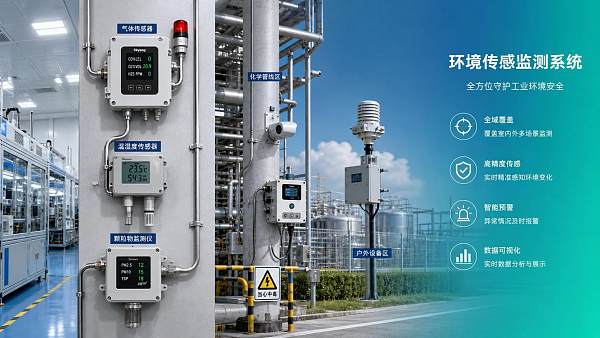
- Advanced measurement tools are making environmental and process deviations visible at finer resolution.
The last point is especially relevant across manufacturing, electronics, aerospace, chemicals, and industrial components.
Better optical inspection, trace-gas analysis, electrical testing, and non-contact sensing reveal a wider difference between declared performance and measured conditions.
That does not mean suppliers are always misrepresenting data. Often, systems were never designed for Sustainability-grade traceability.
Legacy spreadsheets, disconnected laboratories, missing calibration links, and uneven standards adoption create blind spots that look minor until scrutiny increases.
In that environment, Sustainability becomes less about policy language and more about measurable operational proof.
The data problems behind many supplier Sustainability failures
Hidden risk usually comes from ordinary data weaknesses rather than one obvious red flag.
These weaknesses tend to cluster in fast-growing supply networks and technically complex categories.
A supplier may have excellent delivery metrics yet still carry hidden Sustainability exposure because measurement discipline and reporting architecture matured at different speeds.
Measurement maturity is now part of supplier credibility
A noticeable change is that environmental and ethical claims are no longer evaluated separately from technical evidence.
This is where intelligent measurement frameworks matter.
Across advanced industry, reliable Sustainability assessment increasingly depends on whether a supplier can connect sensing, inspection, test, and traceability into one defensible chain.
The broader logic aligns with institutions such as G-IMS, where measurement is treated as the basis for actionable industrial judgment.
That perspective is useful because Sustainability risk often hides between technical domains rather than inside one report.
For example, environmental monitoring may indicate process instability. Optical inspection may show defect drift. Electrical test variation may suggest hidden energy inefficiency or material inconsistency.
Viewed separately, these issues look operational. Viewed together, they may reveal a deeper Sustainability weakness.
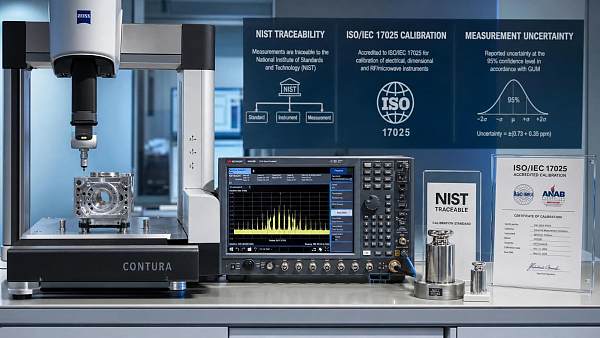
Standards also shape this transition. ISO/IEC 17025, IEEE methods, and NIST-linked calibration practices strengthen trust in data used for supplier evaluation.
Without those links, even well-intended Sustainability statements may remain commercially fragile.
The impact does not stay in one business function
When supplier Sustainability data is weak, the consequences spread wider than many organizations expect.
Cost models become less reliable
Energy intensity, waste assumptions, and scrap behavior influence total cost. If the underlying data is poor, savings forecasts become misleading.
Compliance timelines start to slip
Missing evidence often appears during qualification, export review, customer audits, or annual disclosure cycles. Late correction is almost always more expensive.
Brand value can be affected indirectly
Reputation damage rarely begins with a headline claim. It often begins with inconsistent supplier evidence that undermines confidence in stated commitments.
Innovation programs may slow down
New materials and high-performance components require stronger proof chains. Weak Sustainability data can delay adoption even when technical performance looks promising.
What deserves closer attention in supplier Sustainability reviews
In practice, the most useful review points are often very specific.
- Check whether reported Sustainability metrics can be traced to instrumented source data.
- Compare declarations across sites, shifts, and reporting periods for unexplained variance.
- Review calibration and verification histories for equipment used in environmental or quality reporting.
- Look for missing links between material identifiers, lot records, and disposal or recycling evidence.
- Test whether abnormal readings trigger investigation or simply remain archived without action.
More mature suppliers can usually explain these connections quickly. Less mature ones often rely on narrative reassurance.
That distinction is increasingly important because Sustainability claims are moving from communication assets to verification assets.
The next phase will favor measurable, comparable Sustainability evidence
Looking ahead, supplier Sustainability assessment will likely become more granular, more automated, and more technically integrated.
Three developments stand out.
- Environmental sensing will move closer to real-time exception management.
- Benchmarking will increasingly compare measured performance against common technical standards.
- Supplier scoring models will weigh data integrity more heavily, not just headline Sustainability targets.
This creates a subtle but important shift. The strongest suppliers may not be the ones making the broadest claims.
They may be the ones able to prove process stability, measurement discipline, and traceable improvement over time.
For sectors shaped by precision manufacturing, photonic sensing, advanced metrology, and high-frequency testing, that shift is already visible.
Sustainability performance is being judged less as a statement of intent and more as a system of evidence.
A practical way to respond before hidden risk becomes visible damage
The immediate priority is not collecting more supplier documents for their own sake.
It is identifying where Sustainability decisions rely on data that has weak measurement support.
Start by mapping critical claims to source systems, instruments, standards, and review frequency.
Then compare suppliers not only on declared Sustainability outcomes, but on the reliability architecture behind those outcomes.
Where gaps appear, build staged requirements. Begin with traceability, then verification, then comparability across facilities and time periods.
That sequence is often more effective than chasing perfect reporting immediately.
The wider lesson is clear. Hidden Sustainability risk is rarely invisible. It is usually unconnected.
Organizations that connect supplier data, technical measurement, and standards-based validation earlier will make more resilient judgments later.
The next useful step is to review which supplier Sustainability indicators are genuinely measurable today, which are only declared, and which still lack a trustworthy evidence chain.
Recommended News
 Aug 21, 2026When do industrial boilers need low-NOx burners to meet emissions limitsIndustrial boilers may need low-NOx burners when stricter permits, fuel changes, or upgrades reduce compliance margin. Learn the key triggers before emissions risks cause downtime.
 Aug 14, 2026How advanced metrology standards affect measurement traceability and audit readinessadvanced metrology standards strengthen measurement traceability, improve audit readiness, and help QA teams defend every result with confidence.
 Aug 08, 2026How to Evaluate a Global Trade Platform for Supplier Reach and Compliance RiskGlobal trade platform evaluation starts with usable supplier reach and compliance clarity. Learn how to spot weak records, hidden logistics risks, and decision-ready supplier data.
 Jul 20, 2026High Voltage Cables: Key Selection Factors for Reliable Power ProjectsHighvoltagecables selection made practical: learn how to compare insulation, installation environment, compliance, and lifecycle cost for safer, more reliable power projects.
 Jul 15, 2026Environmental Sensor Systems for Continuous Compliance MonitoringEnvironmental Sensor Systems for continuous compliance monitoring across production, labs, and utilities—improve audit readiness, data reliability, and operational control.
 Jul 14, 2026Eco-Friendly Furniture: What Actually Affects Cost, Durability, and ComplianceEco-friendly furniture explained: compare real cost drivers, durability, certifications, and compliance proof to avoid greenwashing and choose smarter long-term value.
 Jul 12, 2026What CE Certification Means for Photonic Sensor System CompliancePhotonic sensor systems CE certified: learn what CE really covers, which compliance risks matter most, and how to verify claims before choosing industrial sensing equipment.
 Jul 10, 2026How to Evaluate a Cuplock Scaffolding Manufacturer for Safety and Lead TimeCuplock scaffolding manufacturer selection affects safety, quality, and delivery. Learn how to verify process control, load data, traceability, and realistic lead times.
 Jul 09, 2026Data Intelligence Protocols for Smart Factories: Key Standards to KnowData Intelligence Protocols for smart factories explained: discover OPC UA, MQTT, ISA-95, ISO/IEC 17025, and IEC 62443 to improve traceability, security, and quality decisions.
 Jul 06, 2026How Modular Building Wind Load Resistance Is CalculatedModular building wind load resistance explained clearly: learn how engineers calculate loads, verify connections, and use test-backed data to reduce risk and improve project confidence.
 Jul 05, 2026What CE Certified Measuring Equipment Really Covers Before You BuyCE certified measuring equipment may meet EU compliance rules, but what does it really cover? Learn how to verify safety, EMC, documents, and performance before you buy.
 Jul 04, 2026Life Sciences Measurement Trends in 2026: Where Quality Control Is TighteningLife sciences measurement trends for 2026 show why quality control is tightening fast. Explore key risks, data integrity demands, and practical steps to stay compliant and competitive.
 Jul 01, 2026Calibration and Measurement Standards USA: What Matters MostCalibration and measurement standards USA guide traceability, uncertainty, and audit-ready measurement control. Learn what protects quality, compliance, and confident decisions.
 Jul 01, 2026ISO 10360 Europe: Key Compliance Changes for 2026ISO 10360 Europe 2026 compliance changes will reshape CMM validation, traceability, software control, and audit readiness. See key risks, impacts, and practical steps to prepare.
 Jun 29, 2026Supplier Evaluation Checklist for Industrial Technology Sourcing in 2026Industrial Technology Sourcing supplier evaluation in 2026 demands more than price checks. Explore a practical checklist to reduce risk, verify compliance, and choose resilient suppliers with confidence.
 Jun 27, 2026First Aid Kits Wholesale: Cost, MOQ, and Compliance ChecklistFirst aid kits wholesale guide covering landed cost, MOQ, customization, and compliance. Compare suppliers smarter, reduce sourcing risk, and buy market-ready kits with confidence.
 Jun 26, 2026How to Evaluate a First Aid Kits Distributor for Compliance and Supply StabilityFirst aid kits distributor evaluation guide: learn how to verify compliance, traceability, refill control, and supply stability before choosing a safer, audit-ready partner.
 Jun 25, 2026Steel Rebar for Construction: Grades, Sizes, and Load PerformanceSteel rebar for construction explained: compare grades, sizes, tolerances, and load performance to choose safer, code-compliant reinforcement with greater long-term reliability.
 Jun 24, 2026How Import Data Reveals Supplier Risk and Price Shifts in 2026Import data reveals supplier risk, price shifts, and sourcing concentration in 2026. Discover early warning signals that help teams protect costs, continuity, and smarter supply decisions.
 Jun 23, 2026How to Evaluate an Outdoor Lithium Power Station Factory in 2026Outdoor lithium power station factory evaluation in 2026 starts with quality control, compliance, and test evidence. Discover how to compare suppliers and reduce sourcing risk.
 Jun 22, 2026Organic Chemicals: Key Purity Risks and Compliance ChecksOrganic chemicals can pass on paper yet fail in practice. Learn the key purity risks, compliance checks, and supplier review points needed to protect quality, safety, and process stability.
 Jun 19, 2026Electric Vehicle Parts Trends Shaping 2026 Supply PlanningElectric vehicle parts trends for 2026 are reshaping supply planning. Discover how validation, traceability, testing, and resilient sourcing can reduce risk and improve EV program performance.
 Jun 18, 2026Organic Chemicals: How to Compare Purity, Stability, and ComplianceOrganic chemicals buying guide: compare purity, stability, and compliance to reduce risk, improve quality, and choose suppliers with more confidence.
 Jun 16, 2026Hospitality Supply Chain Risks to Watch in 2026Hospitality supply chain risks are reshaping 2026 operations. Discover the biggest threats to hotels and how smarter visibility, compliance, and resilience planning can protect service and profit.