Calibration and Measurement Standards USA: What Matters Most
Time
Click Count
Calibration and measurement standards USA shape how industrial data becomes trusted evidence rather than an uncertain reference point.
That matters wherever product quality, worker safety, regulatory compliance, and process repeatability depend on readings that must stand up to audits and operational pressure.
In practice, the issue is bigger than instrument accuracy alone.
Traceability, calibration intervals, environmental control, laboratory competence, software integrity, and documentation discipline all affect whether a measurement can be defended.
For facilities working with tight tolerances, high-frequency electronics, optical inspection, environmental monitoring, or 3D metrology, the standards framework becomes part of risk control.
What the standards framework actually covers
When people discuss calibration and measurement standards USA, they often mean several linked layers rather than one single regulation.
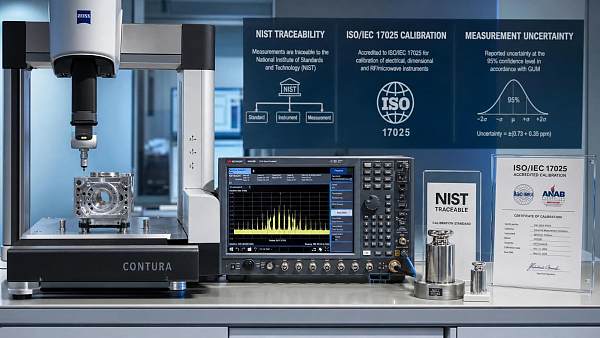
At the foundation is traceability to recognized national standards, especially through NIST-linked reference chains.
Then comes laboratory competence, commonly evaluated through ISO/IEC 17025.
Beyond that are sector-specific expectations from bodies such as IEEE, ANSI, ASTM, or internal customer specifications.
The result is a practical system for proving that a reading is reliable, comparable, and suitable for the decision it supports.
Accuracy is only one part of confidence
A device may perform within specification and still create compliance exposure if its calibration record is incomplete or its uncertainty statement is poorly defined.
That distinction is central to calibration and measurement standards USA.
The question is not just whether a value looks correct.
The real question is whether the measurement process can be repeated, traced, interpreted, and defended under review.
Why the topic has become more important
Tolerance windows are shrinking across many sectors.
Semiconductor packaging, aerospace assemblies, battery systems, high-speed communications hardware, and clean manufacturing all require tighter measurement discipline than before.
At the same time, audits are becoming more data-driven.
It is no longer enough to show that instruments were calibrated sometime last year.
Reviewers increasingly want to see uncertainty budgets, environmental records, digital data integrity, and evidence that methods match actual use conditions.
This is why calibration and measurement standards USA now influence procurement, qualification, maintenance planning, and supplier approval.
The shift from devices to measurement systems
A sensor, analyzer, CMM, vision system, or gas monitor rarely works in isolation.
It is part of a chain that includes fixtures, software, operators, reference artifacts, and environmental conditions.
Organizations such as G-IMS have helped sharpen this wider view by benchmarking instruments against standards and real operating demands.
That broader perspective is useful because failure often comes from the system around the instrument, not the instrument alone.
Where errors usually enter the picture
Most measurement risk does not start with dramatic equipment failure.
It usually starts with small mismatches between the standard, the method, and the application.
These issues explain why calibration and measurement standards USA should be treated as an operational discipline, not a paperwork exercise.
What deserves closer attention in real facilities
The standards question changes with the measurement task.
Still, several themes appear consistently across sectors.
Dimensional and 3D metrology
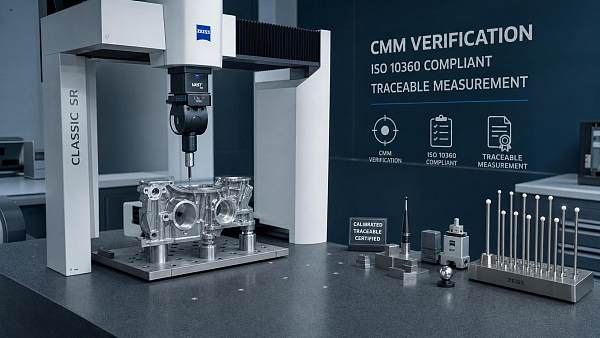
CMMs, laser scanners, and structured-light systems require more than periodic verification.
Probe configuration, artifact condition, thermal compensation, and part fixturing can all distort results.
Calibration and measurement standards USA matter here because small geometric deviations can affect downstream assembly and validation.
Electrical and high-frequency measurement
Oscilloscopes, power analyzers, spectrum analyzers, and RF test systems demand method control that matches operating frequency, load, and signal conditions.
A certificate alone says little if cable loss, connector wear, grounding, or shielding are unmanaged.
Vision, optics, and non-contact inspection
Resolution claims can be misleading when illumination, contrast, lens distortion, and algorithm settings vary between calibration and production.
This is where benchmark-oriented review, such as the approach used by G-IMS, becomes practical rather than theoretical.
Environmental and safety monitoring
Gas detectors, particulate monitors, temperature sensors, and humidity instruments often support both compliance and worker protection.
Drift, cross-sensitivity, response time, and field bump testing can matter as much as formal calibration.
How to evaluate a calibration program with more precision
A credible program connects instrument control to product and process risk.
It does not treat every device the same.
- Map each instrument to the decision it influences, including release, safety, troubleshooting, or trend monitoring.
- Review whether the calibration method reflects the actual operating range and measurement function.
- Check that certificates include traceability, uncertainty, pass-fail logic, and clear as-found or as-left results.
- Set intervals using stability and consequence, not calendar habit alone.
- Confirm software versions, access controls, and data retention practices.
- Investigate recurring out-of-tolerance events as process signals, not isolated administrative exceptions.
This kind of review makes calibration and measurement standards USA more useful in daily operations.
It shifts attention from certificate collection to measurement assurance.
How standards support procurement and system selection
Measurement equipment is often purchased on nominal specification, speed, or price.
That is rarely enough for high-consequence applications.
A better evaluation asks whether the supplier can support a compliant, traceable, and maintainable measurement lifecycle.
For that reason, calibration and measurement standards USA should influence supplier qualification, service contracts, spare strategy, and training plans.
This is also where independent technical repositories and comparative benchmarking add value.
G-IMS, for example, sits at the intersection of sensory hardware, standards alignment, and application-level interpretation.
That kind of context helps separate marketing claims from measurement performance that can actually be defended.
Practical next steps that improve confidence
The most useful starting point is not rewriting every procedure at once.
It is identifying where measurement uncertainty creates the highest operational consequence.
Focus first on instruments tied to safety-critical alarms, final release decisions, customer acceptance, or narrow-tolerance production steps.
Then compare current practice against the core expectations behind calibration and measurement standards USA.
Look for broken traceability, weak uncertainty treatment, unrealistic intervals, and gaps between calibration setup and real use.
Where systems are complex, external benchmarking can help validate assumptions before capital decisions or audit cycles.
The goal is straightforward: measurements that are trusted by operations, accepted by auditors, and strong enough to support precise action.
Recommended News
 Sep 29, 2026How water utilities can prepare sustainability reports for assuranceSustainability reporting for water utilities: learn to build assurance-ready metrics, controls, evidence, and governance that strengthen trust, compliance, and resilience.
 Sep 20, 2026How to choose sanitary ware that meets drinking water safety standardsSanitary ware for drinking water: learn how to verify certifications, wetted materials, hygiene design, and traceability for safer, compliant installations.
 Aug 21, 2026When do industrial boilers need low-NOx burners to meet emissions limitsIndustrial boilers may need low-NOx burners when stricter permits, fuel changes, or upgrades reduce compliance margin. Learn the key triggers before emissions risks cause downtime.
 Aug 14, 2026How advanced metrology standards affect measurement traceability and audit readinessadvanced metrology standards strengthen measurement traceability, improve audit readiness, and help QA teams defend every result with confidence.
 Aug 08, 2026How to Evaluate a Global Trade Platform for Supplier Reach and Compliance RiskGlobal trade platform evaluation starts with usable supplier reach and compliance clarity. Learn how to spot weak records, hidden logistics risks, and decision-ready supplier data.
 Jul 20, 2026High Voltage Cables: Key Selection Factors for Reliable Power ProjectsHighvoltagecables selection made practical: learn how to compare insulation, installation environment, compliance, and lifecycle cost for safer, more reliable power projects.
 Jul 15, 2026Environmental Sensor Systems for Continuous Compliance MonitoringEnvironmental Sensor Systems for continuous compliance monitoring across production, labs, and utilities—improve audit readiness, data reliability, and operational control.
 Jul 14, 2026Eco-Friendly Furniture: What Actually Affects Cost, Durability, and ComplianceEco-friendly furniture explained: compare real cost drivers, durability, certifications, and compliance proof to avoid greenwashing and choose smarter long-term value.
 Jul 12, 2026What CE Certification Means for Photonic Sensor System CompliancePhotonic sensor systems CE certified: learn what CE really covers, which compliance risks matter most, and how to verify claims before choosing industrial sensing equipment.
 Jul 10, 2026How to Evaluate a Cuplock Scaffolding Manufacturer for Safety and Lead TimeCuplock scaffolding manufacturer selection affects safety, quality, and delivery. Learn how to verify process control, load data, traceability, and realistic lead times.
 Jul 09, 2026Data Intelligence Protocols for Smart Factories: Key Standards to KnowData Intelligence Protocols for smart factories explained: discover OPC UA, MQTT, ISA-95, ISO/IEC 17025, and IEC 62443 to improve traceability, security, and quality decisions.
 Jul 06, 2026How Modular Building Wind Load Resistance Is CalculatedModular building wind load resistance explained clearly: learn how engineers calculate loads, verify connections, and use test-backed data to reduce risk and improve project confidence.
 Jul 05, 2026What CE Certified Measuring Equipment Really Covers Before You BuyCE certified measuring equipment may meet EU compliance rules, but what does it really cover? Learn how to verify safety, EMC, documents, and performance before you buy.
 Jul 04, 2026Life Sciences Measurement Trends in 2026: Where Quality Control Is TighteningLife sciences measurement trends for 2026 show why quality control is tightening fast. Explore key risks, data integrity demands, and practical steps to stay compliant and competitive.
 Jul 01, 2026Calibration and Measurement Standards USA: What Matters MostCalibration and measurement standards USA guide traceability, uncertainty, and audit-ready measurement control. Learn what protects quality, compliance, and confident decisions.
 Jul 01, 2026ISO 10360 Europe: Key Compliance Changes for 2026ISO 10360 Europe 2026 compliance changes will reshape CMM validation, traceability, software control, and audit readiness. See key risks, impacts, and practical steps to prepare.
 Jun 29, 2026Supplier Evaluation Checklist for Industrial Technology Sourcing in 2026Industrial Technology Sourcing supplier evaluation in 2026 demands more than price checks. Explore a practical checklist to reduce risk, verify compliance, and choose resilient suppliers with confidence.
 Jun 27, 2026First Aid Kits Wholesale: Cost, MOQ, and Compliance ChecklistFirst aid kits wholesale guide covering landed cost, MOQ, customization, and compliance. Compare suppliers smarter, reduce sourcing risk, and buy market-ready kits with confidence.
 Jun 26, 2026How to Evaluate a First Aid Kits Distributor for Compliance and Supply StabilityFirst aid kits distributor evaluation guide: learn how to verify compliance, traceability, refill control, and supply stability before choosing a safer, audit-ready partner.
 Jun 25, 2026Steel Rebar for Construction: Grades, Sizes, and Load PerformanceSteel rebar for construction explained: compare grades, sizes, tolerances, and load performance to choose safer, code-compliant reinforcement with greater long-term reliability.
 Jun 24, 2026How Import Data Reveals Supplier Risk and Price Shifts in 2026Import data reveals supplier risk, price shifts, and sourcing concentration in 2026. Discover early warning signals that help teams protect costs, continuity, and smarter supply decisions.
 Jun 23, 2026How to Evaluate an Outdoor Lithium Power Station Factory in 2026Outdoor lithium power station factory evaluation in 2026 starts with quality control, compliance, and test evidence. Discover how to compare suppliers and reduce sourcing risk.
 Jun 22, 2026Organic Chemicals: Key Purity Risks and Compliance ChecksOrganic chemicals can pass on paper yet fail in practice. Learn the key purity risks, compliance checks, and supplier review points needed to protect quality, safety, and process stability.
 Jun 19, 2026Electric Vehicle Parts Trends Shaping 2026 Supply PlanningElectric vehicle parts trends for 2026 are reshaping supply planning. Discover how validation, traceability, testing, and resilient sourcing can reduce risk and improve EV program performance.