Organic Chemicals: Key Purity Risks and Compliance Checks
Time
Click Count
Why do purity risks in organic chemicals deserve closer attention?
In many production lines, organic chemicals look compliant on paper but behave differently in use.
That gap usually comes from hidden impurities, weak specifications, or incomplete verification.
For sectors handling coatings, solvents, resins, electronics, cleaning agents, or intermediates, small purity shifts can trigger larger operational problems.
A trace of moisture may reduce stability. Residual catalysts may change reactivity. Uncontrolled volatiles may affect worker exposure and downstream curing.
This is why organic chemicals are not assessed only by label grade or supplier reputation.
They need a control logic that links purity data, process sensitivity, and compliance evidence.
In practice, the most reliable approach combines incoming inspection, application-based acceptance criteria, and traceable measurement methods.
That measurement-first mindset aligns with the broader G-IMS view of turning sensory data into actionable quality decisions.
What actually counts as a purity risk in organic chemicals?
Purity risk is not limited to one bad contaminant.
It includes any unintended component or uncontrolled variation that can change safety, performance, storage behavior, or legal status.
Some risks are obvious, such as foreign particles or off-color material.
More common issues are less visible and therefore harder to manage.
- Residual solvents that remain above internal limits or customer specifications.
- Water content that alters viscosity, reaction yield, or shelf life.
- Unreacted monomers and by-products that affect toxicity or odor.
- Metal ions introduced by equipment wear, storage tanks, or catalysts.
- Cross-contamination between grades during transfer, packaging, or cleaning.
- Stabilizer imbalance that changes oxidation resistance or transport classification.
Needless to say, the same impurity level does not carry the same risk in every application.
A cleaning solvent for general maintenance may tolerate more variation than a chemical used near optical assemblies or high-frequency electronics.
That is why purity checks for organic chemicals should always reflect end-use sensitivity, not just generic commodity grading.
Where do these contamination and compliance gaps usually begin?
Most failures do not start in the lab. They start much earlier.
A supplier may use a valid test method, but the reporting threshold may be too broad for the actual process window.
In other cases, the certificate of analysis confirms purity percentage, yet omits critical trace markers.
Packaging and logistics also matter more than many teams expect.
Organic chemicals can absorb moisture, leach container residues, or degrade under heat and light.
Even a well-made batch can become nonconforming after poor storage discipline.
Another weak point is specification translation.
A purchasing document may state “high purity,” while production really needs limits for halides, non-volatile residue, peroxide value, or specific isomer ratios.
When that detail is missing, incoming approval becomes a guess dressed as a procedure.
The table below summarizes where organic chemicals often fail compliance checks and what should be reviewed first.
Which compliance checks matter most before release or use?
Not every batch needs an exhaustive test panel, but certain checks carry high practical value.
The smarter approach is to build a release package around critical risk points.
Identity and composition come first
Before debating fine tolerances, confirm the material is exactly what the label claims.
GC, GC-MS, HPLC, FTIR, and NMR can support this, depending on the chemistry involved.
For blended organic chemicals, composition drift may matter more than headline purity.
Trace impurities need method-fit review
A result is only useful if the detection limit fits the decision being made.
If the process fails at 50 ppm chloride, a method reporting less than 100 ppm is not enough.
This is a frequent blind spot in organic chemicals control programs.
Environmental and safety attributes should not be separated
Flash point, VOC profile, peroxide formation tendency, and hazardous residue status can all shift with impurity changes.
A batch may pass composition review but still create transport, ventilation, or waste handling issues.
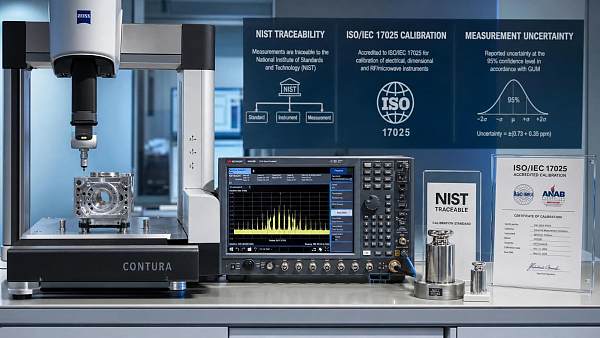
Measurement traceability supports defensible decisions
In regulated or high-precision operations, test numbers alone are not enough.
You also need calibration control, documented uncertainty, and auditable method execution.
This is where benchmark-driven frameworks, such as those emphasized by G-IMS, become especially useful.
They connect sensor capability, laboratory practice, and regulatory interpretation into one operational standard.
How can you judge whether a supplier specification is truly sufficient?
A strong specification answers more than “What is the purity?”
It clarifies what is controlled, how it is measured, and why the limit matters.
When reviewing organic chemicals, a few questions help separate usable specifications from marketing language.
- Does the document define critical impurities individually, not only total purity?
- Are test methods named, version-controlled, and suitable for the required detection range?
- Is there a difference between typical values and guaranteed acceptance limits?
- Are storage conditions, shelf life, and retest instructions clearly stated?
- Does the COA reflect batch-specific data rather than generic specification text?
- Are change notifications required for raw materials, process routes, or packaging components?
More importantly, specification review should include actual use trials when process sensitivity is high.
Two organic chemicals may both meet stated limits, yet only one performs consistently in production.
That difference often appears only when analytical data is read together with operational evidence.
What mistakes cause purity checks to look complete while risk remains?
One common mistake is treating all lots with the same confidence level.
New suppliers, reformulated products, and materials with seasonal variability usually need tighter scrutiny.
Another mistake is relying on a single indicator, such as assay percentage.
For many organic chemicals, the failure mode sits in what is not visible in that top-line number.
There is also a practical misunderstanding around compliance ownership.
Documentation, safety review, and laboratory release are often managed separately, which creates decision gaps.
A cleaner process is to align them through a short review matrix.
So what should be done next if organic chemicals are part of a critical process?
A workable next step is to map the few purity attributes that truly affect performance, safety, or compliance.
Then compare those attributes against current specifications, laboratory methods, and supplier evidence.
If the limits are vague, or the methods are not sensitive enough, the risk is already visible.
Organic chemicals rarely fail because teams ignore quality completely.
They fail because control points are present, but not connected.
A stronger program links specification design, traceable measurement, storage discipline, and release decisions.
That is also the most practical way to reduce rework, audit exposure, and unexpected process instability.
Where precision requirements are high, using benchmark-based references from institutions such as G-IMS can help validate whether current compliance checks are truly fit for purpose.
From there, the next move is clear: review the specification, verify the method, and test organic chemicals under real operating conditions before risk becomes a costly event.
Recommended News
 Sep 20, 2026How to choose sanitary ware that meets drinking water safety standardsSanitary ware for drinking water: learn how to verify certifications, wetted materials, hygiene design, and traceability for safer, compliant installations.
 Aug 21, 2026When do industrial boilers need low-NOx burners to meet emissions limitsIndustrial boilers may need low-NOx burners when stricter permits, fuel changes, or upgrades reduce compliance margin. Learn the key triggers before emissions risks cause downtime.
 Aug 14, 2026How advanced metrology standards affect measurement traceability and audit readinessadvanced metrology standards strengthen measurement traceability, improve audit readiness, and help QA teams defend every result with confidence.
 Aug 08, 2026How to Evaluate a Global Trade Platform for Supplier Reach and Compliance RiskGlobal trade platform evaluation starts with usable supplier reach and compliance clarity. Learn how to spot weak records, hidden logistics risks, and decision-ready supplier data.
 Jul 20, 2026High Voltage Cables: Key Selection Factors for Reliable Power ProjectsHighvoltagecables selection made practical: learn how to compare insulation, installation environment, compliance, and lifecycle cost for safer, more reliable power projects.
 Jul 15, 2026Environmental Sensor Systems for Continuous Compliance MonitoringEnvironmental Sensor Systems for continuous compliance monitoring across production, labs, and utilities—improve audit readiness, data reliability, and operational control.
 Jul 14, 2026Eco-Friendly Furniture: What Actually Affects Cost, Durability, and ComplianceEco-friendly furniture explained: compare real cost drivers, durability, certifications, and compliance proof to avoid greenwashing and choose smarter long-term value.
 Jul 12, 2026What CE Certification Means for Photonic Sensor System CompliancePhotonic sensor systems CE certified: learn what CE really covers, which compliance risks matter most, and how to verify claims before choosing industrial sensing equipment.
 Jul 10, 2026How to Evaluate a Cuplock Scaffolding Manufacturer for Safety and Lead TimeCuplock scaffolding manufacturer selection affects safety, quality, and delivery. Learn how to verify process control, load data, traceability, and realistic lead times.
 Jul 09, 2026Data Intelligence Protocols for Smart Factories: Key Standards to KnowData Intelligence Protocols for smart factories explained: discover OPC UA, MQTT, ISA-95, ISO/IEC 17025, and IEC 62443 to improve traceability, security, and quality decisions.
 Jul 06, 2026How Modular Building Wind Load Resistance Is CalculatedModular building wind load resistance explained clearly: learn how engineers calculate loads, verify connections, and use test-backed data to reduce risk and improve project confidence.
 Jul 05, 2026What CE Certified Measuring Equipment Really Covers Before You BuyCE certified measuring equipment may meet EU compliance rules, but what does it really cover? Learn how to verify safety, EMC, documents, and performance before you buy.
 Jul 04, 2026Life Sciences Measurement Trends in 2026: Where Quality Control Is TighteningLife sciences measurement trends for 2026 show why quality control is tightening fast. Explore key risks, data integrity demands, and practical steps to stay compliant and competitive.
 Jul 01, 2026Calibration and Measurement Standards USA: What Matters MostCalibration and measurement standards USA guide traceability, uncertainty, and audit-ready measurement control. Learn what protects quality, compliance, and confident decisions.
 Jul 01, 2026ISO 10360 Europe: Key Compliance Changes for 2026ISO 10360 Europe 2026 compliance changes will reshape CMM validation, traceability, software control, and audit readiness. See key risks, impacts, and practical steps to prepare.
 Jun 29, 2026Supplier Evaluation Checklist for Industrial Technology Sourcing in 2026Industrial Technology Sourcing supplier evaluation in 2026 demands more than price checks. Explore a practical checklist to reduce risk, verify compliance, and choose resilient suppliers with confidence.
 Jun 27, 2026First Aid Kits Wholesale: Cost, MOQ, and Compliance ChecklistFirst aid kits wholesale guide covering landed cost, MOQ, customization, and compliance. Compare suppliers smarter, reduce sourcing risk, and buy market-ready kits with confidence.
 Jun 26, 2026How to Evaluate a First Aid Kits Distributor for Compliance and Supply StabilityFirst aid kits distributor evaluation guide: learn how to verify compliance, traceability, refill control, and supply stability before choosing a safer, audit-ready partner.
 Jun 25, 2026Steel Rebar for Construction: Grades, Sizes, and Load PerformanceSteel rebar for construction explained: compare grades, sizes, tolerances, and load performance to choose safer, code-compliant reinforcement with greater long-term reliability.
 Jun 24, 2026How Import Data Reveals Supplier Risk and Price Shifts in 2026Import data reveals supplier risk, price shifts, and sourcing concentration in 2026. Discover early warning signals that help teams protect costs, continuity, and smarter supply decisions.
 Jun 23, 2026How to Evaluate an Outdoor Lithium Power Station Factory in 2026Outdoor lithium power station factory evaluation in 2026 starts with quality control, compliance, and test evidence. Discover how to compare suppliers and reduce sourcing risk.
 Jun 22, 2026Organic Chemicals: Key Purity Risks and Compliance ChecksOrganic chemicals can pass on paper yet fail in practice. Learn the key purity risks, compliance checks, and supplier review points needed to protect quality, safety, and process stability.
 Jun 19, 2026Electric Vehicle Parts Trends Shaping 2026 Supply PlanningElectric vehicle parts trends for 2026 are reshaping supply planning. Discover how validation, traceability, testing, and resilient sourcing can reduce risk and improve EV program performance.
 Jun 18, 2026Organic Chemicals: How to Compare Purity, Stability, and ComplianceOrganic chemicals buying guide: compare purity, stability, and compliance to reduce risk, improve quality, and choose suppliers with more confidence.