Zero Defect Manufacturing with Vision Inspection: 7 Common Mistakes
Time
Click Count
For quality and safety teams, knowing How to Achieve Zero Defect Manufacturing with Vision Inspection is no longer optional—it is a competitive necessity.
Yet many factories still miss critical defects because of preventable setup, calibration, and data-integration errors.
This article examines seven common mistakes, the signals behind them, and practical ways to strengthen inspection reliability across mixed industrial environments.
Why zero-defect expectations are rising faster than legacy inspection practices
Across general industry, defect tolerance is shrinking while product complexity is increasing.
Assemblies now combine tighter tolerances, shorter product cycles, traceability requirements, and broader supplier networks.
That shift changes How to Achieve Zero Defect Manufacturing with Vision Inspection from a local equipment question into a system-level capability.
A camera alone does not create zero defects.
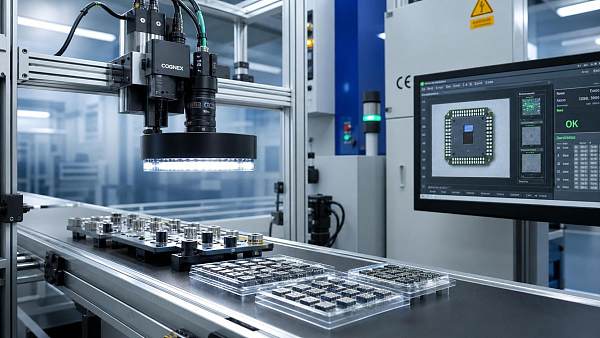
Stable optics, calibrated measurement logic, controlled lighting, validated algorithms, and production feedback loops are all required.
When one layer is weak, false rejects rise, escapes multiply, and confidence in automation declines.
The strongest trend signals behind How to Achieve Zero Defect Manufacturing with Vision Inspection
Several trend signals explain why vision inspection strategies are being re-evaluated.
These signals show that How to Achieve Zero Defect Manufacturing with Vision Inspection depends on technical discipline, not only hardware investment.
Seven mistakes that quietly weaken zero-defect manufacturing performance
1. Treating vision inspection as a final checkpoint only
Many lines still place vision at the end of production.
This catches defects late, after material, labor, and machine time are already consumed.
How to Achieve Zero Defect Manufacturing with Vision Inspection starts with earlier detection at incoming, in-process, and final stages.
2. Ignoring lighting as a controlled measurement variable
Lighting instability remains one of the most common root causes of inconsistent results.
Glare, shadows, color shift, and ambient variation can hide burrs, scratches, print errors, or contamination.
Zero-defect manufacturing with vision inspection requires documented lighting geometry, intensity limits, and replacement intervals.
3. Using insufficient calibration and weak traceability
A vision system may detect contrast changes well but still fail as a measurement system.
Without calibrated scaling, lens distortion correction, and verification against reference artifacts, dimensions can drift unnoticed.
This is especially risky where ISO-aligned quality evidence is required.
4. Training AI models on poor or narrow datasets
AI improves speed, but weak training data creates fragile inspection logic.
If images lack variation in orientation, surface finish, batch change, and actual defect types, classification confidence becomes misleading.
How to Achieve Zero Defect Manufacturing with Vision Inspection requires representative datasets and periodic retraining controls.
5. Failing to connect inspection results to process correction
Inspection that only labels pass or fail leaves value on the table.
When defect codes do not trigger machine adjustment, tooling checks, or operator alerts, recurring errors continue too long.
A true zero-defect approach links image evidence to root-cause action.
6. Overlooking part presentation and motion stability
Even a premium vision platform fails when parts arrive misaligned, vibrating, or inconsistently spaced.
Motion blur, focus variation, and orientation errors often appear as software problems but begin as mechanical problems.
How to Achieve Zero Defect Manufacturing with Vision Inspection depends on fixture design and transport repeatability.
7. Measuring system output without measuring system capability
Some sites track reject rate but not inspection capability.
They miss false accept rate, false reject rate, repeatability, reproducibility, and long-term drift.
That makes it impossible to judge whether the system truly supports How to Achieve Zero Defect Manufacturing with Vision Inspection.
Why these mistakes are increasing in modern production environments
The seven mistakes are not random.
They grow from broader operational changes affecting general industry.
- Shorter launches reduce validation time.
- Mixed suppliers increase variation in materials and finishes.
- Smaller features challenge conventional optics.
- Digitalization creates more data but not always better decisions.
- AI deployment often outruns governance and metrology discipline.
This is why How to Achieve Zero Defect Manufacturing with Vision Inspection now requires cross-functional alignment between quality, automation, optics, and data systems.
Where the business impact appears first
Weak inspection performance rarely stays inside the inspection cell.
It affects yield, delivery reliability, complaint rates, warranty exposure, and engineering confidence in production data.
That is why How to Achieve Zero Defect Manufacturing with Vision Inspection should be treated as a risk-reduction framework, not just an automation upgrade.
What deserves the closest attention in the next upgrade cycle
The most effective improvement priorities are usually straightforward.
- Map defect modes by process step, not only by final failure.
- Validate optics, lighting, and calibration before tuning algorithms.
- Define traceable golden samples and rejection boundaries.
- Measure false accepts and false rejects separately.
- Build structured defect libraries for AI and rules-based inspection.
- Connect inspection outputs to maintenance and process-control actions.
- Review capability regularly against changing materials and variants.
These priorities make How to Achieve Zero Defect Manufacturing with Vision Inspection more repeatable across product families and sites.
A practical decision path for stronger zero-defect vision inspection
- Audit current escapes, false rejects, and unknown defect categories.
- Check whether lighting, mechanics, and calibration are documented and controlled.
- Identify where in-process inspection can prevent waste earlier.
- Verify data flow into MES, SPC, maintenance, or alert systems.
- Run capability studies before expanding AI or adding more cameras.
- Reassess performance whenever product design or supplier input changes.
Following this path helps convert vision inspection from passive screening into active process intelligence.
In practice, How to Achieve Zero Defect Manufacturing with Vision Inspection depends on consistency, traceability, and response speed more than on headline specifications.
The next move toward measurable zero-defect progress
Start with one line, one defect family, and one measurable improvement target.
Then standardize calibration, image conditions, defect labeling, and escalation logic before scaling wider.
That disciplined approach is the most reliable answer to How to Achieve Zero Defect Manufacturing with Vision Inspection in complex industrial operations.
When inspection data becomes trusted operational evidence, zero-defect manufacturing moves from aspiration to controlled reality.
Recommended News
 Oct 01, 2026What drives PPE price differences between suppliers?PPE price differences explained: compare materials, certifications, quality controls, logistics, and supplier risk to choose reliable protection and better value.
 Jul 12, 2026How to Vet a Smart Home Devices Wholesale Supplier in ChinaSmart home devices wholesale supplier in China: learn how to verify quality, certifications, lead times, and factory capability before ordering. Avoid costly sourcing risks.
 Jul 08, 2026Vision Inspection Systems Europe: Key Compliance and Performance TrendsVision Inspection Systems Europe is redefining quality control with stronger compliance, traceability, and reliable performance. Explore key trends shaping smarter, audit-ready manufacturing.
 Jul 06, 2026Smart Home Devices Worth Buying for Lower Energy UseSmart home devices can cut energy waste and lower utility bills. Discover the best picks—from thermostats to smart plugs and lighting—to save money with less effort.
 Jun 24, 2026UV Nail Lamps: Key Safety and Curing Factors Before You BuyUVnaillamps buying guide: compare wavelength, wattage, LED layout, and safety features to avoid under-curing, reduce heat spikes, and choose a lamp that delivers reliable salon-like results.
 Jun 23, 2026IP Cameras for Business Security: Resolution, Storage, and Blind SpotsIPcameras for business security: learn how resolution, storage, and blind spot control impact evidence quality, retention, and site coverage before you upgrade.
 Jun 08, 2026Portable Lithium Battery Storage Design: Key Safety and Runtime Trade-OffsLithium battery storage portable design explained: compare safety, runtime, thermal control, and real-world reliability to choose a portable power system that performs with confidence.
 Jun 03, 2026Industrial Hard Hats: What to Check Before Field Deploymentindustrialhardhats must be checked before field deployment. Learn key inspection steps for shell integrity, fit, certification, storage, and traceable safety control.
 Jun 01, 2026Baby Monitors with Camera: Privacy and Safety Features Worth Checkingbabymonitorswithcamera guide: discover key privacy, encryption, app security, night vision, and safety features to choose a smarter baby monitor with confidence.
 May 22, 2026Zero Defect Manufacturing with Vision Inspection: 7 Common MistakesHow to Achieve Zero Defect Manufacturing with Vision Inspection: discover 7 common mistakes, practical fixes, and proven ways to improve quality, traceability, and production confidence.
 May 20, 2026Non Contact Inspection for Fragile Parts: Key TradeoffsNon Contact Inspection for fragile parts: explore the key tradeoffs in accuracy, speed, surface response, and validation to choose a safer, smarter quality strategy.
 May 16, 20263D Profile Projector Factory Comparison for Faster First-Article Inspection3d profile projector factory comparison for faster first-article inspection. Compare image clarity, stage stability, software, calibration, and support to choose a supplier that boosts accuracy and uptime.
 May 12, 2026Non Contact Inspection: When It Beats Touch ProbingNon Contact Inspection beats touch probing when speed, surface protection, and full-field accuracy matter. See when it improves yield, repeatability, and line efficiency.
 May 06, 20263D Profile Projector Factory Checklist for Long-Term Service and Spare Parts3d profile projector factory checklist for long-term service, spare parts, and calibration support. Learn what to verify before buying to reduce downtime and protect uptime.
 May 02, 2026When Non Contact Inspection Makes More Sense Than Touch ProbingNon Contact Inspection makes sense when parts are delicate, geometries are complex, or speed matters. Learn when it outperforms touch probing and supports faster, lower-risk quality decisions.