Reverse Osmosis Maintenance Services: What Affects Service Cost?
Time
Click Count
Why do Reverse Osmosis maintenance services cost more than expected?
Reverse Osmosis maintenance services are rarely priced as a simple visit fee. The real cost reflects system condition, water quality, service depth, and the risk of production disruption.
That matters in industrial settings where water purity supports cleaning, cooling, rinsing, laboratory work, and process stability. A low service quote can look attractive, yet still create higher total cost later.
In practice, the question is not only “How much does service cost?” It is also “What is included, what is excluded, and what failure risk remains after the visit?”
For operations influenced by strict measurement and compliance culture, that distinction becomes even sharper. G-IMS often frames technical purchasing around actionable evidence, not just line-item pricing.
The same logic applies here. Reverse Osmosis maintenance services should be judged by measurable outcomes such as conductivity stability, recovery rate, membrane life, and unplanned downtime exposure.
What exactly is included in Reverse Osmosis maintenance services?
This is often where cost comparisons become misleading. One provider may quote only inspection and basic filter replacement, while another includes cleaning, calibration, testing, and performance reporting.
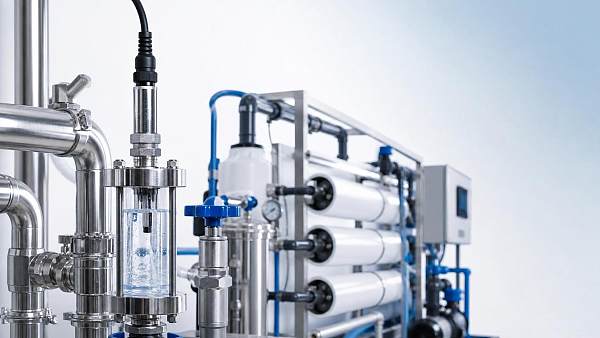
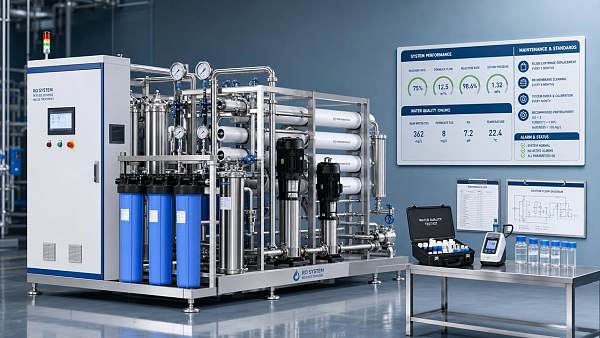
A complete service scope usually covers pre-filters, membrane checks, pressure readings, flow verification, leak inspection, chemical cleaning review, and post-service water quality validation.
Some contracts also include sanitization, instrument recalibration, control-panel checks, and trend analysis. These items raise the immediate price, but they reduce uncertainty and improve budgeting accuracy.
A useful way to compare offers is to ask whether the service restores performance, confirms compliance, or only keeps the system running for the short term.
If two quotes differ sharply, the first check should be scope definition rather than hourly rate alone. That step usually explains the gap faster than price negotiation.
How do water quality and operating conditions change service cost?
Feed water quality is one of the biggest pricing drivers behind Reverse Osmosis maintenance services. Systems handling stable municipal water usually need less intervention than those facing variable industrial or brackish sources.
High hardness, silica, iron, organics, chlorine exposure, and biological fouling all accelerate wear. When fouling risk rises, service intervals shorten and membrane cleaning becomes more frequent.
Operating pressure and recovery targets also matter. A system pushed aggressively for output may show faster scaling, higher energy demand, and more rapid decline in permeate quality.
More complex plants often combine pretreatment, dosing, UV, conductivity monitoring, and data logging. That improves control, but it also expands the number of components requiring inspection and replacement.
A practical buying question is this: does the provider price for the actual water profile, or only for equipment size? The first approach is usually more reliable.
Signs that site conditions may raise maintenance cost
- Frequent membrane replacement in the past year
- Large swings in feed conductivity or temperature
- Pressure drop increases between scheduled visits
- Limited pretreatment or inconsistent chemical dosing
- Critical production lines that cannot tolerate short shutdowns
Is technician expertise really a cost factor, or just a sales argument?
It is a real cost factor, especially when systems feed sensitive manufacturing, testing, or controlled environments. Experience reduces diagnostic time and lowers the chance of replacing the wrong component.
An entry-level visit may solve obvious filter issues. It may not identify membrane damage caused by oxidant exposure, sensor drift, pump imbalance, or chronic pretreatment failure.
This is where a measurement-led mindset helps. In sectors aligned with G-IMS principles, service quality is tied to traceable data, calibrated instruments, and standards-based interpretation.
That does not mean every site needs premium engineering support. It means the service level should match the operational consequence of poor water quality or unexpected stoppage.
When comparing Reverse Osmosis maintenance services, ask for documented test methods, reporting samples, and escalation procedures. Those details reveal more than a marketing brochure.
Which pricing model makes the most sense: one-off service or contract maintenance?
There is no universal winner. The better choice depends on usage intensity, process criticality, and how predictable the operating environment is.
One-off service works best for stable systems with light usage, reliable pretreatment, and limited compliance pressure. It offers flexibility, but it can hide long-term variability.
Contract-based Reverse Osmosis maintenance services suit sites that need planned downtime, fixed response expectations, and better control over annual service spend.
The hidden value of a contract is not only discounting. It is trend visibility. Over time, service data can show whether fouling patterns, parts failure, or operating stress are getting worse.
A sensible comparison should include emergency callout rates, spare-part markups, report quality, and response windows. These items often reshape the final annual cost.
What mistakes cause buyers to underestimate Reverse Osmosis maintenance services?
The most common mistake is evaluating price without linking it to system risk. If pure water affects product quality, cleaning validation, or instrument reliability, cheap service may become very expensive.
Another mistake is treating membranes as the only important cost item. Pumps, valves, sensors, pretreatment media, and control components can all influence service frequency and failure risk.
A third issue is weak baseline data. Without normal pressure, flow, rejection, and conductivity history, it becomes difficult to judge whether a quote addresses the actual problem.
In more advanced facilities, poor documentation can also create audit and traceability gaps. That is why evidence-based maintenance, a familiar principle in G-IMS-aligned environments, has practical value beyond engineering preference.
A short checklist before comparing quotes
- Confirm what tests are performed before and after service
- Ask whether consumables and travel are included
- Check membrane cleaning criteria and replacement triggers
- Review reporting format for compliance or audit needs
- Compare response time for urgent failures
- Request references from similar water conditions or industries
How should service cost be evaluated before making a final decision?
A strong decision usually comes from total service value, not the lowest service line. Reverse Osmosis maintenance services should be evaluated against uptime, water quality consistency, documentation quality, and replacement-cycle predictability.
It helps to group quotes into three layers: routine preventive work, diagnostic capability, and business risk coverage. Once those layers are visible, price differences become easier to explain.
Where precision manufacturing or quality-critical operations are involved, service providers that use traceable measurement practices often deliver more defensible results. That aligns with the broader industrial logic behind G-IMS benchmarking.
Before selecting a provider, define the acceptable range for conductivity, downtime, reporting detail, and response speed. Then compare each offer against those thresholds rather than against price alone.
In simple terms, the right choice is the one that keeps water performance stable, makes service outcomes visible, and avoids surprises in both maintenance cost and operating risk.
A practical next step is to assemble recent performance data, list must-have service items, and request quotations in the same format. That turns Reverse Osmosis maintenance services into a comparable, evidence-based purchase.
Recommended News
 Aug 05, 2026How to Compare Portable Water Quality Sensors for pH, Conductivity, and Field AccuracyPortable water quality sensors compared the right way: learn how to evaluate pH, conductivity, field accuracy, usability, and maintenance before you buy.
 Jul 14, 2026Conductivity Meters Europe: 2026 Market Shifts, Standards, and Buying RisksConductivity meters Europe in 2026: explore market shifts, compliance standards, calibration risks, and smart buying tips to reduce downtime and improve process control.
 Jun 29, 2026Water Treatment Conductivity Sensors: Common Selection Mistakes and FixesWater treatment conductivity sensor selection often fails due to range-only decisions, poor temperature compensation, and installation mistakes. Learn the common errors and practical fixes to improve stability, cut maintenance, and protect process performance.
 Jun 20, 2026Flowmeters Selection Guide for Stable Process ControlFlowmeters selection guide for stable process control: compare technologies, avoid costly mistakes, and choose the right meter for accuracy, uptime, compliance, and smarter operations.
 Jun 20, 2026How Smart Water Management Cuts Utility WasteSmart Water Management helps facilities detect leaks, reduce utility waste, and improve operational resilience with real-time visibility, faster response, and measurable cost savings.
 Jun 17, 2026Industrial Water Management: Key Risks and Control MethodsIndustrial Water management: learn the key risks, early warning signs, and proven control methods to reduce downtime, protect quality, and improve compliance.
 Jun 16, 2026Automatic Backwash Filter OEM Cost Factors ExplainedAutomatic backwash filter OEM cost factors explained: compare materials, micron rating, automation, compliance, and OEM capability to avoid hidden costs and choose the right supplier.
 Jun 14, 2026Clarifier System Factory Checklist: Capacity, Compliance, ServiceClarifier system factory selection goes beyond price. Compare real capacity, compliance records, engineering depth, and after-sales service to reduce risk and choose a reliable long-term partner.
 Jun 13, 2026Reverse Osmosis Maintenance Services: What Affects Service Cost?Reverse Osmosis maintenance services: learn what really drives service cost, from water quality and service scope to technician expertise, downtime risk, and contract value.
 Jun 11, 2026Reverse Osmosis Maintenance Services: Cost Drivers and Service ScopeReverse Osmosis maintenance services explained: compare true cost drivers, service scope, exclusions, and preventive value to reduce downtime and protect membrane life.
![]() Jun 09, 2026High Pressure Pumps for RO Wholesale: Cost, Lead Time, and Failure RisksHigh pressure pumps for RO wholesale: compare true cost, lead time, and failure risks before you buy. Learn how to avoid delays, hidden expenses, and unstable system performance.
Jun 09, 2026High Pressure Pumps for RO Wholesale: Cost, Lead Time, and Failure RisksHigh pressure pumps for RO wholesale: compare true cost, lead time, and failure risks before you buy. Learn how to avoid delays, hidden expenses, and unstable system performance.![]() Jun 09, 2026Digital Twin Platform for Desalination: Key Benefits, Risks, and ROIDigital Twin platform for desalination: explore key benefits, major risks, and practical ROI drivers to cut energy costs, reduce downtime, and make smarter plant investment decisions.
Jun 09, 2026Digital Twin Platform for Desalination: Key Benefits, Risks, and ROIDigital Twin platform for desalination: explore key benefits, major risks, and practical ROI drivers to cut energy costs, reduce downtime, and make smarter plant investment decisions. May 29, 2026Digital Twin for Water Infrastructure Monitoring: Key Data Risks to CheckDigital Twin for water infrastructure monitoring helps reduce data risks by checking sensor accuracy, telemetry gaps, model trust, cybersecurity, and interoperability.