Industrial Water Management: Key Risks and Control Methods
Time
Click Count
Industrial Water Management: Key Risks and Control Methods
Industrial Water management is now a daily operating issue, not a background utility topic.
Water touches product quality, asset life, worker safety, and environmental compliance at the same time.
When control is weak, problems spread quickly across cooling loops, boilers, rinsing lines, and wastewater discharge points.
That is why effective Industrial Water management needs both field discipline and reliable measurement.
From a practical standpoint, teams need to detect risk early, respond fast, and document every control action clearly.
This article explains the main risks, proven control methods, and monitoring priorities that support stable production and stronger quality outcomes.
Why Industrial Water Management Matters More Than Before
In many facilities, water quality shifts faster than legacy inspection routines can catch.
Source water variability, tighter discharge rules, and more sensitive equipment make Industrial Water management harder than it was five years ago.
A small conductivity drift can affect rinse performance.
A hidden microbiological issue can trigger odor, fouling, or product rejection.
In closed systems, unnoticed oxygen ingress may accelerate corrosion long before visible damage appears.
This also means Industrial Water management must move from periodic checking to risk-based monitoring and response.
The Four Risks That Cause Most Water Failures
1. Contamination
Contamination is one of the most common Industrial Water management failures.
It may involve particles, oil, heavy metals, microbes, or chemical carryover from upstream processes.
In production settings, contamination can stain surfaces, change chemical reactions, or compromise cleaning efficiency.
For quality control, the real challenge is that contamination often starts small and spreads before alarms are triggered.
2. Corrosion
Corrosion damages pipes, valves, heat exchangers, tanks, and instrument fittings.
It is often driven by pH imbalance, dissolved oxygen, chlorides, low inhibitor levels, or galvanic conditions.
In Industrial Water management, corrosion is expensive because it causes both unplanned downtime and long-term asset loss.
It can also create safety issues if weakened components fail under pressure or temperature stress.
3. Scaling
Scaling reduces heat transfer, increases energy use, and narrows flow paths.
Hardness, silica, alkalinity, and temperature shifts are common drivers.
Even a thin scale layer can reduce process efficiency significantly.
In Industrial Water management, scaling is often underestimated because it builds gradually and may look harmless at first.
4. Compliance Failure
Regulatory risk is rising across discharge control, chemical treatment, worker exposure, and reporting accuracy.
Poor records, missing calibration, or inconsistent sampling can turn a manageable issue into a formal violation.
Strong Industrial Water management now depends on traceable data, clear thresholds, and defensible response procedures.
Early Warning Signs Teams Should Not Ignore
Most serious water issues do not begin with a major failure.
They begin with weak signals that get dismissed as normal variation.
Useful warning signs include:
- Repeated pH drift outside the usual operating band
- Rising conductivity without a planned process change
- Higher differential pressure across filters or exchangers
- Discoloration, odor, foam, or visible suspended solids
- Faster chemical consumption than the historical baseline
- More frequent nozzle blockage or rinse inconsistency
- Unexpected deviations in corrosion coupon or sensor readings
In day-to-day Industrial Water management, these patterns matter more than isolated numbers viewed without context.
Control Methods That Work in Real Operations
Build a risk map by water use
Start by separating water systems by function, not by habit.
Cooling water, boiler feedwater, process rinse water, and wastewater need different limits and control logic.
This makes Industrial Water management more precise and prevents one generic standard from hiding real risk.
Define control points, not just test points
A useful control point is tied to action.
If conductivity rises, what valve changes, chemical adjustments, or inspections follow immediately?
Good Industrial Water management links every critical measurement to a named response, owner, and time limit.
Use layered treatment
Single-point treatment rarely covers all risks.
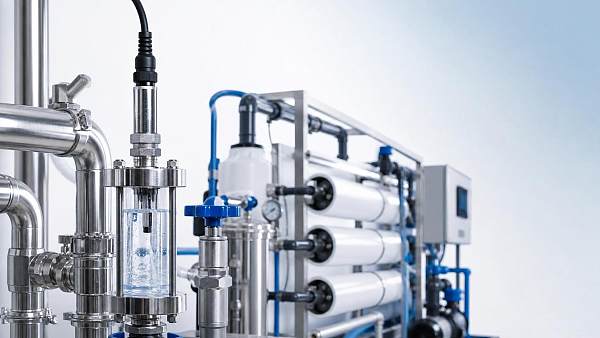
Depending on the process, layered treatment may combine filtration, softening, reverse osmosis, deionization, dosing, and disinfection.
The right Industrial Water management strategy matches treatment depth to process sensitivity and failure cost.
Control chemistry with discipline
Chemical treatment only works when dosage, mixing, retention time, and verification stay aligned.
Overdosing creates waste and secondary risk.
Underdosing leaves corrosion, scale, or biological growth uncontrolled, which weakens Industrial Water management quickly.
Monitoring Strategy: What to Measure and Why
Measurement quality is the backbone of Industrial Water management.
Without dependable data, teams are only reacting to symptoms.
Core parameters usually include:
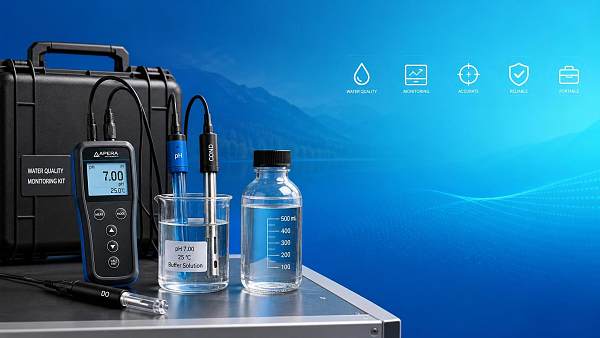
- pH for corrosion balance and process stability
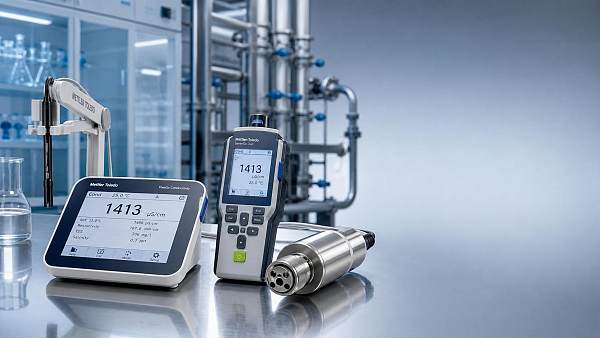
- Conductivity or resistivity for ionic contamination control
- Turbidity or particle load for filtration and cleanliness status
- Dissolved oxygen for corrosion risk in closed systems
- Hardness, alkalinity, and silica for scaling prediction
- ORP or disinfectant residual for microbial control
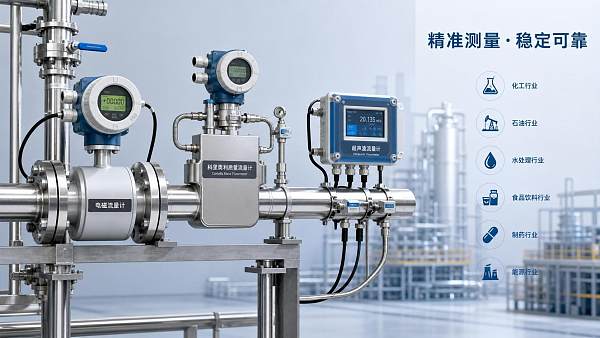
- Flow, pressure, and temperature for system performance context
In advanced Industrial Water management, online sensors and lab checks should support each other.
Online monitoring gives speed.
Laboratory verification gives confidence, calibration discipline, and defensible records for audits or customer reviews.
How Better Measurement Improves Control
This is where technical benchmarking becomes valuable.
Organizations such as G-IMS focus on the link between sensing hardware, reliable measurement, and actionable industrial decisions.
For Industrial Water management, that link matters because poor sensors create false confidence.
A drifted probe, weak calibration routine, or badly placed analyzer can hide a real process shift.
More reliable sensing supports earlier intervention, tighter process windows, and stronger alignment with standards such as ISO/IEC 17025 where applicable.
A Practical Response Plan for Water Incidents
When a deviation appears, a simple response plan helps:
- Confirm the reading with a secondary method or calibrated instrument.
- Assess impact by system, product exposure, and safety consequence.
- Contain the issue through isolation, diversion, or controlled shutdown.
- Correct the root condition, not only the visible symptom.
- Record findings, actions, and lessons for future Industrial Water management decisions.
This approach reduces confusion during events and improves repeatability across shifts and sites.
Final Takeaway
Effective Industrial Water management is not only about cleaner water.
It is about protecting process stability, equipment reliability, regulatory confidence, and product quality at the same time.
The strongest programs identify risk by system, monitor the right parameters, and connect every reading to a clear action.
In real operations, better Industrial Water management starts with disciplined measurement and faster response to weak signals.
If current controls rely too heavily on manual checks or delayed data, the next step is simple: review critical points, tighten monitoring, and standardize response before small deviations become major failures.
Recommended News
 Aug 05, 2026How to Compare Portable Water Quality Sensors for pH, Conductivity, and Field AccuracyPortable water quality sensors compared the right way: learn how to evaluate pH, conductivity, field accuracy, usability, and maintenance before you buy.
 Jul 14, 2026Conductivity Meters Europe: 2026 Market Shifts, Standards, and Buying RisksConductivity meters Europe in 2026: explore market shifts, compliance standards, calibration risks, and smart buying tips to reduce downtime and improve process control.
 Jun 29, 2026Water Treatment Conductivity Sensors: Common Selection Mistakes and FixesWater treatment conductivity sensor selection often fails due to range-only decisions, poor temperature compensation, and installation mistakes. Learn the common errors and practical fixes to improve stability, cut maintenance, and protect process performance.
 Jun 20, 2026Flowmeters Selection Guide for Stable Process ControlFlowmeters selection guide for stable process control: compare technologies, avoid costly mistakes, and choose the right meter for accuracy, uptime, compliance, and smarter operations.
 Jun 20, 2026How Smart Water Management Cuts Utility WasteSmart Water Management helps facilities detect leaks, reduce utility waste, and improve operational resilience with real-time visibility, faster response, and measurable cost savings.
 Jun 17, 2026Industrial Water Management: Key Risks and Control MethodsIndustrial Water management: learn the key risks, early warning signs, and proven control methods to reduce downtime, protect quality, and improve compliance.
 Jun 16, 2026Automatic Backwash Filter OEM Cost Factors ExplainedAutomatic backwash filter OEM cost factors explained: compare materials, micron rating, automation, compliance, and OEM capability to avoid hidden costs and choose the right supplier.
 Jun 14, 2026Clarifier System Factory Checklist: Capacity, Compliance, ServiceClarifier system factory selection goes beyond price. Compare real capacity, compliance records, engineering depth, and after-sales service to reduce risk and choose a reliable long-term partner.
 Jun 13, 2026Reverse Osmosis Maintenance Services: What Affects Service Cost?Reverse Osmosis maintenance services: learn what really drives service cost, from water quality and service scope to technician expertise, downtime risk, and contract value.
 Jun 11, 2026Reverse Osmosis Maintenance Services: Cost Drivers and Service ScopeReverse Osmosis maintenance services explained: compare true cost drivers, service scope, exclusions, and preventive value to reduce downtime and protect membrane life.
![]() Jun 09, 2026High Pressure Pumps for RO Wholesale: Cost, Lead Time, and Failure RisksHigh pressure pumps for RO wholesale: compare true cost, lead time, and failure risks before you buy. Learn how to avoid delays, hidden expenses, and unstable system performance.
Jun 09, 2026High Pressure Pumps for RO Wholesale: Cost, Lead Time, and Failure RisksHigh pressure pumps for RO wholesale: compare true cost, lead time, and failure risks before you buy. Learn how to avoid delays, hidden expenses, and unstable system performance.![]() Jun 09, 2026Digital Twin Platform for Desalination: Key Benefits, Risks, and ROIDigital Twin platform for desalination: explore key benefits, major risks, and practical ROI drivers to cut energy costs, reduce downtime, and make smarter plant investment decisions.
Jun 09, 2026Digital Twin Platform for Desalination: Key Benefits, Risks, and ROIDigital Twin platform for desalination: explore key benefits, major risks, and practical ROI drivers to cut energy costs, reduce downtime, and make smarter plant investment decisions. May 29, 2026Digital Twin for Water Infrastructure Monitoring: Key Data Risks to CheckDigital Twin for water infrastructure monitoring helps reduce data risks by checking sensor accuracy, telemetry gaps, model trust, cybersecurity, and interoperability.