What Hyperspectral Imaging Reveals Before Crop Stress Shows
Time
Click Count
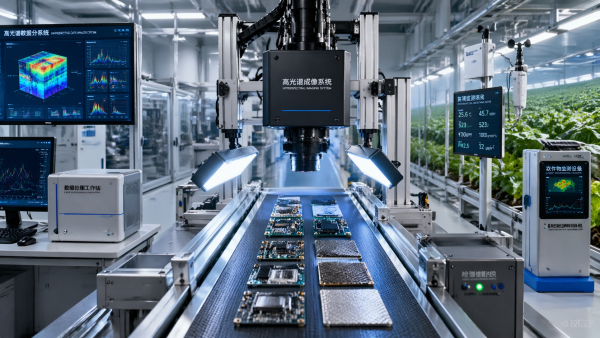
Before leaves wilt or yields decline, Hyperspectral Imaging for agriculture can detect invisible biochemical shifts that signal early crop stress. For researchers and field operators exploring Hyperspectral Imaging applications, this technology turns spectral data into actionable insight—much like advanced metrology solutions and Environmental Monitoring sensors do across precision industries—helping teams respond faster, reduce losses, and improve decision-making in modern agriculture.
For information researchers and field operators, the value of hyperspectral imaging is not in producing more images, but in revealing earlier signals. In many crop systems, visible symptoms appear 3–10 days after physiological stress begins. That delay can mean avoidable yield loss, fertilizer waste, or a missed irrigation window. Hyperspectral imaging shortens that response gap by measuring reflectance across dozens to hundreds of narrow bands, often from roughly 400–1000 nm in VNIR systems and extending into SWIR ranges for more advanced platforms.
Within a broader industrial measurement context, the logic is familiar: precise sensing enables earlier intervention. G-IMS approaches hyperspectral imaging through the same lens used for industrial optics, non-contact inspection, and environmental monitoring—linking sensor capability, data quality, calibration discipline, and operational decisions. In agriculture, that means converting spectral signatures into practical alerts for nitrogen deficiency, water stress, disease pressure, or canopy variability before those issues are obvious in the field.
How Hyperspectral Imaging Detects Stress Before Visual Symptoms
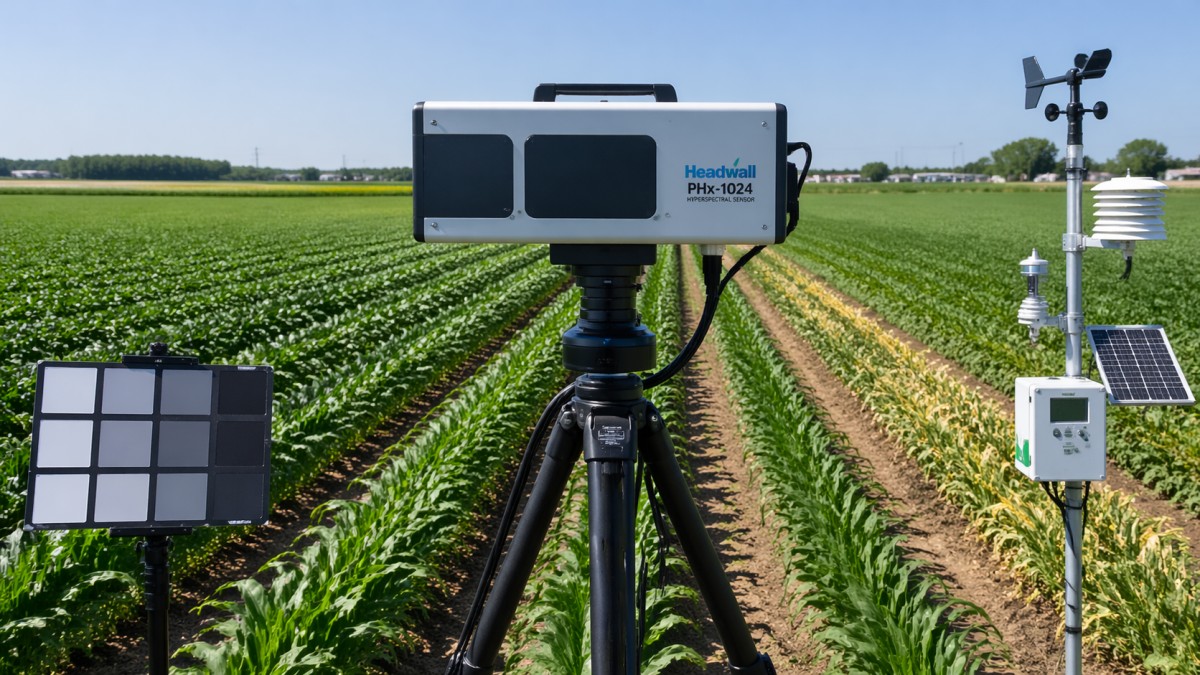
Hyperspectral imaging works by capturing reflected light in many narrow spectral bands rather than just 3 broad bands such as red, green, and blue. A standard RGB camera may provide useful canopy color information, but it cannot reliably isolate subtle biochemical changes. A hyperspectral sensor can detect wavelength-specific shifts associated with chlorophyll concentration, water content, cell structure, pigment degradation, and stress-related metabolites.
This matters because crop stress begins as a physiological process, not a visual event. For example, reduced stomatal conductance, lower chlorophyll activity, or uneven water uptake may affect spectral response well before leaves curl or yellow. In practical terms, operators may gain an early-warning window of 2–7 days for acute stress events and sometimes 1–2 weeks for chronic nutrient or disease-related issues, depending on crop type, environment, and sensor resolution.
The most useful interpretation of hyperspectral imaging is not “one stress equals one band.” Instead, stress is identified through spectral patterns across multiple wavelengths. This is why calibration, environmental control, and processing workflow are critical. If illumination changes sharply between scans, or if reference targets are omitted, the data may show false variation that looks agronomic but is actually operational noise.
What the sensor is really seeing
In field or greenhouse use, hyperspectral imaging often tracks four categories of hidden change:
- Leaf pigment shifts, including chlorophyll and carotenoid imbalance.
- Water-status changes reflected in near-infrared and shortwave infrared behavior.
- Tissue structure disruption linked to disease, heat stress, or physical damage.
- Spatial variability within plots, rows, or management zones that broad averages miss.
For research teams, this supports earlier phenotyping and treatment comparison. For operators, it supports faster scouting, more targeted intervention, and better prioritization across large acreage. The point is not to replace agronomists or ground truthing, but to direct those resources where risk is rising first.
What Hyperspectral Imaging Can Reveal in Real Agricultural Scenarios
Different stress mechanisms create different spectral responses, but the most valuable agricultural use cases tend to cluster around 5 operational questions: Is the crop under water stress? Is nutrient uptake becoming uneven? Is disease pressure emerging? Are treatment zones responding differently? Is the canopy changing faster than visual scouting can capture? When deployed properly, hyperspectral imaging helps answer each of these earlier than standard visual inspection.
In row crops, the system can identify patchy vigor loss linked to irrigation distribution, soil compaction, or nutrient variability. In orchards and vineyards, it can reveal canopy sections where transpiration or pigment response is deviating from the block average. In controlled environments such as greenhouses, the same technology can detect stress caused by root-zone imbalance, disease onset, or lighting inconsistency across benches.
The table below shows how early spectral indicators typically map to operational decisions. These are not universal thresholds, because crops, cultivars, and local conditions differ. However, they provide a practical framework for information gathering and system planning.
The key takeaway is that hyperspectral imaging is most effective when paired with a response protocol. Detecting stress 5 days earlier only creates value if agronomy, irrigation, or protection teams can act inside that window. This is why many B2B users evaluate not just the sensor, but the full workflow from scanning cadence to decision thresholds.
Where operators see the fastest return
Field teams usually see the fastest practical benefit in three areas:
- Reducing unnecessary blanket treatment by identifying only affected zones.
- Improving scouting efficiency across larger acreage or more greenhouse bays.
- Documenting treatment response over 2–4 monitoring cycles instead of relying on a single visual check.
System Selection: Sensor Range, Platform, Calibration, and Data Workflow
Choosing a hyperspectral imaging solution for agriculture requires more than comparing advertised spectral bands. Buyers and technical evaluators should assess at least 4 dimensions: wavelength range, spectral resolution, deployment platform, and processing workflow. A system that performs well in a controlled lab may be unsuitable for open-field conditions if scan speed, lighting correction, or georeferencing is weak.
In many agricultural applications, VNIR systems covering approximately 400–1000 nm are used for vegetation and pigment analysis. SWIR-capable systems can add value for moisture-related and material-composition insights, but they usually increase system cost, data volume, and operational complexity. For field teams, this means the “best” sensor is often the one that matches the decision objective rather than the one with the widest specification sheet.
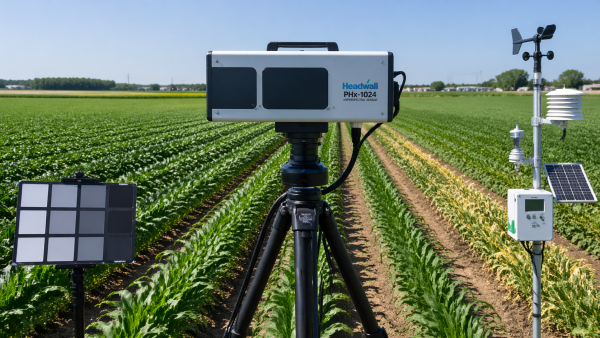
Platform choice also matters. Handheld or tripod-mounted systems support controlled plot research and close-range inspection. UAV-mounted systems improve coverage and speed for larger fields, while vehicle-mounted systems can support repeatable row-level acquisition. Each platform changes the trade-off between spatial resolution, throughput, calibration burden, and operator skill requirements.
Core selection criteria for B2B users
The table below summarizes common selection factors that researchers, procurement teams, and operators should align before purchase.
A common mistake is underestimating the data pipeline. Even a mid-scale field campaign can generate tens of gigabytes in a short period, especially when hyperspectral cubes are acquired repeatedly across multiple plots. Without a defined workflow for preprocessing, reflectance correction, labeling, model validation, and storage, operational teams often collect more data than they can turn into action.
Practical selection checklist
- Match the sensor to a specific agronomic question, not a generic innovation goal.
- Confirm whether the team needs plot-scale analysis, block-scale mapping, or both.
- Ask how repeatability is maintained across light changes, seasons, and operators.
- Review integration with environmental sensors, GPS data, and farm management software.
- Plan for operator training over at least 1–3 working sessions, not a single demonstration.
Implementation Workflow: From Scanning to Actionable Decisions
Successful implementation depends on turning hyperspectral imaging into a routine measurement process rather than an occasional trial. In practical deployments, the workflow usually has 5 stages: baseline definition, acquisition planning, calibration and capture, analysis, and intervention review. Skipping any one of these can weaken confidence in the results, especially when comparing crop conditions over time.
Baseline definition should begin before stress is obvious. Teams need reference scans of healthy plants, representative soil background, and standard environmental conditions when possible. If the first scan happens only after a problem is suspected, the system still has value, but it loses some comparative power. Many operators establish a weekly or twice-weekly scan cadence during sensitive growth stages and increase frequency during known risk periods.
Acquisition planning includes time-of-day consistency, reference panel handling, platform speed, and overlap settings. For UAV use, flight altitude and ground sample distance should be matched to the crop architecture. For greenhouse use, artificial lighting conditions should remain stable across sessions. Repeatability is often more valuable than theoretical peak resolution because management decisions depend on comparable measurements over 2, 3, or 6 scanning cycles.
A practical 5-step deployment model
- Define target stress categories such as water, nutrient, disease, or heat.
- Collect reference data from healthy and known-affected samples.
- Standardize acquisition conditions, including calibration and timing.
- Build decision rules, maps, or alert thresholds tied to field action.
- Review outcomes after intervention within 48 hours to 14 days, depending on the crop issue.
The intervention review step is where many programs either mature or stall. If hyperspectral imaging flags 12 zones as high risk, teams should verify which zones were treated, how quickly the treatment occurred, and whether subsequent scans showed spectral recovery. This closes the loop between detection and operational value. In measurement-driven organizations, that feedback cycle is what justifies wider deployment and future procurement.
Integration with other sensing layers
Hyperspectral imaging becomes more powerful when combined with complementary sources such as soil moisture probes, weather stations, thermal imaging, or trace-gas and environmental monitoring data. The reason is simple: spectral patterns show that change is happening, while environmental data often helps explain why. This mirrors broader industrial sensing practice, where no single instrument should carry the full burden of diagnosis if multi-sensor fusion can improve confidence.
Common Risks, Misinterpretations, and Operational Constraints
Despite its value, hyperspectral imaging is not a shortcut to perfect crop diagnosis. One of the most common risks is confusing correlation with causation. A spectral anomaly may indicate stress, but not always the exact stress source. Similar signatures can emerge from different mechanisms, especially when water limitation, nutrient imbalance, and disease pressure interact in the same field. That is why validation samples and agronomic context remain essential.
Another issue is overreliance on a single index or model. Many teams begin with vegetation indices or simplified classification outputs, which are useful starting points. However, if the model is trained under narrow conditions and then applied across another cultivar, season, or lighting regime, performance can degrade quickly. A model that performs well in one site during a 4-week trial may need recalibration before seasonal or regional scaling.
Operational constraints are also real. Hyperspectral imaging systems can require careful setup, substantial storage, and trained interpretation. In some field conditions, cloud variability, wind movement, or canopy geometry can reduce data quality. This does not make the technology impractical, but it does mean buyers should evaluate total workflow burden, not just image quality in ideal demonstration settings.
Risk-control points for procurement and deployment
- Ask for repeatability evidence across at least 2 environments or 2 crop stages.
- Verify how calibration is handled during long sessions or changing daylight.
- Check whether analysis outputs are understandable for operators, not only data scientists.
- Plan validation sampling for 5–10 representative points per stress class when feasible.
- Budget for training, data storage, and maintenance rather than sensor hardware alone.
For B2B decision-makers, the safest purchasing path is to define one high-value use case first, such as early irrigation stress detection in a high-margin crop or disease-zone identification in a greenhouse. Once the team proves repeatability and response value in that use case, expansion into more complex models becomes more credible and easier to manage.
FAQ for Researchers, Operators, and Technical Buyers
How early can hyperspectral imaging detect crop stress?
In many practical settings, hyperspectral imaging can detect stress 2–7 days before clear visual symptoms appear, and sometimes earlier for nutrient or disease-related changes. The exact lead time depends on crop type, sensor range, stress intensity, and how often scans are performed. A weekly scan may catch a trend; a scan every 48–72 hours is better for fast-moving stress events.
Is hyperspectral imaging better than multispectral imaging for agriculture?
Not always better in every workflow, but typically more detailed. Multispectral imaging is often easier and less data-intensive, making it suitable for routine vegetation monitoring. Hyperspectral imaging offers more precise spectral discrimination, which is valuable when users need early stress detection, research-grade analysis, or better separation of similar crop conditions. The right choice depends on whether the decision requires broad monitoring or narrow-band diagnostic sensitivity.
What should buyers evaluate before procurement?
At minimum, buyers should review 6 areas: wavelength range, spectral resolution, calibration method, deployment platform, software usability, and support for data integration. It is also wise to confirm training scope, maintenance expectations, and the typical implementation timeline. For many organizations, a realistic pilot-to-routine deployment period is 4–12 weeks, depending on workflow complexity.
Can field operators use the system without advanced data-science skills?
Yes, if the workflow is designed correctly. Operators do not need to build every spectral model from scratch, but they do need clear acquisition rules, calibration discipline, and readable outputs such as stress maps, flagged zones, or threshold-based alerts. The most effective systems reduce interpretation complexity while preserving measurement quality and traceability.
Hyperspectral imaging reveals what conventional scouting often misses: the biochemical and structural signals that emerge before crop stress becomes obvious, expensive, and harder to control. For research teams, it supports earlier phenotyping and stronger experimental insight. For operators and technical buyers, it enables faster intervention, more targeted input use, and a clearer link between sensing and action.
Viewed through the broader G-IMS measurement framework, the value of hyperspectral imaging is not just spectral richness, but disciplined deployment: calibrated sensing, usable data, and decisions tied to measurable outcomes. If you are evaluating hyperspectral imaging for agriculture, now is the time to compare system architectures, clarify your field workflow, and align sensor capability with the crop decisions that matter most. Contact us to discuss product details, application-fit criteria, or a tailored solution path for your monitoring objectives.
Recommended News
 Apr 24, 2026Hyperspectral Imaging Applications That Moved Beyond LabsHyperspectral Imaging applications now power agriculture, automated vision inspection systems, and 3D Scanning for quality control—see how calibrated, practical solutions improve accuracy and speed.
 Apr 24, 2026What Hyperspectral Imaging Reveals Before Crop Stress ShowsHyperspectral Imaging for agriculture reveals crop stress before visible damage appears, helping teams act earlier with smarter Environmental Monitoring sensors and advanced metrology solutions.
 Apr 24, 2026Hyperspectral Imaging in 2026: Faster Capture, Harder DecisionsHyperspectral Imaging in 2026: compare 3D Scanning, Spectrum Analyzers, Electrical Test, and Industrial Sensors with IEEE Standards and NIST Standards for smarter buying decisions.
 Apr 24, 2026Why Hyperspectral Imaging Misses Defects RGB Cameras CatchHyperspectral Imaging vs RGB: learn why visible defects escape spectral systems on fast lines, and how Industrial Sensors, IEEE Standards, and NIST Standards guide smarter inspection choices.