Hyperspectral Imaging Applications That Moved Beyond Labs
Time
Click Count
Hyperspectral Imaging applications have rapidly moved from research labs into real-world operations, from Hyperspectral Imaging for agriculture to automated vision inspection systems in manufacturing. For information seekers and hands-on users, this shift connects advanced metrology solutions, 3D Scanning for quality control, Electrical Test equipment, Environmental Monitoring sensors, and NIST Standards for calibration with practical decisions that improve accuracy, speed, and industrial confidence.
What changed is not only sensor performance, but also the economics of deployment. Systems that once demanded controlled laboratory lighting, specialist operators, and long analysis cycles can now be integrated into production lines, field vehicles, sorting platforms, and inspection cells. In many industrial settings, acquisition speeds below 200 milliseconds per line, spectral ranges from 400 nm to 2500 nm, and software-supported classification pipelines have made hyperspectral imaging practical rather than experimental.
For B2B buyers and technical users, the key question is no longer whether hyperspectral imaging works. The real issue is where it delivers measurable value, how to benchmark it against conventional machine vision, and what operating conditions determine success or failure. That is especially relevant for organizations that rely on metrology discipline, calibration traceability, and zero-defect manufacturing logic.
Within the G-IMS perspective, hyperspectral imaging should be evaluated as part of a broader measurement ecosystem. It interacts with optical sensors, non-contact vision inspection, 3D scanning, electrical test, and environmental monitoring. When these layers are aligned, the result is faster defect detection, stronger process control, and more reliable technical decisions at the factory, warehouse, field, or laboratory-to-production interface.
Why Hyperspectral Imaging Is Now a Practical Industrial Tool

Hyperspectral imaging captures data across dozens to hundreds of narrow spectral bands, rather than the 3 channels of standard RGB cameras. This allows operators to detect chemical composition, moisture variation, surface contamination, coating inconsistency, and hidden defects that conventional imaging often misses. In operational terms, the technology converts invisible spectral differences into usable classification rules, pass/fail thresholds, and process alerts.
The move beyond labs has been enabled by 4 practical improvements. First, detectors are more stable across wider temperature ranges such as 10°C to 35°C. Second, computing hardware can process large spectral cubes in near real time. Third, illumination systems are more robust for industrial duty cycles of 8 to 24 hours. Fourth, software interfaces now help non-specialist users build models with fewer manual scripting steps.
For information seekers comparing inspection technologies, hyperspectral imaging should be seen as a complementary tool rather than a replacement for every machine vision method. Standard cameras remain efficient for dimensional checks, barcode reading, and obvious color contrast tasks. Hyperspectral systems become valuable when material identity, contamination, internal stress indicators, or subtle process drift must be detected at thresholds such as 1% to 5% variation.
For operators, the biggest advantage is decision quality. Instead of relying on visual appearance alone, a system can classify objects based on spectral fingerprints. That reduces subjectivity, lowers rework risk, and supports repeatable inspection over 3 shifts or more. In sectors where false negatives are expensive, even a 2% to 4% improvement in defect capture can justify the investment.
Key drivers behind deployment
- Higher line-speed compatibility, with many applications operating from 20 to 300 inspected items per minute depending on field of view and spectral resolution.
- Better integration with PLCs, MES platforms, and industrial data systems for automated sorting or process intervention.
- Improved calibration routines aligned with traceability expectations common in ISO/IEC 17025-driven environments.
- Lower dependence on expert-only workflows due to model libraries, recipe management, and guided user interfaces.
Where it differs from conventional vision
Conventional vision answers questions such as shape, position, size, and visible contrast. Hyperspectral imaging answers a different set of questions: what the material is, whether a coating has shifted, if moisture content is uneven, or whether contamination exists below visible detection. That distinction is central for procurement teams that need to justify why a higher-cost imaging platform delivers lower process risk.
Applications That Prove Hyperspectral Imaging Has Left the Lab
The strongest proof of market maturity is application diversity. Hyperspectral imaging is now used in agriculture, food sorting, electronics inspection, pharmaceuticals, recycling, aerospace materials review, and environmental monitoring. Across these settings, the common objective is to identify differences that are spectrally meaningful but visually subtle.
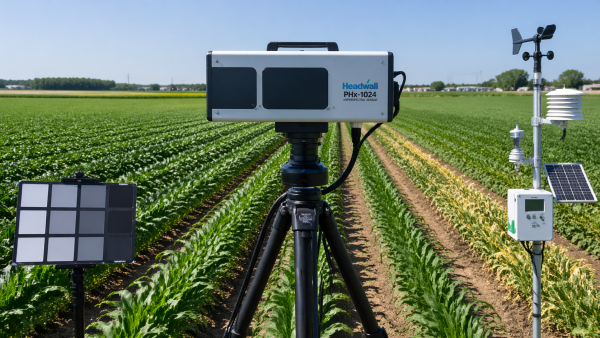
In agriculture, systems mounted on drones, tractors, or fixed gantries can assess crop stress, nutrient imbalance, and irrigation inconsistency. Typical field programs may revisit the same zone every 3 to 7 days, helping users detect early vegetation stress before it becomes obvious in RGB imagery. This supports more targeted spraying, fertilization, and harvest planning.
In manufacturing, automated vision inspection benefits from hyperspectral imaging when parts have similar geometry but different material states. Examples include adhesive coverage checks, coating uniformity, composite curing assessment, semiconductor wafer contamination screening, and battery electrode evaluation. Here, the value lies in identifying defects at in-line or near-line speeds without destructive testing.
In recycling and waste handling, spectral signatures help separate polymers, fibers, organics, and contaminated fractions. This is important where throughput may exceed 1 ton per hour and misclassification affects downstream recovery value. In pharmaceutical and chemical handling, hyperspectral imaging can support raw material verification, blend uniformity checks, and packaging integrity review, especially where visible appearance is not enough.
Typical operational scenarios
The table below shows how common applications differ by inspection goal, deployment mode, and practical performance expectation.
The practical conclusion is clear: applications are no longer limited by scientific curiosity. They are being selected according to throughput, defect criticality, and process economics. Buyers should therefore compare use cases by measurable inspection objectives rather than by the novelty of the imaging method itself.
A note for hands-on users
Operators often see the fastest wins in repetitive classification tasks, where the system only needs to distinguish 2 to 6 predefined material or defect classes. Trying to detect every possible anomaly from day one usually slows deployment. A phased approach works better: start with one narrow defect family, stabilize the recipe, then expand the model set.
How to Evaluate a System: Spectral Range, Speed, Calibration, and Integration
System selection should begin with the inspection question, not the camera brochure. If the target issue is moisture, organic content, or coating chemistry, visible-near infrared and short-wave infrared ranges may offer very different value. A buyer should specify the material class, defect type, target throughput, working distance, and acceptable false rejection rate before comparing hardware.
In practice, 4 technical dimensions dominate purchasing decisions: spectral suitability, spatial resolution, acquisition speed, and calibration discipline. A system with 200 bands is not automatically better than one with 80 bands if the required discrimination is achieved at lower data volume. More bands can increase processing load, storage demand, and model complexity without improving production decisions.
Calibration also matters more outside the lab. Variations in lighting, lens contamination, ambient temperature, conveyor vibration, and sample orientation can alter results over time. This is where links to metrology practice, NIST-traceable references, and repeatable validation routines become important. In many industrial deployments, weekly reflectance checks and quarterly full verification are more realistic than one-time commissioning alone.
Integration should be treated as a formal engineering scope. The camera is only one layer. The full system may require controlled illumination, protective housings, reject mechanisms, software licensing, PLC communication, storage architecture, and user access rules. In factories already using CMM, 3D scanning, and electrical test systems, hyperspectral data should support the same quality logic rather than create a separate, isolated workflow.
Core evaluation factors
The table below provides a practical screening framework for procurement and technical review teams.
A useful buying rule is to request a pilot that includes controlled sample variation, not just ideal samples. If the model is only trained on clean material, stable lighting, and one batch condition, the production result will often disappoint. Good validation should include at least 3 sample states, multiple operating shifts, and repeat tests under realistic environmental conditions.
Selection mistakes to avoid
- Choosing the broadest spectral range without confirming that the target defect actually requires it.
- Ignoring illumination design, even though poor lighting can reduce model reliability more than sensor specifications.
- Underestimating storage and computing demand when spectral cubes are collected continuously over 8-hour shifts.
- Accepting a lab demo without an on-site proof under conveyor vibration, dust, and real operator handling.
Implementation Roadmap for Operators and Technical Teams
Deployment succeeds when it follows a structured path from problem definition to controlled operation. For many organizations, the most efficient roadmap consists of 5 stages over 4 to 12 weeks, depending on line complexity. Rushing directly from hardware purchase to full production usually creates avoidable downtime and unstable classification performance.
Stage 1 is requirement framing. Teams define what must be detected, the acceptable miss rate, line speed, sample variability, and the required decision output. Stage 2 is feasibility testing using representative samples, often 50 to 200 pieces across good, marginal, and defective states. Stage 3 covers pilot integration with lighting, mounting, software logic, and operator screens. Stage 4 validates repeatability across time. Stage 5 formalizes SOPs, maintenance routines, and escalation rules.
Operators should be trained on both normal operation and failure recognition. A practical training plan can often be completed in 2 sessions of 2 to 3 hours each, followed by supervised use over the first production week. The goal is not to make every user a spectroscopy expert. The goal is to help them manage recipes, verify references, respond to alarms, and recognize when results may be drifting.
Environmental control is also part of implementation. Dust, heat, vibration, and unstable lighting can erode performance. In many installations, basic controls such as protective windows, regular lens cleaning, source intensity checks, and vibration-aware mounting produce more value than adding algorithm complexity. The simplest stable workflow usually outperforms an advanced but fragile one.
Recommended rollout sequence
- Define one measurable inspection objective with a pass/fail threshold.
- Collect representative samples across at least 3 operating conditions.
- Run a controlled pilot for 1 to 2 weeks with documented false reject and false accept results.
- Connect the output to process action, such as sorting, alarm, or batch hold logic.
- Lock the SOP, calibration interval, and user responsibility matrix before scale-up.
Maintenance and service considerations
A robust support plan includes daily cleaning checks, weekly verification against a stable reference, software backup controls, and a documented revalidation trigger after any optical replacement or mechanical re-alignment. In quality-critical operations, a 24-hour response window for remote diagnostics and a 3- to 5-day on-site support window are common planning assumptions.
For organizations using broader sensory infrastructure, hyperspectral imaging should sit within a unified measurement governance model. That means version control for algorithms, traceable reference management, and alignment with existing metrology and inspection audit practices. This is where a benchmarking-oriented institution such as G-IMS adds value by connecting optical performance with operational acceptance criteria.
Common Questions, Risks, and Buying Guidance
Even when the application is promising, buyers often hesitate because hyperspectral imaging appears complex. In reality, the complexity is manageable when the use case is narrow, sample data is representative, and validation is disciplined. The bigger risk is not technical difficulty alone; it is poor problem framing, weak calibration planning, or buying a system that is not matched to production conditions.
A good procurement process should involve at least 4 viewpoints: process engineering, quality assurance, operations, and IT or automation. This prevents a situation where the sensor works in a demo but cannot communicate with production systems, or where operators cannot maintain the process after the integrator leaves. For high-value sectors, it is also sensible to define acceptance criteria before purchase, including target accuracy, response time, and revalidation frequency.
How do you know if hyperspectral imaging is justified?
It is usually justified when standard vision cannot reliably distinguish good from bad material, when destructive testing is too slow or costly, or when quality losses from hidden defects exceed the cost of automation. If a defect is purely dimensional and visible, conventional vision or 3D scanning may be sufficient. If the issue is material state, residue, or composition, hyperspectral imaging deserves serious evaluation.
What is a realistic delivery and pilot timeline?
For many projects, sample assessment and feasibility review can begin within 1 to 3 weeks. A pilot setup may take 2 to 8 weeks depending on optics, illumination, enclosure, and software integration. Full production deployment can extend further if reject handling, compliance review, or multi-line scaling is required. Buyers should budget time for recipe tuning, operator training, and environmental stabilization.
What are the most common deployment risks?
The top risks are unrepresentative training samples, unstable lighting, insufficient calibration routines, and overambitious classification goals at launch. Another frequent issue is treating the system as a standalone camera rather than part of a controlled measurement process. The better approach is to start with one use case, document model limits, and expand only after process stability is proven.
Practical buying checklist
- Ask which wavelength range matches your target material or defect mechanism.
- Request on-site or production-like validation with real throughput and real sample variability.
- Confirm calibration method, drift-check interval, and reference standard management.
- Review integration scope, including software outputs, alarms, storage, and maintenance access.
- Define acceptance metrics before ordering, including repeatability and false classification limits.
Hyperspectral imaging has clearly moved beyond laboratories because the operational case is now strong across agriculture, manufacturing, environmental monitoring, recycling, and advanced quality inspection. For information seekers, the priority is to compare applications by measurable inspection value. For operators, the focus should be recipe stability, calibration discipline, and maintainable workflows. For decision-makers, the best results come when hyperspectral imaging is benchmarked as part of a larger intelligent measurement architecture that includes optics, metrology, electrical test, and standards-based validation.
If you are evaluating hyperspectral imaging for production, field monitoring, or high-value inspection, now is the right time to align the technology with practical measurement goals. Contact G-IMS to discuss benchmarking criteria, compare deployment options, and obtain a tailored solution path based on your application, operating environment, and quality requirements.
- Intelligent Measurement
- Advanced Metrology
- 3D Scanning
- Electrical Test
- Vision Inspection Systems
- Environmental Monitoring
- Hyperspectral Imaging
- NIST Standards
- Electrical Test equipment
- Hyperspectral Imaging applications
- Environmental Monitoring sensors
- Hyperspectral Imaging for agriculture
- NIST Standards for calibration
- 3D Scanning for quality control
- automated vision inspection systems
- advanced metrology solutions
Recommended News
 Apr 24, 2026Hyperspectral Imaging Applications That Moved Beyond LabsHyperspectral Imaging applications now power agriculture, automated vision inspection systems, and 3D Scanning for quality control—see how calibrated, practical solutions improve accuracy and speed.
 Apr 24, 2026What Hyperspectral Imaging Reveals Before Crop Stress ShowsHyperspectral Imaging for agriculture reveals crop stress before visible damage appears, helping teams act earlier with smarter Environmental Monitoring sensors and advanced metrology solutions.
 Apr 24, 2026Hyperspectral Imaging in 2026: Faster Capture, Harder DecisionsHyperspectral Imaging in 2026: compare 3D Scanning, Spectrum Analyzers, Electrical Test, and Industrial Sensors with IEEE Standards and NIST Standards for smarter buying decisions.
 Apr 24, 2026Why Hyperspectral Imaging Misses Defects RGB Cameras CatchHyperspectral Imaging vs RGB: learn why visible defects escape spectral systems on fast lines, and how Industrial Sensors, IEEE Standards, and NIST Standards guide smarter inspection choices.