Hyperspectral Imaging in 2026: Faster Capture, Harder Decisions
Time
Click Count
In 2026, Hyperspectral Imaging is moving from promising lab capability to high-speed industrial reality—but faster capture creates harder decisions for engineering, quality, and procurement teams. As Sensory Technology evolves alongside 3D Scanning, Electrical Test, Spectrum Analyzers, and Industrial Sensors, buyers must compare performance, data usability, and compliance with IEEE Standards and NIST Standards across manufacturing and Environmental Monitoring workflows.
Why hyperspectral imaging is becoming a harder buying decision in 2026
Hyperspectral imaging is no longer evaluated only as a niche optical tool. In industrial settings, it now sits inside broader inspection, process control, and traceability architectures that also include machine vision, non-contact measurement, electrical test, and environmental sensing. That shift changes the buying question from “Can the camera detect spectral differences?” to “Can the full system support usable, compliant, and timely decisions at line speed?”
For operators, the pain point is practical: faster capture often means larger data volumes, more calibration demands, and tighter maintenance windows. For technical evaluators, the challenge is balancing spectral resolution, spatial resolution, illumination stability, and software interoperability. For procurement teams, the real risk appears when a low initial equipment cost leads to higher integration effort over 6–18 months.
Across semiconductor, food processing, pharmaceuticals, recycling, coatings, agriculture, aerospace materials, and environmental monitoring, the buying criteria are converging around 4 core issues: capture speed, classification accuracy, deployment complexity, and standards alignment. A system that works in a controlled demo may fail in dusty, vibrating, temperature-variable production environments unless optics, motion handling, and data pipelines are engineered together.
This is where G-IMS brings value. As a multidisciplinary B2B benchmarking hub covering Industrial Optics & Photonic Sensors, Advanced Metrology & 3D Scanning, Electrical Test & High-Frequency Measurement, Non-Contact Vision Inspection Systems, and Environmental Monitoring & Specialized Sensors, G-IMS evaluates hyperspectral imaging in the context of operational decision-making rather than isolated component claims.
What changed between pilot projects and industrial-scale deployment?
In pilot projects, users often accept slower scan rates, controlled lighting, and offline model tuning. In production, those assumptions collapse. A line may require continuous operation for 8–24 hours, daily verification checks, and compatibility with MES, SPC, or quality documentation workflows. That means the camera is only one element inside a larger decision chain.
The hardest decisions now concern trade-offs. Higher spectral bands can improve material discrimination, but they can also increase data handling load. Faster acquisition reduces motion blur risk, yet may demand stronger illumination and more careful thermal control. These are not academic details; they directly affect false reject rates, operator workload, and payback timing.
- Research users usually ask whether hyperspectral imaging can reveal hidden variation beyond RGB or standard NIR inspection.
- Operators ask whether the system can remain stable after shift changes, lens cleaning, and product mix variation.
- Procurement asks whether integration, training, and maintenance will stay predictable over a 12–36 month ownership cycle.
Which application scenarios really benefit from hyperspectral imaging?
Not every inspection task needs hyperspectral imaging. The strongest business case appears when conventional vision cannot separate materials, detect early-stage contamination, identify chemical differences, or verify coating uniformity without destructive testing. In those cases, hyperspectral imaging can reduce sampling delays and improve process feedback loops.
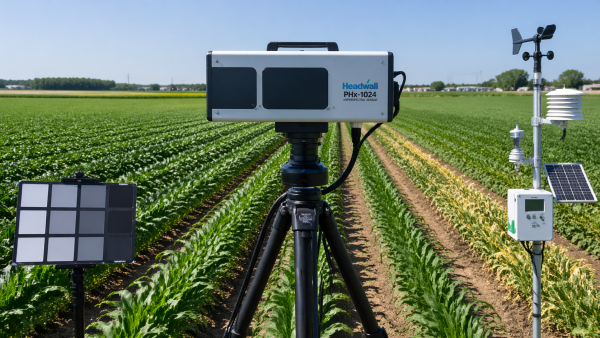
In discrete manufacturing, common uses include composite inspection, adhesive verification, surface contamination detection, thermal damage screening, and sorting of visually similar parts. In process industries, use cases include moisture estimation, foreign-material detection, ingredient consistency review, and coating thickness proxy analysis. In environmental monitoring, spectral systems can support classification of particulates, vegetation stress indicators, water quality proxies, and material identification in field or lab workflows.
The most successful deployments usually start with 1 clearly bounded use case, 2–3 measurable pass/fail criteria, and a validation period of 4–12 weeks. Trying to solve every inspection problem with one spectral model often delays implementation and weakens user trust. A modular rollout is usually safer for project managers and quality leaders.
G-IMS recommends evaluating applications by decision consequence, not by image novelty. If a wrong classification can stop a line, trigger scrap, or create compliance exposure, then spectral explainability, repeatability, and traceability matter more than attractive demo images.
Scenario fit across industries
The table below helps teams compare where hyperspectral imaging adds meaningful value and where a simpler sensor stack may be sufficient. This is especially useful for distributors, engineering managers, and sourcing teams handling mixed portfolios across multiple plants or customer segments.
The key reading is simple: hyperspectral imaging is strongest when the inspection target is material-dependent rather than purely geometric. If your defect is primarily dimensional, then 3D scanning or high-precision metrology may offer a cleaner and lower-cost path. If your challenge is spectral discrimination under production speed constraints, hyperspectral imaging deserves deeper evaluation.
A quick shortlist before launching a trial
- Define whether the target is classification, contamination detection, trend monitoring, or pass/fail inspection.
- Set a realistic throughput band such as batch, mid-volume, or continuous line-speed operation.
- Confirm whether decisions must be made in real time, near-line within 1–5 minutes, or offline within a quality lab.
- Identify the cost of false positives versus false negatives before model training begins.
What technical performance should buyers compare first?
Many teams focus too early on the number of bands. In practice, technical performance must be reviewed as a stack: spectral range, spectral resolution, spatial resolution, signal-to-noise behavior, illumination design, motion synchronization, software export, and calibration stability. If one layer is weak, the whole measurement chain becomes harder to trust.
A practical evaluation typically takes place across 3 stages. Stage 1 confirms detectability under stable conditions. Stage 2 tests robustness under expected plant variation such as speed changes, dust, or product mix. Stage 3 checks whether the resulting data can feed real business actions such as alarm logic, SPC review, batch release support, or supplier quality comparison.
Technical evaluators should also separate sensor specifications from system performance. A high-end camera paired with unstable illumination or poor conveyor synchronization can underperform a more balanced setup. This is one reason G-IMS compares full decision systems against international reference logic rather than relying on isolated component marketing.
Where standards matter, buyers should ask how calibration artifacts are maintained, how reference materials are documented, and how data traceability aligns with ISO/IEC 17025-adjacent lab practices, IEEE-aligned data handling expectations, and NIST-oriented reference discipline where applicable. The question is not whether one label appears in a brochure, but whether the workflow supports defensible measurement decisions.
Parameter review table for engineering and procurement teams
The table below highlights the technical areas that most often influence project success, commissioning time, and long-term maintenance burden. It is particularly useful during RFQ preparation and supplier comparison.
The table shows why technical performance cannot be reduced to a single specification. In many projects, the decisive factor is not peak camera capability but the stability of the entire capture-to-decision chain over 3–6 months of routine operation.
Three questions that prevent expensive mistakes
First, can the system maintain usable signal quality across expected temperature, vibration, and illumination changes? Second, can the model be revalidated without vendor dependency every time product variation shifts? Third, can the output be turned into operator instructions, alarms, or quality records without manual rework? If one answer is unclear, the project is not ready for final approval.
For quality and safety managers, another practical checkpoint is inspection governance. Define who owns the reference library, how often verification occurs, and what happens when spectral confidence drops below an agreed threshold. Even a strong system needs operating rules.
How should buyers compare hyperspectral imaging against alternatives?
A disciplined procurement process starts by comparing decision value, not technology excitement. In some cases, multispectral imaging is enough. In others, standard machine vision with controlled lighting, NIR point sensors, 3D scanning, thermal imaging, or lab spectroscopy may solve the problem with less integration effort. The right answer depends on throughput, discrimination difficulty, and the cost of incorrect decisions.
Hyperspectral imaging is typically strongest when users need spatially resolved chemical or material information over a field of view, not just a single-point reading. It can outperform simpler tools when contamination is localized, defects are subtle, or mixed materials must be separated at moderate to high speed. However, it can be excessive for fixed, repeatable, single-attribute checks.
From a budget perspective, teams should assess total ownership over 12–36 months, including optical hardware, illumination, integration engineering, software, model maintenance, operator training, and calibration consumables or references. A system with lower purchase cost but longer commissioning can easily become the more expensive option.
G-IMS supports this comparison through benchmark logic across sensing categories. Because hyperspectral imaging increasingly interacts with electrical test, non-contact vision, advanced metrology, and environmental monitoring, a cross-domain evaluation often reveals where a hybrid architecture is better than a single-sensor solution.
Alternative technology comparison
Use the following comparison to decide whether hyperspectral imaging is justified, whether multispectral imaging is sufficient, or whether a non-spectral inspection method should be prioritized first.
A common and effective strategy is phased deployment: start with lab or near-line validation, then move to pilot inspection on one product family, then scale to continuous operation once model drift, operator training, and maintenance frequency are understood. This 3-step path reduces both technical and commercial risk.
Cost drivers teams should not ignore
- Illumination and optical enclosure design often determine whether the promised capture speed is realistic on the plant floor.
- Integration with conveyors, triggers, PLCs, or quality systems can take 2–8 weeks depending on site readiness.
- Model maintenance effort rises when raw materials, suppliers, or environmental conditions change frequently.
- Training should cover both operation and verification; a 1-day handover is rarely enough for mission-critical inspection.
What standards, implementation steps, and risk controls matter most?
Compliance in hyperspectral imaging is rarely about one single certificate. It is about whether the inspection process is controlled, documented, and repeatable enough to support quality decisions, supplier acceptance, product release logic, or regulated workflow evidence. Buyers should therefore review measurement governance together with hardware performance.
In many industrial programs, implementation works best in 4 phases: use-case definition, feasibility validation, line integration, and operational verification. Depending on complexity, this can take 6–16 weeks for a focused deployment, or longer if multiple recipes, product families, or locations are involved. The timeline should be defined before PO approval, not after equipment arrival.
Standards language should be used carefully. ISO/IEC 17025 is relevant as a benchmark for calibration and laboratory discipline. IEEE standards may shape data, signal, or interoperability expectations in adjacent systems. NIST references are important when traceability and reference material discipline matter. What matters commercially is how the supplier translates those frameworks into actual procedures, logs, and acceptance criteria.
For all-industry buyers, the most frequent risk is not hardware failure but process ambiguity. Teams launch a project without agreeing on golden samples, alarm thresholds, retraining rules, cleaning intervals, or who signs off on model changes. That creates hidden quality risk even when the optics are excellent.
Implementation checklist for project managers and quality teams
- Define 3–5 acceptance criteria, such as target detection reliability, maximum review time, verification frequency, and data retention expectations.
- Prepare sample sets that reflect normal, borderline, and known-failure conditions rather than only ideal parts or materials.
- Agree on verification intervals, such as per shift, daily, or weekly, based on environmental variation and production criticality.
- Document operator actions for low-confidence outcomes, including manual hold, lab confirmation, and escalation path.
- Confirm how results connect to MES, batch records, maintenance logs, or supplier quality reports.
FAQ: the questions most buyers ask before approval
The following questions frequently appear during RFQ review, distributor discussions, and executive sign-off. They are also useful for aligning technical and commercial teams before a site trial starts.
How do we know if hyperspectral imaging is justified instead of standard vision?
Choose hyperspectral imaging when the decision depends on material composition, contamination, moisture, coating state, or subtle chemical variation rather than visible geometry alone. If a controlled RGB or monochrome setup can already meet the required defect escape rate, hyperspectral imaging may be unnecessary. A 2–4 week feasibility study with representative samples is usually the safest way to decide.
What should procurement ask beyond the hardware price?
Ask about integration scope, illumination design, calibration workflow, software licensing, training hours, model update process, and expected commissioning window. Also request clarification on whether acceptance is based on lab samples, pilot-line samples, or live production. These details often have more impact on final cost than the camera itself.
How long does deployment usually take?
For a focused single-use-case project, feasibility and initial integration commonly take 6–16 weeks, depending on sample readiness, automation interfaces, and validation depth. Multi-product or multi-site deployments can take longer because each recipe, spectral library, and acceptance workflow needs review. Teams that define ownership early usually move faster.
What is the most common implementation mistake?
The most common mistake is treating hyperspectral imaging as a camera purchase instead of a decision system. Without agreed reference standards, retraining rules, and operator procedures, even strong image quality will not guarantee reliable inspection outcomes. Governance must be designed alongside optics and software.
Why work with G-IMS when evaluating hyperspectral imaging programs?
G-IMS is built for buyers who need more than product brochures. Our institutional focus is the logic between measurement and intelligent action: what the system measures, how reliably it measures it, how the data becomes a quality or operational decision, and whether the architecture remains defensible under international technical expectations. This is especially valuable when hyperspectral imaging must be compared against adjacent technologies such as 3D scanning, electrical test, spectrum analyzers, or environmental sensors.
For CTOs, quality directors, sourcing teams, project leaders, and channel partners, we help convert complex specifications into decision-ready benchmarking. That includes parameter confirmation, application mapping, standards-oriented evaluation logic, and practical selection criteria for high-precision manufacturing and monitoring workflows. Our role is not to inflate complexity, but to remove avoidable uncertainty.
If you are comparing hyperspectral imaging platforms in 2026, the most useful next step is a structured review of 5 areas: target material behavior, line-speed requirement, integration environment, data workflow, and compliance expectations. Once these are clear, the shortlist becomes far easier and the risk of buying the wrong architecture drops sharply.
Contact G-IMS to discuss application feasibility, parameter confirmation, solution comparison, delivery timing, custom evaluation plans, standards-related documentation expectations, sample testing scope, or quotation alignment. If your team is unsure whether hyperspectral imaging, multispectral imaging, machine vision, or a hybrid sensing architecture is the right path, we can help define the decision framework before capital is committed.
Recommended News
 Apr 24, 2026Hyperspectral Imaging Applications That Moved Beyond LabsHyperspectral Imaging applications now power agriculture, automated vision inspection systems, and 3D Scanning for quality control—see how calibrated, practical solutions improve accuracy and speed.
 Apr 24, 2026What Hyperspectral Imaging Reveals Before Crop Stress ShowsHyperspectral Imaging for agriculture reveals crop stress before visible damage appears, helping teams act earlier with smarter Environmental Monitoring sensors and advanced metrology solutions.
 Apr 24, 2026Hyperspectral Imaging in 2026: Faster Capture, Harder DecisionsHyperspectral Imaging in 2026: compare 3D Scanning, Spectrum Analyzers, Electrical Test, and Industrial Sensors with IEEE Standards and NIST Standards for smarter buying decisions.
 Apr 24, 2026Why Hyperspectral Imaging Misses Defects RGB Cameras CatchHyperspectral Imaging vs RGB: learn why visible defects escape spectral systems on fast lines, and how Industrial Sensors, IEEE Standards, and NIST Standards guide smarter inspection choices.