IEEE Standards for Wireless Communication Explained Simply
Time
Click Count
Understanding IEEE Standards for wireless communication does not have to be complicated. This guide breaks down the core IEEE frameworks behind Wi-Fi, Bluetooth, and emerging industrial connectivity in simple terms, helping information seekers grasp why these standards matter for compatibility, performance, compliance, and future-ready technology decisions.
What IEEE Standards for Wireless Communication Actually Mean
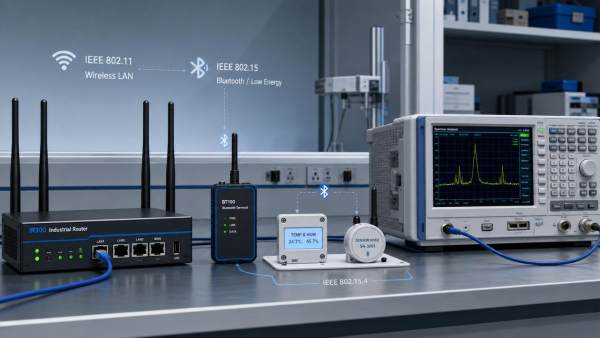
At a basic level, IEEE Standards for wireless communication are technical rules created so different devices can exchange data reliably over the air. IEEE, the Institute of Electrical and Electronics Engineers, publishes widely used standards that define how radios transmit, receive, identify channels, manage interference, and maintain interoperability. Without these shared rules, one vendor’s access point, sensor, test instrument, or mobile device might not work correctly with another vendor’s equipment.
The best-known family is IEEE 802, especially IEEE 802.11 for Wi-Fi and IEEE 802.15 for short-range wireless technologies. These standards do not merely describe speed. They also address spectrum usage, modulation methods, security mechanisms, timing behavior, network access, and quality of service. In simple terms, they create a common language for wireless systems.
For information seekers in industrial, laboratory, and technology benchmarking environments, IEEE Standards for wireless communication are important because they connect product claims to measurable technical expectations. If a device supports a specific IEEE standard, buyers and engineers can better estimate its compatibility, likely performance envelope, test requirements, and upgrade path.
Why Industry Pays Close Attention to These Standards
Wireless communication is no longer just a consumer convenience. It is now part of manufacturing visibility, remote diagnostics, environmental sensing, machine coordination, asset tracking, and quality data collection. In advanced sectors such as semiconductor production, aerospace, electronics testing, and precision metrology, the wireless layer must support dependable data movement without undermining accuracy, latency control, or compliance requirements.
This is where the broader industrial perspective becomes essential. Organizations such as G-IMS focus on the link between sensory hardware and actionable intelligence. In that context, IEEE Standards for wireless communication matter because they influence whether measurement devices, machine vision systems, high-frequency instruments, and environmental sensors can integrate into secure and scalable digital workflows. Standards provide a reference point for benchmarking systems against repeatable technical criteria rather than marketing language alone.
Another reason for strong interest is lifecycle risk. Wireless infrastructure is often expected to last for years, sometimes longer than the software platforms built on top of it. Using recognized IEEE frameworks reduces the chance of vendor lock-in and makes future migration easier, especially when businesses move toward denser sensor networks, edge analytics, and AI-assisted inspection environments.
Core IEEE Wireless Standards in Simple Terms
Not every wireless technology comes directly from IEEE, but several of the most influential frameworks do. The table below offers a simple overview of the standards most often discussed in practical decision-making.
When people search for IEEE Standards for wireless communication, they often want to know which standard fits which job. Wi-Fi, for example, is generally selected for higher data throughput and broad device compatibility. IEEE 802.15.4-based technologies are more often associated with lightweight, low-power sensor communication. The technical choice depends on range, power budget, latency tolerance, data volume, interference conditions, and network density.
How These Standards Connect to Real-World Performance
A common misunderstanding is that a standard guarantees identical real-world performance across all products. It does not. Standards define a framework, but actual results depend on antenna design, chipset quality, firmware, environmental interference, network architecture, and test methodology. That is why technical benchmarking remains essential.
For example, two devices may both support the same Wi-Fi generation, yet behave very differently in a factory full of metal surfaces, motors, and electromagnetic noise. Likewise, two sensor nodes built around similar low-power wireless rules may have different battery life, packet stability, or coexistence behavior. IEEE Standards for wireless communication give the foundation, but measurement validates implementation quality.
This is especially important in high-value industrial environments where data integrity is tied to process control. Wireless links used for environmental monitoring, optical sensor status, test equipment synchronization, or inspection reporting must be evaluated against practical conditions, not only specification sheets.
Typical Application Areas Across the Industrial Landscape
The value of IEEE Standards for wireless communication becomes clearer when viewed through application categories rather than abstract definitions. Different industries care about different aspects of the same standard.
Across these categories, standards support a more disciplined evaluation process. A quality director may care about data continuity and audit traceability. A CTO may focus on architectural flexibility and future bandwidth. A procurement officer may prioritize multi-vendor compatibility and regulatory confidence. The same standard has different business meaning depending on the stakeholder.
Why Compatibility and Compliance Matter More Than Ever
In modern connected operations, compatibility is not just about whether two devices can connect once. It is about whether they can continue to exchange data consistently as networks grow, firmware changes, cybersecurity requirements tighten, and performance expectations increase. IEEE Standards for wireless communication reduce friction by giving manufacturers and buyers a common framework for implementation.
Compliance also matters because wireless systems often sit inside regulated or quality-sensitive environments. While IEEE standards themselves are not the only compliance requirement, they often work alongside broader frameworks such as ISO/IEC 17025, NIST-aligned testing practices, and regional radio regulations. In industrial benchmarking, standards awareness helps organizations ask better questions about validation, calibration environments, and documented performance claims.
For information researchers, this means a standards label should be seen as the start of evaluation, not the end of it. It tells you what technical family a product belongs to and what baseline behavior to expect, but deeper review is still needed to confirm fit for the intended operating environment.
Practical Points to Check When Evaluating Wireless Technologies
If you are comparing devices, modules, or systems based on IEEE Standards for wireless communication, several practical checkpoints can improve decision quality.
- Confirm the exact standard revision or generation rather than relying on broad labels such as “wireless capable.”
- Check whether performance data was measured in realistic operating conditions, especially in RF-noisy industrial settings.
- Review security support, because connectivity without strong protection can create system risk.
- Assess coexistence with existing networks, sensors, and test equipment sharing nearby spectrum.
- Look for evidence of interoperability testing with third-party devices and infrastructure.
- Consider lifecycle support, firmware update policy, and migration path toward future wireless architectures.
These checks are particularly useful in measurement-intensive organizations where wireless links support data collection rather than casual connectivity. A small interoperability issue can become a major visibility gap when hundreds of sensing points are involved.
Common Misconceptions About IEEE Wireless Standards
One misconception is that newer always means better. In reality, the best choice depends on the application. A high-throughput standard may be ideal for image-heavy inspection systems, while a lower-power framework may be more suitable for distributed environmental sensors.
Another misconception is that standards remove the need for testing. In fact, standards make testing more meaningful because they define what should be examined. Signal integrity, throughput under load, roaming behavior, packet loss, and electromagnetic coexistence still need verification.
A third misconception is that wireless decisions are purely IT decisions. In many industries, they are also metrology, quality, operations, and procurement decisions. That is why IEEE Standards for wireless communication often show up in cross-functional technical reviews rather than in isolated network discussions.
Frequently Asked Questions
Is Bluetooth an IEEE standard?
Bluetooth has its own development ecosystem, but it has historical links to IEEE 802.15.1 in discussions of short-range wireless communication. In practical research, it is often useful to distinguish between Bluetooth branding and the broader IEEE framework for personal area networking concepts.
Are IEEE Standards for wireless communication only relevant to Wi-Fi?
No. Wi-Fi is the most visible example, but IEEE standards also shape many other wireless communication models, especially in short-range and low-power networking.
Why do standards matter in industrial sensing?
Because industrial sensing relies on consistent, auditable, and scalable data exchange. Standards help support interoperability, maintenance planning, and more credible performance benchmarking.
A Practical Way to Read the Standards Landscape
A simple way to approach IEEE Standards for wireless communication is to think in layers. First, ask what kind of job the wireless link must do: high-speed transfer, low-power telemetry, close-range device pairing, or broad facility coverage. Second, identify which standard family best aligns with that job. Third, compare implementation quality using measured evidence, not only conformance claims. Finally, place the technology in its business context: uptime, quality assurance, system expansion, and integration with digital manufacturing goals.
For organizations operating in high-precision environments, this approach helps translate wireless terminology into decision-ready insight. It also aligns with the broader industrial need to connect sensory systems, measurement infrastructure, and actionable intelligence under recognized technical frameworks.
In short, IEEE Standards for wireless communication are not just engineering details. They are foundational tools for understanding compatibility, evaluating risk, and planning future-ready connectivity. If you are researching wireless systems for industrial, laboratory, or enterprise use, start with the standard, then move to testing evidence, integration needs, and long-term operational fit.
Recommended News
 May 03, 2026IEEE Standards for Wireless Communication Explained SimplyIEEE Standards for wireless communication explained simply—learn how Wi-Fi, Bluetooth, and industrial wireless standards impact compatibility, performance, and smarter technology choices.
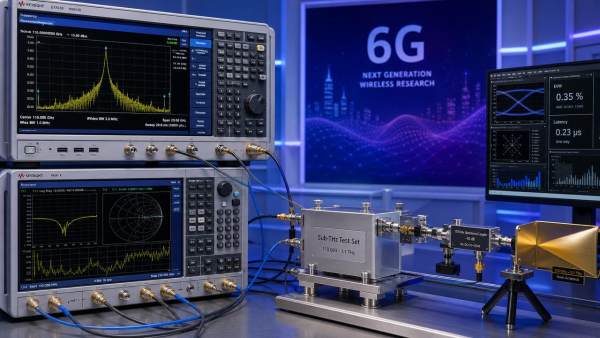
 May 02, 20266G Measurement Basics: What Actually Matters in Early Testing6G Measurement explained clearly: learn which early-test factors really matter—frequency stability, signal integrity, latency behavior, and repeatability—to compare claims with confidence.
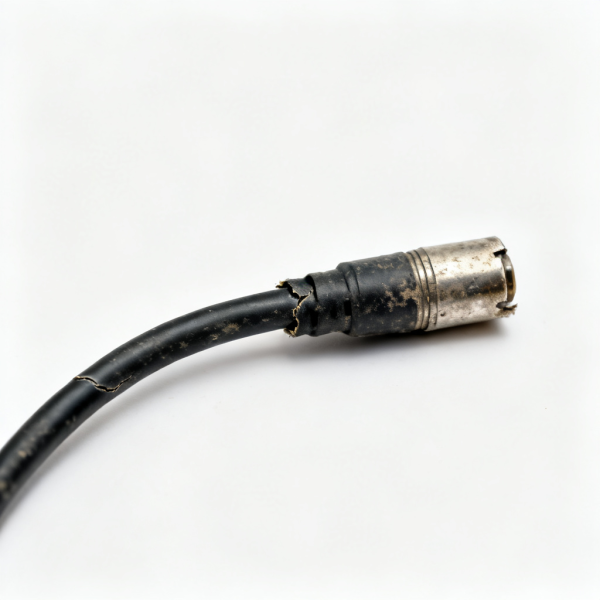
 Apr 24, 2026Electrical Test Repeatability Drops Fast When Cables AgeElectrical Test repeatability drops as cables age. Learn how Industrial Sensors, Spectrum Analyzers, IEEE Standards and NIST Standards help reduce drift and protect data confidence.