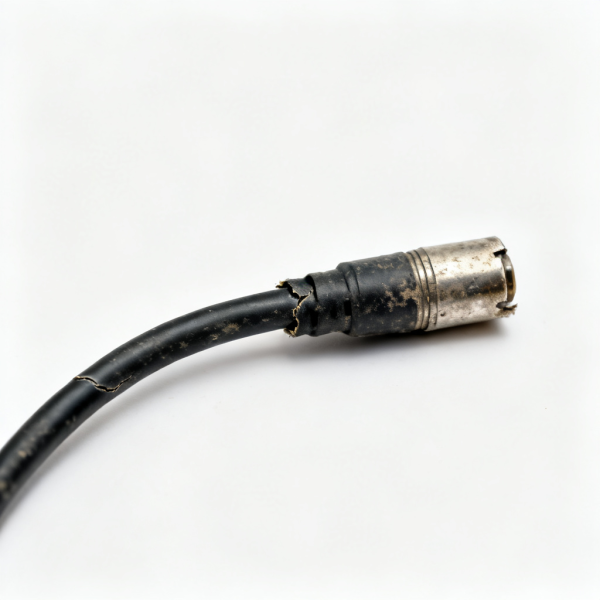
Electrical Test Repeatability Drops Fast When Cables Age
Time
Click Count
As cables age, electrical test repeatability often deteriorates much earlier than teams expect. The problem is not only cable failure in the obvious sense, but a gradual drift in signal integrity, contact stability, shielding performance, and impedance behavior that undermines confidence in every repeated measurement. For engineers, quality teams, buyers, and plant decision-makers working with sensory technology, industrial sensors, spectrum analyzers, and systems aligned with IEEE standards or NIST standards, the practical conclusion is clear: aging cables should be treated as a measurable source of uncertainty, not a passive accessory.
In most industrial and lab environments, poor repeatability is first blamed on instruments, operators, fixtures, or environmental changes. But in many cases, the cable assembly is the silent variable. When that variable is ignored, teams risk false failures, hidden escapes, longer debug cycles, unnecessary recalibration, and poor procurement decisions. The most effective response is to build cable condition into test planning, maintenance, acceptance criteria, and replacement strategy.
Why do aging cables reduce electrical test repeatability so quickly?
Repeatability drops fast because cable degradation directly affects the signal path. A cable does not need to be fully broken to become unreliable. Small changes in conductor integrity, dielectric properties, shielding effectiveness, connector wear, and strain history can produce measurement variation long before a total failure appears.
In practical test environments, repeatability declines for several reasons:
- Connector wear and contact instability: Repeated mating cycles increase contact resistance and micro-motion, especially in high-frequency and low-level signal applications.
- Shield degradation: Aging or damaged shielding increases susceptibility to EMI, which can distort readings and raise test-to-test variation.
- Dielectric aging: Insulation materials change over time due to heat, humidity, bending, and chemical exposure, altering capacitance and impedance behavior.
- Mechanical fatigue: Repeated flexing creates intermittent faults that may only appear in certain positions or during movement.
- Surface contamination and oxidation: Connector surfaces accumulate residues or oxidation layers, reducing signal consistency.
- Thermal stress: Temperature cycling accelerates material expansion, contraction, and long-term instability.
This is why teams can see stable instrument calibration but still get poor repeatability at the point of test. The cable becomes a variable amplifier of uncertainty.
What are the first warning signs that cable aging is affecting test results?
Most organizations do not discover cable aging through a single catastrophic event. They see a pattern of small anomalies that appear unrelated at first. Recognizing these early signals helps prevent larger quality and uptime losses.
Common warning signs include:
- Results that drift between repeated tests on the same unit
- Measurements that improve after reconnecting or repositioning the cable
- Intermittent failures that cannot be reproduced consistently
- Unexpected variation between operators or test stations
- Higher noise floor in spectrum analyzer or sensor-based measurements
- More frequent out-of-tolerance events without a clear product defect trend
- Test failures concentrated on older harnesses, adapters, or high-use assemblies
For quality managers and safety teams, these signs matter because they indicate not only measurement instability but also a traceability risk. If repeatability is compromised, test evidence becomes harder to defend in audits, customer investigations, or regulated production environments.
Which applications are most vulnerable to cable-related repeatability loss?
The impact is highest anywhere signal integrity and precision matter. In low-risk systems, a degraded cable may only cause occasional inconvenience. In advanced manufacturing, validation labs, semiconductor workflows, aerospace programs, and sensor-driven automation, the same issue can create costly decisions based on unreliable data.
High-risk scenarios include:
- High-frequency measurement: RF and microwave applications are highly sensitive to impedance mismatch, insertion loss, and shielding degradation.
- Precision sensor systems: Industrial sensors and sensory technology platforms can show unstable outputs when cable noise or resistance shifts occur.
- Automated production testing: High-cycle fixtures accelerate cable wear and create station-to-station inconsistency.
- Metrology-linked electrical validation: Repeatability issues can corrupt correlation between dimensional, electrical, and environmental data.
- Harsh environments: Heat, vibration, oil mist, moisture, and chemical exposure age cable materials faster.
- Compliance testing: Where IEEE standards, NIST standards, or internal quality protocols require defensible measurement performance, cable degradation can undermine the entire chain of confidence.
For procurement and project leaders, this means cable selection should match not only nominal electrical specifications but also real operating stress, mating frequency, maintenance capacity, and expected service life.
How should engineers and quality teams diagnose the real source of repeatability loss?
When repeatability drops, teams often lose time replacing instruments or adjusting software before checking the interconnect path. A more effective approach is structured isolation.
Start with the following sequence:
- Compare with a known-good cable: The fastest way to isolate the issue is substitution with a verified reference cable.
- Inspect connectors and strain points: Look for bent contacts, looseness, oxidation, jacket damage, or stress near termination points.
- Perform controlled repeat tests: Run repeated measurements with cable position fixed, then vary cable movement intentionally to detect sensitivity.
- Check environmental influence: Evaluate whether humidity, temperature, vibration, or nearby EMI sources worsen variability.
- Review usage history: Cables in high-flex or high-mating applications often fail earlier than their calendar age suggests.
- Measure electrical parameters directly: Depending on the application, examine continuity, insulation resistance, return loss, insertion loss, or time-domain behavior.
- Document uncertainty impact: If the cable shifts measured values or variance beyond acceptable limits, treat it as a controlled quality variable.
This method matters for technical evaluators because it separates true product variation from measurement system variation. That distinction is critical in root-cause analysis, supplier qualification, and process capability studies.
What replacement and maintenance strategy makes the most business sense?
The best strategy is not “replace only when broken” and not “replace everything on a calendar” either. The most cost-effective model is risk-based cable lifecycle management.
A practical framework includes:
- Classify cables by measurement criticality: High-frequency, safety-related, and precision-test cables deserve stricter control than low-risk utility connections.
- Track usage, not just age: Mating cycles, flex cycles, and environmental exposure often predict failure better than elapsed time.
- Create acceptance baselines: Record baseline performance when a cable enters service so future drift can be compared objectively.
- Standardize inspection intervals: Tie visual checks and verification tests to production volume or operating hours.
- Maintain certified spares: Keep known-good replacements ready for critical stations to minimize downtime.
- Control supplier quality: Evaluate suppliers not only on price but also shielding quality, connector durability, documentation, and consistency.
- Retire cables based on measurement risk: Replace once repeatability impact becomes meaningful, even if the cable still “works.”
For enterprise decision-makers, the return on this approach is straightforward: fewer false rejects, fewer hidden escapes, lower troubleshooting cost, stronger audit readiness, and more reliable production data. In many environments, the cost of one unresolved repeatability issue exceeds the cost of a disciplined cable management program.
How should buyers and technical evaluators assess cables before purchase?
Buying cables for electrical testing should not be treated as a commodity decision, especially in advanced industrial measurement. The right evaluation criteria depend on application stress, signal sensitivity, and required confidence level.
Key questions to ask suppliers include:
- What are the verified electrical performance limits over time, not just at delivery?
- How many mating cycles are connectors rated for under real use conditions?
- What shielding design and materials are used?
- How is strain relief engineered for repeated motion or operator handling?
- What traceability or test documentation is provided?
- Are assemblies validated against relevant IEEE standards, NIST-aligned methods, or internal industrial benchmarks?
- Can the supplier provide consistency data across batches?
Distributors and resellers can also add value here by helping customers match cable assemblies to lifecycle and measurement risk, rather than selling only on connector type or nominal bandwidth.
What is the practical takeaway for organizations that depend on repeatable measurements?
If your electrical test repeatability is degrading faster than expected, aging cables should be one of the first suspects. They are often overlooked because they rarely fail in a dramatic, easy-to-identify way. Instead, they erode measurement confidence gradually through intermittent instability, higher noise, altered impedance behavior, and connector inconsistency.
The most resilient organizations treat cables as controlled assets within the measurement system. They define baselines, monitor degradation, align replacement with risk, and evaluate suppliers based on long-term performance, not initial price alone. That approach protects uptime, product quality, compliance defensibility, and decision accuracy across labs, production lines, and field-service environments.
In short, aging cables do not just affect connectivity. They affect trust in data. And once repeatability is compromised, every downstream quality and business decision becomes less reliable.
Recommended News