6G Measurement Basics: What Actually Matters in Early Testing
Time
Click Count
As 6G research accelerates, early testing is less about chasing headline speeds and more about validating what truly affects future performance: frequency stability, signal integrity, latency behavior, and measurement repeatability. For information seekers evaluating 6G Measurement, understanding these fundamentals is essential to separate marketing claims from technical readiness and make better-informed benchmarking decisions.
Why a checklist approach works better for early 6G Measurement
At the early research stage, 6G Measurement is not yet a single, settled discipline with one universal test script. It spans sub-THz exploration, AI-native network behavior, ultra-low-latency targets, sensing-communication convergence, and new channel models. That means information seekers can easily get lost in buzzwords or overvalue one eye-catching data point. A checklist approach keeps the evaluation grounded in what can actually be measured, compared, repeated, and trusted.
For technical benchmarking teams, procurement researchers, and decision support analysts, the key question is not “Who claims the fastest 6G?” but “Which early test results are meaningful enough to support future planning?” In practice, useful 6G Measurement should answer three things: whether the setup reflects realistic operating conditions, whether the results are repeatable, and whether the metrics connect to future deployment decisions.
First-pass checklist: what to confirm before trusting any 6G Measurement result
Before comparing platforms, labs, or white papers, start with these priority checks. They help filter weak claims and highlight technically credible work.
- Frequency range clarity: Confirm the tested band, bandwidth, and intended use case. Results at lower microwave frequencies are not equivalent to sub-THz behavior.
- Measurement objective: Identify whether the test focuses on radio performance, channel characterization, latency, beamforming, sensing integration, or system-level reliability.
- Instrument traceability: Check whether the setup references recognized calibration and quality frameworks such as ISO/IEC 17025, IEEE methods, or NIST-linked traceability.
- Repeatability conditions: Ask whether the same result was reproduced across time, operators, environmental conditions, or device samples.
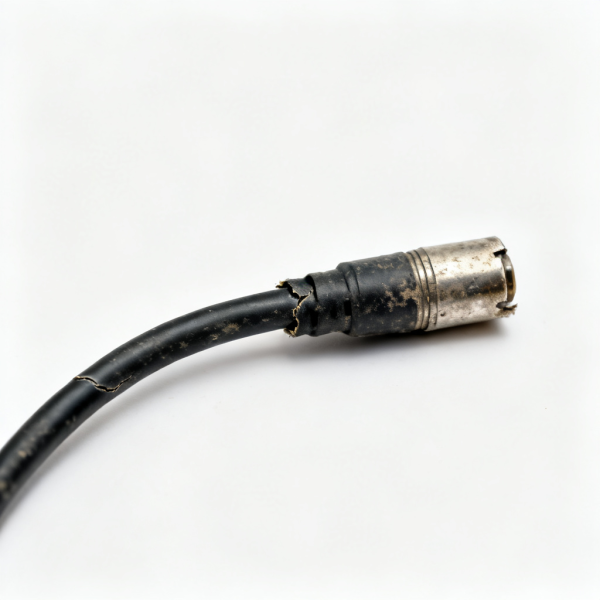
- Signal path integrity: Review cable loss, connector quality, front-end linearity, phase noise, and conversion artifacts that may distort the reading.
- Test environment disclosure: Determine whether the result came from simulation, shielded lab testing, over-the-air measurement, or dynamic real-world emulation.
- Metric relevance: Make sure the reported metric supports a future engineering or procurement decision rather than serving only as a demonstration number.
Core 6G Measurement factors that actually matter
1. Frequency stability is more important than peak claims
In early 6G Measurement, high frequency operation introduces oscillator drift, phase noise, and synchronization challenges that can undermine every downstream result. A system that briefly reaches an impressive throughput level may still be unsuitable if its frequency reference is unstable. Information seekers should prioritize evidence of stable carriers, consistent locking behavior, and clear reporting of drift over time.
Useful indicators include phase noise characterization, frequency error tolerance, local oscillator stability, and synchronization method under test. If these basics are missing, then claims around beam control, throughput, or sensing precision become much harder to trust.
2. Signal integrity determines whether the measurement is usable
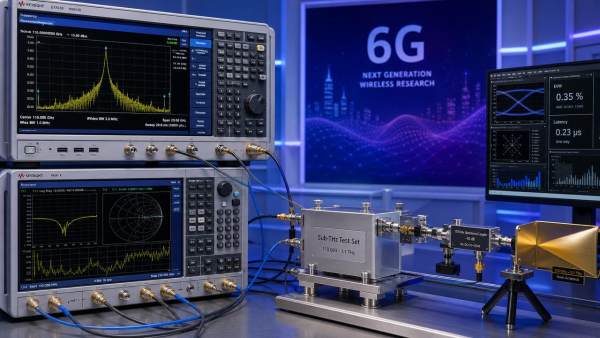
Signal integrity is central to meaningful 6G Measurement because sub-THz and ultra-wideband testing can amplify distortion, attenuation, crosstalk, and nonlinear effects. A clean measurement chain is often more valuable than a complex one. Researchers should ask how the lab controls insertion loss, dynamic range, error vector magnitude, modulation quality, and front-end compression.
This is especially relevant for organizations comparing spectrum analyzers, vector network analyzers, signal generators, and over-the-air chambers. If the instrument stack cannot preserve waveform fidelity, then system behavior may be misread as a device problem when it is really a test architecture problem.
3. Latency behavior matters more than average latency alone
Many early studies highlight a low average latency figure, but for 6G Measurement, jitter, tail latency, scheduling response, and consistency under load are often more important. Future industrial, aerospace, and machine autonomy applications depend on deterministic performance, not just occasional speed. Therefore, test reports should show latency distribution, not a single average.
A stronger benchmark includes packet timing variation, end-to-end versus air-interface separation, congestion behavior, and synchronization across nodes. These details help decision-makers understand whether the network can support precision control, time-sensitive sensing, or edge AI coordination.
4. Repeatability is the dividing line between research and readiness
Repeatability is one of the most undervalued aspects of 6G Measurement. Early-stage demonstrations are often impressive but fragile. If results change substantially with a different operator, cable set, ambient condition, or antenna alignment, the data may be interesting for exploration but weak for planning. Robust repeatability gives confidence that the result reflects system capability rather than laboratory luck.
When reviewing data, look for test-retest consistency, uncertainty reporting, calibration intervals, and operator procedure control. These are standard signs of mature measurement practice and align with the benchmarking rigor valued by technical intelligence hubs such as G-IMS.
A practical evaluation table for comparing early 6G Measurement programs
The table below can help information seekers compare laboratories, vendors, and research reports using decision-oriented criteria instead of headline metrics.
What changes by scenario: the same 6G Measurement does not fit every use case
Early 6G Measurement should also be judged by intended application context. The right priorities differ by scenario, and this is where many broad market summaries become misleading.
For industrial automation and precision manufacturing
Prioritize low jitter, synchronization accuracy, electromagnetic resilience, and stable behavior near machinery. In these environments, a small timing inconsistency can matter more than peak throughput. Measurement repeatability under interference and reflective surfaces is especially important.
For aerospace and high-reliability systems
Focus on traceability, environmental tolerance, fault response, and long-duration stability. Early 6G Measurement here should include behavior across temperature variation, vibration-sensitive setups, and strict uncertainty documentation.
For research labs and advanced component development
The priority is often frequency extension, channel exploration, antenna behavior, and sensing-communication integration. However, even exploratory setups should document calibration discipline and uncertainty, or their results will remain hard to benchmark externally.
For procurement and technology scouting teams
The key is comparability. Ask vendors to present 6G Measurement methods in the same structure: test objective, setup, environment, uncertainty, repeatability, and standards alignment. Without a common reporting format, product comparisons become unreliable.
Commonly ignored issues that weaken 6G Measurement decisions
- Confusing simulation output with measured performance. Simulations are useful, but they are not a substitute for instrument-backed validation.
- Overlooking environmental sensitivity. At higher frequencies, minor alignment shifts, temperature changes, and material interactions can materially alter results.
- Ignoring uncertainty budgets. A result without uncertainty context may look precise while actually being weakly controlled.
- Using incompatible benchmark conditions. Comparing indoor static tests with dynamic over-the-air tests creates false conclusions.
- Focusing only on throughput. Throughput is useful, but frequency stability, latency behavior, and repeatability usually say more about future readiness.
- Assuming all sub-THz tools perform equally. Front-end architecture, calibration quality, and sensitivity differ widely across platforms.
Execution advice: how to organize your next 6G Measurement review
If your organization is moving from general research into structured evaluation, the most efficient next step is to standardize the review process. This reduces noise and helps internal teams compare external findings on the same basis.
- Build a one-page review template covering band, setup, calibration status, environment, key metrics, uncertainty, and repeatability.
- Separate exploratory metrics from decision metrics. Not every interesting result should influence roadmap or sourcing decisions.
- Request raw context, not just summary figures. Plots, retest records, and method descriptions often reveal more than headline numbers.
- Define minimum acceptability thresholds for repeatability and traceability before comparing vendors or laboratories.
- Map each 6G Measurement result to a business use case such as industrial control, advanced sensing, or high-frequency component development.
FAQ: quick answers for information seekers evaluating 6G Measurement
Is the highest frequency result always the most valuable?
No. A lower-frequency test with strong traceability, repeatability, and signal integrity can be more decision-useful than a higher-frequency demonstration with weak controls.
What is the best single indicator of credible early 6G Measurement?
There is no single indicator, but repeatability supported by clear calibration and uncertainty reporting is one of the strongest signs that the result deserves attention.
Why do different labs report very different performance?
Differences often come from setup architecture, environment, signal chain quality, processing methods, and inconsistent definitions of the metric being reported.
What to ask next before moving forward
For anyone assessing 6G Measurement, the smartest next step is not to ask for bigger numbers, but better evidence. Request the test conditions, calibration approach, uncertainty method, retest history, and intended application relevance. If you are comparing instruments, labs, or technical partners, also ask about parameter ranges, setup adaptability, validation cycle time, and how results align with future procurement or R&D milestones.
In practical terms, organizations should prioritize discussions around measurable fit: which frequency ranges matter, which latency behaviors are acceptable, what repeatability threshold is required, what standards support the workflow, and what budget or timeline is realistic for deeper benchmarking. That is where early 6G Measurement becomes actionable instead of promotional.
Recommended News
 May 02, 20266G Measurement Basics: What Actually Matters in Early Testing6G Measurement explained clearly: learn which early-test factors really matter—frequency stability, signal integrity, latency behavior, and repeatability—to compare claims with confidence.
 Apr 24, 2026Electrical Test Repeatability Drops Fast When Cables AgeElectrical Test repeatability drops as cables age. Learn how Industrial Sensors, Spectrum Analyzers, IEEE Standards and NIST Standards help reduce drift and protect data confidence.