Specialized Sensors for High-Temperature Applications Compared
Time
Click Count
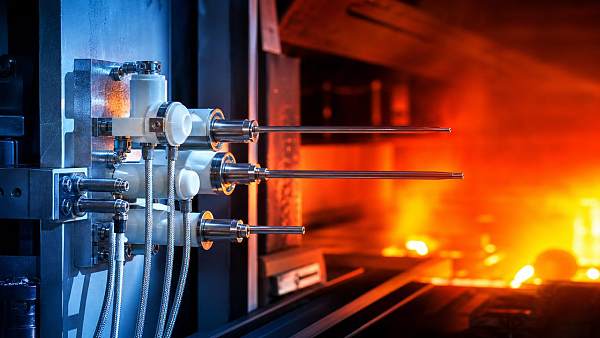
Specialized Sensors for High-Temperature Applications are essential wherever heat directly affects quality, safety, and process continuity.
In aerospace, energy, electronics, metallurgy, and advanced manufacturing, thermal exposure can quickly degrade standard sensing devices.
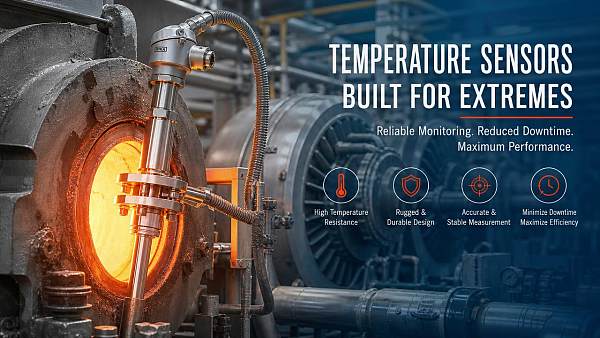
That is why Specialized Sensors for High-Temperature Applications must combine measurement accuracy, material resilience, and long-term signal stability.
A useful comparison goes beyond temperature range alone.
It should include drift behavior, response speed, installation limits, calibration needs, and compatibility with industrial control systems.
This overview compares major sensor categories and outlines practical criteria for evaluating high-heat monitoring solutions across demanding industrial environments.
Definition and Performance Scope
Specialized Sensors for High-Temperature Applications are devices designed to measure temperature or heat-related variables under sustained thermal stress.
These variables may include surface temperature, gas temperature, radiant energy, thermal gradients, and heat-driven process changes.
Unlike general-purpose sensors, high-temperature designs use specialized alloys, ceramics, sapphire, platinum, or optical components.
Their packaging also matters.
Sheathing, insulation, sealing methods, and connector selection often determine whether the sensor survives actual operating conditions.
For technical benchmarking, performance is usually judged through five baseline factors:
- Maximum continuous operating temperature
- Measurement accuracy and repeatability
- Signal drift over time and thermal cycling
- Mechanical and chemical resistance
- Ease of calibration and system integration
In many industrial settings, failure occurs because the selected sensor matches the temperature, but not the atmosphere or duty cycle.
Current Industry Focus in High-Heat Measurement
The market for Specialized Sensors for High-Temperature Applications is shaped by stricter process windows and tighter traceability expectations.
More production lines now require thermal data that supports predictive control, zero-defect quality targets, and digital compliance records.
Several trends are driving renewed comparison of sensor technologies:
As a result, evaluation now focuses on whole-system reliability, not only raw sensing element capability.
Comparison of Major Sensor Types
Several technologies dominate Specialized Sensors for High-Temperature Applications, each suited to different temperature bands and process constraints.
Thermocouples
Thermocouples remain the most common choice for broad industrial use.
They offer wide temperature range, fast response, compact form factors, and relatively low cost.
Base-metal types suit furnaces and ovens, while noble-metal versions support hotter and more stable environments.
Their main limitation is drift, especially during prolonged exposure, contamination, or repeated thermal cycling.
RTDs and Platinum Sensors
RTDs provide high accuracy and excellent repeatability within moderate high-temperature ranges.
They are valuable where precise control matters more than extreme upper temperature capability.
Platinum elements are favored for stable calibration behavior.
However, vibration, shock, and very high temperatures can shorten life or increase measurement error.
Infrared and Pyrometric Sensors
Non-contact infrared sensors are important when direct contact is impossible, unsafe, or contaminating.
They are widely used for moving targets, rotating parts, molten materials, and vacuum or sterile conditions.
Their performance depends heavily on emissivity control, optical path cleanliness, and target geometry.
Without proper setup, apparent temperature can differ significantly from actual process temperature.
Fiber Optic Temperature Sensors
Fiber optic designs support electrical isolation and resistance to electromagnetic interference.
They are useful near high voltage, RF-rich systems, and sensitive electronics production tools.
Some versions also tolerate harsh chemical surroundings better than conventional probes.
Complexity and cost are usually higher, and installation requires careful optical protection.
Semiconductor and Ceramic-Based Sensors
These sensor families are gaining attention in embedded systems and compact assemblies.
Advanced ceramic packaging can improve survivability in corrosive or mechanically aggressive heat zones.
Selection should be tied to proven field data, because long-term drift characteristics can vary widely by design.
Operational Value Across Industrial Environments
The practical value of Specialized Sensors for High-Temperature Applications lies in better process visibility and lower unplanned failure risk.
Accurate thermal sensing helps maintain product properties, energy efficiency, and regulatory compliance in heat-sensitive production steps.
In precision sectors, small thermal deviations can affect dimensional stability, coating adhesion, crystal growth, or material hardness.
Reliable thermal data also improves root-cause analysis.
When integrated with analytics, it can reveal hidden drift, insulation breakdown, burner imbalance, or early equipment degradation.
- Reduced scrap caused by thermal inconsistency
- Safer operation in furnaces, kilns, reactors, and engines
- More stable batch-to-batch performance
- Improved maintenance planning through trend monitoring
- Stronger documentation for quality and audit requirements
Typical Application Categories
Choosing Specialized Sensors for High-Temperature Applications becomes easier when linked to the real thermal behavior of each process.
Selection Guidance and Implementation Notes
A strong selection process for Specialized Sensors for High-Temperature Applications should begin with the full thermal environment, not the catalog maximum rating.
Temperature level is only one input.
Atmosphere, pressure, vibration, contamination, mounting distance, and expected service interval are equally important.
- Define continuous temperature and short-term peak temperature separately.
- Check whether the target is a surface, gas, liquid, or radiating body.
- Review chemical exposure, oxidation risk, and abrasion conditions.
- Estimate acceptable drift between calibration intervals.
- Verify signal compatibility with existing PLC, SCADA, or analytics systems.
- Request traceable test data under conditions close to actual use.
Field validation is especially important.
A sensor that performs well in laboratory conditions may fail early in dirty, dynamic, or poorly shielded installations.
For long-life deployments, it is often wise to evaluate sensor element, sheath, connector, cable, and mounting assembly as one monitored package.
Next-Step Evaluation Framework
When comparing Specialized Sensors for High-Temperature Applications, a structured shortlist can reduce technical and operational risk.
Start with two or three candidate technologies, then compare them against real process temperatures, expected drift, maintenance windows, and integration needs.
Use pilot testing to confirm response behavior, survivability, and data consistency before standardizing across lines or facilities.
The best Specialized Sensors for High-Temperature Applications are not simply those rated for the hottest environment.
They are the ones that deliver stable, traceable, and actionable thermal intelligence over the full operating lifecycle.
A disciplined evaluation approach supports better uptime, tighter process control, and more confident investment decisions in high-precision industrial systems.
Recommended News
 Jun 11, 2026Photonic Sensors for Environmental Monitoring: Best Field Use CasesPhotonic Sensors for Environmental Monitoring: explore best field use cases in air, water, and industrial sites to improve detection speed, compliance, and safer decisions.
 Jun 08, 2026Smart Fabrics in 2026: Practical Uses, Limits, and Market DirectionSmart fabrics in 2026 are moving from hype to real business value. Explore practical uses, key limits, and market direction across healthcare, safety, logistics, and performance.
 Jun 03, 2026Wearable Technology in 2026: Key Safety and Productivity Use CasesLearn how Wearable technology in 2026 improves workplace safety, productivity, fatigue monitoring, and ROI with practical enterprise use cases and pilot tips.
 May 22, 2026Specialized Sensors for High-Temperature Applications: What Fails FirstSpecialized Sensors for High-Temperature Applications: learn what fails first—from drift and insulation breakdown to connector issues—and reduce downtime with a practical diagnostic checklist.
 May 15, 2026Specialized Sensors for High-Temperature Applications ComparedSpecialized Sensors for High-Temperature Applications compared: explore thermocouples, RTDs, infrared, and fiber optic options to improve accuracy, reliability, and process control.
 May 04, 2026Specialized Sensors for High-Temperature Applications: What Reduces DowntimeSpecialized Sensors for High-Temperature Applications help cut downtime in furnaces, turbines, and process lines with better stability, faster fault detection, and longer service life.
 Apr 24, 2026Environmental Monitoring Sensors That Drift Too FastEnvironmental Monitoring sensors drifting too fast can compromise compliance and quality. Learn how Electrical Test equipment, 3D Scanning for quality control, and NIST Standards for calibration help reduce risk.
 Apr 24, 2026Industrial Sensors That Fail Early in High Humidity SettingsIndustrial Sensors in high humidity can drift, corrode, and fail early. Explore 3D Scanning, Spectrum Analyzers, Electrical Test, Hyperspectral Imaging, CMM, and IEEE/NIST-based selection tips.