How Infrastructure Developers Compare Site Risks Before Buildout
Time
Click Count
How Infrastructure Developers Compare Site Risks Before Buildout
Before capital is committed, Infrastructure Developers rarely judge a site on land price alone.
A lower-cost parcel can carry hidden exposure that later inflates schedules, claims, and operating costs.
That is why risk comparison now starts with measurable evidence, not early optimism.
For roads, plants, logistics hubs, utilities, and data centers, the same question applies.
Which location gives the strongest long-term buildout case once technical, regulatory, and operational risks are compared side by side?
The answer usually comes from disciplined screening, field validation, and a practical ranking model.
In real projects, this also means combining engineering data with business timing and compliance reality.
Why Infrastructure Developers Treat Site Risk as a Decision Variable
A site is not only a location.
It is a bundle of conditions that will affect engineering design, procurement strategy, and construction sequencing.
Infrastructure Developers compare these conditions early because late-stage surprises are expensive.
Weak soil may require deeper foundations.
Flood exposure may push platform elevation and drainage redesign.
Utility uncertainty may delay commissioning long after civil works finish.
A site that looks efficient on paper can become the weakest option after risk-adjusted comparison.
This is even more obvious in sectors where uptime, precision, or regulatory traceability matter.
Recent shifts also reinforce this approach.
Climate volatility, stricter environmental review, and grid constraints all increase the value of pre-build evidence.
The Core Risk Categories Compared Before Buildout
Most Infrastructure Developers begin with a structured risk map.
The goal is simple.
Compare each site using the same categories before emotional preference enters the process.
1. Geotechnical and Ground Stability Risk
Ground conditions shape cost more than many early models admit.
Soil bearing capacity, settlement behavior, rock depth, and groundwater movement all matter.
If a site requires heavy stabilization, the low acquisition cost quickly loses meaning.
- Review borehole data, historical land use, and subsurface variability.
- Check seismic classification and nearby slope failure history.
- Estimate foundation redesign probability, not only baseline design cost.
2. Environmental and Climate Exposure
Environmental exposure is no longer a background issue.
It directly influences insurability, permitting, and lifecycle resilience.
Infrastructure Developers now compare flood pathways, heat stress, wind intensity, and contamination legacy with greater rigor.
- Map flood recurrence and drainage bottlenecks.
- Screen for soil, groundwater, or air-quality liabilities.
- Assess climate resilience over the full operating horizon.
3. Utility and Access Reliability
A technically strong parcel can still fail if utilities are unreliable.
Power capacity, water availability, telecom resilience, and transport access all affect readiness.
For high-demand assets, grid lead times can be more decisive than land economics.
- Verify committed utility capacity, not informal estimates.
- Check redundancy options and outage history.
- Measure route constraints for oversized equipment and heavy transport.
4. Regulatory and Entitlement Constraints
Permitting risk often hides behind vague assumptions.
Zoning alignment does not guarantee a smooth approval path.
Protected habitats, setback rules, emissions thresholds, and community review can all change schedule confidence.
- Review entitlement history for similar projects nearby.
- Identify conditions likely to trigger deeper studies.
- Model approval timing using realistic agency response cycles.
How Infrastructure Developers Build a Risk Comparison Framework
A useful framework does more than list risks.
It converts mixed technical findings into comparable decision inputs.
In practice, Infrastructure Developers often combine probability, impact, cost sensitivity, and schedule sensitivity.
- Define the non-negotiables first, such as power availability, flood tolerance, or seismic limits.
- Score each site with identical criteria and evidence thresholds.
- Separate confirmed facts from assumptions needing field validation.
- Apply weighted scoring based on business model and asset criticality.
- Stress-test the ranking with worst-case and delay scenarios.
This method keeps a flashy site from winning on aesthetics or early pricing alone.
It also creates a transparent record for internal approval and procurement alignment.
Example of a Practical Comparison Table
A table like this keeps discussions grounded in evidence.
It also helps Infrastructure Developers explain why the safest choice may not be the cheapest parcel.
Why Measurement Quality Changes the Outcome
Risk comparison is only as strong as the data behind it.
This is where advanced measurement and sensor-driven verification become valuable.
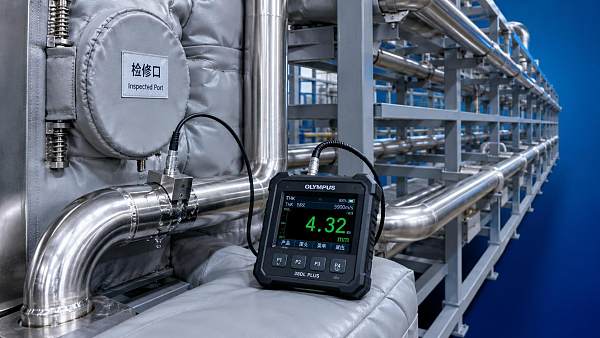
High-resolution terrain mapping, subsurface investigation, environmental sensing, and utility diagnostics reduce assumption gaps.
For Infrastructure Developers, better measurement means earlier detection of cost-moving conditions.
That can include unnoticed drainage patterns, vibration exposure, thermal variation, or contamination spread.
From the G-IMS perspective, this is where technical due diligence becomes more than a checklist.
It becomes a measurable path from field conditions to intelligent action.
- Use calibrated instruments and traceable test protocols.
- Benchmark findings against recognized standards where relevant.
- Document uncertainty ranges, not only headline values.
- Link measurements directly to design and schedule decisions.
Common Mistakes Infrastructure Developers Should Avoid
Even experienced teams can misread site risk when deadlines compress early evaluation.
The most common mistakes are usually avoidable.
- Overweighting land price while underweighting utility lead times.
- Accepting desktop data without targeted field confirmation.
- Treating environmental review as a late legal task.
- Using generic scoring models for highly specialized assets.
- Failing to update rankings when new evidence changes assumptions.
A better approach is iterative.
Initial screening narrows options.
Focused measurements then refine the decision before full commitment.
A Simple Pre-Buildout Decision Sequence
For Infrastructure Developers comparing several candidate sites, a practical sequence keeps teams aligned.
- Set business priorities, critical loads, and schedule boundaries.
- Screen sites using public records, mapping, and preliminary utility input.
- Commission targeted geotechnical and environmental investigations.
- Build a weighted risk matrix with cost and delay scenarios.
- Review the top option against a fallback site before final approval.
This sequence is not complicated.
What matters is discipline, evidence quality, and willingness to reject a risky favorite.
Final Takeaway
The strongest site decision is rarely the one with the lowest headline cost.
It is the one Infrastructure Developers can defend with clear measurements, realistic assumptions, and risk-adjusted logic.
When geotechnical, environmental, utility, and compliance factors are compared early, buildout becomes more predictable.
That improves not only schedule confidence, but also long-term asset performance.
Before moving to land commitment or design lock, compare what the site can hide, not only what it appears to offer.
That is usually where the smartest infrastructure decision begins.
Recommended News
 Sep 17, 2026How to select inline measurement systems for Middle East heatInline Measurement Systems Middle East: learn how to select reliable solutions for heat, dust, vibration, calibration, and production-ready data integration.
 Sep 16, 2026How to choose monitor stands that reduce neck strain at workMonitor stands can reduce neck strain by improving screen height, distance, and stability. Explore practical tips to choose the right ergonomic stand for a more comfortable workspace.
 Sep 15, 2026How to verify an importers directory for machinery before contacting suppliersImporters directory for machinery verification guide: assess legal status, technical fit, compliance, and service capability to build a reliable supplier shortlist.
 Sep 13, 2026How to assess calibration support from metrology suppliers in the Middle EastMetrology suppliers Middle East: learn how to assess ISO/IEC 17025 scope, calibration uncertainty, local support, turnaround time, and lifecycle cost.
 Sep 12, 2026How material fatigue causes cracks in safety-critical componentsMaterial fatigue can trigger hidden cracks in safety-critical components long before visible failure. Learn how cyclic loading, stress concentrations, inspection methods, and targeted controls reduce risk.
 Sep 10, 2026What to verify before choosing an optical micrometer supplier for wireChoose an optical micrometer supplier for wire with confidence. Verify real-line accuracy, calibration, integration, and support before you buy.
 Sep 08, 2026How to choose thickness gauges for pipes with limited accessThickness Gauges for pipes: learn how to select the right ultrasonic gauge and probe for tight access, curved surfaces, corrosion, coatings, and reliable readings.
 Sep 07, 2026How to choose anti-aging face serums for your skin typeantiagingfaceserums made simple: discover the best ingredients, textures, and routines for dry, oily, sensitive, or combination skin—plus tips for visible results.
 Sep 05, 2026How to choose sheet metal components for tight-tolerance assembliesSheet metal components for tight-tolerance assemblies: learn how to align materials, datums, forming, finishes, and inspection for reliable fit and repeatable performance.
 Sep 04, 2026What accuracy should a digital temperature humidity sensor have?Digital temperature humidity sensor accuracy explained: compare temperature and RH limits, resolution, drift, calibration, and installation effects to choose reliable performance for your application.
 Sep 03, 2026How to choose glamping tents for eco resorts in high-wind locationsGlamping Tents for eco resorts: discover how to choose wind-resistant structures, engineered anchors, and durable materials for safer, sustainable stays.
 Sep 02, 2026How to assess a bore gauge manufacturer in Latin America for measurement reliabilityBore gauge manufacturer Latin America: learn how to verify calibration traceability, repeatability, service support, and shop-floor reliability before you buy.
 Sep 01, 2026What accuracy factors matter most in advanced metrology calibration?Advanced metrology calibration: discover the key accuracy factors—from traceability and uncertainty to environment, probes, and software—for reliable decisions.
 Aug 31, 2026When does legal tech make sense for a growing business?Legal tech helps growing businesses streamline contracts, compliance, IP, and audit controls. Discover the key signals, practical tools, and steps to scale with confidence.
 Aug 30, 2026How manufacturing tolerance affects thread gauge acceptance limitsThread gauge manufacturing tolerance affects acceptance limits, calibration confidence, wear risk, and inspection consistency. Learn how to prevent costly thread gauge errors.
 Aug 29, 2026How to choose office supplies that reduce waste in shared workspacesOffice supplies can cut waste and costs in shared workspaces. Discover practical procurement tips for durable, refillable, low-packaging products.
 Aug 28, 2026How to compare metrology equipment vendors for calibration supportMetrology equipment vendors: compare calibration scope, ISO/IEC 17025 support, downtime, documentation, and lifecycle costs to choose reliable service.
 Aug 27, 2026What to evaluate before choosing industrial inspection systems in AsiaIndustrial Inspection Systems Asia: evaluate accuracy, cycle time, automation, traceability, and local service to choose a reliable solution for smarter quality control.
 Aug 26, 2026Do dermarollers actually improve absorption of skincare productsDermarollers can improve skincare absorption, but not always safely. Learn when they help, which products to pair, and how to avoid irritation for better skin results.
 Aug 25, 2026What makes a high accuracy CMM probe reliable at tight tolerancesHigh accuracy CMM probe reliability depends on repeatability, stylus stability, calibration integrity, and system fit. Learn what ensures trusted results at tight tolerances.
 Aug 24, 2026When does an automated trade platform make sense for growing teams?Automated trade platform adoption makes sense when growing teams face supplier complexity, compliance risk, and limited visibility. Learn the signs, ROI factors, and how to scale with control.
 Aug 22, 2026How to vet an industrial measurement equipment supplier for calibration traceabilityIndustrial measurement equipment supplier selection starts with calibration traceability. Learn how to verify ISO/IEC 17025 evidence, uncertainty, and audit-ready documentation.
 Aug 20, 2026What is driving demand in the optical metrology market right nowOptical metrology market demand is rising as manufacturers need faster, non-contact, high-precision inspection for semiconductors, EVs, electronics, and automated production lines.
 Aug 18, 2026How to integrate a digital gauge RS232 output with SPC softwareDigital gauge RS232 output integration with SPC software: learn how to ensure stable data capture, traceability, and scalable deployment while avoiding hidden quality risks.