Eco-Friendly Gadgets Worth Watching in 2026
Time
Click Count
Sustainability is no longer a soft branding theme. In 2026, it is increasingly tied to capital planning, supplier selection, and operating resilience. That shift is why eco-friendly gadgets deserve closer attention. The most relevant devices are not novelty items. They are measurable tools that reduce energy waste, improve visibility, extend service life, and support lower-impact operations across offices, labs, facilities, and production environments.
For organizations balancing environmental targets with performance requirements, the conversation has matured. Buyers now look beyond recycled casings or minimal packaging. They want proof of efficiency, data quality, repairability, materials transparency, and lifecycle value. In that context, eco-friendly gadgets become part of a broader technology stack, especially where sensing, measurement, and environmental monitoring already shape daily decisions.
Why eco-friendly gadgets matter more in 2026
Several pressures are converging at once. Energy costs remain volatile. Reporting expectations are becoming stricter. Product teams are under pressure to show decarbonization progress with evidence, not claims.
At the same time, many digital tools now include embedded sensing, edge analytics, and smarter power management. That means eco-friendly gadgets can influence both sustainability metrics and operational efficiency.
This is especially relevant in environments where precision matters. G-IMS, with its focus on measurement intelligence, industrial optics, test systems, and environmental sensing, reflects a practical market reality: better data often leads to better resource use. When a device measures more accurately, sleeps more efficiently, or lasts longer in service, it reduces hidden waste across the system.
What counts as an eco-friendly gadget now
The term covers more than small electronics labeled “green.” In practice, eco-friendly gadgets are devices designed to lower environmental impact without weakening usability or technical performance.
That impact can come from several places. Power draw may be lower. Components may be modular. Sensors may help users avoid unnecessary energy use. Materials may be easier to recover. Firmware may extend product life through updates rather than replacement.
For serious evaluation, four questions matter:
- Does the device reduce energy or material consumption in real operating conditions?
- Can its environmental claims be verified through standards, test data, or lifecycle disclosures?
- Will the gadget remain useful, serviceable, and compatible over time?
- Does it create actionable data rather than adding another isolated endpoint?
The categories worth watching closely
Not every green-labeled device will matter equally. The most promising eco-friendly gadgets in 2026 tend to fall into a few high-value categories.
Smart environmental monitors
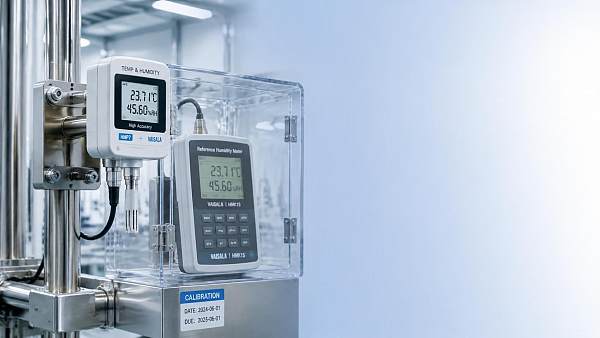
Compact monitors for air quality, temperature, humidity, particulates, and trace gases are becoming far more capable. Their value is no longer limited to compliance or comfort.
In buildings, they can support ventilation tuning and reduce over-conditioning. In technical spaces, they help protect process stability while avoiding unnecessary energy use. This links closely with the G-IMS emphasis on environmental monitoring and specialized sensors.
Low-power sensing and edge devices
Battery-efficient sensors, solar-assisted wireless nodes, and ultra-low-power gateways are expanding fast. These eco-friendly gadgets reduce maintenance visits, cabling demands, and wasted power from always-on legacy equipment.
They are especially useful where retrofits are more realistic than full infrastructure replacement.
Repairable mobile and desktop accessories
Charging hubs, peripherals, docking tools, and communication devices with replaceable batteries or modular parts are gaining strategic importance. They may look ordinary, yet they directly affect replacement cycles and electronic waste volumes.
A gadget that stays in service two extra years often delivers more environmental value than one marketed with greener packaging alone.
Precision energy-use trackers
Portable submeters, smart plugs for technical assets, and device-level power diagnostics are moving from consumer convenience into serious operational analysis. These eco-friendly gadgets expose idle loads, poor charging habits, and hidden consumption patterns.
Where measurement quality is critical, benchmarked test credibility matters. That is where standards-based evaluation becomes more useful than broad marketing claims.
How the value shows up in real operations
The practical appeal of eco-friendly gadgets is rarely about one dramatic saving. More often, value appears through many small improvements that compound over time.
The key point is that eco-friendly gadgets create value when they fit a workflow. A standalone device with no reporting path or maintenance plan usually underperforms, even if its hardware looks impressive.
What separates credible innovation from green noise
The market will remain crowded in 2026. Some devices will be genuinely useful. Others will rely on vague sustainability language with limited technical substance.
A stronger evaluation model includes performance evidence, not just eco claims. That means checking calibration integrity, energy-use profiles, environmental tolerances, update policy, component longevity, and interoperability.
This is where institutions like G-IMS offer a useful lens. In measurement-driven environments, devices are judged through benchmarking, standards alignment, and application relevance. The same discipline should apply when comparing eco-friendly gadgets.
- Ask for tested power consumption under realistic loads.
- Review serviceability, spare-part availability, and expected operating life.
- Check whether sensor outputs can feed existing dashboards or controls.
- Look for recognized standards, traceability, or third-party validation.
- Consider end-of-life recovery, not only first-purchase price.
Where adoption is likely to accelerate
Adoption will likely move fastest in spaces where sustainability and measurable performance already overlap. Facilities management is one example. Another is technical operations, where environmental drift or power inefficiency can create quality problems.
Eco-friendly gadgets also fit well into phased modernization. They allow organizations to improve visibility and reduce waste without waiting for large infrastructure overhauls.
That matters across a broad industry mix, from corporate campuses and healthcare sites to electronics assembly, logistics nodes, research centers, and clean manufacturing support spaces. In each case, the winning devices are likely to combine low-impact design with useful measurement intelligence.
How to build a practical watchlist
A useful watchlist should be narrower than the market hype. Focus on eco-friendly gadgets that solve a defined operational problem and produce evidence of improvement.
Usually, a practical review starts with three filters: where energy is being lost, where environmental conditions are poorly understood, and where replacement cycles are unnecessarily short.
From there, compare devices through a balanced lens:
- Technical fit with current systems and reporting tools
- Verified environmental benefit over the full lifecycle
- Durability in the intended operating environment
- Upgrade path, maintenance burden, and total ownership cost
- Quality of sensing, measurement, or control performance
That approach keeps eco-friendly gadgets connected to business logic rather than trend chasing.
A smarter next step
The most interesting eco-friendly gadgets in 2026 will not win attention through appearance alone. They will stand out because they help convert sustainability goals into measurable action.
A sensible next step is to map current pain points against a short list of devices with credible efficiency data, serviceable design, and useful sensing capability. Then compare those options using the same discipline applied to any critical technical investment.
In other words, watch the gadgets that do more than signal environmental intent. Watch the ones that measure well, last longer, integrate cleanly, and make lower-impact operations easier to prove.
Recommended News
 Sep 17, 2026How to select inline measurement systems for Middle East heatInline Measurement Systems Middle East: learn how to select reliable solutions for heat, dust, vibration, calibration, and production-ready data integration.
 Sep 16, 2026How to choose monitor stands that reduce neck strain at workMonitor stands can reduce neck strain by improving screen height, distance, and stability. Explore practical tips to choose the right ergonomic stand for a more comfortable workspace.
 Sep 15, 2026How to verify an importers directory for machinery before contacting suppliersImporters directory for machinery verification guide: assess legal status, technical fit, compliance, and service capability to build a reliable supplier shortlist.
 Sep 13, 2026How to assess calibration support from metrology suppliers in the Middle EastMetrology suppliers Middle East: learn how to assess ISO/IEC 17025 scope, calibration uncertainty, local support, turnaround time, and lifecycle cost.
 Sep 12, 2026How material fatigue causes cracks in safety-critical componentsMaterial fatigue can trigger hidden cracks in safety-critical components long before visible failure. Learn how cyclic loading, stress concentrations, inspection methods, and targeted controls reduce risk.
 Sep 10, 2026What to verify before choosing an optical micrometer supplier for wireChoose an optical micrometer supplier for wire with confidence. Verify real-line accuracy, calibration, integration, and support before you buy.
 Sep 08, 2026How to choose thickness gauges for pipes with limited accessThickness Gauges for pipes: learn how to select the right ultrasonic gauge and probe for tight access, curved surfaces, corrosion, coatings, and reliable readings.
 Sep 07, 2026How to choose anti-aging face serums for your skin typeantiagingfaceserums made simple: discover the best ingredients, textures, and routines for dry, oily, sensitive, or combination skin—plus tips for visible results.
 Sep 05, 2026How to choose sheet metal components for tight-tolerance assembliesSheet metal components for tight-tolerance assemblies: learn how to align materials, datums, forming, finishes, and inspection for reliable fit and repeatable performance.
 Sep 04, 2026What accuracy should a digital temperature humidity sensor have?Digital temperature humidity sensor accuracy explained: compare temperature and RH limits, resolution, drift, calibration, and installation effects to choose reliable performance for your application.
 Sep 03, 2026How to choose glamping tents for eco resorts in high-wind locationsGlamping Tents for eco resorts: discover how to choose wind-resistant structures, engineered anchors, and durable materials for safer, sustainable stays.
 Sep 02, 2026How to assess a bore gauge manufacturer in Latin America for measurement reliabilityBore gauge manufacturer Latin America: learn how to verify calibration traceability, repeatability, service support, and shop-floor reliability before you buy.
 Sep 01, 2026What accuracy factors matter most in advanced metrology calibration?Advanced metrology calibration: discover the key accuracy factors—from traceability and uncertainty to environment, probes, and software—for reliable decisions.
 Aug 31, 2026When does legal tech make sense for a growing business?Legal tech helps growing businesses streamline contracts, compliance, IP, and audit controls. Discover the key signals, practical tools, and steps to scale with confidence.
 Aug 30, 2026How manufacturing tolerance affects thread gauge acceptance limitsThread gauge manufacturing tolerance affects acceptance limits, calibration confidence, wear risk, and inspection consistency. Learn how to prevent costly thread gauge errors.
 Aug 29, 2026How to choose office supplies that reduce waste in shared workspacesOffice supplies can cut waste and costs in shared workspaces. Discover practical procurement tips for durable, refillable, low-packaging products.
 Aug 28, 2026How to compare metrology equipment vendors for calibration supportMetrology equipment vendors: compare calibration scope, ISO/IEC 17025 support, downtime, documentation, and lifecycle costs to choose reliable service.
 Aug 27, 2026What to evaluate before choosing industrial inspection systems in AsiaIndustrial Inspection Systems Asia: evaluate accuracy, cycle time, automation, traceability, and local service to choose a reliable solution for smarter quality control.
 Aug 26, 2026Do dermarollers actually improve absorption of skincare productsDermarollers can improve skincare absorption, but not always safely. Learn when they help, which products to pair, and how to avoid irritation for better skin results.
 Aug 25, 2026What makes a high accuracy CMM probe reliable at tight tolerancesHigh accuracy CMM probe reliability depends on repeatability, stylus stability, calibration integrity, and system fit. Learn what ensures trusted results at tight tolerances.
 Aug 24, 2026When does an automated trade platform make sense for growing teams?Automated trade platform adoption makes sense when growing teams face supplier complexity, compliance risk, and limited visibility. Learn the signs, ROI factors, and how to scale with control.
 Aug 22, 2026How to vet an industrial measurement equipment supplier for calibration traceabilityIndustrial measurement equipment supplier selection starts with calibration traceability. Learn how to verify ISO/IEC 17025 evidence, uncertainty, and audit-ready documentation.
 Aug 20, 2026What is driving demand in the optical metrology market right nowOptical metrology market demand is rising as manufacturers need faster, non-contact, high-precision inspection for semiconductors, EVs, electronics, and automated production lines.
 Aug 18, 2026How to integrate a digital gauge RS232 output with SPC softwareDigital gauge RS232 output integration with SPC software: learn how to ensure stable data capture, traceability, and scalable deployment while avoiding hidden quality risks.