CNC Machining Tolerances, Costs, and Best-Fit Applications
Time
Click Count
CNC machining is often treated as a fast route to precise parts, yet speed rarely decides success on its own. Tolerance targets, geometry, material response, inspection effort, and downstream risk shape the real economics. For organizations evaluating critical components, the better question is not whether CNC machining is accurate, but where a given tolerance level delivers measurable value without creating unnecessary cost.
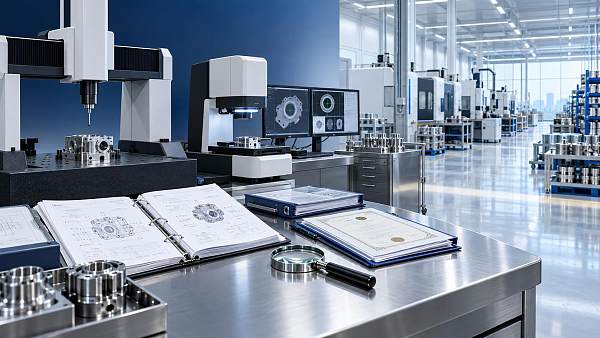
That question matters more now because production quality is increasingly tied to measurable data. In sectors where micron-level variation affects fit, signal integrity, thermal behavior, or safety margins, machining capability must be judged alongside metrology capability. This is also where the G-IMS perspective becomes relevant: machining decisions gain meaning when they are linked to verifiable measurement, benchmarking discipline, and standards-based quality control.
Why tolerance strategy matters more than nominal precision
Tolerance is not simply a number on a drawing. It is a control boundary that defines how much variation a part can absorb before function degrades.
In CNC machining, tighter tolerance usually means slower cutting parameters, more stable fixturing, added tool changes, stricter thermal control, and more frequent inspection. Each of those steps raises cost.
The practical issue is that many parts are specified more tightly than their function requires. That creates hidden expense without improving assembly quality or field performance.
On the other hand, under-specifying a tolerance can trigger rework, alignment problems, leak paths, bearing wear, optical drift, or unstable electrical contact. The right range sits between those two extremes.
How CNC machining tolerances affect total cost
Pricing in CNC machining is rarely driven by material and cycle time alone. Tolerance classes influence almost every production variable, including scrap exposure and verification time.
Key cost drivers behind tighter tolerances
- More machining passes to control dimensional variation and improve surface finish.
- Higher fixture rigidity and more careful datum selection.
- Premium tooling and shorter tool life allowances.
- Greater environmental sensitivity, especially with heat-generating materials.
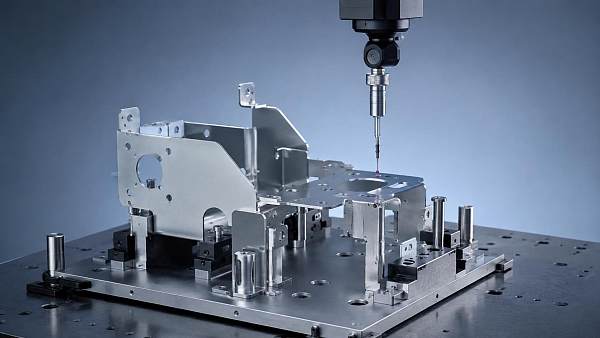
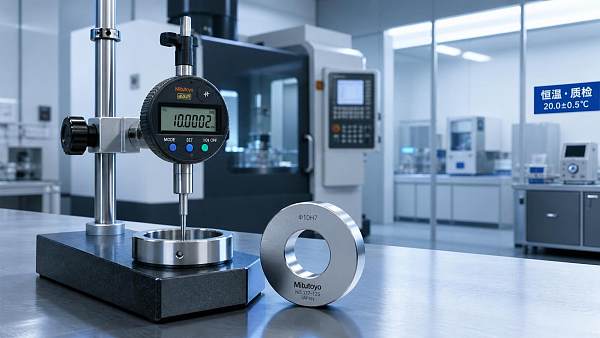
- Expanded inspection plans using CMM, optical systems, or in-process probing.
- Higher rejection risk when variation bands are extremely narrow.
Usually, the cost curve is not linear. Moving from a general tolerance to a moderate precision band may be manageable. Moving from moderate precision to near-micron repeatability can raise cost sharply.
This is why quoting CNC machining work without reviewing critical dimensions often produces misleading comparisons. Two suppliers may quote the same part, but one may interpret inspectability and process capability far more rigorously.
Typical relationship between tolerance and effort
Material and geometry change the tolerance equation
A tolerance value cannot be separated from the part itself. Material behavior and geometry determine how realistic, stable, and repeatable that value will be in CNC machining.
Aluminum is generally easier to machine quickly, but thin walls may distort after clamping release. Stainless steel can hold important features well, yet heat and work hardening complicate repeatability.
Titanium, engineering plastics, and high-performance alloys introduce their own limits. Plastics may absorb moisture or creep over time, which means a dimension that passes inspection may still shift in service.
Geometry matters just as much. Deep pockets, slender pins, interrupted cuts, long bores, and thin ribs reduce process stability. Complex five-axis surfaces may be manufacturable, but not all surfaces deserve the same tolerance band.
A well-structured drawing distinguishes between critical datums, mating surfaces, sealing interfaces, and non-critical cosmetic regions. That is often where substantial CNC machining savings are found.
Best-fit applications for CNC machining
CNC machining remains one of the most adaptable manufacturing routes because it supports diverse materials, complex features, and controlled tolerances without tooling lock-in.
Its best-fit applications usually share one trait: the component carries functional importance that justifies dimensional control, traceability, or material specificity.
Where CNC machining delivers strong value
- Prototype and bridge production where design iteration remains active.
- Precision housings for optics, sensors, RF modules, and inspection devices.
- Aerospace and motion-control parts requiring controlled flatness, concentricity, or position.
- Semiconductor support tooling where cleanliness and dimensional consistency are critical.
- Medical and laboratory hardware using certified materials and documented inspection.
- Low- to mid-volume industrial components with many feature variations.
In these settings, CNC machining competes not just on accuracy but on responsiveness, change control, and the ability to align process output with metrology records.
That alignment is increasingly important in environments influenced by ISO/IEC 17025, NIST traceability expectations, and digital quality workflows. A machined part has limited value if its conformity cannot be demonstrated consistently.
Where tolerance decisions connect to measurement discipline
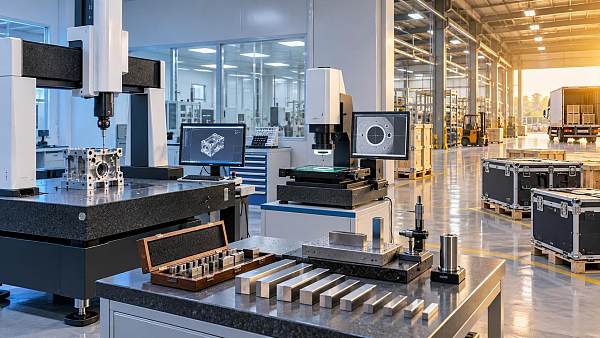
The most reliable CNC machining programs are built with inspection in mind from the beginning. This means the tolerance scheme should match the available measurement method, not just the CAD intent.
For example, a tight positional callout across multiple axes may require fixture referencing, CMM verification, and thermal normalization. If that inspection chain is weak, the printed tolerance offers little operational certainty.
This is where G-IMS-style benchmarking offers practical value. Looking at machining capability together with optical inspection systems, CMM performance, and standards compliance creates a more realistic basis for supplier comparison.
In other words, CNC machining should be evaluated as part of a measurement ecosystem. Process capability, sensor quality, and inspection repeatability are interdependent.
What to review before approving a CNC machining route
A solid review does not begin with unit price alone. It begins with how the part functions, how it will be measured, and which dimensions truly control performance.
Useful checkpoints during evaluation
- Separate critical dimensions from general dimensions on the drawing.
- Confirm whether the material remains stable after machining, coating, or heat treatment.
- Check whether the supplier can inspect each critical callout with traceable equipment.
- Review datum strategy, not just individual dimensions.
- Ask whether very tight features are process-capable or only theoretically achievable.
- Compare the cost of tighter tolerance against the actual cost of failure in service.
Often, the best outcome is selective precision. Keep tight control where the part interfaces, seals, locates, or transfers force. Relax tolerance where variation carries little functional consequence.
A practical next step for decision quality
CNC machining decisions improve when drawings, process plans, and inspection logic are reviewed together rather than in sequence. That approach exposes unnecessary precision, weak measurement assumptions, and avoidable cost drivers earlier.
For high-value components, the next step is usually to build a tolerance map: identify critical features, link them to functional risk, assign realistic measurement methods, and compare supplier capability on that basis.
That framework makes CNC machining choices easier to defend. It turns tolerance from a drawing habit into a controlled business decision, grounded in manufacturability, metrology, and application fit.
Recommended News
 Sep 17, 2026How to select inline measurement systems for Middle East heatInline Measurement Systems Middle East: learn how to select reliable solutions for heat, dust, vibration, calibration, and production-ready data integration.
 Sep 16, 2026How to choose monitor stands that reduce neck strain at workMonitor stands can reduce neck strain by improving screen height, distance, and stability. Explore practical tips to choose the right ergonomic stand for a more comfortable workspace.
 Sep 15, 2026How to verify an importers directory for machinery before contacting suppliersImporters directory for machinery verification guide: assess legal status, technical fit, compliance, and service capability to build a reliable supplier shortlist.
 Sep 13, 2026How to assess calibration support from metrology suppliers in the Middle EastMetrology suppliers Middle East: learn how to assess ISO/IEC 17025 scope, calibration uncertainty, local support, turnaround time, and lifecycle cost.
 Sep 12, 2026How material fatigue causes cracks in safety-critical componentsMaterial fatigue can trigger hidden cracks in safety-critical components long before visible failure. Learn how cyclic loading, stress concentrations, inspection methods, and targeted controls reduce risk.
 Sep 10, 2026What to verify before choosing an optical micrometer supplier for wireChoose an optical micrometer supplier for wire with confidence. Verify real-line accuracy, calibration, integration, and support before you buy.
 Sep 08, 2026How to choose thickness gauges for pipes with limited accessThickness Gauges for pipes: learn how to select the right ultrasonic gauge and probe for tight access, curved surfaces, corrosion, coatings, and reliable readings.
 Sep 07, 2026How to choose anti-aging face serums for your skin typeantiagingfaceserums made simple: discover the best ingredients, textures, and routines for dry, oily, sensitive, or combination skin—plus tips for visible results.
 Sep 05, 2026How to choose sheet metal components for tight-tolerance assembliesSheet metal components for tight-tolerance assemblies: learn how to align materials, datums, forming, finishes, and inspection for reliable fit and repeatable performance.
 Sep 04, 2026What accuracy should a digital temperature humidity sensor have?Digital temperature humidity sensor accuracy explained: compare temperature and RH limits, resolution, drift, calibration, and installation effects to choose reliable performance for your application.
 Sep 03, 2026How to choose glamping tents for eco resorts in high-wind locationsGlamping Tents for eco resorts: discover how to choose wind-resistant structures, engineered anchors, and durable materials for safer, sustainable stays.
 Sep 02, 2026How to assess a bore gauge manufacturer in Latin America for measurement reliabilityBore gauge manufacturer Latin America: learn how to verify calibration traceability, repeatability, service support, and shop-floor reliability before you buy.
 Sep 01, 2026What accuracy factors matter most in advanced metrology calibration?Advanced metrology calibration: discover the key accuracy factors—from traceability and uncertainty to environment, probes, and software—for reliable decisions.
 Aug 31, 2026When does legal tech make sense for a growing business?Legal tech helps growing businesses streamline contracts, compliance, IP, and audit controls. Discover the key signals, practical tools, and steps to scale with confidence.
 Aug 30, 2026How manufacturing tolerance affects thread gauge acceptance limitsThread gauge manufacturing tolerance affects acceptance limits, calibration confidence, wear risk, and inspection consistency. Learn how to prevent costly thread gauge errors.
 Aug 29, 2026How to choose office supplies that reduce waste in shared workspacesOffice supplies can cut waste and costs in shared workspaces. Discover practical procurement tips for durable, refillable, low-packaging products.
 Aug 28, 2026How to compare metrology equipment vendors for calibration supportMetrology equipment vendors: compare calibration scope, ISO/IEC 17025 support, downtime, documentation, and lifecycle costs to choose reliable service.
 Aug 27, 2026What to evaluate before choosing industrial inspection systems in AsiaIndustrial Inspection Systems Asia: evaluate accuracy, cycle time, automation, traceability, and local service to choose a reliable solution for smarter quality control.
 Aug 26, 2026Do dermarollers actually improve absorption of skincare productsDermarollers can improve skincare absorption, but not always safely. Learn when they help, which products to pair, and how to avoid irritation for better skin results.
 Aug 25, 2026What makes a high accuracy CMM probe reliable at tight tolerancesHigh accuracy CMM probe reliability depends on repeatability, stylus stability, calibration integrity, and system fit. Learn what ensures trusted results at tight tolerances.
 Aug 24, 2026When does an automated trade platform make sense for growing teams?Automated trade platform adoption makes sense when growing teams face supplier complexity, compliance risk, and limited visibility. Learn the signs, ROI factors, and how to scale with control.
 Aug 22, 2026How to vet an industrial measurement equipment supplier for calibration traceabilityIndustrial measurement equipment supplier selection starts with calibration traceability. Learn how to verify ISO/IEC 17025 evidence, uncertainty, and audit-ready documentation.
 Aug 20, 2026What is driving demand in the optical metrology market right nowOptical metrology market demand is rising as manufacturers need faster, non-contact, high-precision inspection for semiconductors, EVs, electronics, and automated production lines.
 Aug 18, 2026How to integrate a digital gauge RS232 output with SPC softwareDigital gauge RS232 output integration with SPC software: learn how to ensure stable data capture, traceability, and scalable deployment while avoiding hidden quality risks.