ISO 17025 Compliance Gaps That Delay Lab Approval
Time
Click Count
ISO 17025 Compliance gaps often appear late, but they start much earlier
ISO 17025 Compliance gaps often surface during final review, when fixing them is slow, expensive, and disruptive to laboratory approval timelines.
Most delays do not come from one dramatic failure. They come from small weaknesses that accumulate across records, methods, traceability, competence, and corrective action.
In complex industrial environments, these weaknesses affect testing labs, calibration labs, sensory measurement facilities, and advanced metrology operations alike.
A practical review structure helps expose hidden blockers before the accreditation body does. That is why a checklist-driven approach improves both speed and confidence.
Why a structured review is essential for ISO 17025 Compliance
ISO 17025 Compliance is not only about having procedures. It is about proving those procedures are implemented, controlled, and technically valid.
Labs working with optics, electronics, environmental sensors, dimensional metrology, or vision systems often manage mixed risks and complex evidence chains.
Without a structured review, teams may miss links between method validation, equipment calibration, uncertainty budgets, software control, and result authorization.
A checklist makes review repeatable. It also supports internal audits, supplier qualification, cross-site harmonization, and readiness for customer technical assessments.
Core checks that prevent laboratory approval delays
- Confirm the scope matches real activities, equipment, ranges, matrices, and reporting limits used in daily laboratory operations.
- Verify every controlled document has approval status, revision history, effective dates, distribution control, and withdrawal of obsolete versions.
- Check method validation records for accuracy, precision, robustness, detection limits, linearity, and fitness for intended use.
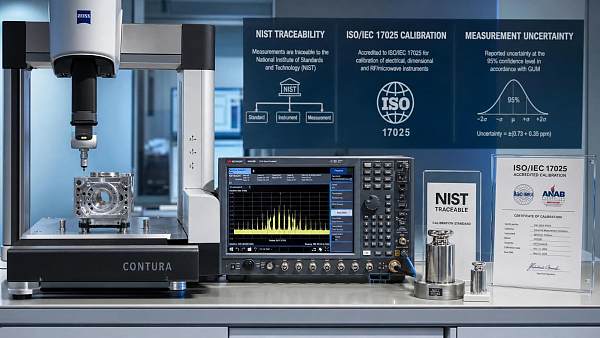
- Review measurement traceability to ensure unbroken calibration chains link standards, reference materials, and critical instruments to recognized references.
- Ensure uncertainty evaluations are current, technically justified, and aligned with each test or calibration method actually performed.
- Confirm staff competence records include training, authorization, observed performance, requalification intervals, and evidence for task-specific capability.
- Inspect environmental monitoring records for temperature, humidity, vibration, contamination, and other conditions affecting result validity.
- Verify equipment maintenance, intermediate checks, software backups, and service logs are complete, reviewed, and technically meaningful.
- Check sample handling controls, including receipt, identification, storage, transport, retention, and prevention of mix-up or deterioration.
- Review quality control data, proficiency testing, replicate checks, and trend analysis for timely investigation of abnormal results.
- Confirm nonconformity, corrective action, and root-cause records show effectiveness verification instead of superficial closure statements.
- Make sure report templates contain required statements, decision rules, units, uncertainty, traceability references, and authorized release control.
Where ISO 17025 Compliance gaps usually hide
Documentation exists, but implementation evidence is weak
Many labs have polished manuals. Delays happen when work instructions, forms, and records do not match what personnel actually do.
Assessors often compare procedure language against bench-level practice. Any mismatch raises concern about control effectiveness and system maturity.
Method validation is incomplete or copied from external sources
Borrowing published methods is common, but ISO 17025 Compliance still requires local confirmation under actual laboratory conditions.
The gap appears when validation data does not reflect the real matrix, operator variation, instrument configuration, or acceptance criteria.
Traceability is assumed rather than demonstrated
A calibrated instrument alone does not guarantee valid traceability. Labs must show the full relationship between standards, intervals, and application limits.
This issue is common in multi-vendor sensor systems, optical measurement setups, and high-frequency electrical test environments.
Competence records are generic
Training attendance sheets are not enough. ISO 17025 Compliance depends on role-specific authorization supported by direct technical evidence.
Observed demonstrations, blind checks, result reviews, and periodic reassessment strengthen competence claims during accreditation review.
Key checks for different laboratory situations
Calibration and dimensional metrology environments
Focus on uncertainty budgets, environmental stability, reference standard intervals, and evidence that intermediate checks protect measurement integrity.
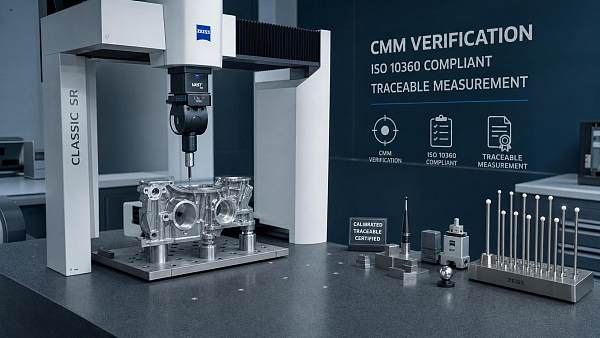
For CMM, laser, and 3D scanning workflows, software version control and artifact-based verification deserve special attention.
Electrical and high-frequency measurement laboratories
Review connector wear, cable control, drift checks, shielding conditions, firmware management, and reference path verification.
ISO 17025 Compliance can be delayed when test uncertainty ignores accessories or environmental influences on signal integrity.
Optical, vision, and photonic sensor laboratories
Check illumination stability, lens cleanliness, alignment procedures, image-processing parameter control, and validation of algorithm outputs.
Where AI-assisted inspection is used, decision logic and model change control should be documented and reviewable.
Environmental and specialized sensor testing
Pay close attention to gas standards, chamber mapping, contamination prevention, stabilization time, and cross-sensitivity evaluation.
Approval delays often arise when field conditions differ from lab simulations, but the method transfer study is missing.
Commonly overlooked risks that slow accreditation
Decision rules are frequently omitted from reports. That creates uncertainty when statements of conformity are issued near specification limits.
Subcontracted activities may be technically sound, yet poorly controlled from a qualification and record-retention perspective.
Spreadsheet calculations often lack validation, protection, and change history. Assessors treat uncontrolled calculation tools as serious risks.
Internal audits sometimes repeat the same checklist without testing effectiveness. Weak audit depth delays confidence in ISO 17025 Compliance.
Management review can become a formality if it does not analyze trends, complaints, resources, impartiality, and improvement priorities.
A practical way to close ISO 17025 Compliance gaps
- Map every accreditation requirement to one owner, one procedure, one record type, and one verification activity.
- Run a mock assessment using real samples, real equipment, and real reporting pathways instead of document-only review.
- Rank findings by approval impact, technical risk, and correction time, then address evidence gaps before formatting issues.
- Recheck closed actions after implementation to confirm behavior changed, not just wording in procedures and forms.
- Maintain a rolling readiness file containing key records, trend charts, scope links, and recent objective evidence.
This approach supports sustainable ISO 17025 Compliance across single labs, distributed sites, and technically diverse industrial testing networks.
FAQ on ISO 17025 Compliance delays
What causes the most frequent approval delays?
Incomplete validation, weak traceability evidence, poor uncertainty justification, and generic competence records are among the most common causes.
Can strong technical performance offset weak documentation?
No. ISO 17025 Compliance requires both technical validity and controlled evidence. One cannot replace the other during assessment.
How early should a readiness review begin?
Begin several months before application or surveillance. Early review provides time for data collection, retraining, and effectiveness checks.
Conclusion and next steps
Laboratory approval delays rarely come from unknown rules. They come from known ISO 17025 Compliance requirements that were not translated into reliable evidence.
A disciplined review of scope, methods, traceability, competence, software, reporting, and corrective action reduces delay risk significantly.
For advanced industrial labs, the goal is not only accreditation. The goal is a dependable system that supports precision, repeatability, and trusted decisions.
Start with the checklist above, test each claim with objective evidence, and close gaps before they become findings.
Recommended News
 Sep 20, 2026How to choose sanitary ware that meets drinking water safety standardsSanitary ware for drinking water: learn how to verify certifications, wetted materials, hygiene design, and traceability for safer, compliant installations.
 Aug 21, 2026When do industrial boilers need low-NOx burners to meet emissions limitsIndustrial boilers may need low-NOx burners when stricter permits, fuel changes, or upgrades reduce compliance margin. Learn the key triggers before emissions risks cause downtime.
 Aug 14, 2026How advanced metrology standards affect measurement traceability and audit readinessadvanced metrology standards strengthen measurement traceability, improve audit readiness, and help QA teams defend every result with confidence.
 Aug 08, 2026How to Evaluate a Global Trade Platform for Supplier Reach and Compliance RiskGlobal trade platform evaluation starts with usable supplier reach and compliance clarity. Learn how to spot weak records, hidden logistics risks, and decision-ready supplier data.
 Jul 20, 2026High Voltage Cables: Key Selection Factors for Reliable Power ProjectsHighvoltagecables selection made practical: learn how to compare insulation, installation environment, compliance, and lifecycle cost for safer, more reliable power projects.
 Jul 15, 2026Environmental Sensor Systems for Continuous Compliance MonitoringEnvironmental Sensor Systems for continuous compliance monitoring across production, labs, and utilities—improve audit readiness, data reliability, and operational control.
 Jul 14, 2026Eco-Friendly Furniture: What Actually Affects Cost, Durability, and ComplianceEco-friendly furniture explained: compare real cost drivers, durability, certifications, and compliance proof to avoid greenwashing and choose smarter long-term value.
 Jul 12, 2026What CE Certification Means for Photonic Sensor System CompliancePhotonic sensor systems CE certified: learn what CE really covers, which compliance risks matter most, and how to verify claims before choosing industrial sensing equipment.
 Jul 10, 2026How to Evaluate a Cuplock Scaffolding Manufacturer for Safety and Lead TimeCuplock scaffolding manufacturer selection affects safety, quality, and delivery. Learn how to verify process control, load data, traceability, and realistic lead times.
 Jul 09, 2026Data Intelligence Protocols for Smart Factories: Key Standards to KnowData Intelligence Protocols for smart factories explained: discover OPC UA, MQTT, ISA-95, ISO/IEC 17025, and IEC 62443 to improve traceability, security, and quality decisions.
 Jul 06, 2026How Modular Building Wind Load Resistance Is CalculatedModular building wind load resistance explained clearly: learn how engineers calculate loads, verify connections, and use test-backed data to reduce risk and improve project confidence.
 Jul 05, 2026What CE Certified Measuring Equipment Really Covers Before You BuyCE certified measuring equipment may meet EU compliance rules, but what does it really cover? Learn how to verify safety, EMC, documents, and performance before you buy.
 Jul 04, 2026Life Sciences Measurement Trends in 2026: Where Quality Control Is TighteningLife sciences measurement trends for 2026 show why quality control is tightening fast. Explore key risks, data integrity demands, and practical steps to stay compliant and competitive.
 Jul 01, 2026Calibration and Measurement Standards USA: What Matters MostCalibration and measurement standards USA guide traceability, uncertainty, and audit-ready measurement control. Learn what protects quality, compliance, and confident decisions.
 Jul 01, 2026ISO 10360 Europe: Key Compliance Changes for 2026ISO 10360 Europe 2026 compliance changes will reshape CMM validation, traceability, software control, and audit readiness. See key risks, impacts, and practical steps to prepare.
 Jun 29, 2026Supplier Evaluation Checklist for Industrial Technology Sourcing in 2026Industrial Technology Sourcing supplier evaluation in 2026 demands more than price checks. Explore a practical checklist to reduce risk, verify compliance, and choose resilient suppliers with confidence.
 Jun 27, 2026First Aid Kits Wholesale: Cost, MOQ, and Compliance ChecklistFirst aid kits wholesale guide covering landed cost, MOQ, customization, and compliance. Compare suppliers smarter, reduce sourcing risk, and buy market-ready kits with confidence.
 Jun 26, 2026How to Evaluate a First Aid Kits Distributor for Compliance and Supply StabilityFirst aid kits distributor evaluation guide: learn how to verify compliance, traceability, refill control, and supply stability before choosing a safer, audit-ready partner.
 Jun 25, 2026Steel Rebar for Construction: Grades, Sizes, and Load PerformanceSteel rebar for construction explained: compare grades, sizes, tolerances, and load performance to choose safer, code-compliant reinforcement with greater long-term reliability.
 Jun 24, 2026How Import Data Reveals Supplier Risk and Price Shifts in 2026Import data reveals supplier risk, price shifts, and sourcing concentration in 2026. Discover early warning signals that help teams protect costs, continuity, and smarter supply decisions.
 Jun 23, 2026How to Evaluate an Outdoor Lithium Power Station Factory in 2026Outdoor lithium power station factory evaluation in 2026 starts with quality control, compliance, and test evidence. Discover how to compare suppliers and reduce sourcing risk.
 Jun 22, 2026Organic Chemicals: Key Purity Risks and Compliance ChecksOrganic chemicals can pass on paper yet fail in practice. Learn the key purity risks, compliance checks, and supplier review points needed to protect quality, safety, and process stability.
 Jun 19, 2026Electric Vehicle Parts Trends Shaping 2026 Supply PlanningElectric vehicle parts trends for 2026 are reshaping supply planning. Discover how validation, traceability, testing, and resilient sourcing can reduce risk and improve EV program performance.
 Jun 18, 2026Organic Chemicals: How to Compare Purity, Stability, and ComplianceOrganic chemicals buying guide: compare purity, stability, and compliance to reduce risk, improve quality, and choose suppliers with more confidence.