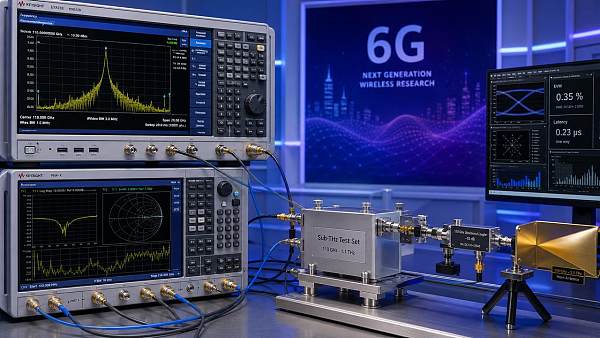
6G Measurement Challenges: Choosing the Right Oscilloscope Features
Time
Click Count
As 6G research pushes into higher frequencies, wider bandwidths, and more complex modulation schemes, 6G Measurement is becoming a critical challenge for technical evaluators.
Choosing the right oscilloscope now depends on more than headline bandwidth. Signal fidelity, noise floor, sampling behavior, timing stability, and software analysis all shape usable results.
For advanced labs, semiconductor validation, aerospace electronics, and high-speed digital design, weak instrument choices can distort waveforms and mislead development decisions.
This guide explains how to evaluate oscilloscope features for reliable 6G Measurement, with practical checkpoints that support technically defensible selection and test planning.
Why a structured evaluation matters for 6G Measurement
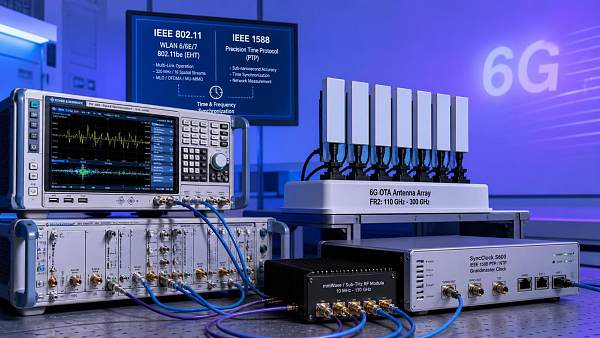
6G Measurement often involves sub-nanosecond events, wideband RF envelopes, mixed-signal behavior, and advanced modulation schemes that stress both analog front ends and digital processing chains.
A structured review reduces the risk of buying an oscilloscope that looks powerful on paper but underperforms in real validation workflows.
It also helps compare platforms against practical needs such as EVM analysis, transient capture, protocol correlation, and traceable reporting under IEEE or NIST-aligned procedures.
Core oscilloscope features to verify before selecting a platform
- Confirm usable bandwidth at the target frequency range, not only nominal bandwidth, because front-end flatness and roll-off directly affect 6G Measurement accuracy.
- Check sample rate under the exact channel count required, since many platforms reduce performance when multiple channels run simultaneously during wideband capture.
- Review effective number of bits and vertical noise, because weak dynamic range can hide low-level distortion, spurs, or modulation defects in 6G Measurement tasks.
- Evaluate memory depth for long captures, especially when burst events, beam switching, or intermittent interference must be stored without sacrificing time resolution.
- Verify trigger sophistication, including edge, pulse, protocol, and zone triggers, to isolate rare events that standard triggering often misses in complex RF systems.
- Assess time-base accuracy and jitter performance, because unstable timing can corrupt phase-sensitive measurements and reduce confidence in high-frequency waveform reconstruction.
- Inspect the oscilloscope input architecture, including impedance options, probe compatibility, and channel isolation, to avoid loading errors and crosstalk during sensitive measurements.
- Require advanced analysis software for FFT, vector signal evaluation, pulse analysis, and automated measurements, since raw waveform viewing is insufficient for 6G Measurement.
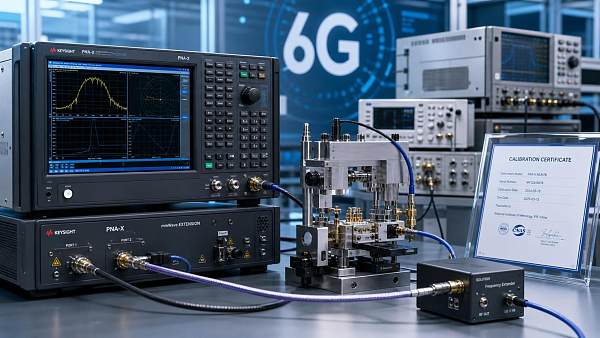
- Check calibration traceability, service intervals, and compliance documentation to support regulated development environments and benchmarking against recognized technical standards.
- Compare upgrade paths for bandwidth, channels, software options, and remote control interfaces so the platform remains useful as 6G Measurement requirements evolve.
Bandwidth is necessary, but not enough
Many teams start with bandwidth alone. That shortcut is risky. Real 6G Measurement quality depends on amplitude flatness, rise-time behavior, and frequency response stability.
A nominal bandwidth figure may not reflect performance at the signal edge of interest. Always examine the guaranteed specification at the intended operating region.
Sampling and memory determine what you truly capture
High sample rate without enough memory creates blind spots. Long acquisitions often force lower effective resolution or reduced time windows.
For 6G Measurement, this matters when validating packetized bursts, fast hopping behavior, or multi-domain events that require context before and after a trigger point.
Noise floor and dynamic range affect every result
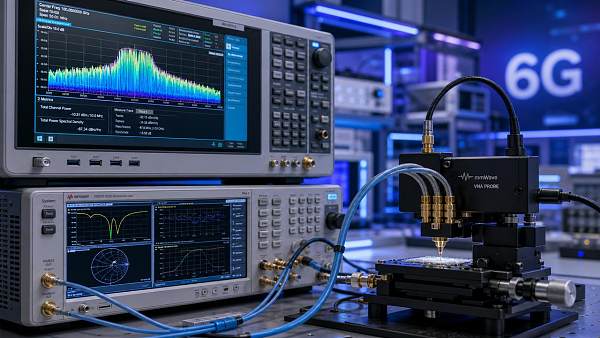
A poor noise floor masks low-level signal components. That can distort harmonic content, degrade spectral interpretation, and undermine modulation analysis.
In 6G Measurement, where wideband and high-order schemes are sensitive to distortion, vertical fidelity often determines whether a platform is credible or merely convenient.
How feature priorities change across application scenarios
RF front-end and transceiver validation
This scenario prioritizes analog bandwidth, low noise, timing integrity, and strong FFT or vector analysis support. Probe and fixture behavior must also be tightly controlled.
For 6G Measurement of mixers, amplifiers, and converters, phase stability and trigger precision are often more important than basic user interface speed.
High-speed digital and mixed-signal design
Digital subsystems supporting 6G platforms demand eye analysis, jitter decomposition, serial decoding, and correlated analog-digital visibility.
Here, 6G Measurement extends beyond RF. Engineers need enough channels, consistent sample rate, and software tools that link power, clocks, control logic, and data paths.
Semiconductor characterization and packaging research
Device-level analysis often requires very low noise, repeatable triggering, and confidence in small waveform changes across process corners or temperature conditions.
For 6G Measurement at chip or interconnect level, calibration quality and de-embedding capability become essential for credible comparison between design revisions.
Aerospace and mission-critical electronics testing
Harsh-environment systems need repeatable measurements over extended validation cycles. Reliability of storage, remote automation, and reporting workflows can be decisive.
In these environments, 6G Measurement platforms should support audit-ready records, stable calibration status, and integration with broader verification infrastructure.
Common oversights that weaken 6G Measurement results
Ignoring the probe and interconnect chain
Even a strong oscilloscope fails if probes, cables, adapters, or fixtures introduce reflections, attenuation, or phase error. The full signal path must be evaluated together.
Trusting typical performance instead of guaranteed specifications
Marketing values often reflect ideal conditions. Serious 6G Measurement decisions should rely on guaranteed specifications, calibration scope, and performance under multi-channel use.
Overlooking software capability and workflow friction
A capable front end loses value if analysis software is limited, slow, or hard to automate. Repetitive validation work requires efficient reporting and scripting.
Buying for today without considering roadmap expansion
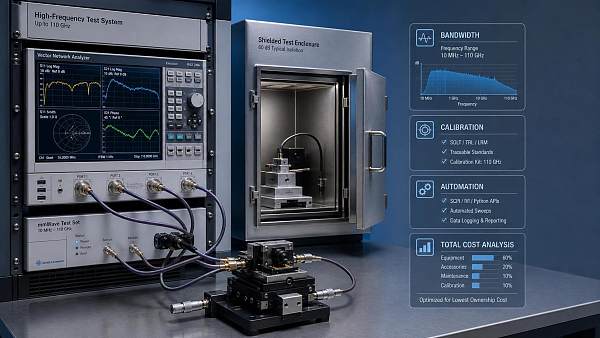
6G Measurement requirements are evolving quickly. Limited upgrade paths can force early replacement and raise total cost of ownership across research and qualification programs.
Practical steps for executing a better instrument selection
- Define the highest frequency, widest bandwidth, longest capture time, and smallest signal detail that must be measured without post-test assumptions.
- Build a short test script using representative signals, then compare candidate instruments on the same setup, probes, and analysis tasks.
- Record not only pass or fail results, but also trigger success rate, analysis speed, waveform repeatability, and report generation effort.
- Review service support, recalibration process, software licensing terms, and interface compatibility before finalizing any 6G Measurement platform decision.
A disciplined selection process usually reveals trade-offs faster than brochure comparison. It also exposes hidden costs tied to probes, software modules, and maintenance commitments.
Conclusion and next actions
Effective 6G Measurement depends on a balanced oscilloscope platform, not a single specification. Bandwidth, sampling, memory, noise, triggering, timing, and analysis must work together.
When evaluation follows a structured checklist, measurement confidence improves and technology decisions become easier to justify across advanced industrial and research environments.
As a next step, create a requirement matrix based on real signals, then score each candidate oscilloscope against those conditions before any purchase or qualification commitment.
Recommended News
 Aug 23, 2026Which IEEE Standards for wireless communication matter most in 6G testingIEEE Standards for wireless communication shape reliable 6G testing. Discover which IEEE frameworks matter most for timing, coexistence, safety, and repeatable lab results.
 Jul 26, 2026How to Evaluate RF High Frequency Test Equipment for 6G Lab AccuracyRF High Frequency Test Equipment evaluation for 6G labs: learn how to assess phase noise, dynamic range, calibration traceability, and repeatability for reliable, decision-grade results.
 Jul 15, 2026High Frequency Test Systems Price: What Drives Total Cost in 2026?High frequency test systems price in 2026 depends on more than the first quote. Discover the real cost drivers, hidden lifecycle expenses, and smart ways to compare suppliers.
![]() Jun 09, 2026Spectrum Analyzers Explained: What Matters Most in Signal TestingSpectrum Analyzers explained for smarter signal testing: learn how frequency range, dynamic range, phase noise, and compliance impact accuracy, speed, and confident buying decisions.
Jun 09, 2026Spectrum Analyzers Explained: What Matters Most in Signal TestingSpectrum Analyzers explained for smarter signal testing: learn how frequency range, dynamic range, phase noise, and compliance impact accuracy, speed, and confident buying decisions. May 21, 20266G Measurement Challenges: Bandwidth, Noise, and Timing in Real Tests6G Measurement faces real-world challenges in bandwidth, noise, and timing. Discover how repeatable testing improves trust, compliance, and performance across advanced R&D and production.
 May 20, 2026High Frequency Measurement: 2026 Selection GuideHigh Frequency Measurement selection in 2026 starts with the right criteria. Learn how to compare accuracy, calibration, workflow, cost, and support to choose with confidence.
 May 14, 20266G Measurement Challenges: Choosing the Right Oscilloscope Features6G Measurement challenges demand more than bandwidth alone. Discover the oscilloscope features that improve signal fidelity, timing accuracy, and analysis confidence for smarter test decisions.
 May 13, 2026High Frequency Measurement: Accuracy Limits at GHz SpeedsHigh Frequency Measurement at GHz speeds demands more than bandwidth. Learn where accuracy breaks down, how to reduce uncertainty, and what to evaluate for reliable, traceable results.
 May 03, 2026IEEE Standards for Wireless Communication Explained SimplyIEEE Standards for wireless communication explained simply—learn how Wi-Fi, Bluetooth, and industrial wireless standards impact compatibility, performance, and smarter technology choices.
 May 02, 20266G Measurement Basics: What Actually Matters in Early Testing6G Measurement explained clearly: learn which early-test factors really matter—frequency stability, signal integrity, latency behavior, and repeatability—to compare claims with confidence.
 Apr 24, 2026Electrical Test Repeatability Drops Fast When Cables AgeElectrical Test repeatability drops as cables age. Learn how Industrial Sensors, Spectrum Analyzers, IEEE Standards and NIST Standards help reduce drift and protect data confidence.